 Birch Bay Exterior
 Siding Built for the Terrell Creek Microclimate
Terrell Creek sits close enough to the water that homes here take a different kind of weathering than siding fifteen miles inland. Salt-laden air off Birch Bay works its way into seams and fastener heads year-round, wind-driven rain comes in sideways during winter storms, and the shaded, damp stretches near the creek corridor stay wet long after the rain stops. That combination is hard on siding that wasn't built or installed with it in mind. We install James Hardie fiber cement siding on Terrell Creek homes because it's the one product system we trust to hold up to all three of those stresses at once, and we install it the way Hardie actually engineers it to be installed — not the shortcut version.
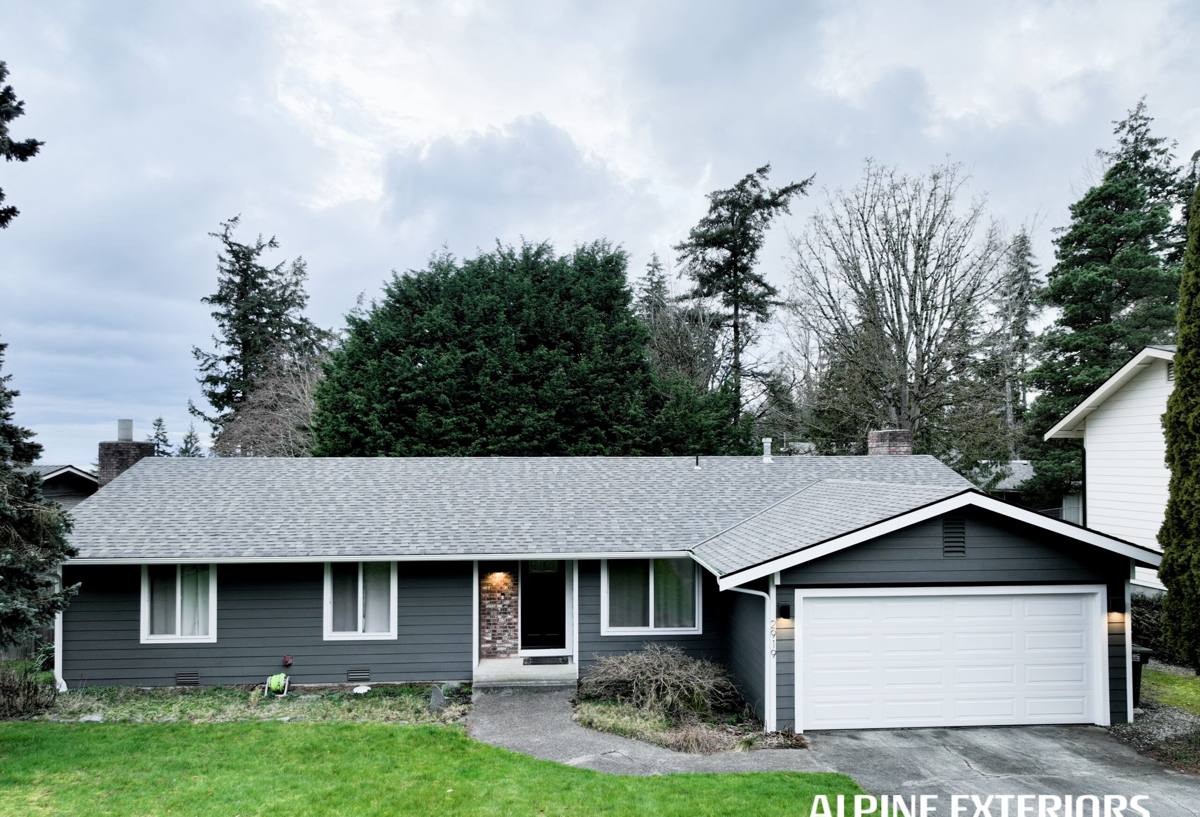
What Terrell Creek's Climate Actually Does to Siding
Salt Air and Corrosion
Coastal salt exposure doesn't just weather paint — it accelerates corrosion on fasteners, flashing, and any metal trim that isn't rated for it. Wood and engineered wood products absorb that salt-laden moisture into the fiber itself, which is part of why they swell, cup, and eventually rot faster near the bay than they would twenty miles east.
Driving Rain
Birch Bay's winter storms don't fall straight down. Wind-driven rain gets pushed horizontally into wall assemblies, which means the water-resistive barrier behind the siding, the flashing details around windows and doors, and the way the siding itself sheds water all matter as much as the siding material choice. A product that's technically "waterproof" can still fail a home if it's installed with poor drainage planes or missing kick-out flashing.
The Long Moss Season
Terrell Creek's tree cover and proximity to the water mean shaded, north-facing walls stay damp for extended stretches, especially through fall and winter. That's exactly the environment moss and algae need to establish on siding surfaces, fascia, and trim. Once organic growth takes hold, it holds moisture against the wall longer, which compounds the problem instead of just being cosmetic.
Why We Only Install James Hardie Fiber Cement
We don't install vinyl siding, LP SmartSide, Cemplank, Allura, primed spruce, or cedar. That's not a marketing position — it's a standard we set because of what we've seen these climate stresses do to those products over time. Vinyl expands, contracts, and can crack in cold snaps, and it doesn't stop moisture from reaching the sheathing behind it. Engineered wood siding and primed spruce rely on their factory coating and field caulking staying intact; once water gets past that layer near the coast, wood-based cores swell and don't recover. Cedar is a beautiful, honest material, but it needs consistent maintenance to resist rot and moss in a damp, shaded environment like Terrell Creek, and most homeowners don't want that as a recurring job.
James Hardie fiber cement is cement, sand, and cellulose fiber — it doesn't have an organic wood core to rot, and it's non-combustible. Hardie also builds region-specific HardieZone products, and HZ5 is engineered for the wetter, milder climate zones like ours, with a formulation and installation spec built around moisture cycling rather than the drier zones on the other side of the mountains. Combined with the factory-applied ColorPlus finish, which is baked on under controlled conditions rather than field-painted, it's the closest thing to a "set it and don't worry about it for a long time" siding system that actually exists for a coastal Whatcom County home.
What a Correct Fiber Cement Job Involves
Tear-Off and Wall Inspection
We don't install new siding over old siding, and we don't skip what's underneath. Removing the existing siding lets us check the sheathing for hidden rot, especially around window and door openings and at the base of walls, which are the areas most likely to show damage from years of driving rain and salt exposure. Any soft or compromised sheathing gets repaired before anything new goes up — covering a moisture problem with new siding just hides it for a few more years.
Water-Resistive Barrier and Flashing
A correctly installed weather-resistive barrier, properly lapped and taped, is what actually keeps wind-driven rain out of the wall assembly. Window and door flashing has to be integrated with that barrier in the right sequence — flashing tucked behind the barrier above, over it below — so water is directed out and down instead of trapped behind the siding. This is the step that separates a siding job that lasts decades from one that leads to hidden rot in five years, and it's invisible once the siding is up, which is exactly why it can't be rushed.
Fastening and Clearances
Hardie specifies fastener type, spacing, and placement, and those specs exist for a reason — improper fastening is one of the most common causes of premature siding failure. We also keep the manufacturer's minimum clearances from grade, roof lines, and decks so the bottom edge of the siding isn't sitting in standing water or trapped moisture, which matters even more in a damp, shaded setting like the areas near the creek.
Joints, Caulking, and Finish Details
Butt joints, trim transitions, and any field-cut edges get treated and sealed according to Hardie's specifications so the factory finish isn't compromised at the seams. This is a small detail that gets skipped on rushed jobs, and it's usually the first place a poorly installed job starts to show its age.
HardiePlank vs. Other Siding Options
| Factor | HardiePlank (James Hardie) | Vinyl | Engineered Wood / Primed Spruce | Cedar |
|---|---|---|---|---|
| Combustibility | Non-combustible | Combustible | Combustible | Combustible |
| Moisture behavior near saltwater | Engineered for coastal HZ5 climate zones | Doesn't rot, but seams and fasteners still let moisture in behind it | Wood-based core can swell/rot if coating is breached | Absorbs moisture; needs consistent sealing/maintenance |
| Moss/algae resistance | Cement-based surface, factory finish resists staining | Can stain and support growth in shaded, damp areas | Prone to surface breakdown that holds moisture and growth | Naturally prone to moss and mildew without upkeep |
| Finish | Factory-baked ColorPlus finish | Color molded through, can fade | Factory or field primer, needs field paint | Natural or field-stained/painted |
| Typical maintenance | Occasional wash, minimal upkeep | Low, but doesn't stop moisture intrusion | Regular inspection of caulking and coating | Recurring staining/sealing |
Our Process, Start to Finish
- On-site walkthrough: We assess your home's exposure — how much direct salt air and wind-driven rain it takes, which walls stay shaded and damp, and where any existing moisture or moss issues are showing up.
- Written estimate: You get a clear scope of work and pricing before anything is scheduled, including which Hardie products and ColorPlus color fit your home.
- Tear-off and sheathing check: Old siding comes off, sheathing is inspected and repaired where needed.
- Water-resistive barrier and flashing: Installed and integrated per manufacturer spec before any siding goes up.
- Siding installation: Fastened, spaced, and sealed to Hardie's published requirements.
- Final walkthrough: We go over the finished work with you before calling the job complete.
Cost Factors for a Terrell Creek Siding Project
| Factor | Why it affects cost |
|---|---|
| Home size and wall complexity | More square footage, corners, and trim details mean more material and labor |
| Sheathing condition | Rot repair discovered during tear-off adds material and time before new siding goes up |
| Product line and profile | Lap width, texture, and ColorPlus color selection affect material pricing |
| Trim and accessory work | Corner boards, window trim, and fascia work add to the scope beyond the field siding |
| Access and site conditions | Slopes, landscaping, or tight clearance near the creek corridor can affect setup and labor time |
We don't quote a number without seeing the home first — a walk-around estimate is the only honest way to account for these factors.
What to Check Before You Sign With Anyone
- Do they specialize in fiber cement, or is it one of several products they install?
- Will they remove the old siding and inspect the sheathing, or install over it?
- Can they describe how they handle the water-resistive barrier and window flashing, specifically?
- Do they follow the manufacturer's published fastening and clearance specs?
- Are they familiar with coastal Whatcom County conditions, or mainly working drier inland jobs?
- Is the warranty structure — both manufacturer and workmanship — explained clearly in writing?
Why a Locally Experienced Crew Matters Here
Terrell Creek isn't a generic siding job. A crew that mostly works inland, low-moisture areas can install a technically fine product and still miss the details that matter most in a bay-adjacent, moss-prone setting — flashing sequencing tuned for driving rain, fastener choices that account for salt exposure, and an awareness of which walls need extra attention because they stay shaded and damp longest. We work in Birch Bay and the surrounding Whatcom County coastline regularly, so those aren't unfamiliar conditions to plan around — they're the baseline we build every estimate on.
Get a Free, No-Pressure Estimate
If your Terrell Creek home is due for new siding, or you're seeing early signs of moss, staining, or wear from salt air and driving rain, we'll walk the property with you, look at what your walls are actually dealing with, and give you a straightforward estimate for James Hardie fiber cement siding — no pressure, no obligation. Use the form below to get started.