 Birch Bay Exterior
 Exterior Work in Ferndale: What the Climate Actually Does to a House
Ferndale sits close enough to the water that homes here deal with a version of coastal weather that's a little different from what you'd find further inland in Whatcom County. Salt-laden air drifts in off Bellingham Bay and the Strait, driving rain comes through sideways more often than straight down, and the region's long, gray, wet stretch from fall through spring keeps exterior surfaces damp for months at a time. None of that is dramatic on any single day. It's the accumulation that matters. A house that handles one wet winter fine can start showing problems by year eight or ten if the siding, roofing, and trim weren't chosen and installed with this specific climate in mind.
We work on homes throughout Ferndale and the surrounding areas as part of our regular service territory out of Birch Bay. The building science doesn't change much between here and there, but the local knowledge does — knowing which sides of a house catch the worst of the wind-driven rain, which roof valleys tend to hold onto needle litter and moss longer, and which neighborhoods sit low enough to deal with more standing moisture around foundations. That local pattern recognition is worth something you can't get from a contractor who's never worked this stretch of county before.
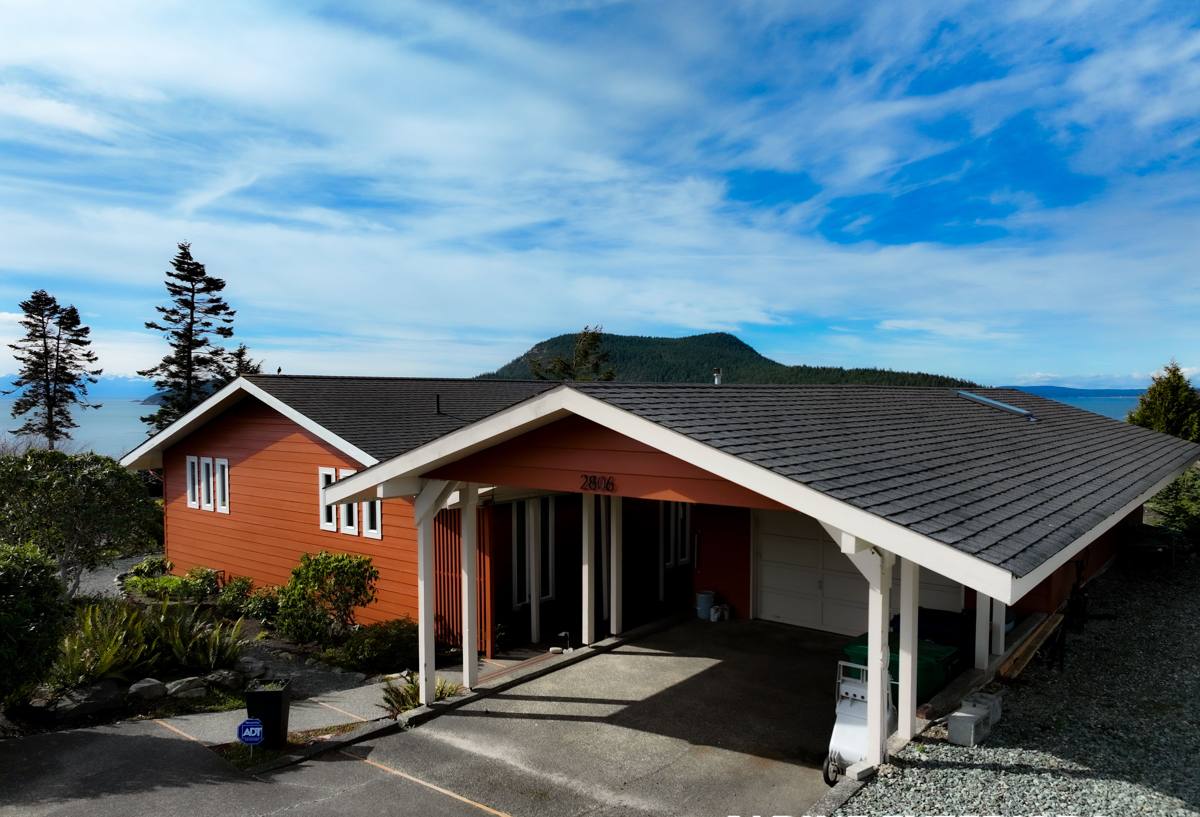
Siding: Why We Only Install James Hardie
Siding is the first line of defense against everything described above, and it's also the exterior component most likely to fail quietly. Moisture doesn't usually show up as an obvious leak — it shows up as soft trim, peeling paint, swelling at the bottom courses, or a musty smell in a wall cavity that nobody notices until a remodel opens it up. Because of that, we made a decision a while back to install only James Hardie fiber cement siding. We don't install vinyl, LP SmartSide, Cemplank, Allura, primed spruce, or cedar, and we think that decision is worth explaining rather than just stating.
What We're Weighing Against
- Vinyl handles rain fine as a shedding surface but expands and contracts with temperature swings, can warp or crack in impact, and doesn't hold paint if a homeowner ever wants to change the color.
- Wood products (cedar, primed spruce) look great initially but are organic material in a climate that stays damp for months — they need consistent maintenance to keep moisture and rot at bay, and skipping a repaint cycle costs more than it looks like it should.
- Engineered wood siding (LP SmartSide) is a legitimate product with a real warranty, but it's still wood-based, meaning cut edges and field damage need to be sealed correctly or moisture will find a way in over time.
- Other fiber cement brands (Cemplank, Allura) are chemically similar to Hardie, but we don't have the same depth of installation training, factory finish track record, or local supply relationship with them that we've built with Hardie over years of installs.
James Hardie fiber cement is non-combustible, doesn't expand and contract the way vinyl does, and doesn't feed mold or rot the way wood-based products can if moisture gets behind them. Hardie's ColorPlus factory-applied finish is baked on under controlled conditions, which gives it better fade and moisture resistance than field-applied paint, and it comes with a real, transferable warranty that matters if the house sells down the road. For a place with a moss season as long as Whatcom County's, that combination of impact resistance, that combination of a stable, dense material and a factory finish that isn't relying on caulk and paint touch-ups to keep working is what we want on the homes we stand behind.
HZ5 Product Line
Hardie makes climate-specific product lines, and homes in this part of Washington get the HZ5 formulation, engineered for wetter, harsher climates rather than the HZ10 line built for hot, dry regions. It's the same core fiber cement chemistry tuned for moisture exposure rather than heat and UV, which is the more relevant threat here.
Roofing: Moss, Debris, and the Slow Leak Problem
Roofs in this area fight a slower, quieter battle than roofs in drier climates. Moss and algae growth is the most visible sign — dark streaking and green patches that show up first on north-facing slopes and shaded valleys where sun exposure is lowest. Moss itself isn't just cosmetic. As it establishes on shingle granules, it holds moisture against the roof surface far longer than bare shingle would, which accelerates granule loss and shortens the life of the roofing material underneath.
Driving rain adds a second problem: wind-driven water finds its way under improperly sealed flashing, around chimneys, and at roof-to-wall transitions in ways that straight-down rain never would. A roof that would perform fine in a calmer climate can develop slow leaks here simply because the water is coming in sideways some percentage of the time.
What We Look At on a Roofing Job
- Flashing condition at every roof-to-wall transition, chimney, and valley
- Moss and debris buildup, especially on shaded, north-facing slopes
- Ventilation adequacy — trapped attic moisture accelerates deck rot from underneath
- Gutter and downspout capacity relative to actual rainfall volume, not just code minimums
- Underlayment quality, since this is the material doing the real work if wind-driven rain gets past the shingles
Windows: Sealing Out Wind-Driven Rain
Window failures in this climate are rarely about the glass. They're about the seal between the window unit and the wall, and about flashing details that either shed water outward or let it track back into the framing. Wind-driven rain puts real pressure on window perimeters that calmer climates don't, which is why window installation quality matters as much as window quality here. A well-built window installed with poor flashing will leak eventually; a mid-grade window installed correctly with proper flashing and sealant will often outperform it.
We pay particular attention to sill pan flashing and head flashing integration with the siding above and below the window opening, since that's where most water intrusion around windows actually originates.
Decks: Built for Wet-Dry Cycling
Decks in Whatcom County go through more wet-dry cycling than decks in drier parts of the state, which stresses fasteners, ledger connections, and any wood-to-wood contact points where water can sit. Proper flashing at the ledger board connection to the house is one of the most important — and most commonly skipped — details in deck construction, since that's the single point most likely to cause structural rot if it's done wrong.
Cost Factors: What Actually Moves the Number
| Factor | Why It Matters Here |
|---|---|
| Home size and wall complexity | More corners, dormers, and transitions mean more flashing detail work, which is where labor time concentrates |
| Existing siding removal | Tear-off and disposal of old material, plus any sheathing repair found underneath, adds time before new siding goes up |
| Moisture damage discovered mid-project | Rot behind old siding or around window openings has to be repaired before new material goes on — this is the most common source of a change order |
| Roof pitch and access | Steeper roofs and limited access add labor time and safety equipment requirements |
| Product line and color | Hardie's ColorPlus finishes and certain profiles carry different material costs than base products |
Why a Local Crew Matters More Than It Sounds Like It Should
A crew that works this part of Whatcom County regularly develops a feel for things that don't show up in a spec sheet — which directions catch the worst weather on a typical lot, how much moss buildup is normal versus a sign of a ventilation problem, and how the local building department handles permitting for exterior work. That familiarity shows up in fewer surprises mid-project and fewer callbacks after. It also means we're not guessing at material choices based on a manufacturer's general climate zone map — we've seen what actually holds up on homes like yours, in this specific pocket of coastline.
A Practical Pre-Winter Checklist for Ferndale Homeowners
- Walk the exterior and look for soft spots, peeling paint, or discoloration at the base of siding
- Check roof valleys and north-facing slopes for moss buildup before it spreads
- Clear gutters and downspouts before the fall rain picks up
- Look at window perimeters for cracked caulk or gaps in the trim
- Check deck ledger boards and fastener heads for rust staining, which can indicate trapped moisture
How We Approach a Ferndale Project
We start with an on-site look at the specific exposure of your home — which walls take the worst of the wind and rain, what the roof's moss history looks like, and whether there's any existing moisture damage that needs to be addressed before new material goes up. From there we talk through material and scope honestly, including where a smaller repair makes more sense than a full replacement. Siding, roofing, windows, and decks all interact at the details — flashing, transitions, ventilation — so we try to look at the whole exterior picture rather than treating each component in isolation.
If you're dealing with an aging exterior, visible moss buildup, or just want an honest read on what your home needs before the next wet season sets in, we're happy to come take a look. Estimates are free, and there's no pressure to move forward with anything on the spot.