 Birch Bay Exterior
 Exterior Work Built for Nooksack's Climate
Nooksack sits inland from the Salish Sea, in the Nooksack River valley at the foot of the Cascade foothills, and that geography shapes what happens to a house here. Homes in this part of Whatcom County deal with a long wet season, heavy morning fog off the river bottoms, and the kind of persistent humidity that keeps siding, trim, and roofing damp for days at a time. Add in driving rain that comes sideways during fall and winter storms, and a moss season that can run from October well into spring, and you have an exterior environment that punishes anything not built or installed to handle it. Birch Bay Exterior Co works throughout Whatcom County, from the coastline at Birch Bay inland to communities like Nooksack, and we bring the same standards to every job regardless of zip code.
Rain and Humidity
The Pacific Northwest's reputation for rain is well earned, but what actually damages a house isn't a single storm — it's cumulative moisture exposure. Wood trim that never fully dries out swells and checks. Caulk joints that stay wet break down faster. Housewrap and flashing details that were installed as an afterthought eventually let water find its way behind the cladding. In a river valley like Nooksack's, where fog and dew add moisture on top of rainfall, that cumulative exposure is higher than in a drier inland climate.
Moss, Algae, and Organic Growth
Anywhere shade, moisture, and mild temperatures overlap, moss and algae take hold. Roofs are the most visible casualty — north-facing slopes and areas under tree cover often show growth first — but siding, decking, and even window sills aren't immune. Organic growth isn't just cosmetic. Moss holds moisture against a surface long after the rain stops, and on materials that aren't moisture-tolerant, that constant dampness accelerates rot, delamination, or coating failure.
Temperature Swings and Wind
Being closer to the foothills than the coastline, Nooksack sees a slightly wider temperature range than shoreline communities and more exposure to cold snaps in winter. Freeze-thaw cycling stresses any material that has already absorbed moisture — water trapped in a crack or seam expands when it freezes and widens the damage. Wind events that funnel through the valley can also drive rain into exterior surfaces at angles that flat-on-flat installations weren't built for.
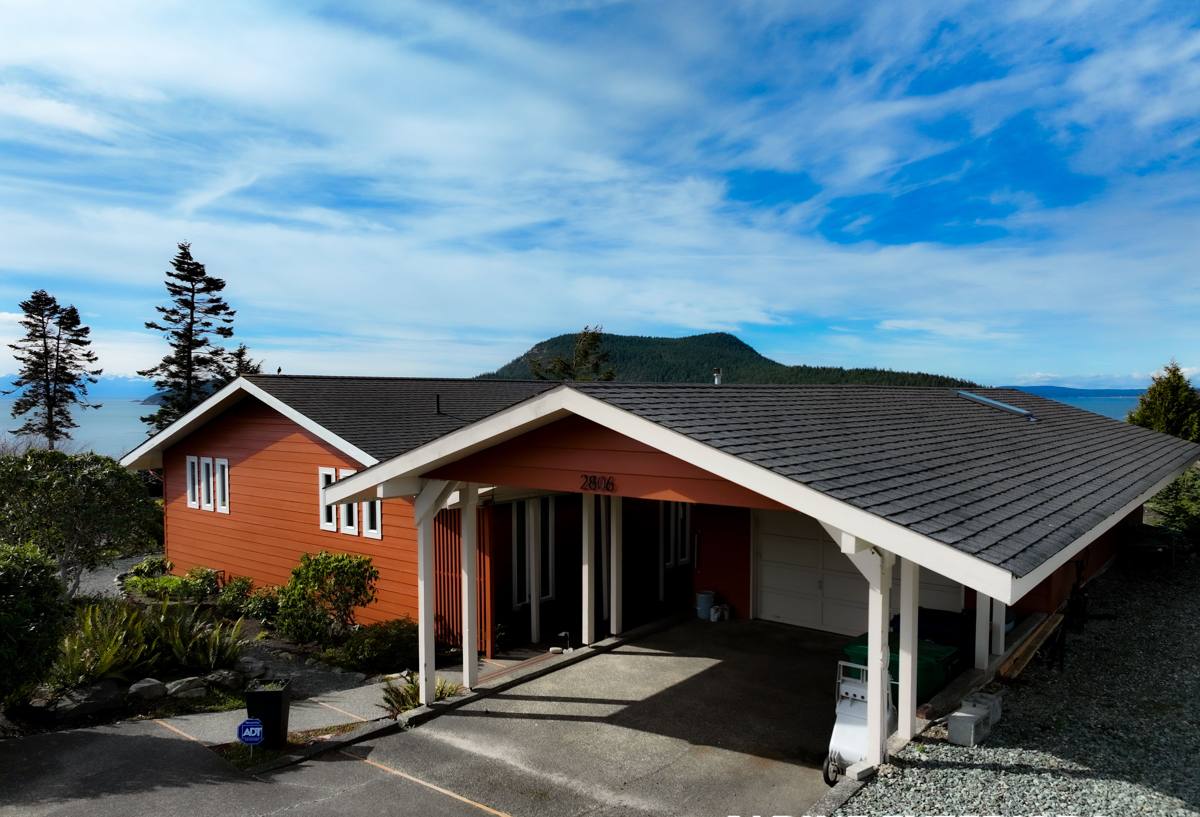
Siding That Actually Holds Up
Siding is the single largest exterior surface on most homes, and it's the first line of defense against everything described above. It's also where we're most particular about what we'll put our name on. Birch Bay Exterior Co installs James Hardie fiber cement siding exclusively. We don't install vinyl, LP SmartSide, or other engineered wood products, and we don't do it because Hardie happens to be convenient — we do it because we've made a professional judgment about what performs over the long run in this climate.
Fiber cement is non-combustible, dimensionally stable, and doesn't feed moisture the way wood-based products can if a seam or cut edge is left exposed. James Hardie's ColorPlus finish is baked on at the factory under controlled conditions, which gives a more consistent, longer-lasting bond than field-applied paint — a real advantage in a climate where paint has fewer dry days to cure properly. Hardie also engineers specific product lines (HZ5 and HZ10) for different climate zones, so the board specified for a Pacific Northwest install is formulated for the moisture and temperature profile we actually get here, not a generic national average.
Why We Don't Install Other Siding Products
Vinyl siding is affordable and low-maintenance in mild climates, but it's a thin, flexible material that can warp under sustained heat and become brittle in a hard freeze, and it relies on overlapping panels rather than a sealed, paintable surface — which matters less where storms are infrequent and more here, where wind-driven rain is routine. LP SmartSide and other engineered wood products use treated wood strand technology that resists moisture better than raw lumber, but they're still wood-based, meaning any breach in the factory coating — a bad cut, a missed caulk joint, a fastener installed wrong — creates a path for moisture absorption and eventual swelling. We're not saying these products fail on every house; we're saying that in a climate that offers this many wet, humid days per year, we don't want to install a product whose long-term performance depends so heavily on flawless field conditions and perfect maintenance follow-through. Fiber cement gives us — and the homeowner — a wider margin for error.
| Material | Moisture Tolerance | Fire Rating | Typical Maintenance |
|---|---|---|---|
| James Hardie fiber cement | High — cement-based, doesn't swell or rot | Non-combustible | Occasional wash; recaulk as needed |
| Vinyl | Moderate — panels can warp or crack over time | Combustible | Low, but panel replacement if damaged |
| LP SmartSide / engineered wood | Moderate — depends on coating integrity | Combustible | Repaint cycle; inspect cut edges and joints |
| Cedar / primed spruce | Lower — natural wood movement | Combustible | Regular repainting/staining and sealing |
Roofing for a Wet, Mossy Climate
Roofs in the Nooksack area do double duty: they shed rain most of the year, and they resist moss growth for the rest of it. A roof system that's right for this area starts with proper ventilation — a roof deck that can't breathe traps moisture underneath the roofing material and shortens its life regardless of what's on top. Underlayment quality matters more here than in drier regions, since it's the backup layer that has to perform when wind-driven rain gets past the primary surface. Flashing at valleys, chimneys, and roof-to-wall transitions is where most leaks actually originate, and it's also the detail most often shortcut on a rushed job. We pay close attention to ventilation, underlayment, and flashing on every roofing project, not just the visible shingle or panel layer.
Moss management is part of the conversation too. Keeping gutters and valleys clear, trimming back overhanging branches where possible, and choosing roofing materials and colors that don't hold moisture as readily all extend the life of a roof in a shaded, humid setting like a river valley.
Windows That Seal Against Driving Rain
Window failures in this climate are almost always about the installation, not just the window unit itself. A quality window can still leak if the flashing sequence around the rough opening isn't done correctly, or if sealant is used as a substitute for proper flashing rather than a supplement to it. We install windows with attention to the full water-management sequence — housewrap integration, sill pans, and flashing tape sequenced so water is always directed outward, never trapped behind the frame. In a climate with sustained wind-driven rain, that sequencing is the difference between a window that performs for decades and one that starts showing interior staining within a few winters.
Energy performance is also worth factoring in. Nooksack's temperature swings are a bit wider than the immediate coastline, so a properly sealed, well-insulated window assembly pays off in both comfort and heating costs.
Decks Built to Survive Wet Ground and Wet Air
Decks take moisture from two directions in this climate — rain and humidity from above, and dampness from vegetation and ground moisture below, especially on properties near the river or with heavier tree cover. Ledger board attachment and flashing where the deck meets the house is one of the most critical — and most commonly overlooked — details in deck construction; it's also where structural failures and hidden rot most often start. Proper spacing between deck boards allows airflow and drainage instead of trapping standing water, and fastener choice matters in a climate where corrosion-resistant hardware isn't optional. We build decks with drainage, ventilation, and structural connections sized for actual Pacific Northwest conditions, not the minimum code requirement for a drier region.
Why a Local Crew Matters
An exterior contractor based near Birch Bay and working regularly throughout Whatcom County sees the same failure patterns repeatedly — the same flashing shortcuts that lead to rot, the same north-facing walls that never fully dry, the same drainage problems around foundations in low-lying areas near the river. That pattern recognition is hard to replace with a generic national playbook. It also means we're not guessing at material specs; we know which Hardie HZ line and which roofing and window details are appropriate for this specific combination of rainfall, humidity, and temperature swing, and we're a known, reachable business if a warranty question comes up years down the road.
What to Expect When You Work With Us
- An on-site walkthrough and honest assessment of what your exterior actually needs — not an upsell to the most expensive option
- A written estimate that spells out materials, scope, and timeline before any work starts
- Attention to the details that don't show up in photos: flashing, ventilation, fastener spacing, and sealant sequencing
- Straight answers about why we use the materials we use, including where a competitor's cheaper option might be a reasonable choice for a different climate or budget
- A crew that shows up when scheduled and communicates if conditions change the plan
Maintenance That Extends the Life of Your Exterior
Even the best-installed exterior benefits from basic upkeep, especially in a climate that stays wet this much of the year. A little seasonal attention prevents most of the expensive problems we get called out for.
- Clean gutters and downspouts at least twice a year, more often if you're near overhanging trees
- Rinse siding annually to remove pollen, dirt, and early moss or algae growth before it takes hold
- Inspect caulk joints around windows and doors each fall, before the wet season sets in
- Trim vegetation back from siding and roof edges to improve airflow and sun exposure
- Walk the deck each spring checking for soft spots, loose fasteners, or standing water between boards
- Have your roof checked for moss and flashing integrity every year or two, particularly on shaded slopes
Cost Factors to Understand Before You Budget
Every property is different, and we don't quote sight-unseen, but these are the variables that most affect price on exterior projects in this area.
| Factor | Why It Matters |
|---|---|
| Existing damage or hidden rot | Moisture-related repair work discovered during tear-off adds scope that can't be priced until the old material is off |
| House size and complexity | Roof pitch, wall height, and architectural detail affect labor time more than material cost |
| Access and site conditions | Tree cover, slope, and staging space around the home affect how efficiently a crew can work |
| Material selection | Product line, siding profile, and roofing material chosen shift both upfront cost and long-term maintenance |
| Scope bundling | Combining siding, roofing, window, or deck work in one project can reduce overall mobilization costs |
If your home in Nooksack is showing signs of moss buildup, soft trim, drafty windows, or a deck that's seen better days, we'd rather look at it in person than guess over the phone. Reach out for a free, no-pressure estimate — we'll walk the property, tell you honestly what needs attention now versus what can wait, and give you a clear picture of the options before any work begins.