 Birch Bay Exterior
 Exterior Homes in Sumas Face Their Own Set of Challenges
Sumas sits at the far northern edge of Whatcom County, tucked into the Nooksack River lowlands right against the Canadian border. It's a different environment than the beach communities along the water — Sumas is inland, in a river valley surrounded by farmland and foothills, and the exterior of a house there wears down in its own particular way. Salt air isn't the main enemy here the way it is closer to the water. What matters most in Sumas is standing moisture: valley fog that sits low through the fall and winter, heavy rain that drains slowly off flat farmland, and a low-elevation setting that has seen real flooding in past years. Add a long moss season under the tree cover along the foothills, and you've got a climate that's tough on siding, roofing, windows, and decks in ways that are easy to underestimate until the damage is already done.
We've worked on homes throughout Whatcom County, and Sumas properties tend to show a consistent pattern: paint failing early on the north and west-facing walls that stay shaded and damp longest, moss creeping across roof slopes that don't get much sun, window sills that stay soft and swollen from months of condensation and rain, and deck boards that cup or rot faster than homeowners expect. None of that is a sign of a poorly built house — it's just what happens when Pacific Northwest moisture meets ordinary building materials over enough winters. The fix isn't more maintenance, it's choosing materials and installation details that were built to handle it.
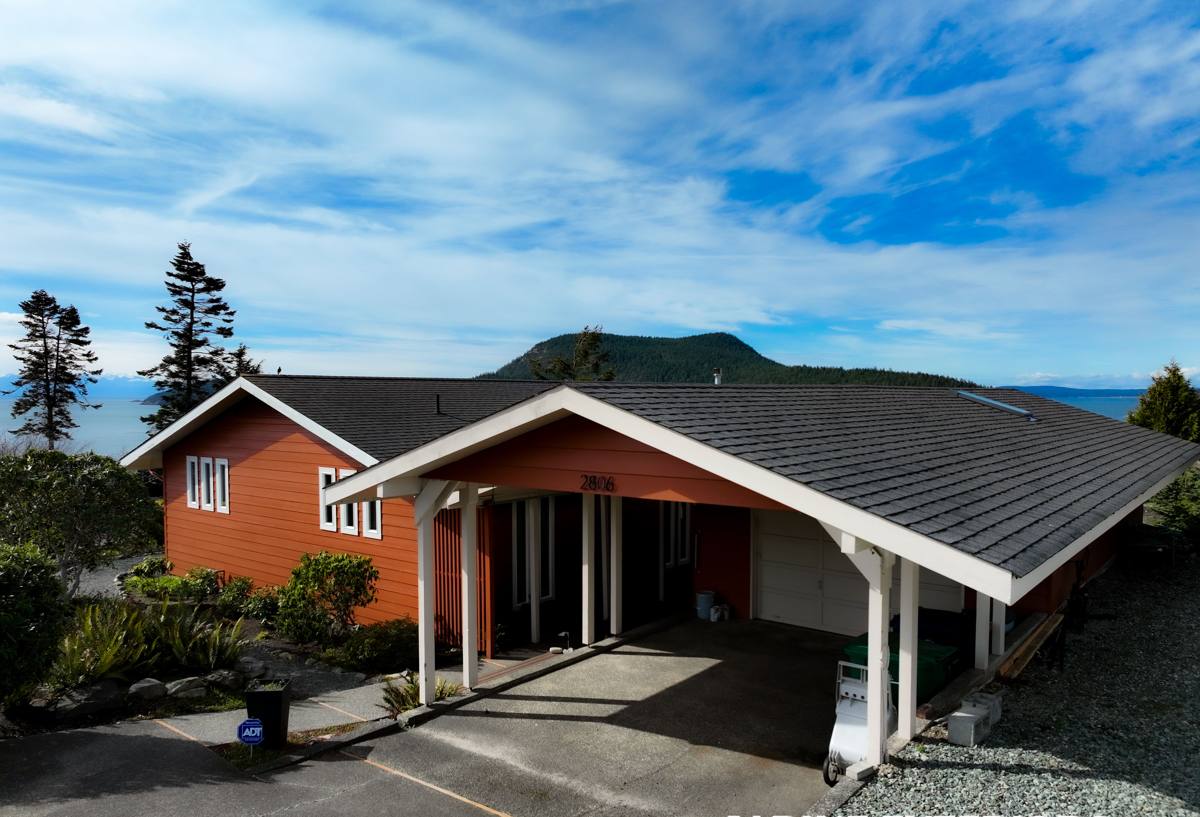
Siding That Actually Holds Up in a Damp River Valley
We install James Hardie fiber cement siding exclusively, and Sumas is a good example of why. Fiber cement doesn't absorb water the way wood-based products do, and it won't swell, delaminate, or feed rot the way engineered wood siding can once moisture works its way behind a seam or a poorly caulked joint. In a valley that holds humidity and fog longer than the coastline does, that difference matters over a ten- or twenty-year timeline, not just in the first few years.
Why We Don't Install Everything on the Market
We get asked from time to time about vinyl, LP SmartSide, or cedar, and we're upfront about why we don't offer them. Vinyl is inexpensive and low-maintenance in a general sense, but it can warp in temperature swings and it doesn't hold paint if a homeowner ever wants to change the color down the road. Engineered wood products like LP SmartSide perform reasonably well when installation is flawless, but they're wood at the core — if water gets past a seam, a fastener, or a cut edge that wasn't properly sealed, the substrate can swell and soften, and that kind of damage is often hidden until it's advanced. Cedar and primed spruce look great on day one but demand a repainting and recaulking schedule that most homeowners don't keep up with, and in a moisture-heavy valley like this one, gaps in that maintenance show up as rot faster than people expect. None of these are bad products in every application — they're just not the standard we're willing to install and stand behind on a house that has to survive Whatcom County winters for decades.
What James Hardie Gets Right
Hardie's fiber cement is non-combustible, dimensionally stable, and available in HZ5 formulations engineered for the freeze-thaw and moisture cycling common to the Pacific Northwest. The ColorPlus factory finish is baked on under controlled conditions rather than field-applied, which means better fade resistance and a finish that isn't dependent on job-site weather the day it's painted. It carries a long transferable warranty on both the substrate and the finish, which matters if a Sumas homeowner ever sells — a fresh Hardie exterior is something a buyer's inspector recognizes and values.
Roofing for Sumas' Wet Winters and Moss Season
Roofs in Sumas deal with a long wet season and, on shaded or tree-lined lots, persistent moss growth that can lift shingles and trap moisture against the roof deck if it's left unaddressed. We look at ventilation, underlayment quality, and flashing details as closely as the shingle or roofing material itself — a roof with weak ventilation will trap warm, moist attic air against the underside of the deck, which accelerates rot and moss growth from the inside out just as much as from the top. Proper drip edge, valley flashing, and step flashing around chimneys and dormers are the details that actually keep water out during a real Whatcom County storm, not just the shingle brand on the label.
Common Roofing Issues We See in the Sumas Area
- Moss buildup on north-facing and shaded slopes that retains moisture against the roof surface
- Undersized or blocked gutters that overflow during heavy rain and back water up under the roof edge
- Poor attic ventilation that traps humid air and accelerates deck rot from underneath
- Worn flashing around chimneys, skylights, and roof-wall intersections
- Granule loss on older asphalt shingles that have gone past their effective lifespan
Windows That Manage Moisture and Cold
Older windows in this part of the county tend to struggle in two ways: they let cold, damp air in during the winter, and they trap condensation between the glass and the frame in ways that eventually rot the surrounding trim and sill. Replacing windows isn't just about energy bills, though that's part of it — it's about cutting off a moisture entry point that, left alone, damages the wall framing around the window over time. We pay close attention to flashing and sealing at the window opening itself, since a poorly flashed window is one of the most common sources of hidden water damage in older homes throughout this region.
Decks Built for a Climate That Doesn't Let Wood Dry Out
A deck in Sumas spends a good part of the year sitting under overcast skies with limited drying time between rain events, especially on the north or east side of a house. That's exactly the environment where standard lumber decking struggles — boards stay damp longer, which accelerates cupping, splitting, and rot at fastener points. We build decks with attention to proper drainage under and around the structure, correct fastener spacing to allow for wood movement, and material choices suited to a long wet season, whether that's a well-treated wood system or a composite product that doesn't absorb moisture the way solid lumber does.
Why a Local Crew Makes a Real Difference
A contractor who works across Whatcom County regularly understands things a national franchise or an out-of-area crew usually doesn't: how far Sumas sits from the coastline versus how it still gets hit hard by inland valley moisture and fog, how the low-lying ground near the river affects drainage around a foundation, and which details actually matter for a house that has to get through a real Pacific Northwest winter every year for decades. That local knowledge shows up in small decisions — flashing details, ventilation choices, fastener selection — that don't show up on a glossy brochure but make the difference between an exterior that lasts and one that needs early repairs.
What to Expect From a Sumas Exterior Estimate
- An on-site walkthrough of your siding, roof, windows, and/or deck with specific attention to moisture entry points
- An honest assessment of what actually needs replacement versus what can be repaired or maintained
- A written, itemized estimate with no pressure to sign on the spot
- A clear explanation of the materials we recommend and why, including why we stand behind James Hardie siding specifically
- A realistic project timeline that accounts for Whatcom County's weather windows
Cost Factors to Understand Before You Budget
| Project | What Drives the Price | What Adds Cost in Sumas Specifically |
|---|---|---|
| Siding replacement | Square footage, number of stories, trim and corner detail | Rot repair to sheathing found once old siding is removed |
| Roof replacement | Roof pitch, square footage, layers to remove | Ventilation upgrades and moss-damaged decking repair |
| Window replacement | Number and size of openings, frame material | Rotted trim or sill repair around older openings |
| Deck build or replacement | Size, height, material choice, railing style | Extra footings or drainage work on lower, damper lots |
These are general factors, not a quote — every property is different, and the only way to get accurate numbers is a walkthrough of your specific house.
Ready to Talk About Your Home?
If you're noticing moss on the roof, paint peeling on a shaded wall, a window that's gone soft at the sill, or a deck that's seen better days, we're happy to take a look. We offer free, no-pressure estimates for homeowners throughout Sumas and the rest of Whatcom County — just fill out the form below and we'll set up a time to walk your property.