 Birch Bay Exterior
 Why Roof Quotes Vary So Much From One Contractor to the Next
If you've collected a few roofing estimates for a home in Birch Bay and found the numbers all over the map, you're not imagining it. Roofing is one of the few home improvement categories where two contractors can look at the same roof and come back with bids that differ by thousands of dollars — and it's not always because one of them is trying to take advantage of you. Roof pricing depends on a stack of variables that aren't visible from the curb: what's under the existing shingles, how the roof deck has held up, how many layers are already up there, and how much of the substrate needs to be replaced rather than just covered.
The goal of this page isn't to hand you a price per square foot — anyone who does that before walking your roof is guessing. It's to walk through the actual factors that drive roofing costs up or down here in Whatcom County, so you can look at a written estimate and understand what you're paying for, and ask better questions when something looks off.
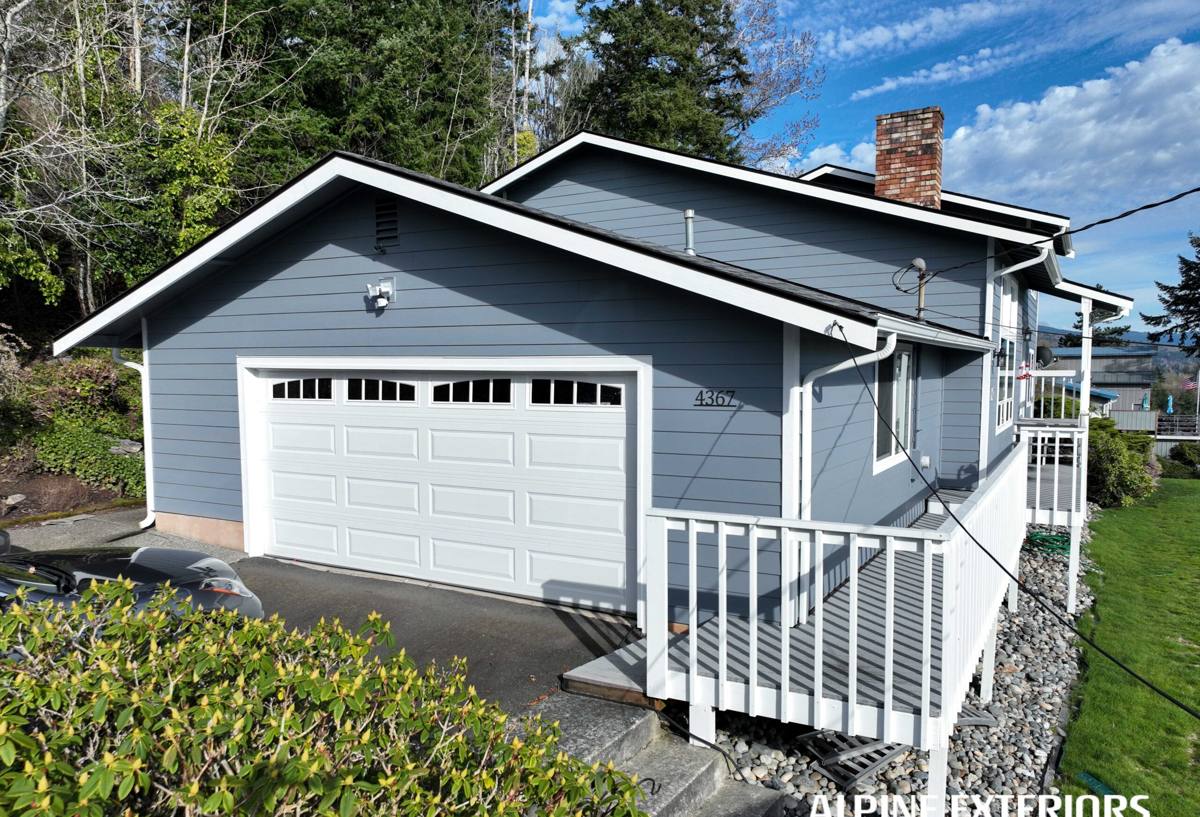
The Core Cost Drivers on Any Roofing Job
Roof Size, Pitch, and Complexity
A simple gable roof with a 4/12 pitch and no obstructions is the cheapest shape to roof — the crew can walk it safely, materials go on fast, and there's little cutting and flashing work. Add a steep pitch, multiple valleys, dormers, skylights, chimneys, or a walk-out deck below, and labor time climbs fast. Steep-slope roofs also require additional fall-protection setup, which is a real cost, not padding.
Tear-Off vs. Layover
Washington building code generally limits roofs to two layers of shingles, but even where a layover is technically allowed, it's rarely the right call. Layering traps moisture between layers, hides the condition of the deck, and voids most manufacturer warranties. A full tear-off costs more up front — disposal, dump fees, and extra labor — but it's the only way to actually inspect and fix the plywood or OSB decking underneath, which matters enormously in a climate like ours.
Deck Repair
You won't know how much decking needs replacing until the old roofing comes off. Any legitimate contractor will build a per-sheet replacement rate into the contract rather than a vague "if needed" line, so ask for that number up front instead of being surprised mid-job.
Access and Site Conditions
Steep driveways, mature trees over the roof, limited dumpster placement, and multi-story sections all add labor hours. It's not a hidden fee if it's disclosed before the contract is signed — it's just a real cost of your specific property.
Material Choice: The Single Biggest Line Item
| Material | Typical Lifespan | Moss/Algae Resistance | Salt Air Durability |
|---|---|---|---|
| 3-Tab Asphalt Shingle | 15-20 years | Low unless treated | Fair — fasteners are the weak point |
| Architectural (Laminate) Shingle | 25-30 years | Good with algae-resistant granules | Good with stainless or coated fasteners |
| Standing Seam Metal | 40-50+ years | Very good | Depends heavily on coating and fastener spec near the shoreline |
| Cedar Shake | 20-25 years with upkeep | Poor without regular treatment | Moderate — needs consistent maintenance |
| Synthetic/Composite Shingle | 30-50 years | Good | Good, product-dependent |
Architectural asphalt shingles remain the most common choice in this area because they balance upfront cost, lifespan, and moss resistance reasonably well when installed with proper ventilation. Metal roofing costs more initially but spreads that cost over a much longer service life, which matters if you plan to be in the home for decades. Whatever material you choose, ask specifically what fastener material is being used — this is a detail contractors skip over, and it matters more here than in most parts of the country.
What Salt Air Actually Does to a Roof
Birch Bay sits close enough to the water that airborne salt is a real factor in how roofing components age, not just a talking point. Salt-laden air accelerates corrosion on anything metal — nail heads, flashing, drip edge, valley metal, and vent stacks. A roof installed with standard electro-galvanized fasteners near the shoreline can show rust streaking and fastener failure years before an identical roof installed a few miles inland with the same materials. This is why the fastener and flashing spec on your contract is worth more scrutiny than the shingle brand alone — stainless steel or hot-dip galvanized hardware costs a little more but is the right call for anything within a mile or two of the water.
Driving Rain and Roof Detailing
Whatcom County doesn't just get a lot of rain — it gets wind-driven rain that pushes water sideways and upward under normal shingle laps. This is where installation quality matters more than material grade. Roofs that leak in this climate almost never fail because the shingles wore out; they fail at the details — valleys, step flashing against siding, chimney crickets, pipe boots, and the ice-and-water shield membrane at eaves and valleys. A contractor who skimps on self-adhering membrane at vulnerable transitions is setting the roof up for water intrusion regardless of how good the shingle itself is. When you're comparing bids, ask each contractor exactly where they're installing ice-and-water shield and what underlayment they're using across the rest of the field — the difference between a 15-lb felt and a synthetic underlayment is a real cost factor, not just marketing.
Moss Season and Long-Term Maintenance Cost
The long, damp moss season here does more than make a roof look dirty — moss holds moisture against the shingle surface, lifts shingle edges as it grows, and shortens the usable life of a roof that would otherwise perform well. A roof installed without attention to this reality will need more frequent cleaning and, in some cases, premature replacement. A few things reduce this burden:
- Zinc or copper strips near the ridge, which release trace metal ions that inhibit moss and algae growth over the roof's life
- Algae-resistant shingle granules, now standard on most mid- and upper-tier shingle lines
- Adequate roof ventilation, which keeps the deck and shingle underside drier and less hospitable to moss growth
- Keeping overhanging tree limbs trimmed back, which is a maintenance step homeowners control directly
None of these add dramatically to the upfront cost, but skipping them tends to show up as an expense later — either in more frequent moss removal or in a shortened roof lifespan.
Permits, Disposal, and the Costs Homeowners Forget
A proper roofing quote should also account for a few line items that are easy to overlook when you're focused on the material and labor numbers:
- Local building permit fees, which vary by jurisdiction in Whatcom County
- Dump and disposal fees for the torn-off roofing, which scale with the size and number of layers removed
- Ventilation upgrades if the current attic ventilation is inadequate for the new roofing system's warranty requirements
- Code-required upgrades, such as updated flashing details or ice-and-water shield coverage that wasn't required when the home was originally built
A contractor who leaves these off the estimate isn't necessarily saving you money — it usually just means they show up as a change order once the job starts.
A Practical Checklist Before You Sign a Roofing Contract
- Is the tear-off vs. layover decision spelled out, with a per-sheet decking replacement rate included?
- Does the contract specify fastener material — and is it appropriate for a near-shoreline property?
- Where exactly is ice-and-water shield being installed, and what underlayment covers the rest of the roof?
- Is attic ventilation being assessed, not just assumed adequate?
- Are permit fees and disposal costs itemized rather than bundled into a vague total?
- Does the shingle or material warranty require specific installation practices, and will the contractor certify to them?
- Is the contractor licensed and insured in Washington, and can they provide proof without being asked twice?
Your Roof Doesn't Work in Isolation From the Rest of the Exterior
It's worth zooming out for a moment: a roof is one part of a home's exterior envelope, and the same driving rain and salt air that affect roofing decisions affect siding decisions too. Homes in this area with aging or moisture-compromised siding often end up dealing with rot at the roofline, damaged fascia, or water tracking behind trim — problems that get misdiagnosed as roofing issues when the siding is actually the source. When we're on a roof and notice siding that's failing at the transitions, we'll tell you honestly, because the two systems have to work together to keep water out.
This is also why, when siding replacement does come up for a home we're working on, we install James Hardie fiber cement exclusively. It's a non-combustible material engineered for wet coastal climates, it holds its factory ColorPlus finish far longer than repainted wood or vinyl in salt air, and it doesn't have the moisture-related failure points that show up on lower-grade siding products over time. A new roof paired with siding that's failing at the edges is a short-term fix — we'd rather tell you that upfront than sell you a roof and ignore the rest of the envelope.
Getting a Number You Can Actually Trust
The only way to get an accurate cost for your specific roof is a physical inspection — one that looks at the current layers, the deck condition where it's accessible, the ventilation setup, the flashing details, and the roof's exposure to wind and salt air given its position in Birch Bay. Anything else is a rough estimate at best. If you'd like an honest, no-pressure look at your roof and a written breakdown of what it would actually take to do the job right, we're happy to come out and walk it with you — no obligation, no pressure, just straight information.