 Birch Bay Exterior
 Exterior Work in a Community That Sits by Itself
Point Roberts is one of the more unusual addresses in Whatcom County. It sits on the tip of a peninsula that dips south of the Canadian border, which means the only way to drive there is through Canada — and it means every home in Point Roberts is fully exposed to the open water and weather of Boundary Bay and the Strait of Georgia. There's no inland buffer, no row of hills to slow down the wind or soften the salt spray coming off the water. For a home's siding, roof, windows, and trim, that's a tougher assignment than most of Whatcom County ever sees.
Birch Bay Exterior Co works throughout this corner of the county, and Point Roberts homes get the same attention we'd give a job five minutes from our shop. We know the drive is longer and the logistics take more planning — we build that into how we schedule and stage a project so it doesn't become the homeowner's problem.
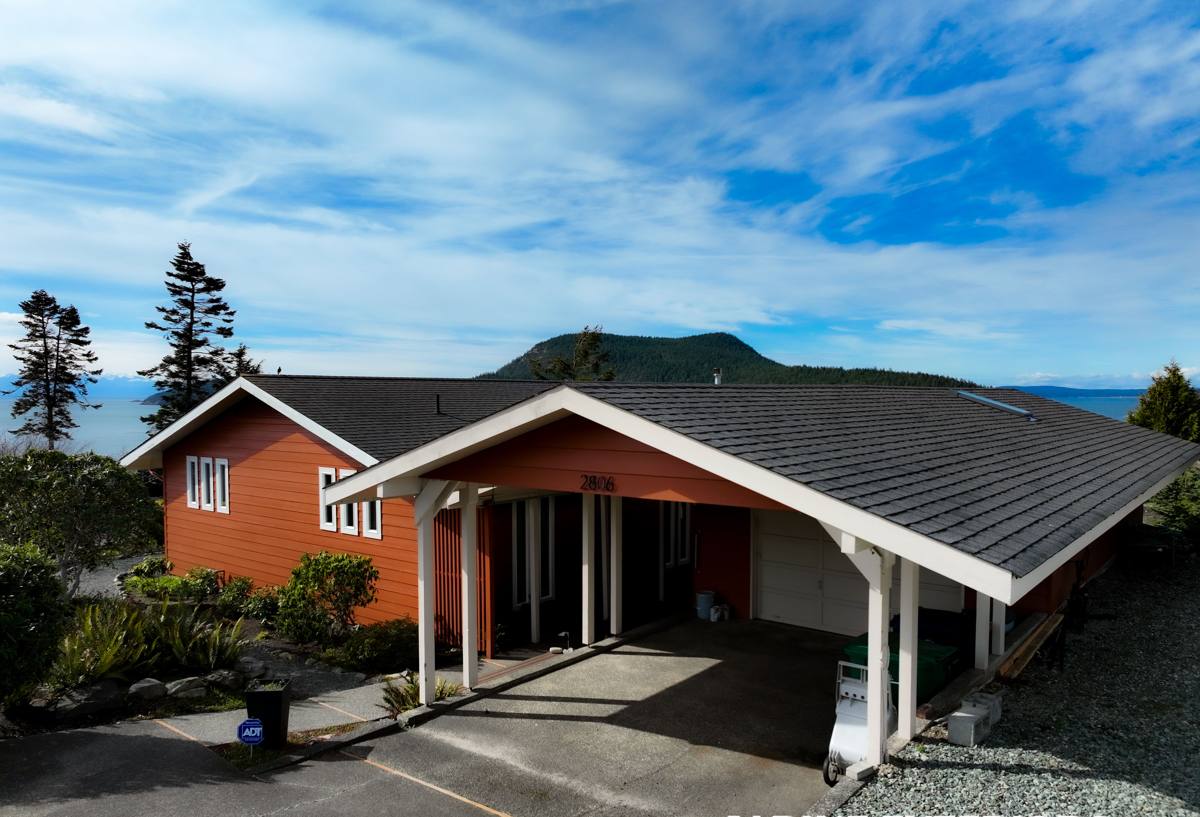
What the Climate Does to a Point Roberts Home
Three things wear down exteriors here faster than in a typical inland Whatcom County neighborhood: salt-laden air, near-constant wind-driven rain, and a moss and mildew season that runs long because the air stays damp for so much of the year.
Salt Air and Wind
Homes close to the water take on airborne salt that settles into every crack, seam, and fastener. Over years, that accelerates corrosion on metal flashing, fasteners, and hardware, and it degrades paint and caulking faster than a home set back from the shoreline. Combine that with wind that has a long, unobstructed run across the water, and you get driving rain that gets pushed sideways into siding laps, window frames, and roof edges instead of just running straight down.
Moss, Mildew, and Trapped Moisture
Whatcom County's marine climate keeps humidity high for much of the year, and a waterfront or near-waterfront lot like most of Point Roberts holds onto that moisture even longer. Roofs in shaded or north-facing spots grow moss aggressively if they aren't maintained, and siding materials that absorb water — wood, some engineered wood products, even certain fiber cement installed without back-priming and proper flashing — can swell, cup, or start to fail from the inside out long before they look bad from the street.
Siding: Why We Only Install James Hardie
Birch Bay Exterior Co installs James Hardie fiber cement siding exclusively. We don't install vinyl, LP SmartSide, Cemplank, Allura, primed spruce, or cedar. That's a deliberate standard, not a sales pitch, and it comes down to how each of those materials actually performs in a place like Point Roberts.
What We're Not Installing, and Why
Vinyl siding is affordable and easy to install, but it's a thin plastic product that expands and contracts with temperature swings, can crack in impact or in a hard freeze, and offers no real fire resistance. In a wind-exposed coastal spot, seams and panels are also more prone to working loose over time.
Wood products — cedar or primed spruce — look great when new, but wood is organic material in a climate that stays damp for months at a stretch. It needs regular repainting or restaining, it's a food source for moss and mildew, and it's vulnerable to rot at any point where caulking fails or water gets trapped, which is common on wind-driven-rain sites.
LP SmartSide, Cemplank, and Allura are all reasonable engineered products, and we're not here to tell homeowners they're junk. But between wood-strand composite siding (LP) that depends heavily on intact factory coating and correct field sealing to resist moisture, and fiber cement competitors to Hardie that don't offer the same depth of climate-specific engineering or the same factory finish warranty, we made a call: for the moisture load and salt exposure this area sees, Hardie's combination of material science and finish system is the one we're willing to put our name behind.
What James Hardie Gets Right for This Site
James Hardie fiber cement is non-combustible, doesn't feed moss or mildew the way wood does, and holds paint and color far longer because the color is baked into the product at the factory under Hardie's ColorPlus finish — not brushed on in the field where weather and prep quality vary. Hardie also engineers specific product lines (their HZ5 designation) for harsher climates, which matters on a site that takes wind and moisture from every direction. Installed correctly — proper clearances, flashing, and fastening for a coastal, wind-exposed lot — it's a siding system built to handle exactly the conditions Point Roberts throws at a house.
Roofing in a Wind-and-Moss Climate
A roof here does two jobs: shed heavy, wind-driven rain without letting water find a way under the shingles at the edges and penetrations, and resist moss long enough that homeowners aren't fighting it every season. We look closely at underlayment quality, flashing detail at valleys and penetrations, and ventilation, since a roof that traps moisture in the attic invites the same mildew problems the exterior is already fighting. Ridge and hip lines exposed to open wind also need fastening and material choices that won't lift or lose granules prematurely.
Moss Management
Moss isn't just cosmetic — left alone, it holds moisture against roofing material and shortens its life. Zinc or copper control strips, periodic cleaning, and keeping overhanging vegetation trimmed back all help, and it's worth building moss prevention into any reroof plan for a shaded or north-facing section of a Point Roberts home.
Windows: Sealing Out Wind-Driven Rain
Wind-driven rain finds weak points in window installations that would never be a problem in a calmer setting — a slightly under-sealed nailing flange, a missed flashing lap, a gap in the sill pan. On an exposed lot, those small gaps become active leak points. We pay particular attention to flashing sequence and sealant quality on window replacements here, and we talk with homeowners about upgrading to units with better performance ratings when an exterior remodel is already opening up the wall.
Decks: Built for Water, Wind, and UV
A deck on a coastal Point Roberts lot deals with salt air, standing moisture, and often more direct sun exposure than an inland yard shaded by trees. Fasteners and hardware need to be corrosion-resistant, framing needs real ventilation underneath to keep it from staying wet, and decking material — whether wood or composite — needs to be a good match for a site that alternates between soaked and sun-baked. We build in proper drainage and flashing at the ledger board connection, which is one of the most common failure points on any deck, coastal or not.
Cost Factors for Exterior Work in Point Roberts
| Factor | Why It Matters Here |
|---|---|
| Site access and logistics | Material and crew travel through the border crossing add planning time; we schedule to minimize trips and delays |
| Wind exposure of the specific lot | Waterfront-facing sides often need extra attention to flashing and fastening detail versus a sheltered side |
| Existing moisture damage | Hidden rot or trapped moisture behind old siding or around old window openings can add scope once uncovered |
| Roof pitch, shading, and moss history | Shaded, moss-prone roof sections may need extra prep or moss-control materials |
| Material choice | Hardie fiber cement siding costs more upfront than vinyl but is engineered for this exposure and holds its finish far longer |
Why a Local Crew Matters Here
Point Roberts isn't a place where a contractor can swing by casually to check on a problem. The border crossing adds real time to every trip, so the work needs to be planned and staged properly the first time — the right materials on site, the right sequence, and a crew that understands what a wind-and-salt environment does to an exterior before they ever pull a nail. Birch Bay Exterior Co serves this area regularly enough to know what to expect on a Point Roberts job, not treat it as an unfamiliar one-off.
What to Check Before Hiring Anyone for Exterior Work Here
- Ask whether they've worked on Point Roberts or other exposed waterfront sites in Whatcom County before
- Confirm they carry proper licensing and insurance for Washington State work
- Ask specifically how they detail flashing and fastening for wind-driven rain, not just general workmanship
- Get a clear material spec in writing — brand, product line, and finish, not just "siding" or "roofing"
- Ask how they plan logistics and scheduling given the border crossing, so there are no surprise delays
- Check that any warranty covers both material and labor, and get the terms in writing
How We Approach a Point Roberts Project
We start with an honest look at the house — what the current siding, roofing, windows, or decking are actually doing, where moisture has already gotten in, and what the specific exposure of that lot calls for. From there we put together a plan and a material spec, and for siding that means James Hardie fiber cement matched to the right HZ product line for a coastal, wind-exposed site. We're upfront about what's involved, including the added logistics of working in Point Roberts, so there aren't surprises mid-project.
If you own a home in Point Roberts and want a straight answer about what your siding, roof, windows, or deck actually need, we're glad to take a look. Fill out the form below for a free, no-pressure estimate.