 Birch Bay Exterior
 Building for Life on Lummi Island
Lummi Island sits out in the salt water of Whatcom County, reached by a short ferry crossing rather than a bridge, and that fact alone shapes how homes there need to be built and maintained. Everything that touches this island — building materials, contractor crews, delivery trucks — has to cross that water, which means scheduling and logistics matter more here than in a typical mainland neighborhood. Homes on Lummi Island also sit closer to open marine exposure than most properties around Birch Bay, with wind and salt spray coming straight off Rosario Strait and the Strait of Georgia. That combination of isolation and exposure is exactly why an exterior contractor who already knows the island — its ferry schedule, its microclimates, its housing stock — is worth more here than a crew that's never made the crossing.
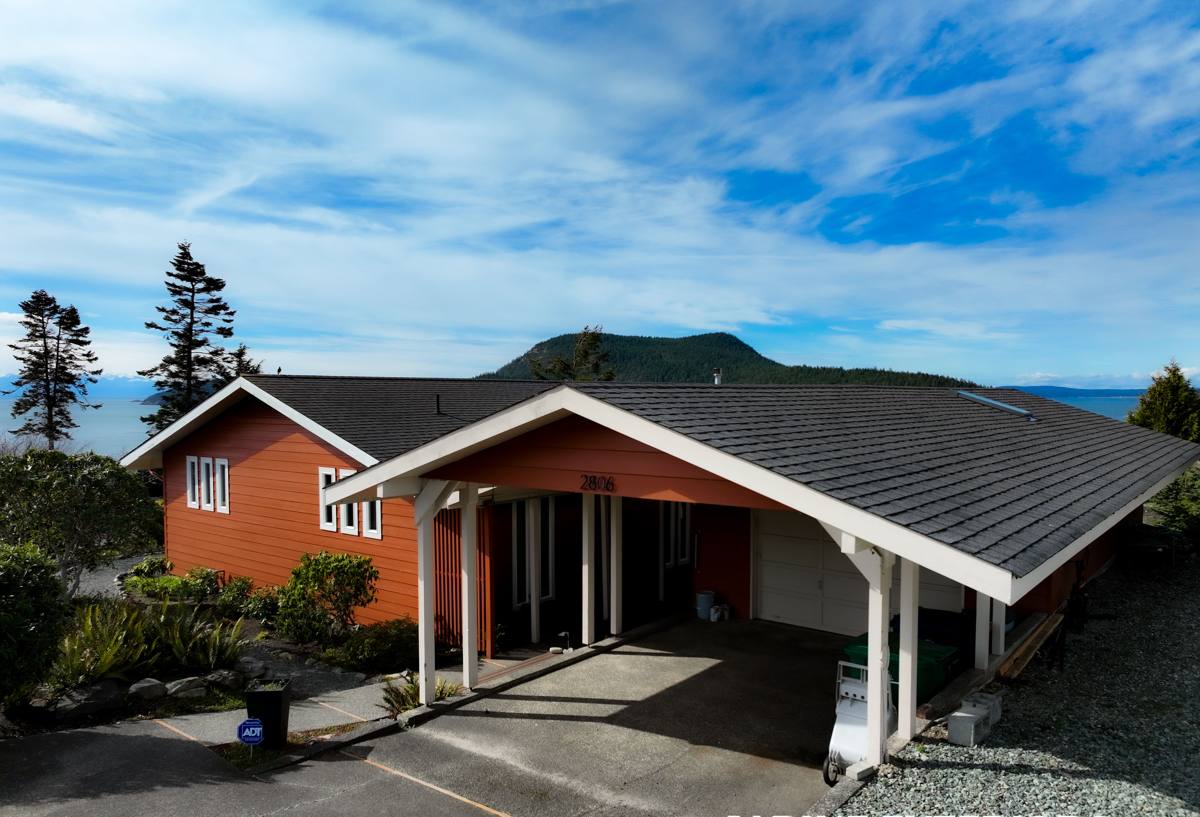
What the Climate Does to a Lummi Island Home
Salt air is the defining factor. Airborne salt settles on every exterior surface, and over years it accelerates corrosion of fasteners, trim, and unprotected wood, and it breaks down finishes that aren't built to handle it. Combine that with Whatcom County's long, wet fall-through-spring stretch — driving rain, persistent cloud cover, and short winter days that barely let anything dry — and you get an environment where moisture sits on siding, roofing, and deck surfaces for months at a time.
Add tree cover and shaded north walls, both common on Lummi Island lots, and you get a long moss and algae season. Moss doesn't just look bad — it holds moisture against whatever it's growing on, and on roofing in particular it can work its way under shingles and shorten the life of the roof system if it's never addressed.
- Salt-laden wind accelerates corrosion on fasteners, flashing, and trim
- Prolonged damp season keeps exterior surfaces wet longer than drier inland areas
- Shade and tree cover extend moss and algae growth well beyond a typical season
- Wind-driven rain tests every seam, joint, and window opening on exposed elevations
- Limited daily sun exposure slows drying time after storms
Siding That Actually Holds Up to Marine Exposure
We install James Hardie fiber cement siding exclusively, and on an island property that decision matters more than it does most places. Fiber cement doesn't rot, it isn't a food source for moss and mildew the way wood is, and it's non-combustible — a real consideration for a property where fire response has to cross water. Hardie's ColorPlus factory-applied finish is baked on under controlled conditions, which means it resists the fading and chalking that salt air and UV exposure cause on field-applied paint over time.
We also use Hardie's HZ5 product line where a home's exposure calls for it — engineered for regions with higher moisture and freeze-thaw cycling, which fits the marine belt around the San Juan and Gulf Islands corridor that Lummi Island sits in. Correct installation matters as much as the product itself: proper flashing, correct fastener spacing, and gapped joints sealed the right way are what keep water from ever getting behind the siding in the first place. That installation discipline is where a lot of siding failures actually start, regardless of brand.
Siding Material Comparison for a Marine Climate
| Material | Salt Air Behavior | Moisture/Moss Resistance | Long-Term Upkeep |
|---|---|---|---|
| Vinyl | Can become brittle and fade faster under coastal UV and salt exposure | Doesn't rot but traps moisture behind panels if installed loose | Low labor, but panels crack and warp over time |
| Cedar / primed wood | Salt accelerates weathering of finishes | Organic material — feeds moss and mildew directly | Frequent repainting and moss treatment required |
| LP SmartSide (engineered wood) | Factory treatment helps but cut edges are vulnerable | Wood-based core is moisture-sensitive if seals fail | Edge sealing and caulk maintenance are critical |
| James Hardie fiber cement | Non-organic, stable under UV and salt exposure | Doesn't feed moss or rot from moisture exposure | Occasional wash-down; factory finish holds color for years |
Roofing for an Island Property
Roofing on Lummi Island has to do two jobs at once: shed a lot of rain and shrug off moss. We look at ventilation, underlayment, and flashing details as closely as the roofing material itself, because a roof that traps moisture underneath will fail from the inside regardless of what shingle sits on top. Where tree cover creates a heavy moss environment, we talk through moss-resistant roofing options and realistic maintenance intervals rather than pretending any roof up here will stay moss-free without attention.
Flashing around chimneys, skylights, and roof-to-wall transitions is where most leaks actually start on homes exposed to driving, wind-blown rain — those are the details we check first on any roofing job, new install or repair.
Windows That Seal Out Wind-Driven Rain
On exposed elevations facing open water, rain doesn't fall straight down — it drives sideways under wind pressure, which means window flashing and sealing have to be done correctly the first time. Poorly flashed windows are one of the most common sources of hidden water intrusion we find behind siding and interior walls on coastal properties. When we replace windows, we treat the flashing and integration with the surrounding siding as part of the same system, not a separate trade working in isolation — because on this kind of exposure, that's exactly where failures happen.
Decks Built for Salt Air and a Long Wet Season
Decks on Lummi Island take a beating from two directions: salt air corroding fasteners and hardware, and a long damp season that keeps deck boards wet longer than they'd stay on a drier, more sheltered lot. We use fasteners and hardware rated for coastal/marine exposure, and we pay attention to airflow underneath the deck structure so boards actually get a chance to dry between rain events instead of sitting damp for weeks at a stretch.
Why a Local Birch Bay Crew Matters on the Island
Working on Lummi Island means working around a ferry schedule, which means material deliveries, crew arrival, and daily logistics all have to be planned differently than a job on the mainland. A crew that's made the crossing before knows how to stage materials, batch trips, and keep a project moving without losing days to missed sailings. We're based out of Birch Bay and already familiar with Whatcom County's coastal conditions broadly, which means we're not learning the island's climate and logistics for the first time on your project.
Being a local, known crew also matters for warranty follow-through. If something needs a look years down the road — a flashing detail, a seam, a section of trim — you want a contractor that's still reachable and still local, not one that came from out of the area for a single job and is gone.
What to Expect From a Lummi Island Project
- An on-site walk-through to assess wind exposure, shade, and moisture patterns specific to your lot
- A materials and delivery plan that accounts for ferry scheduling
- Flashing and sealing details treated as a system across siding, windows, and roofing
- Marine-rated fasteners and hardware on decks and exterior trim
- A realistic maintenance plan for moss and algae given the tree cover and shade on your property
Cost Factors for Exterior Work on Lummi Island
Every property is different, but a few factors consistently affect scope and cost for island projects specifically:
| Factor | Why It Matters |
|---|---|
| Ferry and delivery logistics | Material staging and trip planning add coordination time compared to mainland jobs |
| Exposure level of the site | Homes with direct water-facing elevations need more attention to flashing and fastener selection |
| Existing moisture damage | Long-term moss or trapped moisture can mean repair work is needed before new material goes on |
| Tree cover and shade | Affects material choice and the maintenance plan going forward |
| Access to the property | Narrower island roads and lots can affect equipment and staging options |
Maintenance That Actually Fits This Climate
A maintenance plan that works fine in a drier, more open part of Whatcom County often isn't enough on Lummi Island. We tell homeowners here to expect more frequent moss checks on shaded roof sections and north-facing siding, periodic gutter clearing given the tree cover common on the island, and a visual check of fastener and flashing points after major storm seasons. None of that requires a full crew visit every time — but knowing what to look for, and catching small issues before they become water intrusion, is what keeps an exterior lasting as long as it should in this environment.
If you own a home on Lummi Island and want a straightforward look at your siding, roofing, windows, or deck, we're happy to come out for a free, no-pressure estimate — ferry schedule included in the planning, not an afterthought.