 Birch Bay Exterior
 Building for Point Whitehorn's Coastline
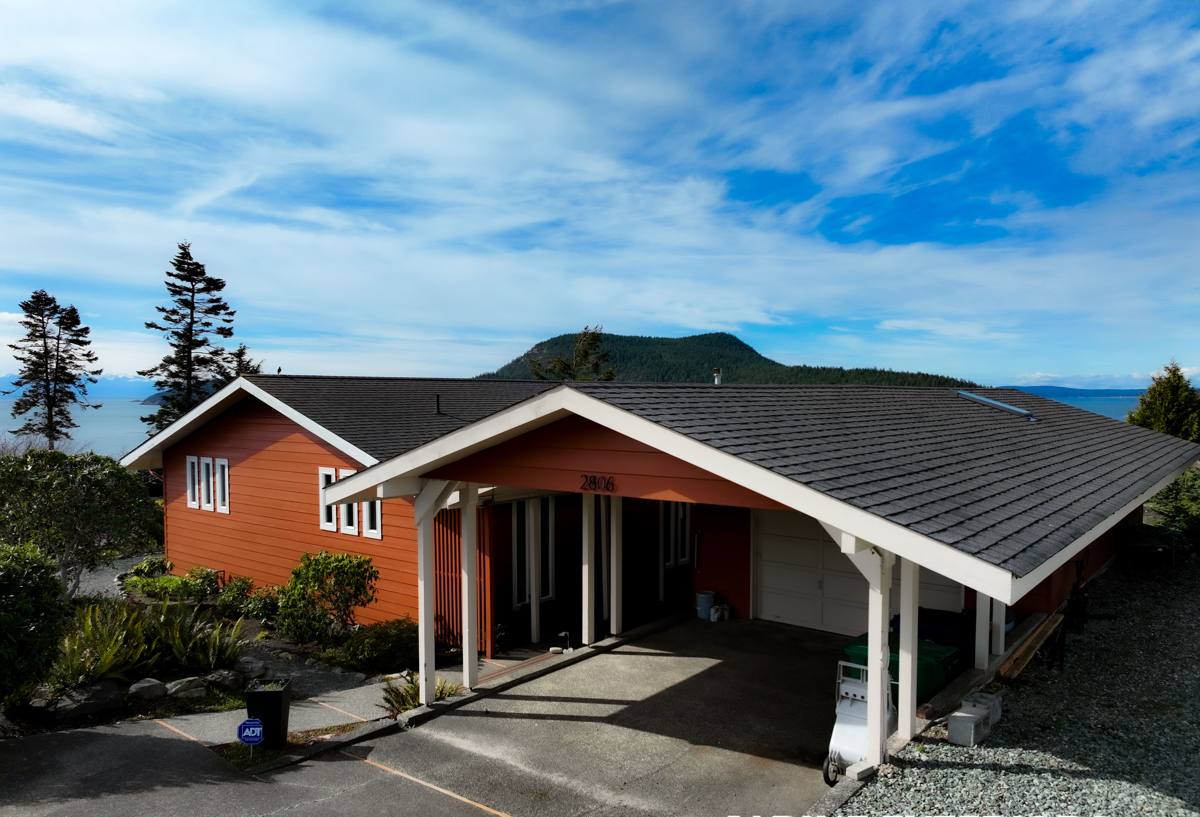
Point Whitehorn sits along one of the more exposed stretches of Whatcom County shoreline, where homes face Georgia Strait weather with little in the way of windbreaks. If you own a home out here, you already know the drill: the wind off the water carries salt, the rain shows up sideways more often than straight down, and the tree cover that shades the property most of the year also keeps everything a little damper than it should be. Exterior materials that work fine twenty miles inland in Bellingham or Ferndale don't always hold up the same way once they're facing open water.
Birch Bay Exterior Co. works this stretch of coastline regularly, and Point Whitehorn is part of our normal service area, not a special trip. We know which sides of a house catch the worst of the weather here, where moss tends to establish first, and what kind of detailing actually keeps water out of a wall assembly in a spot like this.
What the Climate Actually Does to a House Here
Salt Air and Metal Fatigue
Airborne salt is corrosive to anything metal on the exterior of a house — fasteners, flashing, gutter hangers, hinges, and trim accessories. Over years, cheaper or improperly rated hardware starts to rust and stain the surrounding siding or trim, even when the siding itself is fine. This is one of the first things we check on any Point Whitehorn property: whether the fasteners and flashing used in a prior install were actually rated for a marine-exposure environment, or whether standard interior-grade hardware got used because it was cheaper or more convenient.
Driving Rain and Wall Assemblies
Wind-driven rain doesn't just fall on a house, it gets pushed sideways into laps, seams, and penetrations. A wall system that isn't detailed correctly — proper house wrap, flashing at every window and door, correct lap spacing on siding — will eventually let water behind the cladding even if the siding material itself is water-resistant. Once moisture gets behind the siding on a home exposed to this kind of weather, it doesn't dry out quickly, and that's when you start seeing sheathing rot, trim failure, and interior staining that has nothing to do with a leaky roof.
Moss and the Long Wet Season
Whatcom County's wet season runs long, and Point Whitehorn's tree cover and coastal humidity extend it further. Moss and algae growth on roofing, north-facing siding, and shaded trim isn't just cosmetic — moss holds moisture against a surface for months at a time, which accelerates wear on roofing materials and can degrade paint and caulking on lower-grade siding products faster than manufacturers' warranties assume.
Siding: Why We Only Install James Hardie
Birch Bay Exterior Co. installs James Hardie fiber cement siding exclusively. We don't offer vinyl, LP SmartSide, Cemplank, Allura, primed spruce, or cedar as options, and that's a deliberate standard, not a lack of familiarity with the alternatives. In a location like Point Whitehorn, the trade-offs of those other products show up faster and more visibly than they would somewhere more sheltered.
Where Other Products Fall Short Here
- Vinyl siding can warp or distort in sustained wind exposure and doesn't stand up to salt air discoloration the way a factory-finished fiber cement product does. It also has seams and expansion joints that give wind-driven rain more opportunities to work behind the cladding.
- LP SmartSide and other wood-strand products are engineered wood — they perform well in many climates, but engineered wood is still wood, and wood-based sidings are more sensitive to sustained moisture exposure than cement-based products. In a high-humidity, long-wet-season environment, that sensitivity matters more.
- Primed spruce and cedar require the most ongoing maintenance of any siding option — regular repainting, caulking, and moisture monitoring. On a shoreline property where salt and moisture are already working against the finish, that maintenance burden compounds quickly.
- Cemplank and Allura are also fiber cement products, and they're not bad materials — but we've standardized on one manufacturer's system so our crews install one product to one spec every time, and we stand fully behind the ColorPlus factory finish and warranty structure James Hardie backs its products with.
What James Hardie Gets Right for This Location
James Hardie fiber cement is non-combustible, dimensionally stable, and available in HZ5 formulations engineered for wetter, harsher climates like the Pacific Northwest coast. The ColorPlus factory-applied finish is baked on under controlled conditions, which gives it better fade and moisture resistance than field-applied paint, and it carries a strong transferable warranty. None of that replaces correct installation — flashing, fastening, and lap detail still have to be right — but it gives us a material that's actually built for the environment Point Whitehorn homes sit in.
Roofing for Wind, Rain, and Moss Exposure
Roofing on a Point Whitehorn home has to handle sustained wind uplift, heavy driving rain, and long-term moss pressure all at once. We pay particular attention to a few things on coastal roofs in this area:
- Fastener and flashing corrosion resistance, given the salt exposure
- Proper ventilation to reduce the moisture buildup that feeds moss and algae growth
- Ice-and-water shield and underlayment detail at valleys and eaves, where wind-driven rain concentrates
- Edge and ridge detailing that's built to hold up under sustained coastal wind rather than just average regional wind loads
Roof replacement timelines vary a lot depending on prior material, install quality, and how much moss and shade a particular roof has dealt with over the years — we'll give you a straight assessment of where your roof actually stands rather than a generic estimate based on age alone.
Windows: The Weak Point in Most Older Homes
Windows are one of the most common failure points we find on older Point Whitehorn homes. Wind-driven rain finds gaps in aging window flashing and seals faster than it finds gaps almost anywhere else on a house, and once water gets behind a window frame, it can travel into the wall cavity before it ever shows up as a visible interior stain. When we replace windows, we're just as focused on the flashing and sealing detail around the opening as we are on the window unit itself — a good window installed with bad flashing will leak just as much as a bad window.
Decks: Built for Sustained Outdoor Exposure
Decks in this part of Birch Bay take a beating from the same conditions as the rest of the house — salt air, sustained moisture, and moss buildup on any shaded or low-airflow section. We build and repair decks with attention to structural fastener corrosion resistance, proper drainage away from the house, and material choices that hold up to repeated wet-dry cycling rather than just looking good on installation day.
Cost Factors to Expect
| Project | What Drives the Cost | Coastal-Specific Factor |
|---|---|---|
| Siding replacement | Home size, trim complexity, existing wall condition | Sheathing repair if moisture has already gotten behind old siding |
| Roof replacement | Roof size, pitch, layers to remove | Corrosion-resistant fastener and flashing upgrades |
| Window replacement | Number and size of openings, frame material | Flashing and re-sealing detail around each opening |
| Deck build or repair | Square footage, decking material, structural condition | Fastener grade and drainage detailing |
These are the factors that move a bid up or down — we'll walk your specific property with you and explain exactly what we're seeing before we put a number in front of you.
Why a Local Crew Matters Out Here
A crew that mostly works inland jobs doesn't necessarily think about salt-rated fasteners or coastal flashing detail as a default — it's an extra consideration for them. For us, working Point Whitehorn and the rest of the Birch Bay shoreline regularly, it's the baseline we build to every time. That familiarity shows up in small decisions on a job site: which hardware gets pulled off the truck, how flashing gets lapped at a window, where extra attention goes on a roof valley. Those are the details that determine whether an exterior actually performs here for the next fifteen or twenty years.
What to Check Before You Hire
- Is the contractor actually licensed and insured to work in Washington, and can they provide proof without hesitation?
- Do they specify corrosion-resistant, marine-rated fasteners and flashing for coastal work, or is that an upcharge you have to ask for?
- Can they explain their siding manufacturer's warranty terms clearly, including what's covered and what voids it?
- Do they inspect and address existing moisture or rot damage before covering it up with new material?
- Will they give you a written, itemized estimate rather than a rough verbal number?
If you're weighing a siding, roofing, window, or deck project for a home in Point Whitehorn, we're glad to come take a look and give you a straightforward, no-pressure estimate based on what your property actually needs. There's a form below — reach out and we'll get a time on the calendar.