 Birch Bay Exterior
 Living in Terrell Creek: What the Climate Does to a Home's Exterior
Terrell Creek sits in that stretch of Whatcom County where the marine air off Birch Bay meets the low, wooded drainage around the creek itself. It's a beautiful place to live, but it's not an easy place to be a house. Homes here deal with a combination most inland Washington neighborhoods never see: salt-laden air rolling in off the water, wind-driven rain that finds every gap in a building envelope, and a long, damp shoulder season where surfaces just don't dry out. Add the shade and moisture the creek corridor holds onto, and you've got ideal conditions for moss, algae, and slow-moving rot to take hold on anything that isn't built and installed to handle it.
We've worked on enough homes in this corridor to know the failure points aren't dramatic — they're slow. A little bit of moisture behind trim that never fully dries. Caulk that failed two summers ago and nobody noticed. Moss holding water against a roof valley through an entire winter. By the time it shows up as a stain on a ceiling or a soft spot on a wall, the damage has usually been building for years. Good exterior work in Terrell Creek isn't about picking pretty materials — it's about managing water and salt air correctly from the start.
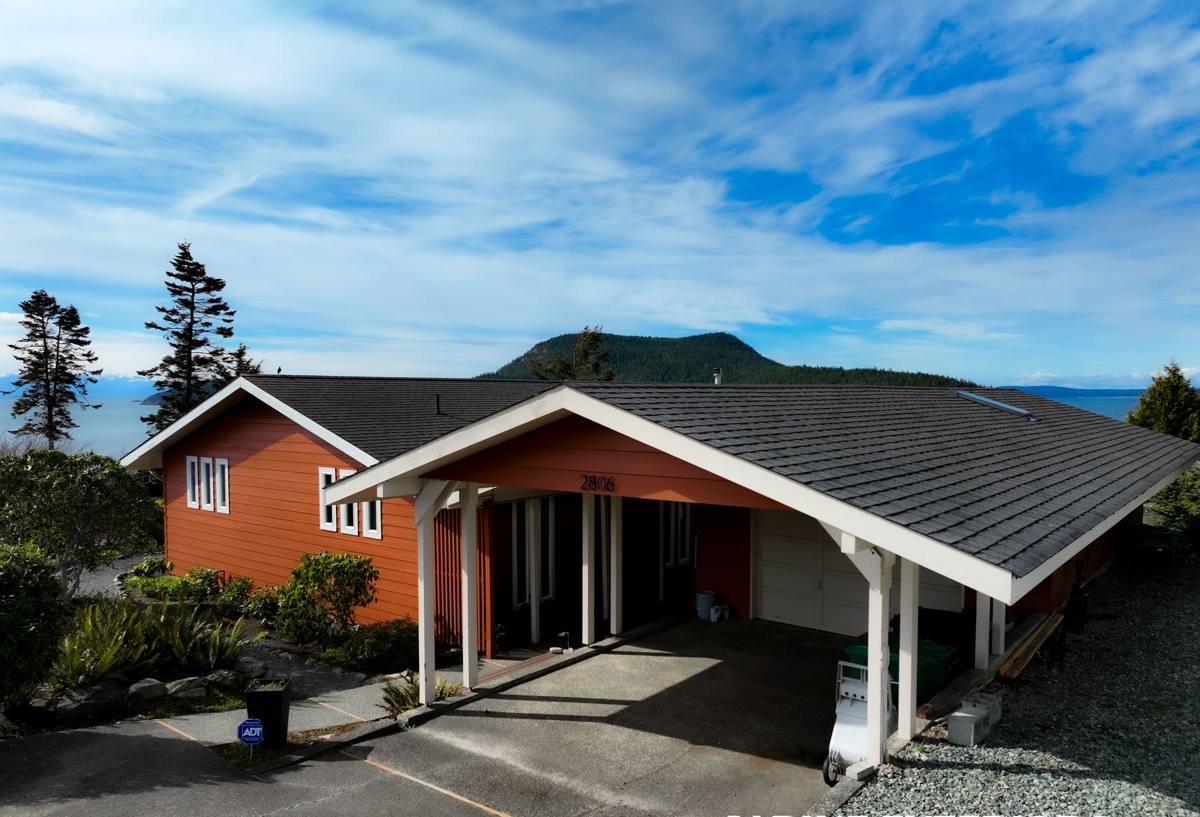
Siding: Why We Only Install James Hardie
Birch Bay Exterior Co installs one siding product: James Hardie fiber cement. That's a deliberate decision, not a limitation of what we're capable of installing. We used to work with other materials, and we still see plenty of them on homes we're called out to repair. What we learned, especially in salt-air, high-moisture areas like Terrell Creek, is that the material matters more than almost anything else in how long a siding job actually lasts.
What we won't install, and why
Vinyl siding is affordable and low-maintenance in the sense that it doesn't need painting, but it's a thin plastic product that expands, contracts, and can warp or crack in temperature swings and wind events. In a coastal wind corridor, that flexibility works against you over time, and vinyl doesn't add any real structural rigidity to a wall.
LP SmartSide and similar engineered wood products perform reasonably well when everything goes right, but they're wood-based, which means the seams, cut edges, and any place the factory coating gets breached are vulnerable to moisture intrusion. In a climate where surfaces stay damp for weeks at a stretch, that's a real long-term liability.
Primed spruce and cedar are traditional, and cedar in particular has genuine appeal — but both require an ongoing maintenance commitment (staining, sealing, repainting) that most homeowners underestimate when they choose it, and both are more susceptible to moss, mildew, and rot in a shaded, damp corridor like Terrell Creek.
What Hardie gets right
James Hardie fiber cement is non-combustible, dimensionally stable, and doesn't feed moss and mildew the way wood-based products can. It's engineered specifically for climate zones — the HZ5 product line is built for the kind of freeze-thaw and moisture cycling the Pacific Northwest sees. The ColorPlus factory finish is baked on under controlled conditions, which holds up far better against UV and salt exposure than field-applied paint, and it carries a strong transferable warranty that follows the house, not just the original owner.
None of this means Hardie is maintenance-free — it still needs proper caulking, flashing, and periodic cleaning like any siding. What it means is that when it's installed correctly, it gives Terrell Creek homeowners a genuinely long runway before they have to think about their siding again.
Comparing Siding Materials for a Coastal Whatcom County Home
| Material | Moisture Resistance | Maintenance | Typical Lifespan Here |
|---|---|---|---|
| James Hardie fiber cement | Excellent — doesn't absorb or swell | Occasional wash, recaulk as needed | 30+ years with correct install |
| Vinyl | Fair — seams and edges vulnerable to wind-driven rain | Low, but limited repair options | 15–25 years, shorter in high wind |
| LP SmartSide / engineered wood | Good if coating stays intact; edges are weak points | Moderate — inspect seams and cuts regularly | 15–25 years, variable |
| Cedar / primed spruce | Poor to fair without diligent upkeep | High — staining/sealing every few years | 10–20 years without strict maintenance |
These are general ranges based on how these materials typically perform in a marine, moisture-heavy environment — actual results depend heavily on installation quality, exposure, and upkeep.
Roofing for Terrell Creek Conditions
A roof in this part of Whatcom County is fighting moss almost year-round. The combination of shade from the surrounding trees, near-constant humidity off the bay, and long stretches without a hard freeze to knock growth back means moss and algae get a real foothold on roofs that don't have good airflow or aren't cleaned periodically. Left alone, moss holds moisture against shingles, lifts tabs, and shortens the life of the roof well before it's structurally due for replacement.
We look at ventilation, flashing at valleys and penetrations, and underlayment quality as much as the shingle or metal product itself. In a wind-and-rain-driven climate, a roof rarely fails because the shingles wore out evenly — it fails because water found one weak seam and worked on it, unnoticed, for a season or two.
What we check on a roofing visit
- Moss and organic growth buildup, especially on north-facing and shaded slopes
- Flashing condition around chimneys, vents, and valleys
- Attic and soffit ventilation — poor airflow accelerates moisture damage from underneath
- Gutter condition and whether water is actually being carried away from the foundation
- Granule loss and any soft spots from prior water intrusion
Windows That Handle Salt Air and Driving Rain
Windows take a beating in this environment in two ways: the seals and frames deal with constant moisture cycling, and salt-laden air accelerates corrosion on hardware and metal components that aren't rated for coastal exposure. Older aluminum-frame windows in particular tend to show pitting and seal failure faster near Birch Bay than they would further inland.
Proper flashing and integration with the surrounding siding matters as much as the window unit itself. A high-quality window installed with poor flashing will leak; a modest window installed correctly, with proper water management around the opening, will outperform it. When we replace windows, we're looking at the whole assembly — frame material, glazing, and how it ties into the wall system — not just the unit in the showroom.
Decks Built for a Damp Climate
Decks in the Terrell Creek area deal with the same moisture load as everything else, plus direct exposure to standing water, freeze-thaw cycling on fasteners, and — if the deck sits under tree cover near the creek corridor — a steady supply of falling debris that traps moisture against the boards. Composite decking has become popular here for good reason: it doesn't require the yearly staining commitment that wood decking does, and it resists the rot and splintering that shaded, damp wood decks are prone to.
Whether composite or wood, the structural framing underneath is where problems actually start. Ledger board attachment, joist protection, and proper drainage away from the house are what determine whether a deck lasts 10 years or 30, regardless of what decking material sits on top.
Signs Your Exterior Needs Attention
- Green or black streaking on siding or roof slopes, especially shaded areas
- Caulk that's cracked, shrunk, or pulled away from trim and window edges
- Soft or spongy spots on decking, especially near ledger boards or post bases
- Peeling paint or bubbling on wood-based siding or trim
- Condensation or fogging between window panes
- Granules collecting in gutters or downspouts
- Musty smell in a room near an exterior wall — often the first sign of hidden moisture
Why a Local Crew Matters
Exterior work in Terrell Creek isn't the same job as exterior work in a dry inland town, and it isn't the same job as exterior work in a heavily exposed, open-water spot either — it's shaded, damp, salt-influenced, and shaped by the creek corridor's own microclimate. A crew that works this specific stretch of Whatcom County regularly knows where moss builds up fastest, which wall orientations catch the worst of the driving rain, and how much lead time to build into a schedule around the wet season. That local knowledge shows up in the small decisions — flashing details, product selection, sequencing — that determine whether a job holds up for one winter or twenty.
It also means accountability. A local company is still going to be down the road next year, and the year after that, if a warranty question or a maintenance issue comes up. That matters more in a climate that tests exterior work as consistently as this one does.
What to Expect When You Work With Us
We start with an honest look at your home's specific exposure — sun, shade, wind direction, and how close you are to the water — because that shapes what actually needs to happen, not just what looks good. From there we talk through materials, realistic timelines, and what the work involves, without pushing a product that doesn't fit the house or the budget. For siding, that conversation always leads back to James Hardie, because it's the only product we're willing to stand behind long-term in this climate.
If you're in Terrell Creek and dealing with siding, roofing, window, or deck issues — or just want an honest read on where your home stands — we're happy to come take a look. The estimate is free, there's no pressure, and you'll walk away with a clear picture of what your exterior actually needs.