 Birch Bay Exterior
 Roofing in Terrell Creek Isn't the Same Job as Roofing Twenty Miles Inland
Terrell Creek sits close enough to Birch Bay and the Strait of Georgia that the air itself works against a roof in ways homeowners further inland rarely deal with. Salt-laden air corrodes exposed metal faster, driving rain off the water finds every weak lap and nail head, and the shaded, moisture-heavy microclimate around the creek corridor keeps roofs damp longer after every storm. None of that means asphalt shingles are the wrong choice here — they're still the most practical, cost-effective roofing material for most Whatcom County homes. It means the installation details matter more in Terrell Creek than they would in a drier part of the state, and cutting corners shows up sooner.
We've worked on roofs throughout the Birch Bay area long enough to know which parts of a standard asphalt shingle install need extra attention here, and which manufacturer specs are non-negotiable given what this climate does to a roof over time.
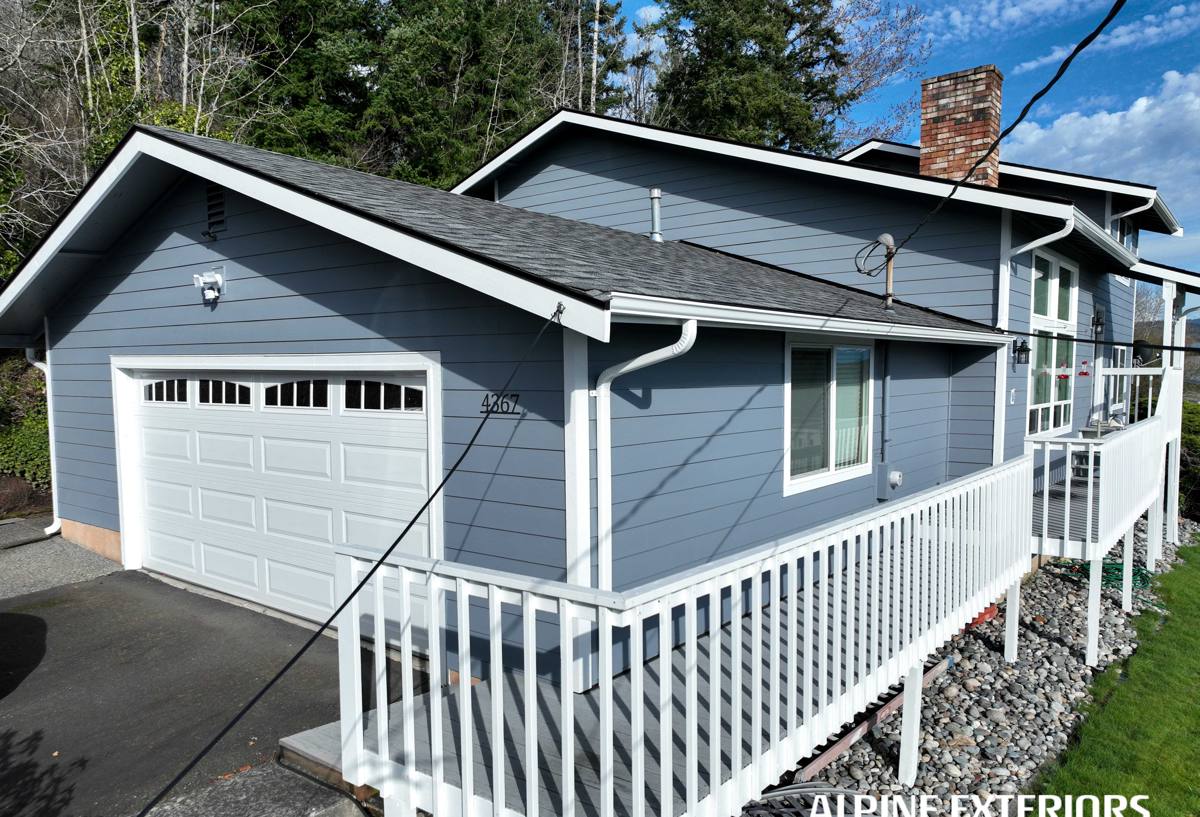
What the Local Climate Actually Does to a Shingle Roof
Salt Air and Metal Fatigue
Flashing, valley metal, drip edge, and exposed fasteners all corrode faster near the water. A roof that would get twenty-plus years out of standard galvanized flashing somewhere inland may show rust streaks and pinholing well before that near Terrell Creek. We treat corrosion-resistant metal as a starting point, not an upgrade.
Driving Rain
Wind off the water doesn't just drop rain straight down — it pushes it sideways and up under shingle tabs, laps, and around penetrations. A roof system built for calm, vertical rainfall will leak here even if every shingle is nailed correctly, because the underlayment and flashing details are what stop wind-driven water, not the shingles alone.
Moss Season
Whatcom County's long, wet, mild winters give moss and algae months to establish themselves, especially on north-facing slopes and anywhere tree cover keeps a roof shaded and damp. Once moss gets a foothold, it lifts shingle edges, holds moisture against the roof deck, and accelerates granule loss. In Terrell Creek's tree-lined, water-adjacent lots, moss pressure is often higher than on open lots elsewhere in Birch Bay.
What a Correctly Installed Asphalt Shingle Roof Includes
A roof that's going to hold up to this climate isn't just shingles nailed to plywood. Every layer does a specific job:
- Deck inspection and repair — soft, delaminated, or water-stained sheathing gets replaced before anything new goes down, not covered over.
- Ice-and-water shield at eaves, valleys, and penetrations — this self-adhering membrane is the real defense against wind-driven rain backing up under shingles.
- Synthetic underlayment across the full deck, which holds up to wet exposure far better than old-style felt during a multi-day install window.
- Corrosion-resistant flashing at all valleys, walls, chimneys, and roof-to-wall transitions — the single most common source of leaks on older Terrell Creek roofs we've inspected.
- Balanced intake and exhaust ventilation so the attic isn't trapping moisture that feeds moss growth from underneath and shortens shingle life from below.
- Manufacturer-spec nailing pattern — correct nail count and placement, not gun pressure guesswork, which is what actually determines wind rating and warranty validity.
Skip any one of those and the roof might look fine for a year or two. In this climate, the problems that show up from a shortcut usually show up as a leak, not a cosmetic flaw.
Signs a Terrell Creek Roof Needs Attention
Because this area's roofs age differently than roofs in drier parts of the state, we tell homeowners to watch for these earlier and more seriously than they might elsewhere:
| What You're Seeing | What It Usually Means |
|---|---|
| Dark streaking or green tint on north-facing slopes | Algae or early moss growth — treatable now, structural risk if ignored |
| Moss clumps at shingle edges or in valleys | Moisture is being held against the deck; shingles may already be lifting |
| Rust-colored streaks below flashing or fasteners | Metal corrosion from salt air exposure — flashing may need replacement |
| Granules collecting in gutters | Accelerated wear, often from trapped moisture or aging shingles |
| Damp or musty attic smell | Ventilation isn't keeping pace with the local moisture load |
| Soft spots underfoot near valleys or chimneys | Deck damage from a long-term flashing or underlayment failure |
Shingle Options and What Actually Drives Cost
Asphalt shingles come in a range of grades, and the right one for a Terrell Creek home depends more on exposure and roof shading than on style preference alone.
| Shingle Type | Typical Fit | Cost Factor |
|---|---|---|
| 3-tab (standard) | Budget-conscious re-roofs, less wind exposure | Lowest material cost, shorter lifespan in this climate |
| Architectural / dimensional | Most Birch Bay-area homes; better wind and impact rating | Mid-range, best balance of cost and durability here |
| Algae-resistant (AR) architectural | Shaded or north-facing roofs near tree cover or water | Modest upcharge, often pays for itself by delaying moss/algae treatment |
| Premium/designer | Higher-visibility homes, longer-warranty goals | Highest material cost, longest expected service life |
Beyond shingle grade, the other real cost drivers are roof pitch and access, the number of valleys and penetrations (more flashing labor), how much of the existing deck needs replacing once it's opened up, and ventilation upgrades if the current attic system is undersized. We walk through all of that on the inspection before any number gets put on paper — not after the job starts.
Ventilation and Moss Prevention Matter as Much as the Shingles Themselves
We see more moss-shortened roofs from bad ventilation and tree shading than from bad shingles. Balanced attic ventilation keeps the roof deck closer to outdoor temperature and moisture levels, which slows moss establishment and helps shingles shed the granule loss that heat and trapped moisture accelerate. On tree-shaded Terrell Creek lots, we'll also talk through practical, low-cost moss management — strategic branch trimming for sun exposure, gentle low-pressure cleaning schedules, and zinc or copper control strips where appropriate — rather than pushing unnecessary treatments. The goal is a roof that doesn't need moss removal as an annual emergency.
Our Process, Start to Finish
1. On-Site Inspection
We walk the roof (or use a drone where pitch or access makes that safer) and check the deck condition, flashing points, valleys, and ventilation setup, not just the shingle surface.
2. Written, Itemized Estimate
You get a clear breakdown of materials, labor, and any deck repair or ventilation work — no vague lump-sum numbers, and no pressure to sign same-day.
3. Material Selection
We talk through shingle grade, color, and algae-resistance options based on your roof's specific sun and shade exposure, not a one-size answer.
4. Tear-Off and Deck Inspection
Old roofing comes off down to the deck so we can actually see what's underneath before anything new goes on. Any soft or damaged sheathing gets flagged and priced separately before replacement, never assumed into the original number.
5. Installation to Manufacturer Spec
Underlayment, ice-and-water shield, flashing, shingles, and ventilation components go in following manufacturer installation requirements, which is what keeps your warranty valid if you ever need it.
6. Final Walkthrough and Cleanup
We walk the finished roof with you, cover care and maintenance basics for this climate, and make sure the property is cleaned up, including a magnetic nail sweep.
Maintenance That Actually Extends a Terrell Creek Roof's Life
- Clear gutters and valleys of debris at least twice a year, more often under heavy tree cover
- Have moss or algae growth addressed early, before it lifts shingle edges
- Keep overhanging branches trimmed back to reduce shading and debris buildup
- Check attic ventilation isn't blocked by insulation or debris
- Have flashing and valleys inspected after any major windstorm off the water
- Get a roof checked before small leaks become deck damage — annual is a reasonable rhythm here
Why It Matters That We Already Work in This Area
A roofing crew that's worked Birch Bay and the Terrell Creek area repeatedly knows which flashing details fail first in this air, which slopes hold moss longest, and which ventilation setups actually keep up with the local moisture load. That's not something a crew driving in from outside the county picks up on a single job. It shows up in fewer callbacks, fewer surprises once the tear-off starts, and a roof that's actually built for what Whatcom County weather does to it over the next couple of decades — not just what it looks like on install day.
If you're weighing a repair against a full replacement, or just want an honest read on how much life is left in your current roof, we're glad to take a look. Request a free, no-pressure estimate using the form below and we'll walk your roof, tell you what we actually see, and give you straight numbers to work from.