 Birch Bay Exterior
 Building Exteriors for Bellingham's Coastal Climate
Homes in and around Bellingham sit close enough to the water that salt air is a daily fact of life, not an occasional nuisance. Add in the driving rain that rolls off the Strait of Georgia and Bellingham Bay through fall and winter, plus a moss season that in this part of Whatcom County can stretch nine months or more, and you have a climate that is genuinely hard on exterior building materials. Wood swells and shrinks, fasteners corrode faster than they would inland, and anything with a seam or a joint becomes a place where moisture eventually finds its way in.
We built our business around exteriors for exactly this kind of climate. Siding, roofing, windows, and decks all have to work together as a system, because water doesn't respect the line between one trade and the next. A roof that sheds water properly but dumps it onto poorly flashed siding just moves the problem downstream. That's the mindset we bring to every Bellingham-area project.
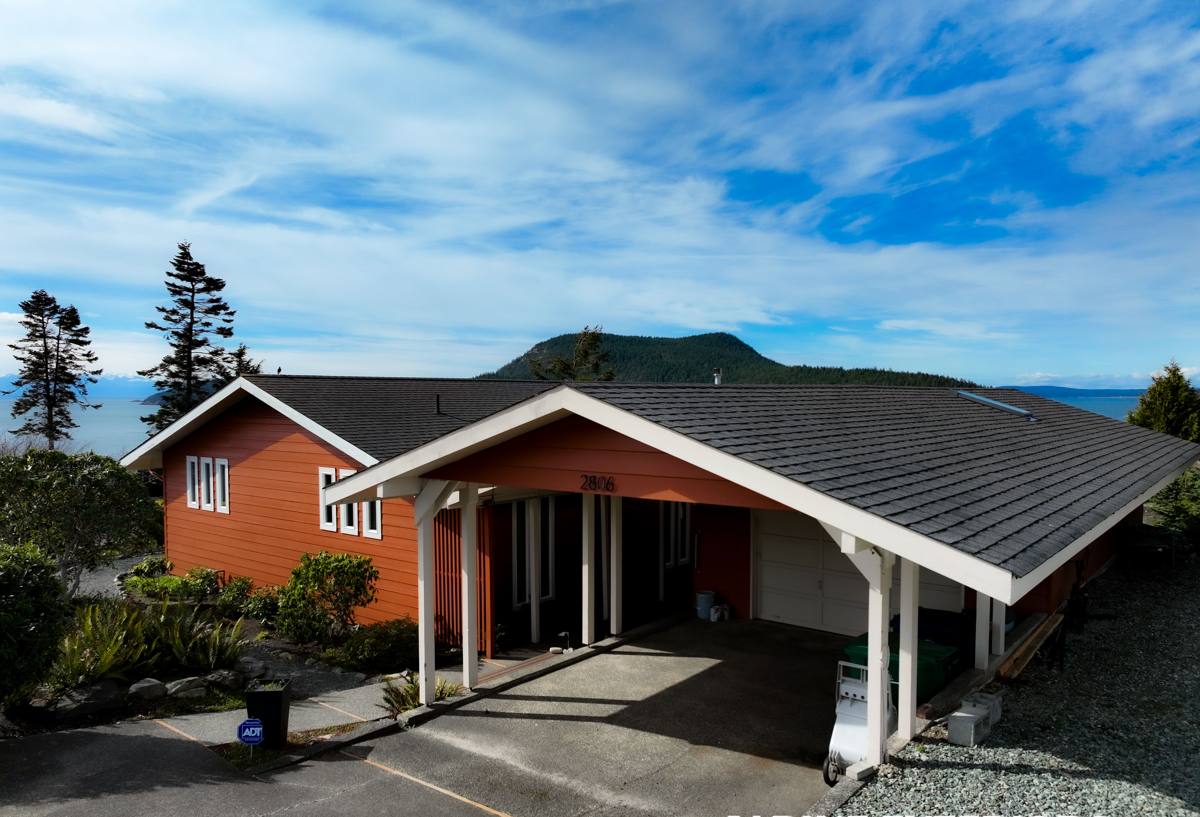
What Salt Air, Rain, and Moss Actually Do to a House
It helps to be specific about the mechanisms, because "coastal weather is tough on houses" is true but vague.
Salt air and corrosion
Airborne salt accelerates corrosion on anything metal — nails, screws, flashing, hardware, and fasteners. Untreated or under-rated fasteners can start rusting years before they would in a drier, inland location. Rust streaks on siding or trim are often the first visible sign that the wrong-grade fastener was used.
Driving rain and wind-driven moisture
Rain in this region rarely falls straight down. Wind pushes it sideways into wall assemblies, around window openings, and up under lap siding edges. Materials and installation details that work fine in calmer climates can fail here simply because the water pressure and angle are different.
Moss, algae, and prolonged dampness
Shaded, north-facing walls and roof planes in Whatcom County can stay damp for days after a storm passes. That prolonged dampness is exactly what moss and algae need to establish themselves, and once organic growth takes hold on a roof or siding surface, it holds moisture against the material and speeds up deterioration underneath.
Siding: Why We Install Only James Hardie Fiber Cement
We get asked why we don't offer vinyl, LP SmartSide, cedar, primed spruce, or other fiber cement brands. The honest answer is that we made a call, based on years of seeing how different products actually hold up in this climate, and we'd rather stand fully behind one system than sell several we have reservations about.
Wood-based and engineered wood siding
Cedar and primed spruce look good on day one, and there's a real appeal to natural wood siding. But wood is organic material, and in a climate with this much sustained moisture and moss pressure, it needs disciplined maintenance — recoating, caulking, and prompt repair of any damaged boards — to hold up over decades. LP SmartSide is an engineered wood product with a resin-treated strand core, which improves on solid wood in some ways, but it's still a wood-based product with a factory coating that depends on unbroken paint and sealant coverage at every cut edge and seam to keep moisture out.
Vinyl siding
Vinyl is inexpensive and low-maintenance in a basic sense, but it's a thin plastic product that can warp, crack, or become brittle over time, especially with temperature swings. It also relies heavily on overlapping panels rather than a sealed, monolithic look, and repairs after wind damage are often visible because color-matching aged vinyl to new panels is difficult.
Why James Hardie
James Hardie fiber cement is non-combustible and dimensionally stable, meaning it doesn't expand and contract with moisture the way wood does. The ColorPlus factory finish is baked on under controlled conditions, which gives more consistent, longer-lasting color than field-applied paint, and touch-up product is available so future repairs actually match. Hardie's HZ5 product line is engineered for climates with more moisture exposure, which fits Whatcom County. The transferable limited warranty also matters to homeowners who may sell before they've fully "used up" the life of their siding.
Roofing in a Wet, Mossy Climate
Roofs here take the most direct hit from rain volume and moss growth. Shaded roof planes, valleys, and areas under overhanging trees are where we see the most moss buildup and the earliest granule loss on asphalt shingles. Proper attic and roof ventilation, correctly lapped underlayment, and metal flashing at every penetration and valley matter more here than they would in a drier climate, because there's simply more water moving across the roof surface over the course of a year.
We also pay close attention to how a roof edge and gutter system work together. Undersized or poorly pitched gutters back water up under the roof edge, which is a slow, hidden way for rot to start in fascia and roof sheathing.
Windows That Handle Wind-Driven Rain
Window failures in this climate are rarely about the glass itself — they're about installation and flashing. A window that isn't properly flashed and integrated with the surrounding siding's water-resistive barrier can leak even if the window unit itself is high quality. We install windows as part of the whole exterior water-management system, not as a standalone swap, which is one reason siding and window work benefit from being handled by the same crew.
Salt air also affects window hardware over time — locks, hinges, and cranks on older windows can stiffen or corrode. When we replace windows, we factor in hardware quality, not just glass performance ratings.
Decks: Built for Rain and Moss, Not Just Sun
A lot of deck advice is written for drier climates where UV exposure is the main design concern. Around Bellingham, moisture and moss are usually the bigger long-term issues. Ledger board flashing, proper drainage under the deck surface, and fastener corrosion resistance all deserve more attention here than a generic deck-building guide would suggest. Decking material choice matters too — some wood species and composite products handle sustained dampness and moss growth better than others, and slip resistance becomes a real safety consideration when a deck stays damp for days at a time in winter.
Comparing Exterior Siding Options for This Climate
| Material | Moisture Behavior | Maintenance | Typical Longevity Here |
|---|---|---|---|
| James Hardie Fiber Cement | Dimensionally stable, non-combustible, engineered HZ lines for moisture exposure | Occasional wash, factory finish reduces repainting | Decades with correct install |
| Vinyl | Won't rot, but can warp/crack with temperature swings and impact | Low, but color fades and repairs can mismatch | Moderate, weather-dependent |
| LP SmartSide / Engineered Wood | Wood-based core; relies on unbroken coating and sealed edges | Regular inspection of seams, cut edges, and coating | Shorter than fiber cement without diligent upkeep |
| Cedar / Primed Spruce | Organic material, absorbs moisture, prone to moss and rot without upkeep | High — recoating, caulking, prompt repairs | Variable, maintenance-dependent |
Why a Local Crew Matters for Bellingham and Birch Bay Homes
Whatcom County's microclimates vary block to block — proximity to the water, tree cover, and elevation all change how much rain, wind, and moss pressure a given house actually faces. A crew that works this area regularly recognizes those patterns and adjusts installation details accordingly, rather than applying a one-size-fits-all approach from a manual written for a different climate. Local crews also know the county's permitting process, typical inspection expectations, and how to schedule exterior work around the wetter months so materials and substrates aren't compromised before the job is finished.
What to look for when hiring an exterior contractor here
- Proof of active Washington state contractor licensing and insurance
- Manufacturer-trained or certified installers for the specific siding product being used
- A written scope that specifies flashing, house wrap, and fastener details — not just "siding replacement"
- Local references or completed work you can ask about directly
- A clear explanation of how they handle moisture management at windows, doors, and roof-to-wall transitions
- Willingness to walk you through warranty terms in writing before work starts
How We Approach a Bellingham Project
Every project starts with an honest look at what's actually happening on the house — where moisture is getting in, what condition the substrate is in under existing siding or roofing, and what the long-term maintenance reality of different options looks like. We'd rather tell a homeowner what a repair or partial replacement will realistically cost them in upkeep than oversell a bigger job they don't need yet.
If you're in Bellingham or Birch Bay and want a straight answer about what your siding, roof, windows, or deck actually need, we're happy to take a look. There's no pressure and no obligation — just a clear assessment and a written estimate you can think over.