 Birch Bay Exterior
 Why Bellingham Homes Need a Different Approach to Windows
Bellingham sits close enough to the water that salt-laden air, wind-driven rain, and a long wet season all work on a house year-round. Windows are one of the first places that shows up. A window that would hold up fine in a drier inland climate can start failing here in a fraction of the time — seals give out early, frames trap moisture, and hardware corrodes faster than most homeowners expect. Custom windows done right for this area aren't about upgrading for looks. They're about matching the product and the installation to what Whatcom County weather actually does to a building envelope.
We work on homes throughout Bellingham and the surrounding Birch Bay area regularly, and the patterns repeat: older aluminum-frame windows with pitted hardware, wood frames with soft spots at the sill from years of driving rain, and condensation or fogging between panes on failed double-glazed units. None of that is unusual for the region. It's just what happens when a window wasn't spec'd for it in the first place.
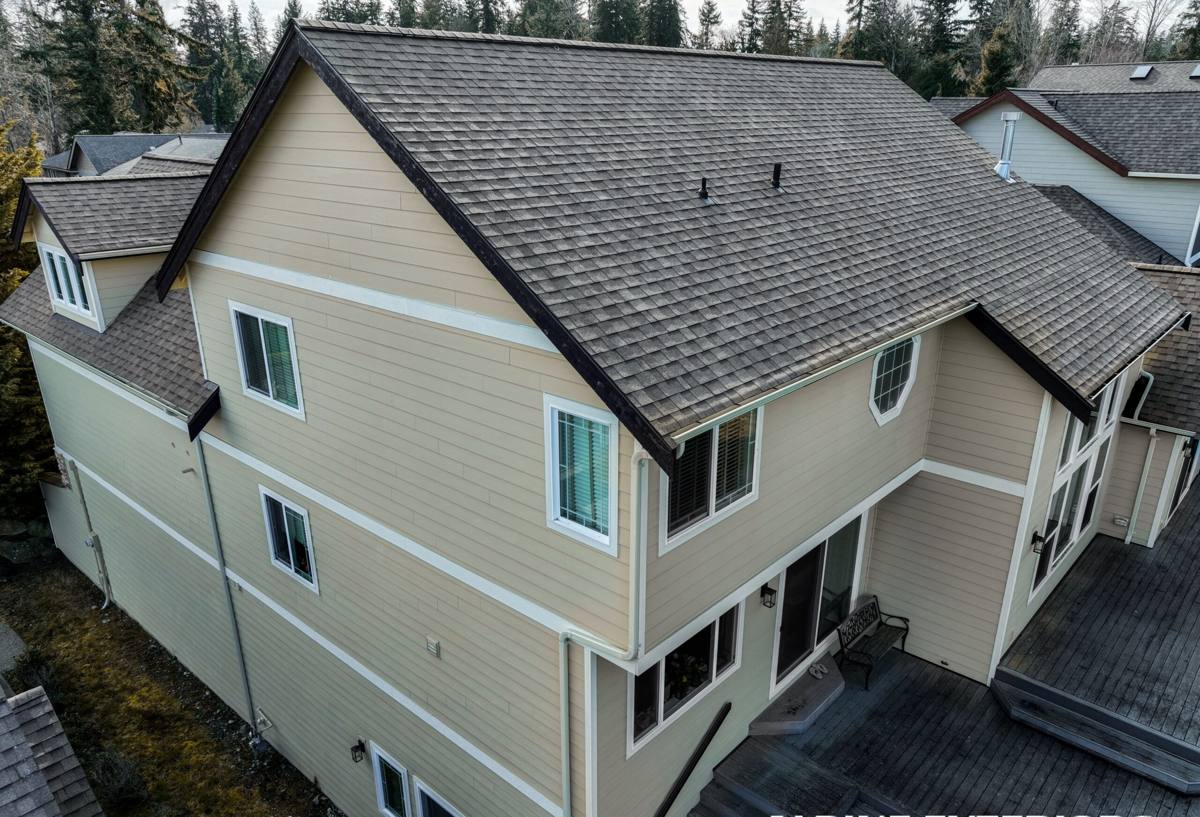
What Salt Air, Rain, and Moss Season Actually Do to Windows
Salt Air and Corrosion
Proximity to Puget Sound and the Strait of Georgia means airborne salt reaches further inland than people assume, especially with prevailing winds. Salt accelerates corrosion on window hardware — hinges, cranks, locks, and especially uncoated or poorly finished aluminum frames. Once corrosion starts on hardware, windows get harder to operate, seals compress unevenly, and small gaps open up that let in more moisture. It's a cycle that speeds up over time rather than staying steady.
Driving Rain and Water Intrusion
Wind-driven rain doesn't just hit a window head-on — it gets pushed sideways and upward into gaps that would stay dry in calmer weather. This is where flashing detail and installation technique matter as much as the window itself. A high-end window installed with poor flashing will leak. A modest window installed correctly, with proper flashing and sealant sequencing, often won't.
Moss and Prolonged Dampness
Whatcom County's long moss season isn't just a roof problem. Moss and algae growth around window trim and sills is a sign of prolonged surface dampness, and that dampness works its way into wood trim, sill plates, and eventually framing if it isn't addressed. Windows with poor drainage paths or clogged weep systems hold water longer, which gives moss and rot more time to take hold.
What "Custom" Actually Means for a Bellingham Window Job
Custom windows aren't just non-standard sizes, though that's part of it — a lot of older Bellingham homes have window openings that don't match today's stock sizing. Custom also means matching frame material, glazing package, and drainage design to the specific exposure of each wall of the house. A window on the weather side facing prevailing wind and rain needs different detailing than one on a sheltered side. Treating every opening the same is one of the more common shortcuts that leads to early failure here.
- Frame material suited to coastal exposure (properly finished vinyl, fiberglass, or clad-wood — not bare or poorly coated aluminum)
- Glazing package appropriate for the home's orientation and sun exposure
- Correctly sized and shimmed openings, especially in older homes with settled framing
- Sill pan flashing that directs water out and away from the framing, not just a bead of caulk
- Working weep holes and drainage paths so any water that does get in can leave again
- Hardware rated for coastal or marine-grade conditions
Choosing the Right Frame Material
There's no single "best" window material for every home — it depends on budget, the home's style, and how exposed the wall is. Here's how the common options actually perform in this climate, based on what we see in the field.
| Frame Material | Coastal Performance | Maintenance | Typical Fit |
|---|---|---|---|
| Vinyl | Good — won't corrode, handles moisture well if properly sealed | Low | Most homes, budget-conscious replacements |
| Fiberglass | Very good — dimensionally stable, resists both moisture and salt | Low | Higher-exposure walls, long-term durability priority |
| Aluminum (properly finished) | Fair to good depending on coating quality | Moderate | Modern/contemporary styling |
| Clad-wood | Good exterior protection, but interior wood still needs care | Moderate to high | Historic or traditional homes wanting real wood interior |
| Bare wood | Poor without diligent upkeep in this climate | High | Restoration projects only, with eyes open on maintenance |
We'll talk through these trade-offs honestly rather than push whatever has the best margin. If a homeowner wants real wood windows for a period-appropriate look, we'll say plainly what the maintenance commitment looks like given the rain and salt exposure here, rather than downplay it.
Installation Is Where Most Failures Actually Start
We see plenty of window failures in this area that have nothing to do with the window brand and everything to do with how it went in. Flashing that wasn't lapped correctly, sealant used in place of proper flashing, or openings that weren't fully dried in before the window was set — any of these will cause problems regardless of how good the window itself is. In a climate with this much driving rain, installation sequencing isn't a minor detail. It's the difference between a window that lasts decades and one that needs attention again in a few years.
Our process for a custom window job follows the same order every time, because skipping steps is exactly how water intrusion problems start:
- Remove the old window and inspect the framing, sill, and sheathing for existing rot or moisture damage
- Repair or replace any damaged framing before anything new goes in
- Install sill pan flashing to direct water outward
- Set the new window plumb, level, and properly shimmed
- Integrate flashing tape with the home's existing weather-resistive barrier, lapped correctly for water shedding
- Seal and insulate the perimeter without blocking drainage paths
- Finish trim and confirm proper operation and drainage before we call it done
Signs a Bellingham Home Needs Window Attention
Homeowners often wait longer than they should because window problems develop gradually. Some signs worth paying attention to:
- Fogging or condensation between panes — the seal has failed and the insulating gas is gone
- Windows that are hard to open, close, or lock — often hardware corrosion or frame swelling
- Visible moss, algae, or dark staining on sills or trim
- Soft or spongy wood at the sill or lower frame
- Drafts or noticeably higher heating costs in winter
- Water staining on interior walls or trim below or beside a window
None of these mean the whole house needs new windows immediately, but they're worth a look before the next round of fall and winter storms.
Cost Factors Worth Understanding Upfront
Custom window pricing varies more than people expect, and the frame material is only one piece of it. What actually moves the price:
| Factor | Why It Matters |
|---|---|
| Opening size and shape | Non-standard or oversized openings cost more to manufacture and install |
| Frame material | Fiberglass and clad-wood typically cost more than vinyl |
| Existing damage | Rotted framing or sheathing found during removal adds repair work |
| Number of openings | Whole-house jobs bring per-unit costs down versus one-off replacements |
| Glazing upgrades | Higher-performance glass packages add cost but improve comfort and efficiency |
We give straightforward, itemized estimates so homeowners can see exactly what they're paying for and where — not a lump number with no breakdown.
Why Local Experience with Bellingham and Birch Bay Conditions Matters
A contractor who mostly works dry, inland jobs will approach a Bellingham window replacement the same way they'd approach one anywhere else — and that's exactly how water intrusion problems get built into a house. Working this area regularly means knowing which walls take the worst of the wind-driven rain, how salt exposure varies by proximity to the water, and how long moss season actually runs here versus other parts of the state. That local knowledge shapes real decisions: which flashing detail to use, which frame finish will actually hold up, and which openings need extra attention because of how the house sits relative to prevailing weather.
It also means we're not guessing about product performance in this climate — we're working from what we've seen hold up and what hasn't, on homes in this same stretch of Whatcom County.
Get an Honest Look at Your Windows
If you're dealing with drafty, foggy, or hard-to-operate windows, or you're planning ahead of the next wet season, we're happy to take a look and give you a straightforward, no-pressure estimate. Use the form below to get started.