 Birch Bay Exterior
 Exterior Work Built for Blaine's Coastal Climate
Blaine sits at the far northwest corner of Whatcom County, wedged between Drayton Harbor, Semiahmoo Bay, and the Canadian border. It's a beautiful place to own a home, but it's also one of the tougher spots on the Salish Sea for exterior materials. Homes here take a steady combination of salt-laden air, wind-driven rain off the water, and a moss and mildew season that can stretch nine months out of the year. None of that is exotic to us — it's the same set of conditions we deal with across Birch Bay and the rest of northwest Whatcom County. But it does mean the products and installation details that work fine in a drier inland climate can fall short here.
This page covers how siding, roofing, windows, and decks hold up in Blaine specifically, and what we do differently because of it.
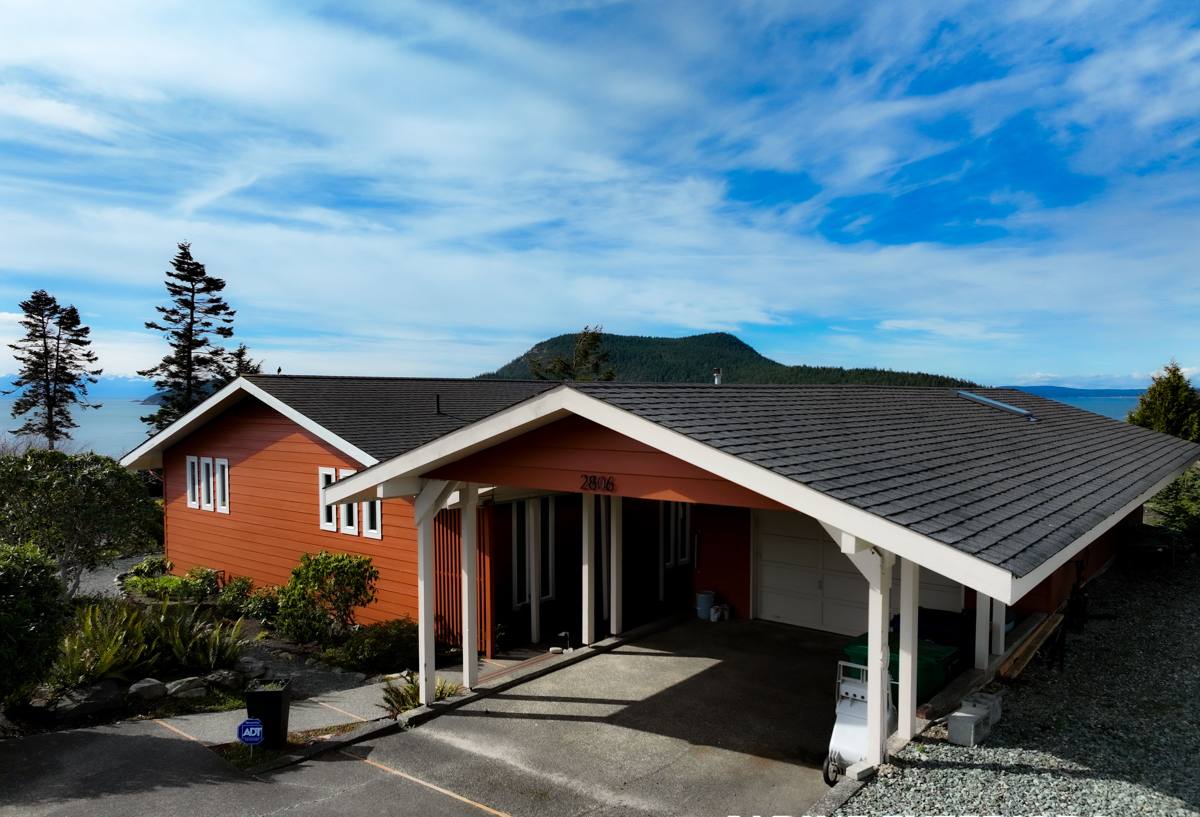
What the Marine Environment Does to a House
Salt Air and Corrosion
Waterfront and near-waterfront homes in Blaine sit close enough to Drayton Harbor and Semiahmoo Bay that airborne salt is a real factor, not just a coastal talking point. Salt exposure accelerates corrosion on fasteners, flashing, and any metal component that isn't rated for it. It also speeds up the breakdown of lower-grade paints and coatings, which is part of why factory-applied, baked-on finishes hold color so much better than field-applied paint in this kind of setting.
Driving Rain
Storms coming off the Strait of Georgia tend to arrive with wind behind them, which means rain doesn't just fall on this area — it gets driven sideways into wall assemblies, window frames, and anywhere two building materials meet. Wind-driven rain finds gaps that vertical rain never would. That makes flashing details, water-resistive barriers, and proper caulking and sealant work every bit as important as the siding or roofing material itself.
Moss, Algae, and Prolonged Dampness
Whatcom County's long, mild, wet stretch from fall through spring keeps roofs and north-facing siding damp for extended periods. That's exactly the environment moss and algae need to establish. Left unchecked, moss holds moisture against roofing material and siding surfaces, which shortens the life of anything that isn't built to resist it.
Siding in Blaine: Why We Only Install James Hardie
We standardized on James Hardie fiber cement siding for every home we side, and Blaine's climate is a big part of why. Fiber cement is non-combustible and dimensionally stable — it doesn't swell, warp, or rot the way wood-based products can when they take on repeated moisture. In a place where wall assemblies see wind-driven rain on a regular basis, that stability matters more than it does in drier climates.
We get asked why we don't install vinyl, LP SmartSide, or primed wood siding, so we'll be direct about it here rather than dodging the question:
- Vinyl siding is affordable and low-maintenance in the sense that it doesn't need painting, but it's a thin plastic product that can crack in impact, fade over time, and has seams and panels that flex — not ideal when wind off the water is a regular occurrence.
- LP SmartSide (engineered wood) performs reasonably well when installation is flawless, but it's wood-based, meaning any breach in the factory coating or caulking at a cut edge gives moisture a path in. In a climate this wet, that margin for error is thinner than we're comfortable with.
- Primed wood or cedar siding needs regular repainting and caulking maintenance to keep water out, and salt air accelerates the breakdown of paint films. It can look great, but it asks a lot of the homeowner in upkeep.
James Hardie's ColorPlus factory finish is baked on and warrantied against fading and peeling, which removes a lot of that maintenance burden. Hardie also engineers regional product lines (HZ5 for our climate zone) specifically for wetter, cooler conditions, and the company backs installations with a strong transferable warranty when installed to their specifications — which we do on every job.
James Hardie Product Comparison
| Product | Material | Maintenance | Combustibility |
|---|---|---|---|
| James Hardie Fiber Cement | Cement, sand, cellulose fiber | Low — factory finish, occasional wash | Non-combustible |
| Vinyl | PVC plastic | Low, but prone to cracking/fading | Combustible |
| LP SmartSide | Engineered wood strand | Moderate — edge sealing critical | Combustible |
| Primed Cedar/Spruce | Solid or primed wood | High — repaint/caulk cycle | Combustible |
Roofing That Handles Moss and Wind
Roofing in Blaine has to deal with two separate problems: wind uplift during winter storms, and moss growth during the long damp season in between. We install roofing systems with proper underlayment, ice-and-water protection at eaves and valleys, and ridge and soffit ventilation that helps roof decks dry out between rain events instead of staying saturated. Ventilation matters as much as the roofing material itself — a roof that can't breathe holds moisture longer and gives moss and algae more time to take hold.
We also pay close attention to flashing at chimneys, skylights, and roof-to-wall transitions, since those are the spots wind-driven rain is most likely to find a way in.
Windows: Sealing Out Wind-Driven Rain
Window failures in this climate are rarely about the glass — they're about the flashing and sealant details around the frame. A window that's flashed correctly, with proper head flashing and integration into the water-resistive barrier, will keep wind-driven rain out even in a hard blow off the water. We treat window installation as a flashing and waterproofing job first, and a window-hanging job second. We also talk with Blaine homeowners about glass packages suited to a marine climate — double- or triple-pane units with the right Low-E coatings help with both moisture control on interior glass and comfort during the region's wind events.
Decks: Built for a Wet, Salty Exposure
Decks in Blaine, especially anything with harbor or bay exposure, take a beating from salt air and near-constant dampness underfoot for much of the year. Fasteners and hardware need to be rated for coastal/marine exposure, not just standard exterior-grade — the wrong hardware corrodes and stains decking within a few seasons. Ledger board flashing where the deck meets the house is one of the most common failure points we see on older decks, since it's a spot that traps water against the structure if it isn't detailed correctly. Whether you're looking at composite decking or wood, we build the structure and flashing to the same standard: keep water moving off the deck and away from the house, not trapped against it.
What to Check Before Hiring an Exterior Contractor Here
- Do they carry current Washington state contractor licensing and adequate liability insurance?
- Can they explain their flashing and water-management approach in plain language, not just brand names?
- Do they have experience specifically with coastal/marine exposure, not just general regional work?
- Will they put warranty terms — both manufacturer and labor — in writing before work starts?
- Do they use manufacturer-certified installation methods (relevant for Hardie's own warranty coverage)?
- Are they local enough to respond quickly if a sealant joint or flashing detail needs a follow-up look?
Why a Local Crew Matters in Blaine
Blaine and the surrounding Birch Bay area have a specific weather pattern — the wind exposure off Semiahmoo Bay and Drayton Harbor, the salt content in the air, the length of the wet season — that a crew working mostly in a different climate zone won't have hands-on experience with. We're not guessing at how these products perform up here; we see how siding, roofing, windows, and decks age in this exact environment year after year, and we build accordingly. That local track record is also part of why we're comfortable standing behind our work with real warranty coverage instead of vague promises.
Cost Factors to Expect
| Factor | Why It Matters in Blaine |
|---|---|
| Wind/moisture exposure of the site | Waterfront and open-exposure homes need more robust flashing and fastening detail |
| Existing substrate condition | Moisture damage found during tear-off or siding removal affects scope |
| Roof/wall complexity | More valleys, dormers, and transitions mean more flashing work |
| Material selection | Hardie siding, roofing class, and window glass packages vary in cost |
| Access and site conditions | Waterfront lots and tight in-town lots can affect equipment access |
If your Blaine home is dealing with tired siding, a moss-covered roof, drafty windows, or a deck that's starting to show its age, we're happy to take a look and walk you through honest options. Reach out for a free, no-pressure estimate — we'll assess the specific exposure your home faces and explain what we'd recommend and why.