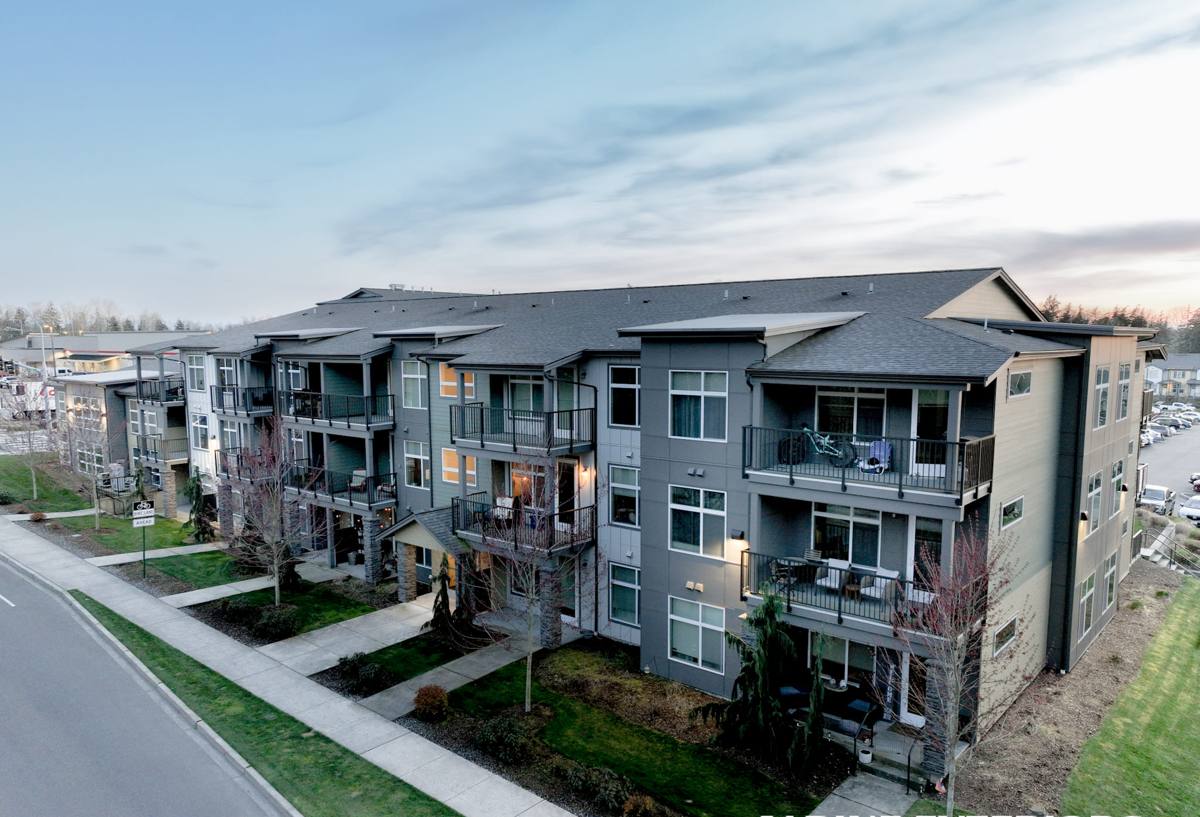
 Birch Bay Exterior
 Why Blaine Homes Are Hard on Siding
Blaine sits close enough to Semiahmoo Bay and the Strait of Georgia that salt-laden air is a daily fact of life, not an occasional nuisance. Add in the wind-driven rain that rolls off the water during fall and winter storms, and you've got two forces working against a home's exterior at the same time: corrosion and moisture intrusion. Layer on Whatcom County's long, damp shoulder seasons — the stretch from October through April when siding rarely gets a chance to fully dry out — and you have the exact conditions that shorten the life of the wrong siding product and accelerate moss and algae growth on the wrong surface.
We install siding across Birch Bay and the surrounding area, and Blaine properties consistently show the same wear pattern: siding that looked fine going into a wet winter comes out of it with soft spots at the bottom courses, discoloration around window heads, and green-black streaking on north- and west-facing walls where sun exposure is lowest and moisture lingers longest. None of that is inevitable. It's a function of what the siding is made of, how it was installed, and whether the details that keep water moving away from the wall were actually done correctly.
What Blaine Siding Actually Needs to Hold Up
A siding system built for this stretch of Whatcom County coastline needs to do three things well, consistently, for decades:
- Resist moisture absorption — not just shed rain, but resist wicking water into the material itself during long damp stretches
- Hold a factory finish — job-site paint fails faster in salt air and high humidity than a factory-cured finish designed for it
- Stay dimensionally stable — swelling and shrinking with moisture cycles opens joints, cracks caulk lines, and telegraphs through paint over time
This is where the material choice matters more than most homeowners realize going in. Wood-based products — cedar, primed spruce, and engineered wood siding like LP SmartSide — all rely on a wood or wood-fiber core, which means they absorb moisture by nature. In a climate that stays wet for months at a stretch, that absorption cycle is where rot, swelling, and paint failure start. Vinyl siding sheds water fine but is a poor fit for this exposure in a different way: it's a thin material with a lot of thermal movement, its seams and J-channels give algae and moss plenty of places to take hold, and it doesn't hold up well to the debris and wind load that coastal storms bring through.
Why We Install James Hardie Fiber Cement — and Nothing Else
Our company made a deliberate decision to install only James Hardie fiber cement siding, on every job, in every neighborhood we serve including Blaine. We don't offer vinyl, LP SmartSide, Cemplank, Allura, primed spruce, or cedar as options. That's not a marketing position — it's a standard we hold because of what we've seen happen to those other products in exactly this climate.
Fiber cement is a mix of cement, sand, and cellulose fiber, engineered to be dimensionally stable and largely indifferent to moisture cycling. It doesn't swell and shrink the way wood does, and it's non-combustible, which matters in a region where wildfire smoke and ember exposure have become a more regular concern in late summer. James Hardie in particular builds region-specific product lines — its HZ5 formulation is engineered for cold, wet, freeze-thaw climates like the Pacific Northwest, which is a meaningfully different product than what gets installed in a dry southern climate.
The ColorPlus factory finish is the other piece that matters here. It's baked on in a controlled environment rather than sprayed or brushed on site, which means better adhesion and color consistency, and a finish that's rated to resist fading and chipping far longer than field-applied paint holds up against salt air and UV exposure. Paired with a transferable warranty that's genuinely strong when the installation is done to Hardie's published specifications, it's the system we're willing to stand behind on a coastal Whatcom County home.
What We Tell Homeowners Who Are Comparing Products
We're not going to tell you vinyl or wood siding is garbage — plenty of homes around the country wear it fine. But we will tell you honestly that in a Blaine-area exposure, the maintenance burden and moisture risk on those products is higher than what we're comfortable putting our name behind, and that's why we standardized on Hardie fiber cement instead.
What a Correct Siding Installation Actually Involves
Fiber cement siding performs the way it's supposed to only when it's installed to spec — and most of the failures we get called out to inspect on other contractors' work trace back to shortcuts in the details below, not the product itself.
Water Management Behind the Siding
Before a single piece of siding goes up, the wall needs a properly lapped weather-resistive barrier, correctly integrated flashing at every window, door, and penetration, and a drainage plane that gives any moisture that gets behind the cladding a way to get back out. This is the layer that actually keeps a house dry — the siding itself is the second line of defense, not the first.
Clearances and Fastening
James Hardie specifies minimum clearances from siding to grade, roof lines, and decks — typically 6 inches from grade and 2 inches from horizontal surfaces like roofing and decking — precisely because tight clearances trap moisture and debris against the bottom edge of the board. Fasteners need to be corrosion-resistant, driven at the correct depth and location, and blind-nailed or face-nailed per the manufacturer's requirements for the specific product and exposure.
Joints, Caulking, and Trim
Butt joints need to be properly backed and sealed, not just butted and caulked over. Trim and corner details need to shed water outward rather than creating shelves where it can pool. Getting this wrong is invisible on install day and shows up as staining or soft trim two or three winters later.
Our Installation Process for Blaine Projects
- On-site assessment — we walk the exterior, check for existing moisture damage, and evaluate the current water-management layer before quoting anything
- Tear-off and inspection — old siding comes off and we inspect sheathing for rot or damage that needs to be addressed before new siding goes on, since covering a problem never fixes it
- Weather barrier and flashing — house wrap and flashing are installed or repaired to current best practice, with careful attention to window and door integration
- Hardie installation — panels or planks installed to manufacturer clearance, fastening, and joint specifications, factory ColorPlus finish protected throughout
- Trim and detail work — corners, trim boards, and caulking finished to shed water and hold the finished look
- Final walkthrough — we go over the completed work with the homeowner before calling the job done
Comparing Siding Options for a Blaine Exposure
| Factor | James Hardie Fiber Cement | Vinyl | Wood / Engineered Wood |
|---|---|---|---|
| Moisture absorption | Very low | N/A (but seams trap moisture) | High — core material absorbs water |
| Finish durability in salt air | Factory-cured ColorPlus, long-rated fade resistance | Color molded in but can fade/chalk | Field-applied paint, shorter repaint cycle |
| Combustibility | Non-combustible | Combustible | Combustible |
| Dimensional stability | High | Moderate (thermal expansion) | Low — swells/shrinks with moisture |
| Typical maintenance in this climate | Periodic wash, repaint on a long cycle if ever needed | Wash to control algae/moss buildup in seams | Regular repainting, moisture and rot monitoring |
Signs Blaine Siding Needs Attention Now
Because moisture damage on the wrong siding product tends to start hidden and surface late, it's worth knowing what to look for before a small problem becomes a full re-side:
- Soft or spongy spots when you press on siding near the bottom courses or under windows
- Persistent green or black staining that comes back quickly after washing, especially on shaded walls
- Paint that's bubbling, peeling, or chalking heavily rather than fading evenly
- Visible gaps or warping at butt joints and corners
- Rising energy bills that suggest the wall assembly behind the siding is no longer doing its job
Why Hiring a Crew That Already Works This Area Matters
Siding installation isn't a one-size-fits-all trade. A crew that works Birch Bay, Blaine, and the rest of this Whatcom County coastline regularly already knows the local wind exposures, which sides of a house take the worst weather, and how aggressively moss and algae establish themselves on north-facing walls here. That familiarity shows up in small decisions — clearance details, flashing choices, product line selection — that a crew unfamiliar with this specific climate might not think twice about.
It also matters for accountability. A local, established crew has a reputation in the community to protect and is easy to reach if a warranty question or a maintenance question comes up years down the road. That's a meaningfully different relationship than a traveling crew that installed siding in the area once and moved on.
A Practical Checklist Before You Hire
- Ask specifically what siding product and product line they install, and why
- Confirm they carry manufacturer certification for fiber cement installation, not just general contracting credentials
- Ask how they handle flashing and weather-barrier work, not just the visible siding
- Get clarity on warranty terms — both the manufacturer's product warranty and the installer's workmanship warranty
- Ask for a written scope that includes tear-off, sheathing inspection, and trim work, not just "siding install"
Ready to Talk About Your Blaine Home
If your siding is showing wear from salt air, sitting damp longer than it should through moss season, or you're simply planning ahead for a replacement, we're happy to walk the exterior with you and give it to you straight. Reach out for a free, no-pressure estimate — there's a form right below to get started.