 Birch Bay Exterior
 Exterior Work Built for Marietta's Conditions
Marietta sits close enough to the water and to Birch Bay proper that its homes deal with the same triple threat every exterior on this stretch of Whatcom County has to survive: salt-laden air rolling in off the bay, driving rain that comes in sideways more often than straight down, and a moss season that seems to stretch longer every year. None of these things are dramatic on their own. What they do is grind away at a house slowly, and slow damage is the kind homeowners often don't notice until it's already expensive. We've built our business around exterior systems that hold up to exactly this kind of wear, and Marietta is squarely in the territory we know best.
This page covers how we approach siding, roofing, windows, and decks for homes in and around Marietta, why local experience matters more than it might seem, and what our standards are for the materials we put on your house.
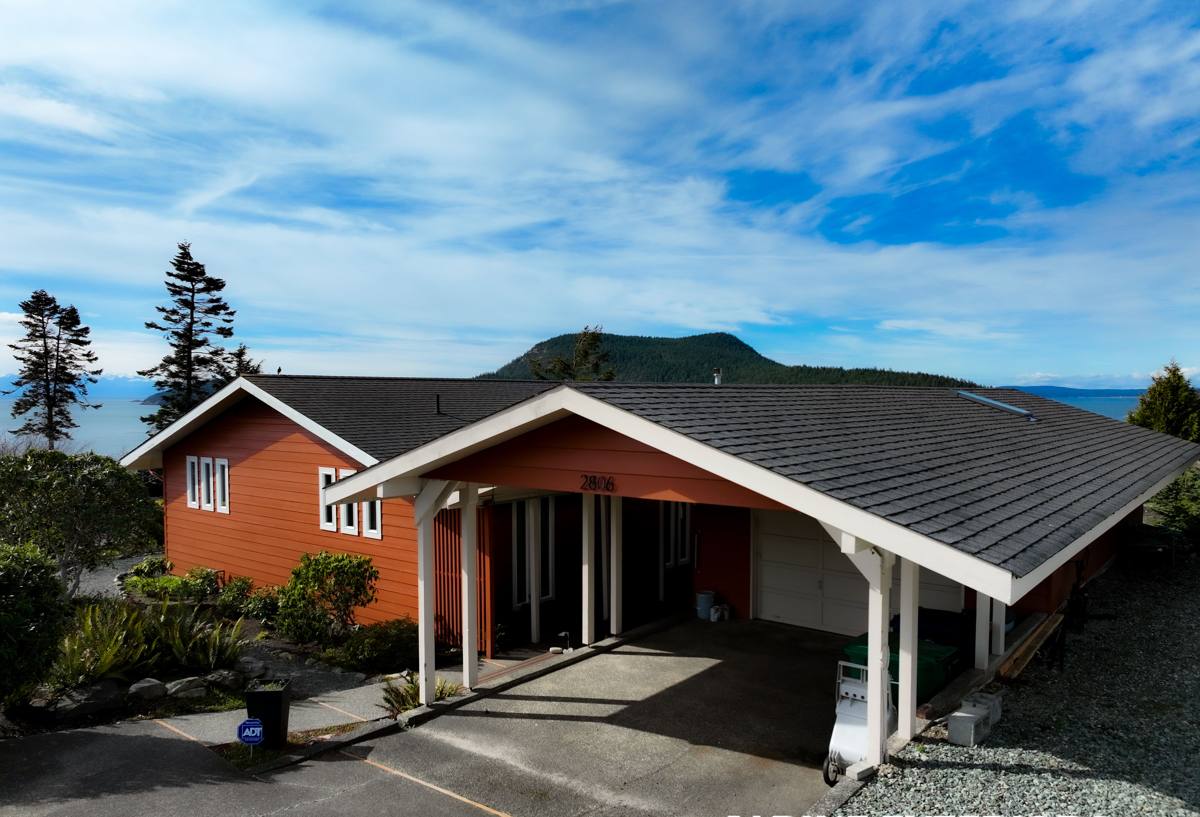
What Marietta Homes Are Up Against
Salt Air
Proximity to Birch Bay means airborne salt is a constant, low-level presence on exterior surfaces. Salt accelerates corrosion on fasteners, flashing, and hardware, and it can degrade certain paint and coating systems faster than manufacturers' standard warranties assume for inland installations. It's not usually a fast process — it's a cumulative one, and it shows up first at the details: nail heads, trim joints, and anywhere metal meets wood or fiber cement.
Driving Rain
Whatcom County doesn't just get a lot of rain — a good share of it arrives at an angle, pushed by wind off the water. Wind-driven rain finds gaps that vertical rain never would: under-lapped siding courses, poorly sealed window flanges, roof-to-wall transitions, and deck ledger connections. A house can look fine from the curb and still be taking on moisture at these points for years before anything visibly fails.
Moss and Prolonged Dampness
The long wet season in this area keeps roofs, siding, and shaded deck surfaces damp for extended stretches, which is exactly what moss and algae need to establish themselves. Beyond the cosmetic issue, moss holds moisture against the surface it's growing on, which on a roof can lift shingles and on siding can keep the substrate wet long after a dry spell elsewhere in the state would have let it fully dry out.
Siding: Why We Only Install James Hardie
Siding is the single largest surface on most homes, and it's the first line of defense against everything described above. We install James Hardie fiber cement exclusively — we don't offer vinyl, LP SmartSide, Cemplank, Allura, primed spruce, or cedar. That's a deliberate standard, not a limitation of what we're capable of installing.
Fiber cement is non-combustible and dimensionally stable, meaning it doesn't expand and contract with moisture the way wood-based products do. In a climate where siding is wet more often than it's dry, that stability matters — it's part of why seams stay tighter and paint holds longer over time. Hardie's ColorPlus factory-applied finish is baked on under controlled conditions, which gives it better long-term consistency against fading and chalking than field-applied paint, and their HZ5 product line is engineered specifically for the kind of wet, moderate-freeze climate we have here. The warranty is transferable, which matters to homeowners who may sell before the siding's useful life is up.
We're not going to tell you other siding products are junk — plenty of them perform reasonably well in the right conditions. What we will say is that after years of doing exterior work in this specific climate, we settled on Hardie because it's the product we trust to hold up to salt air, driving rain, and a long moss season without the maintenance burden or moisture sensitivity that comes with some alternatives. When we recommend it, it's because we'd put it on our own homes.
Roofing for the Local Moss and Rain Cycle
Roofs in this area earn their keep. A correctly installed roofing system starts with attention to the details that matter most in wet, coastal climates: proper underlayment, correctly lapped flashing at every valley and penetration, and ventilation that lets the attic space dry out between storms instead of trapping moisture underneath the deck. Moss prevention starts at installation — clean lines, proper drainage, and the right material choices all reduce how much moss gets a foothold in the first place, which saves homeowners from aggressive cleaning methods down the road that can shorten a roof's life.
We also pay close attention to roof-to-wall transitions and the flashing details where a roof meets siding, since that's one of the most common places wind-driven rain finds its way into a wall assembly.
Windows: Sealing Out Wind-Driven Rain
Window failures in this climate are rarely about the window unit itself — they're almost always about the installation. A window that's flashed and sealed correctly sheds wind-driven rain before it ever reaches the framing. One that isn't will eventually show it, usually as staining, soft trim, or a musty smell nowhere near where the water actually entered. We integrate window flashing with the surrounding siding assembly as one continuous water-management system rather than treating windows as a separate trade, which is where a lot of leaks originate on older installations.
Decks: Built for Wet Shade
Decks on properties with tree cover or a north-facing orientation stay damp longer than open, sun-exposed decks, which makes them more prone to moss growth, slick surfaces, and accelerated wear at ledger boards and fastener points. Proper ledger flashing, gapped decking for drainage and airflow, and hardware rated for coastal exposure all matter more here than they would in a drier inland climate. We build decks with those specifics in mind rather than using a generic approach that ignores how much moisture the structure will actually see.
Why a Local Crew Matters
Exterior contractors who don't work this specific stretch of coastline regularly can miss details that matter here — flashing laps sized for occasional storms instead of a near-constant wet season, fastener choices that aren't rated for salt exposure, or ventilation details borrowed from a drier climate. A crew that works Whatcom County's coastal communities routinely builds habits around these conditions rather than treating them as exceptions.
Being local also means faster response for warranty questions, punch-list items, or a second look at something that's bothering you a year or two after installation. We're not driving in from out of the area for a one-time job.
Cost Factors Homeowners Should Understand
Every exterior project's cost depends on scope, but a few factors show up consistently on Marietta jobs specifically:
| Factor | Why It Affects Cost Here |
|---|---|
| Existing moisture damage | Long wet seasons mean underlying rot or soft sheathing is more common than in drier climates, and it has to be addressed before new material goes on |
| Flashing and detail work | Coastal wind-driven rain requires more careful, more labor-intensive flashing at every transition point |
| Material choice | Fiber cement costs more upfront than vinyl but requires less long-term maintenance and holds up better to salt air |
| Tree cover and shading | Homes with significant shade need extra attention to ventilation and drainage to manage moss and prolonged dampness |
| Access and site conditions | Waterfront-adjacent lots and sloped properties can affect staging and labor time |
Signs Your Exterior Needs Attention
A few things worth checking on a Marietta home, especially heading into another wet season:
- Moss buildup on the roof, especially in shaded valleys or north-facing slopes
- Dark streaking or algae on siding, particularly near the ground or under overhangs
- Soft or discolored trim around windows and doors
- Peeling or bubbling paint on siding, which often signals trapped moisture underneath
- Rust staining around fasteners or metal flashing
- Soft spots or give in deck boards, especially near the ledger or in shaded areas
- Gaps or separation at siding seams and corner boards
Our Process
We start with an on-site assessment specific to your property's exposure — how much direct salt air it gets, how shaded it is, which walls take the worst of the wind-driven rain. That assessment shapes the material and detail decisions we make, rather than applying a one-size-fits-all spec to every house. From there we walk through scope, material options within our James Hardie product lineup, and a straightforward timeline before any work begins.
If you're in Marietta and dealing with any of the issues above, or you're just planning ahead for a siding, roofing, window, or deck project, we'd be glad to take a look. Reach out for a free, no-pressure estimate — there's a form below to get started.