 Birch Bay Exterior
 Board & Batten Siding for Marietta Homes
Marietta sits close enough to the water that salt air, wind-driven rain, and a long stretch of damp, low-light months are simply part of owning a home here. Board and batten siding — with its bold vertical lines and deep shadow lines — is one of the most popular looks for homes in this stretch of Whatcom County, but it's also one of the least forgiving styles if it's installed with the wrong material or the wrong technique. The vertical battens create dozens of extra seams and fastening points compared to standard lap siding, and every one of those seams is a potential water path if it's not detailed correctly.
We work on homes throughout the Birch Bay area, including Marietta, and we've built our process around what actually holds up here: near-constant marine moisture, salt-laden air off the bay, driving rain that hits siding at an angle rather than falling straight down, and a moss season that can stretch for months. A board and batten installation that looks great in a dry climate can fail early here if the underlying assembly wasn't built for this environment.
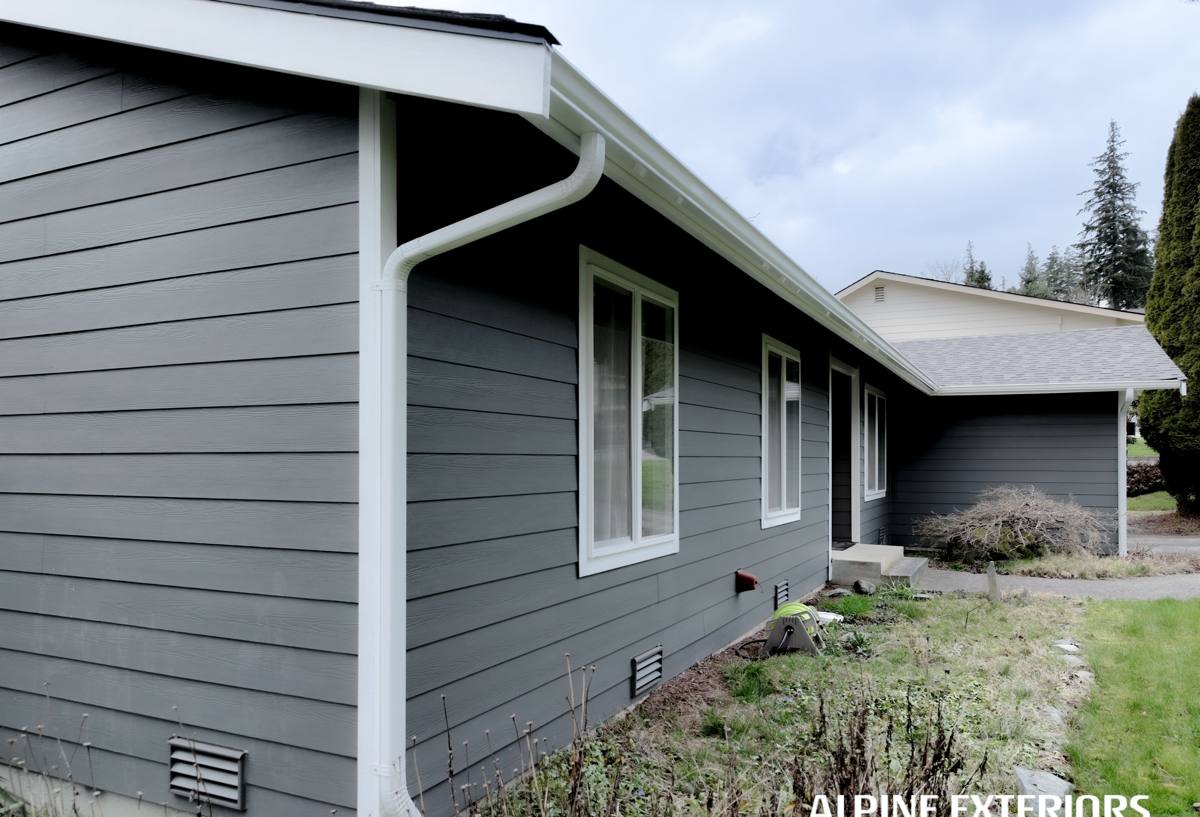
Why Local Climate Changes the Board & Batten Equation
Salt Air and Corrosion
Homes near Birch Bay and the surrounding shoreline deal with airborne salt that accelerates corrosion on fasteners, flashing, and trim. Board and batten siding has more exposed vertical fastening than most siding styles, so the quality and corrosion resistance of every nail, screw, and flashing detail matters more here than it would further inland.
Driving Rain and Wind-Driven Moisture
Storms off the water tend to push rain sideways, not straight down. That means the battens and the gaps behind them need to actually shed water outward rather than trap it against the wall. A board and batten system that relies on face-nailing straight through both layers into the sheathing, without a drainage gap or proper flashing at penetrations, gives wind-driven rain a direct path to the wall assembly.
Moss and Prolonged Dampness
Whatcom County's moss season isn't a minor cosmetic issue — sustained moisture and shade keep siding surfaces damp for extended periods, which is exactly the condition that swells, softens, or delaminates moisture-sensitive materials over time. Anything installed on a Marietta home needs to tolerate being wet more often than it's dry during a good chunk of the year.
What a Correct Board & Batten Installation Involves
Board and batten is a system, not just a pattern of boards nailed to a wall. Getting it right on a home exposed to Birch Bay's weather involves several steps that are easy to skip and hard to notice once the siding is painted:
- A weather-resistive barrier installed and lapped correctly behind the siding, with all penetrations properly flashed before the first board goes up
- A drainage gap or rainscreen strategy so any water that gets behind the battens can drain and dry out instead of sitting against the sheathing
- Correct fastener selection and placement — the right length, spacing, and corrosion-resistant material for a marine environment
- Properly flashed window and door openings, with head flashing that actually directs water out and away from the wall, not just decorative trim
- Butt joints and board ends sealed or detailed so end grain — the most water-absorbent part of any board — isn't left exposed
- Correct clearance at the foundation and roofline so siding isn't sitting in standing water or trapping runoff from the roof
Skipping any one of these doesn't usually cause an immediate problem. It shows up two, five, or ten years later as swelling, staining, soft spots, or paint failure — right around the time a homeowner assumed the siding was maintenance-free.
Why We Install James Hardie, Not Other Board & Batten Materials
Board and batten is available in several materials — vinyl, engineered wood products like LP SmartSide, primed spruce, cedar, and fiber cement. We've made a deliberate decision to install only James Hardie fiber cement siding, and in a climate like Marietta's, the reasoning is straightforward:
| Material | How it holds up in salt air & driving rain |
|---|---|
| Vinyl | Doesn't absorb moisture, but battens and panels can warp or bow with temperature swings, and salt air can dull and chalk the finish over time |
| Primed spruce / cedar | Natural wood movement plus sustained dampness means more frequent repainting, caulking, and watching for rot at joints and board ends |
| Engineered wood (e.g. LP SmartSide) | Wood-based core is more sensitive to prolonged moisture exposure than fiber cement if any water gets past the surface coating |
| James Hardie fiber cement | Non-combustible, dimensionally stable in wet-dry cycling, and engineered specifically for the Pacific Northwest through its HZ10 product line |
We're not going to claim other materials fail on every home — plenty of them perform fine when installed and maintained well. But we've chosen to standardize on one material we can stand behind on every job, and for a coastal Whatcom County climate, fiber cement's resistance to moisture, moss growth, and salt exposure is the deciding factor. It also means we're not learning the quirks of five different siding types — we know this product inside and out.
James Hardie's HZ10 Line
James Hardie engineers its siding into climate zones, and homes in this part of Washington fall under the HZ10 product line, built for wetter, more humid regions. The ColorPlus factory finish is baked on and warranted against fading and flaking, which matters in an area where repainting siding is a real chore — scaffolding, weather windows, and drying time are all harder to come by here than in a dry inland climate.
Our Process for Marietta Board & Batten Projects
- On-site assessment — We look at your home's exposure: how much direct wind-driven rain it takes, roofline drainage, existing moisture damage, and current siding condition.
- Tear-off and sheathing check — Once old siding is removed, we inspect the sheathing for hidden rot or moisture damage before anything new goes up. This is often where problems from a prior installation surface.
- Weather barrier and drainage plane — We install a proper weather-resistive barrier and drainage strategy suited to board and batten's extra seams, not a shortcut version meant for lap siding.
- Flashing at every penetration — Windows, doors, vents, and hose bibs all get flashed before siding installation, not caulked over afterward.
- James Hardie board and batten installation to manufacturer spec — Correct fastener type, spacing, and clearances, following Hardie's published installation requirements rather than generic siding practices.
- Final walkthrough — We go over caulking, trim details, and clearances with you before calling the job complete.
Why Hiring a Crew That Already Works Marietta Matters
Board and batten's biggest failure points — flashing details, drainage behind the battens, fastener corrosion — aren't things you can inspect from the ground once the job is done. A crew that already works in Birch Bay and the surrounding Whatcom County area has seen how homes here actually age: which walls take the worst of the wind-driven rain, where moss builds up fastest, and which older installations are starting to show the first signs of trouble. That local pattern recognition is worth more than a generic installation checklist, because it tells us where to pay extra attention before a problem starts rather than after.
It also means fewer surprises during the project itself. Scheduling around this region's weather windows, knowing how long a wall needs to dry before siding goes on, and understanding what "properly cured" looks like in a marine climate all come from doing this work here repeatedly — not from a manual.
Maintaining Board & Batten Siding Near the Bay
Even with the right material and installation, board and batten siding in this climate benefits from a bit of routine attention:
- Rinse off salt residue and organic buildup periodically, especially on north-facing or shaded walls where moss takes hold fastest
- Check caulking at trim and penetrations annually, since UV and moisture cycling break down sealants faster here than in drier climates
- Keep gutters and downspouts clear so roof runoff isn't dumping extra water directly onto siding
- Trim back vegetation that shades siding and keeps it damp for extended periods
None of this is heavy maintenance — it's the kind of upkeep that keeps a correctly installed system performing the way it's designed to for decades rather than years.
If you're considering board and batten siding for a home in Marietta or elsewhere in the Birch Bay area, we're happy to walk your property, look at your home's specific exposure, and put together a straightforward, no-pressure estimate.