 Birch Bay Exterior
 Cedar siding shows up in a lot of search results and home design photos, and it's easy to see why people ask for it. Real wood has a warmth and grain pattern that manufactured products spend a lot of engineering trying to imitate. We get calls every year from Birch Bay homeowners who want that look on their next re-side. This page explains why, after years of doing exterior work along Whatcom County's coastline, we stopped installing it — and what we install instead.
What Cedar Siding Actually Gets Right
We're not going to pretend cedar is a bad material. Western red cedar has natural oils that resist decay better than most softwoods, it's lightweight, it takes stain and paint well, and the grain pattern genuinely looks better up close than most fiber cement or vinyl profiles when it's new and properly finished. For a certain style of home — craftsman, coastal cottage, cabin — cedar is part of the architectural vocabulary. If you've ever stood next to a well-maintained cedar-sided home in its first few years, you understand the appeal immediately.
The problem isn't day one. It's year eight, or year fifteen, or the first winter after a storm rolls in off the water.
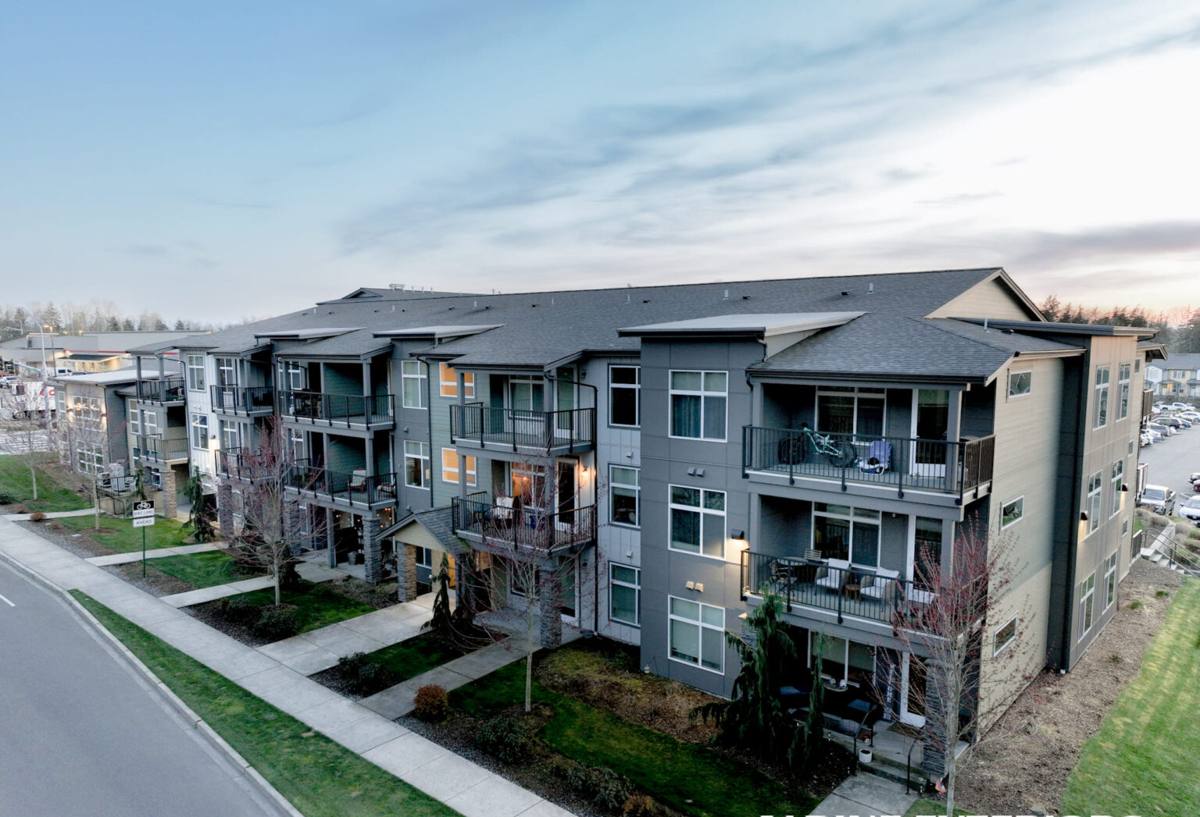
The Real Issue: Birch Bay's Climate Doesn't Do Cedar Any Favors
Cedar siding was never really tested against conditions like ours. Birch Bay sits right on the water, which means salt-laden air moving inland, wind-driven rain that gets pushed sideways into wall assemblies, and a moss season that in this part of Whatcom County can run nine or ten months out of the year on shaded or north-facing walls. Every one of those conditions works against wood siding specifically.
Salt Air and Moisture Cycling
Wood siding near the water absorbs and releases moisture constantly. That expansion and contraction cycle is what causes cupping, checking (the small cracks that run along the grain), and eventually warping at panel edges — exactly where water intrusion starts. Salt air accelerates the breakdown of factory or field-applied finishes faster than it would inland, which means the protective coating fails sooner than the marketing on the product suggests.
Driving Rain and Wall Assemblies
Cedar depends almost entirely on its finish and correct field detailing — flashing, gaps, back-priming, ventilation behind the panel — to keep water out. Any shortcut in installation, and Birch Bay's driving rain will find it. We've opened up enough old cedar walls on this coastline to know that the failures are rarely about the wood species being "bad." They're about water getting behind a material that isn't forgiving of gaps once that finish starts to go.
Moss and Organic Growth
Wood is an organic material sitting in a climate that grows moss on driveways and roofs without much encouragement. On shaded elevations, cedar siding gives moss and mildew something to hold onto far more readily than a factory-finished fiber cement surface does. That green-black staining you see on older wood siding around here isn't just cosmetic — it's holding moisture against the wall longer than bare siding would.
The Maintenance Reality Most Cedar Quotes Don't Mention
Cedar siding is a maintenance commitment, not a one-time purchase. To get anywhere close to its potential lifespan in a coastal climate, it needs:
- Re-staining or repainting on a real cycle — often every 3 to 5 years on sun and rain-exposed elevations, sooner on south and west walls
- Annual inspection for checking, cupping, and finish failure at butt joints and corners
- Caulk and flashing maintenance at every penetration, since cedar movement opens gaps over time
- Moss and mildew treatment on shaded sides, sometimes more than once a year
- Prompt replacement of individual boards that rot or split before the problem spreads to fasteners and sheathing
- Careful attention to ground clearance and gutter overflow, since splashback moisture is one of the fastest ways to rot the bottom courses
Most homeowners we talk to budget for the install and underestimate the decade of upkeep after it. That's not a knock on anyone — it's just not what gets discussed at the sales stage, and it's the main reason we don't want to be the contractor who installs something and then has to keep coming back to explain why it's failing on schedule.
Cost Over Time, Not Just Cost to Install
Cedar can sometimes look competitive on the initial quote, especially at lower grades. Where it stops looking competitive is the 10- and 20-year mark, once you add up refinishing labor, board replacement, and the moisture-related repairs that follow a missed maintenance cycle. Here's a straightforward comparison of the two products as we see them used on real homes in this area:
| Factor | Cedar Siding | James Hardie Fiber Cement |
|---|---|---|
| Refinishing cycle | Every 3–5 years in coastal/salt exposure | ColorPlus factory finish, no repainting for many years |
| Moisture behavior | Absorbs and releases moisture, prone to cupping/checking | Engineered to resist moisture-related warping |
| Fire resistance | Combustible | Non-combustible fiber cement |
| Moss/mildew resistance | Low, especially on shaded walls | Higher resistance to organic growth on the surface |
| Insect vulnerability | Susceptible without ongoing treatment | Not a food source for insects |
| Manufacturer warranty | Varies widely by supplier and finish, often limited | Long, transferable, product-specific warranty coverage |
| Long-term cost | Lower upfront, higher lifetime maintenance cost | Higher upfront, lower lifetime maintenance cost |
None of this means cedar is worthless as a material. It means that in a place like Birch Bay — with the salt exposure, the rain, and the moss — the maintenance burden shows up faster and more aggressively than it would in a drier inland climate, and we've decided we don't want to sell homeowners a product whose real cost only becomes clear years after we've already been paid.
Why We Standardized on James Hardie Instead
After years of tear-offs, repairs, and honest conversations with homeowners about what went wrong with their old siding, we made a decision: we install James Hardie fiber cement, exclusively. Not because it's the only decent product on the market, but because it's the one we can stand behind fully in this specific climate, without caveats.
Hardie's fiber cement is non-combustible, which matters more each year as wildfire smoke and dry summer stretches become part of the Pacific Northwest's normal weather pattern. It's engineered with climate-specific HZ formulations designed for moisture exposure like ours, rather than a general-purpose product applied everywhere regardless of region. The ColorPlus factory finish is baked on under controlled conditions, which holds up against sun and salt exposure far better than field-applied stain or paint on wood — and it removes the recurring refinishing cost that makes cedar expensive over the long run. Hardie also backs the product with a strong, transferable warranty, which protects the homeowner rather than just the initial buyer.
When it's installed correctly — proper flashing, correct fastening, appropriate clearances — it holds its look and its performance for a long time without the maintenance calendar cedar requires.
What This Means If You're Comparing Options
If you're set on cedar for a specific architectural look, that's a legitimate choice and there are contractors who specialize in it and can maintain it properly. We're not the right fit for that project, and we'd rather tell you that upfront than take the job and quietly cut corners on the detailing that wood siding actually requires to survive here.
If you're open to a material that gets you a similar clean, dimensional look — Hardie makes lap, shingle, and panel profiles that read very differently from vinyl — and you want something that isn't asking for a maintenance commitment every few years, that's the conversation we're built to have.
Questions Worth Asking Before You Commit to Any Siding Material
- What is the manufacturer's actual warranty, and does it transfer if you sell the home?
- What does the maintenance schedule look like in year 5, year 10, and year 20 — not just year 1?
- Is the finish factory-applied or field-applied, and how does that hold up against salt air specifically?
- How is the product rated for fire exposure?
- What happens at seams, corners, and penetrations if the finish fails before the substrate does?
If you're weighing your options for a Birch Bay re-side and want a straight answer about what will actually hold up on your specific elevation and exposure, we're happy to walk the house with you. Reach out for a free, no-pressure estimate — no upsell script, just what we'd do on our own home in this climate.