 Birch Bay Exterior
 Why Siding in California Creek Takes a Different Kind of Beating
California Creek sits close enough to the water that homes here deal with a combination most inland Whatcom County properties never see: salt-laden air, wind-driven rain off Birch Bay, and a moss season that can run eight or nine months out of the year. Individually, none of these is unusual for the Pacific Northwest. Together, on a property exposed to open water and prevailing weather, they wear siding down faster and in different ways than a textbook maintenance schedule accounts for.
That matters when it comes to repair. A patch that would hold up fine on a sheltered lot inland can fail within a season here if it doesn't account for what's actually attacking the wall. Good siding repair in this area starts with understanding those three forces, not just filling a gap or caulking a crack and moving on.
Salt Air and Fasteners
Airborne salt accelerates corrosion on exposed nails, screws, and metal trim pieces. Once a fastener starts to rust, it loses grip, siding boards work loose, and water finds a way behind them. We see this most often on the windward side of a house — the elevation facing the bay — where salt exposure and wind pressure both concentrate.
Wind-Driven Rain and Wall Assemblies
Ordinary rain falls straight down and mostly sheds off a properly lapped wall. Wind-driven rain off open water hits siding sideways and can be forced upward under laps, around window and door trim, and into any gap that a calm-weather installation would have gotten away with. Repairs that don't address flashing and lap direction end up being redone within a year or two.
Moss, Mildew, and the Long Damp Season
Shade, moisture, and mild temperatures make this part of Whatcom County ideal growing conditions for moss and mildew on north- and west-facing walls. Beyond the cosmetic issue, moss holds moisture against the siding surface far longer than open air would, which is what turns a small paint or coating failure into rot underneath.
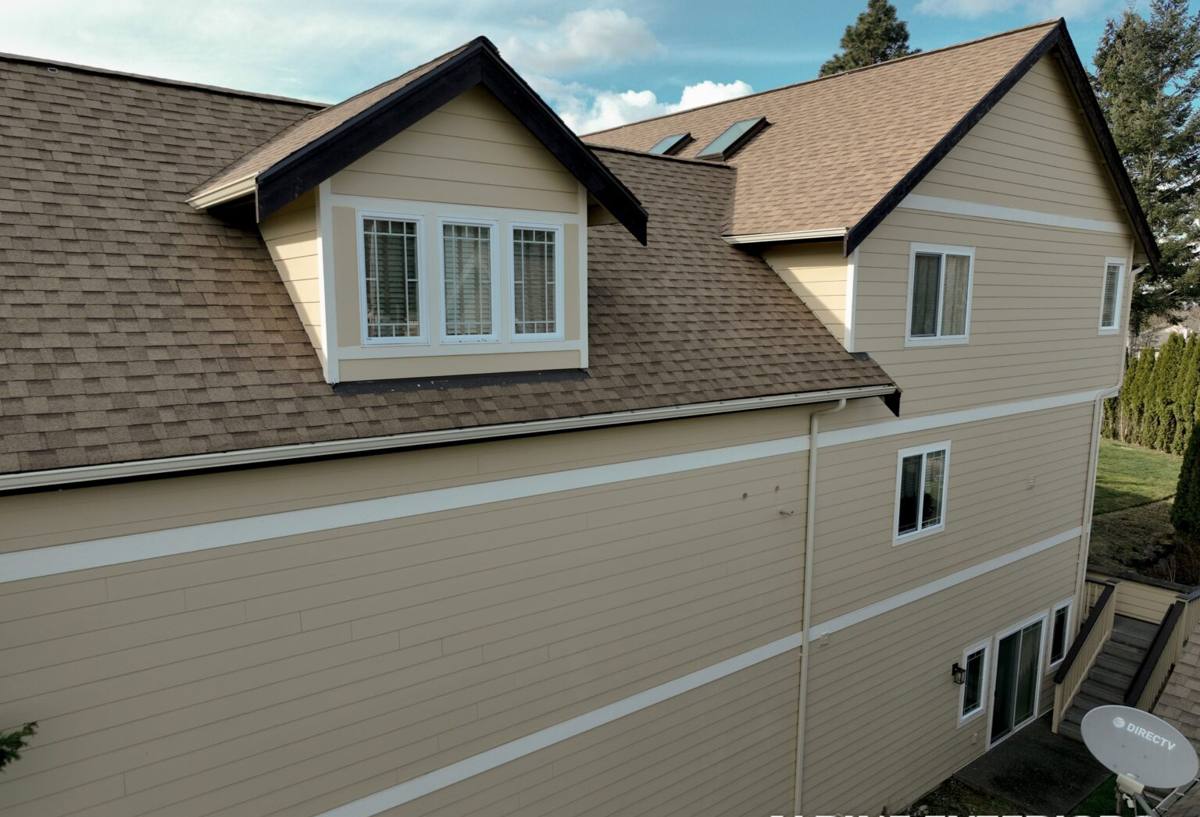
Signs Your California Creek Home Needs Siding Repair
Some damage is obvious. A lot of it isn't — especially on fiber cement and older wood-based sidings, where the surface can look fine while trouble builds underneath. These are the signs worth acting on before they spread:
- Soft or spongy spots when you press on the siding, especially near the bottom courses or under windows
- Visible cracking, chipping, or delamination at butt joints and corners
- Paint or finish that's peeling, bubbling, or wearing unevenly in patches
- Persistent moss or dark staining that keeps coming back after cleaning
- Gaps opening up around trim, window casings, or where siding meets the foundation
- Nail heads popping out or streaking rust down the face of the board
- Musty smell or discoloration on interior walls that back up to exterior siding
- Warping or bowing visible from a distance, especially on the bay-facing side of the house
Any one of these on its own might be minor. Two or three together, especially in the same area of the house, usually means water has been getting behind the siding for a while.
Repair the Right Way: What a Proper Job Actually Involves
Diagnosing the Cause, Not Just the Symptom
A cracked board or a gap at a trim joint is the symptom. The cause could be a failed sealant joint, a flashing detail that was never installed correctly, a fastener that's corroded and let a board shift, or moisture trapped by moss or debris. We pull back damaged material far enough to see what's actually going on before we decide how to fix it. Patching over a cause we haven't identified just delays the same repair.
Matching Materials and Finish
If the existing siding is in generally good condition and the damage is localized, the right move is often a targeted repair — replacing the damaged boards or sections with matching material and finish, not a full re-side. This only works well when the replacement piece is properly matched for profile, exposure, and color, and when it's integrated into the existing lap and flashing system correctly rather than just caulked into the gap.
Sealing and Flashing Details
Given how much wind-driven rain this area sees, the flashing and sealant details around every repair matter as much as the board itself. That means correct head flashing above windows and trim, proper lap orientation so water sheds outward instead of pooling, and sealant used only where it belongs — sealant is a backup to good flashing, not a substitute for it. A repair that leans on caulk to do a flashing detail's job is a repair that will need to be done again.
Repair vs. Replacement: How We Help You Decide
Not every problem area needs a full re-side, and not every repair is worth doing instead of replacement. We walk this decision through with the homeowner honestly rather than defaulting to whichever job is bigger.
| Factor | Favors Repair | Favors Replacement |
|---|---|---|
| Extent of damage | Isolated to one or two areas | Spread across multiple walls or elevations |
| Underlying material condition | Sound, still performing as designed | Warped, delaminating, or past its practical service life |
| Cause of damage | One-off event or a fixable detail (flashing, fastener, sealant) | Systemic moisture intrusion or a recurring pattern across the house |
| Siding material | Fiber cement or sound wood that can be matched | Aging vinyl, hardboard, or product no longer manufactured or matchable |
| Age of existing siding | Within its expected lifespan | Near or past manufacturer-rated service life |
When a repair reveals a bigger problem — rot behind several boards, a wall assembly that was never properly flashed, or a product that's simply reached the end of what it can reasonably do — we'll say so directly. We'd rather lose a small repair job than sell a homeowner a patch that won't hold.
Our Siding Repair Process for California Creek Homes
- On-site inspection. We look at the damage itself, the surrounding siding, and the wall assembly behind it — not just the spot the homeowner called about.
- Honest diagnosis. We explain what caused the damage and whether it's isolated or a sign of a broader issue, in plain terms, before recommending a scope of work.
- Written estimate. A clear scope and price for the repair, including what material and finish will be used and how it will be matched to the existing siding.
- Removal and inspection of the substrate. Once damaged siding is off, we check the sheathing and weather barrier underneath for hidden moisture damage before closing anything back up.
- Correct flashing and sealing. Every repair gets flashing and lap details built for wind-driven rain and salt exposure, not just a quick weatherproof patch.
- Finish match and cleanup. New material is finished to match as closely as possible, and the site is cleaned up before we call the job done.
Why We Repair (and Replace) With James Hardie Fiber Cement
When a repair calls for new siding material — whether it's a few replacement boards or, in cases where the damage points to a bigger problem, a full re-side — our standard is James Hardie fiber cement. It's non-combustible, engineered for Pacific Northwest moisture conditions in its HZ5 product line, and finished with a factory-applied ColorPlus coating that holds up to sun and salt air better than field-applied paint. It's also backed by a strong transferable warranty when installed to Hardie's specifications, which matters on a coastal property where the siding is working harder than it would inland.
We don't install vinyl, LP SmartSide, primed wood, or other fiber cement brands. That's a deliberate standard, not a sales pitch — it means every repair or replacement we do on a California Creek home uses one product system we know inside and out, installed the way the manufacturer specifies, in a climate that punishes shortcuts.
Why Local Experience in Birch Bay and California Creek Matters
A repair crew that mostly works inland jobs doesn't always think about salt exposure, wind direction off the water, or how long moss stays wet on a shaded wall near the bay. Those details change which side of a house fails first, which fastener spec to use, and how aggressively to detail the flashing. Working regularly in this specific area — not just Whatcom County broadly — means we're not guessing at how the local climate behaves on a given lot; we've already seen what it does to siding here, season after season.
It also means a faster, more accurate first look. Because we're already familiar with how homes in this area are typically built and where problems tend to show up, an inspection here usually gets to the real cause of the damage quickly, instead of taking multiple visits to rule things out.
Caring for Your Siding After the Repair
A correct repair should last, but a little seasonal attention keeps it — and the rest of the siding — performing the way it should:
- Rinse off salt residue and grime a couple times a year, especially on the bay-facing side
- Keep gutters and downspouts clear so runoff isn't sheeting down the siding face
- Trim back vegetation and branches that keep walls shaded and damp
- Address new moss growth early with a gentle wash rather than letting it establish
- Walk the exterior once or twice a year and check caulk joints, trim, and low corners for early signs of wear
- Call in a repair while damage is still localized — it's almost always less work and less cost than waiting
If you're seeing any of the warning signs above on a California Creek home, or you just want an honest read on whether a spot of damage is a quick fix or something bigger, we're happy to take a look. Reach out for a free, no-pressure estimate using the form below.