 Birch Bay Exterior
 Fiber Cement Siding Built for Cottonwood Beach's Coastline
Cottonwood Beach sits close enough to the water that its homes take a different kind of weather beating than houses even a few miles inland in Birch Bay. Salt-laden wind off the Strait of Georgia, long stretches of driving rain, and a moss season that can run most of the year all work on exterior walls in ways that standard siding wasn't built to handle. We install fiber cement siding for homeowners in this area because it's one of the few claddings that holds up to all three at once without turning into a maintenance chore.
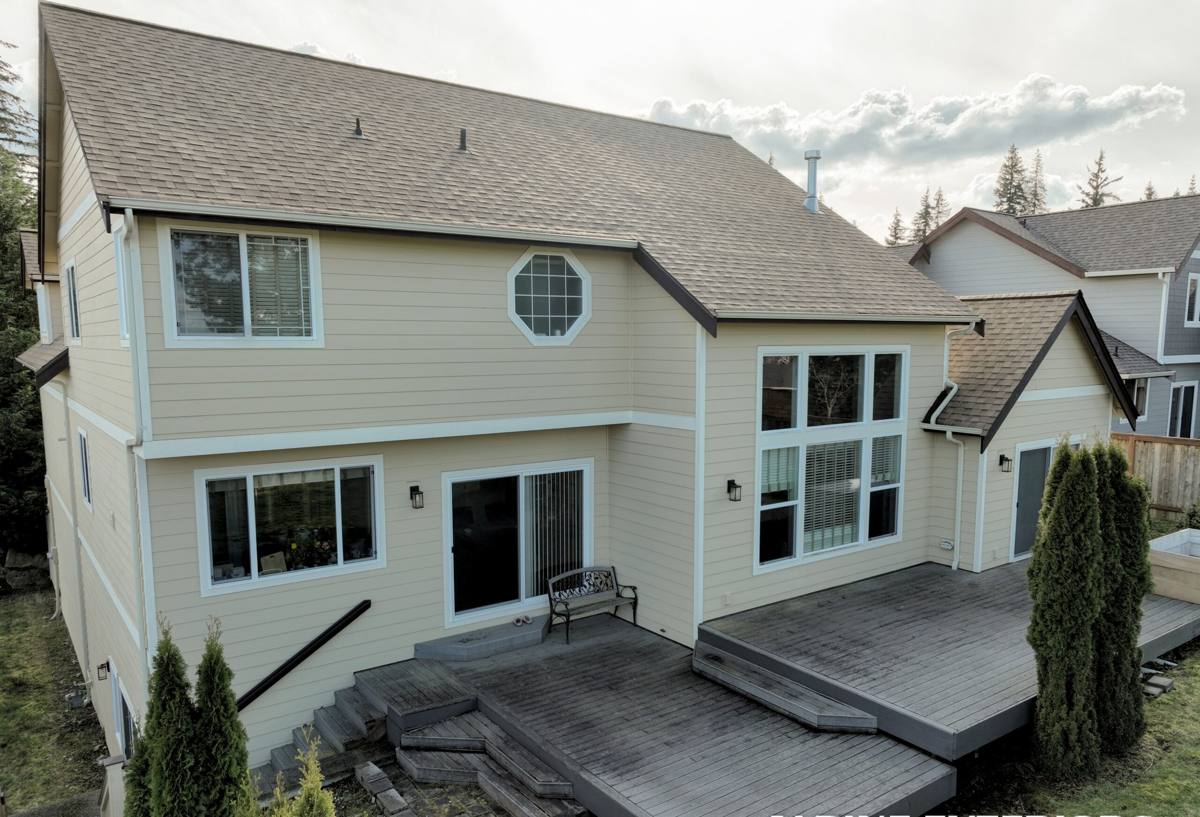
This page is about one job in one place: correctly installed James Hardie fiber cement siding on a Cottonwood Beach home. Not a general siding overview, not a sales pitch for every product on the market — just what your house actually needs given where it sits, and what a job done right looks like from tear-off to trim.
What Salt Air, Driving Rain, and Moss Season Do to Siding
Salt and Wind Exposure
Airborne salt from Boundary Bay and the Strait doesn't just sit on the surface of your siding — it works into seams, fastener heads, and any spot where two materials meet. On wood-based products, that moisture-salt combination accelerates rot from the inside out, often before it's visible from the street. On metal fasteners and trim, it accelerates corrosion. Wind-driven rain makes it worse by pushing water sideways into laps and joints that were only ever designed to shed water falling straight down.
Moss, Algae, and Prolonged Dampness
Whatcom County's marine climate keeps humidity high for much of the year, and shaded north- and west-facing walls near the water rarely get a real chance to dry out between rain events. That's exactly the environment moss and algae need. On absorbent siding materials, sustained dampness doesn't stay on the surface — it soaks in, and repeated wet-dry cycling is what eventually causes swelling, delamination, and paint failure. The siding on a Cottonwood Beach home needs to resist water absorption at the material level, not just rely on a coat of paint to keep moisture out.
Why We Install Only James Hardie Fiber Cement
We standardized on James Hardie for every siding job we do, including here in Cottonwood Beach, and we don't install vinyl, LP SmartSide, or primed wood siding as alternatives. That's a deliberate choice, not a limitation of what we're capable of installing.
Fiber cement is a blend of cement, sand, and cellulose fibers — it doesn't absorb and swell the way wood-based products do, and it doesn't soften, warp, or become brittle from UV and temperature swings the way vinyl can. It's also non-combustible, which matters more every year as wildfire smoke and ember exposure become a bigger part of Pacific Northwest summers. James Hardie's ColorPlus factory-applied finish is baked on and warranted separately from the panel, so it resists the fading and chipping that field-applied paint jobs are prone to in a wet, salty climate. Hardie also engineers specific product lines (HardiePlank HZ5, for example) for different climate zones, which is relevant here — this isn't a one-size-fits-all product marketed the same way in Arizona as it is on the Washington coast.
None of this means other products are junk. It means that after years of installing and maintaining exterior siding in this exact climate, fiber cement from a manufacturer that engineers for coastal exposure is what we're willing to put our name behind.
What a Correct Installation Involves
Prep and Water Management
The siding panel itself is only part of the system. A correct installation starts with the water-resistive barrier and flashing details underneath it — window and door flashing, kick-out flashing at roof-to-wall intersections, and proper weather barrier lapping so water sheds down and out instead of finding a path behind the wall. On a home exposed to wind-driven rain the way Cottonwood Beach properties are, these hidden details matter more than the visible plank pattern. Rushed or skipped flashing work is the single biggest cause of siding failures we see, regardless of what material was used.
Fastening, Clearances, and Trim
James Hardie publishes specific installation requirements — fastener type and spacing, minimum clearance from grade, roofline, and decks, and gaps at butt joints and trim to allow for expansion. Skipping these specs doesn't just risk a warranty claim; it creates the exact conditions (trapped moisture, wicking at ground contact) that undo the durability the product is engineered for. We follow Hardie's published specs as a floor, not a suggestion, especially at grade-level clearances given how much rain this area sees pooling near foundations.
- Weather-resistive barrier installed and lapped correctly before any siding goes up
- Flashing at every window, door, and roof-wall intersection
- Fasteners driven to Hardie's specification, not just "snug"
- Proper clearance from grade, roofing, and decking surfaces
- Factory-cut and factory-primed edges used wherever possible to reduce field cutting exposure
- Caulking only at manufacturer-approved joints, not as a substitute for proper flashing
Our Process, Start to Finish
- On-site assessment — we look at your home's actual exposure: which walls take the worst wind-driven rain, where moss and staining are already showing, and where existing moisture damage might be hiding under the current siding.
- Scope and estimate — a clear breakdown of what's a full tear-off versus what can be addressed with targeted repair, and what trim, flashing, and water management work is included.
- Tear-off and inspection — removing old siding gives us a direct look at the sheathing and framing underneath. Any rot or water damage found at this stage gets addressed before new siding goes on, not covered up.
- Water barrier and flashing installation — the part of the job that determines whether the siding lasts twenty years or fails in five.
- Hardie panel installation — installed to manufacturer spec for fastening, clearance, and joint treatment.
- Final walkthrough — checking trim, caulking, and finish before we consider the job done.
What Drives the Cost of a Cottonwood Beach Siding Job
Every home is different, but the same handful of factors determine scope and cost on most jobs in this area:
| Factor | Why It Matters Here |
|---|---|
| Existing wall condition | Hidden moisture damage from prior water intrusion often isn't visible until tear-off; salt-air exposure can accelerate hidden rot |
| Wall exposure and orientation | West- and water-facing walls in Cottonwood Beach typically need more flashing and water-management attention than sheltered walls |
| Trim and architectural detail | Homes with more windows, dormers, and roof-wall intersections require more flashing work and labor time |
| Full tear-off vs. re-side over existing sheathing | Tear-off allows inspection and repair of the water barrier; skipping it can hide problems this climate makes worse over time |
| Product line and finish | HardiePlank profile, ColorPlus finish selection, and panel width all affect material cost |
Signs Your Cottonwood Beach Home Needs New Siding
- Persistent moss or algae growth that returns soon after cleaning, especially on north or west walls
- Paint that's peeling, bubbling, or chalking faster than expected for its age
- Soft or spongy spots when you press on the siding, particularly near the bottom courses
- Visible warping, cupping, or separation at seams and butt joints
- Rising energy bills that suggest the wall assembly isn't insulating or sealing the way it should
- Staining or streaking below window sills or roof-wall intersections, which often points to a flashing failure
Why a Crew That Already Works Cottonwood Beach Matters
Siding work in a coastal Whatcom County community isn't the same job as siding work forty miles inland. A crew that already works Cottonwood Beach knows which walls typically take the worst of the wind-driven rain, understands the moss and moisture patterns specific to this stretch of coastline, and isn't guessing at flashing details based on a drier climate's assumptions. That local track record also means fewer surprises with permitting and site access, and a crew that isn't learning this area's quirks on your dime.
It also means accountability. A contractor who plans to keep working in your neighborhood for years has every reason to get the flashing, clearances, and finish work right the first time — not just make it look good until the truck pulls away.
Maintaining Hardie Siding in This Climate
Fiber cement cuts maintenance significantly compared to wood or repainted materials, but it isn't zero-maintenance in a salt-air, high-moss environment. A yearly rinse-down to clear salt residue and organic growth before it takes hold, a visual check of caulked joints and flashing after major storms, and prompt attention to any paint chip or ding (to prevent moisture from finding a way behind the ColorPlus finish) will keep the system performing the way it's designed to for decades. That's a fraction of the upkeep wood or vinyl typically demands on a property this exposed.
If your Cottonwood Beach home's siding is showing its age, or you just want a straight answer about what shape it's in, we're glad to take a look. Fill out the form below for a free, no-pressure estimate — we'll walk the exterior, tell you what we actually see, and give you honest options.