 Birch Bay Exterior
 Marietta's Coastline Is Hard on Decks
Marietta sits close enough to the water that salt air, wind-driven rain, and shade from mature evergreens are just part of daily life. That combination is rough on outdoor structures in general, but decks take the worst of it because they're horizontal, walked on, and exposed to standing moisture in a way that siding and trim aren't. A deck built to a generic spec — the kind of build that might hold up fine in a drier inland town — often starts showing problems within a few seasons out here.
We've worked on enough homes along this stretch of Whatcom County to know the failure points aren't hypothetical. They're the same handful of issues, over and over: fasteners corroding faster than expected, boards holding moisture in shaded corners, and moss taking hold in the gaps between boards by the second or third wet season. A composite deck built with this climate in mind avoids most of that. One built without it just moves the same problems onto a more expensive material.
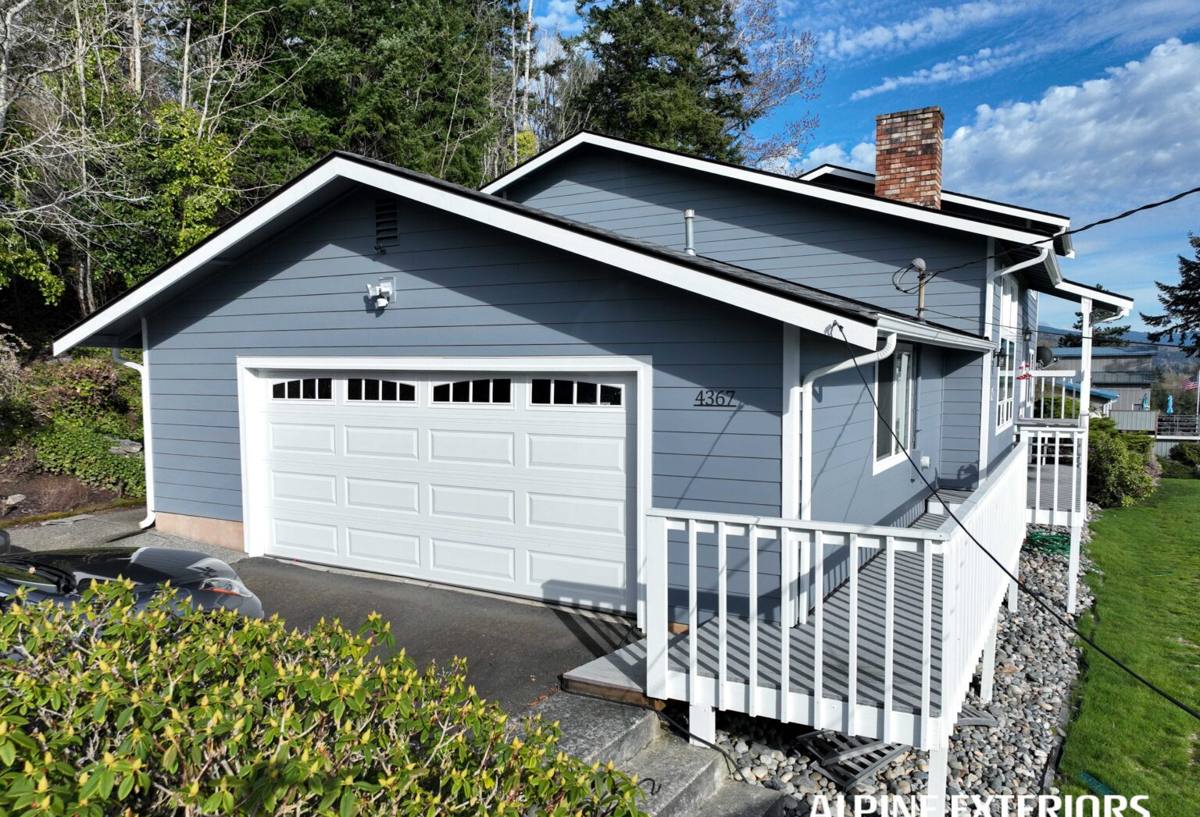
What Salt Air, Rain, and Moss Actually Do to a Deck
To Wood
Untreated or even pressure-treated wood decking absorbs moisture at the board ends, around fastener holes, and wherever boards sit tight against each other. In a marine climate, that moisture doesn't fully dry out between rain events, especially through fall and winter when Birch Bay gets long stretches of overcast, damp weather. The result is cupping, splintering, and — because shaded, moist wood is exactly what moss and algae need to establish — a slick, green film that shows up faster on a wood deck near the water than almost anywhere else in the state.
To Fasteners and Framing
Salt-laden air accelerates corrosion on anything less than a fully rated fastener. We've pulled apart decks where the boards themselves were still serviceable but the screws and joist hangers underneath had corroded enough to compromise the structure. This is a framing and hardware problem as much as it's a decking-material problem, and it's one reason a "just replace the boards" repair on an older deck often isn't enough on its own.
Why Composite Decking Holds Up Better Here
Composite decking — a blend of wood fiber and plastic, usually with a protective cap layer — doesn't absorb water the way solid wood does, which takes the biggest driver of rot, splintering, and moss growth off the table. It won't need annual staining or sealing, which matters on a property where a missed maintenance year in a wet climate can do real damage. And because it doesn't have wood's open grain, algae and moss have a much harder time getting a foothold, even in the shaded, north-facing spots common on Marietta lots with tall fir and cedar cover.
That said, composite isn't a install-it-and-ignore-it material. It still needs proper drainage underneath, the right fastening system, and gaps sized correctly for board expansion — get those wrong and you can still end up with standing water, mold under the boards, or a deck that buckles in the first hot week of summer. The material solves some problems; the installation has to solve the rest.
Composite vs. Wood vs. PVC: A Straight Comparison
| Factor | Pressure-Treated Wood | Capped Composite | Solid PVC |
|---|---|---|---|
| Moisture absorption | High — swells, cups, checks | Very low | Essentially none |
| Moss/algae resistance | Poor in shaded, damp spots | Good, especially with a capped surface | Very good |
| Annual maintenance | Staining or sealing most years | Occasional wash-down | Occasional wash-down |
| Upfront cost | Lowest | Mid | Highest |
| Typical lifespan | 10–15 years before major repair | 25–30+ years | 25–30+ years |
| Feel underfoot | Warmer, more natural texture | Consistent, some heat retention in direct sun | Consistent, lighter |
We install composite for most Marietta homeowners because it lands at the best point between upfront cost and how little it asks of you afterward. PVC is a fair option too, particularly right on the waterfront where salt exposure is heaviest, but it costs more and some homeowners find the look less natural. Wood still has a place for owners who want that specific look and are willing to keep up with the maintenance — we won't talk anyone out of it, but we're upfront that it's a different level of ongoing work in this climate.
What a Correct Composite Deck Build Involves
Substructure and Framing
The framing underneath is where a lot of decks quietly fail, because it's invisible once the boards go down. We use corrosion-rated hardware throughout — joist hangers, structural screws, and ledger flashing rated for the moisture and salt exposure this area sees, not just whatever meets the bare minimum code requirement. Ledger board flashing gets particular attention, since that's the single most common point where water works its way into a house rim joist over time.
Drainage and Board Spacing
Composite boards need consistent gapping, both between boards and at the perimeter, so water actually sheds instead of sitting in narrow channels where it feeds moss and mildew. We also joist-tape the framing before boards go down, which protects the wood underneath and keeps moisture from wicking into the substructure — a step that's easy to skip and impossible to see once the deck is finished.
Fasteners and Fastening Pattern
Hidden fastener systems keep the deck surface free of screw heads, which matters both for looks and because exposed fastener holes are one more place for water to sit. The fastening pattern also has to account for composite's thermal expansion, which is more pronounced than wood's — done wrong, you get boards that buckle or pull loose after a few seasons of temperature swings.
Railings and Code
Any deck of meaningful height needs railing that meets current guard and baluster spacing code, and in a wind-exposed spot like Marietta, we also think about how the railing system handles wind load, not just whether it passes inspection. We build to current Whatcom County requirements and pull permits where the scope of work calls for one.
Our Process, Site to Finish
We start with an on-site assessment, not a phone estimate. That means walking the existing deck or the proposed footprint, checking the condition of ledger attachment points, looking at drainage and grade, and noting how much sun versus shade the deck actually gets through the day — that shade pattern tells us a lot about where moss risk will be highest.
From there we handle permitting where required, then move into demo (if we're replacing an existing deck), framing repairs or new framing, joist protection, board installation, and railing. We walk the finished deck with the homeowner before we consider the job done, and we're clear about what maintenance — minimal as it is — will keep the warranty intact.
Living With a Composite Deck in Moss Season
Composite cuts down maintenance dramatically compared to wood, but "low-maintenance" isn't "no-maintenance," especially through a Whatcom County fall and winter. A few habits keep a composite deck looking and performing the way it should for decades:
- Sweep off fallen needles and leaf debris regularly through autumn — trapped organic matter is what feeds moss growth, not the composite itself
- Rinse the deck surface a few times a year, more often in shaded sections, with plain water or a mild deck cleaner
- Keep gutters and downspouts clear so runoff isn't dumping extra water directly onto the deck surface
- Check that furniture and planters aren't sitting in one spot long enough to trap moisture underneath
- Have railings and fastener points inspected periodically, since hardware is still the part of the system most affected by salt air
Signs an Existing Deck Has Already Lost the Battle
- Boards that stay slick with moss or algae film even a day or two after rain
- Soft or spongy spots underfoot, which usually points to framing damage rather than just surface wear
- Visible rust staining around fastener heads or hardware
- Gaps between boards that have closed up or widened unevenly
- A ledger board area that looks discolored or damp along the house wall
Any one of these is worth a look before it turns into a structural repair instead of a straightforward deck replacement.
What Affects the Cost of a Marietta Composite Deck
| Factor | Why It Matters |
|---|---|
| Deck size and shape | Square footage and the number of angles/cuts drive material and labor time |
| Existing framing condition | Rotted or corroded substructure needs rebuilding before new decking goes on |
| Height and railing requirements | Taller decks need more substantial railing systems and structural support |
| Board tier | Entry-level capped composite vs. premium composite or PVC changes material cost per square foot |
| Site access | Tight side yards or elevation changes common on sloped Marietta lots can add labor time |
| Permitting scope | New construction or structural changes require permit review, which factors into timeline and cost |
We give homeowners a real number after seeing the site, not a rough guess over the phone — too much of what drives the final cost depends on what's actually underneath the existing deck or on the ground where a new one is going.
Why a Crew That Already Works Marietta Matters
A contractor who already builds and repairs decks in this specific stretch of Whatcom County has seen how these lots actually behave — where the shade sits through the seasons, which framing details keep failing on homes near the water, and what a proper build here needs to hold up that a copy-paste spec sheet doesn't account for. That's different from general decking experience picked up somewhere drier or further inland.
It also means fewer surprises during the job itself. We know what Whatcom County permitting typically expects for deck work, we're used to the drainage and access quirks of this terrain, and we're not learning the local climate's failure modes on your project. For a homeowner, that translates into a deck that's specified correctly the first time, not one that needs revisiting in three years once the moss and moisture find the weak points.
If you're weighing a new composite deck or replacing one that's past its prime, we're happy to take a look and give you a straightforward, no-pressure estimate — just fill out the form below.