 Birch Bay Exterior
 Window Installation Built for Blaine's Coastal Exposure
Blaine sits right up against the water in northern Whatcom County, and homes here take a different kind of beating than houses even twenty minutes inland. Salt-laden air off the bay, wind-driven rain that comes in sideways during winter storms, and a moss season that seems to stretch longer every year all work against your windows year-round. A window installation job that would hold up fine in a drier, more sheltered part of the county can fail early here if it isn't built and installed with this specific exposure in mind.
This page covers what window installation actually looks like when it's done right for a Blaine home — the materials that make sense, the installation details that matter most in this climate, and how our process works from first look to final walkthrough.
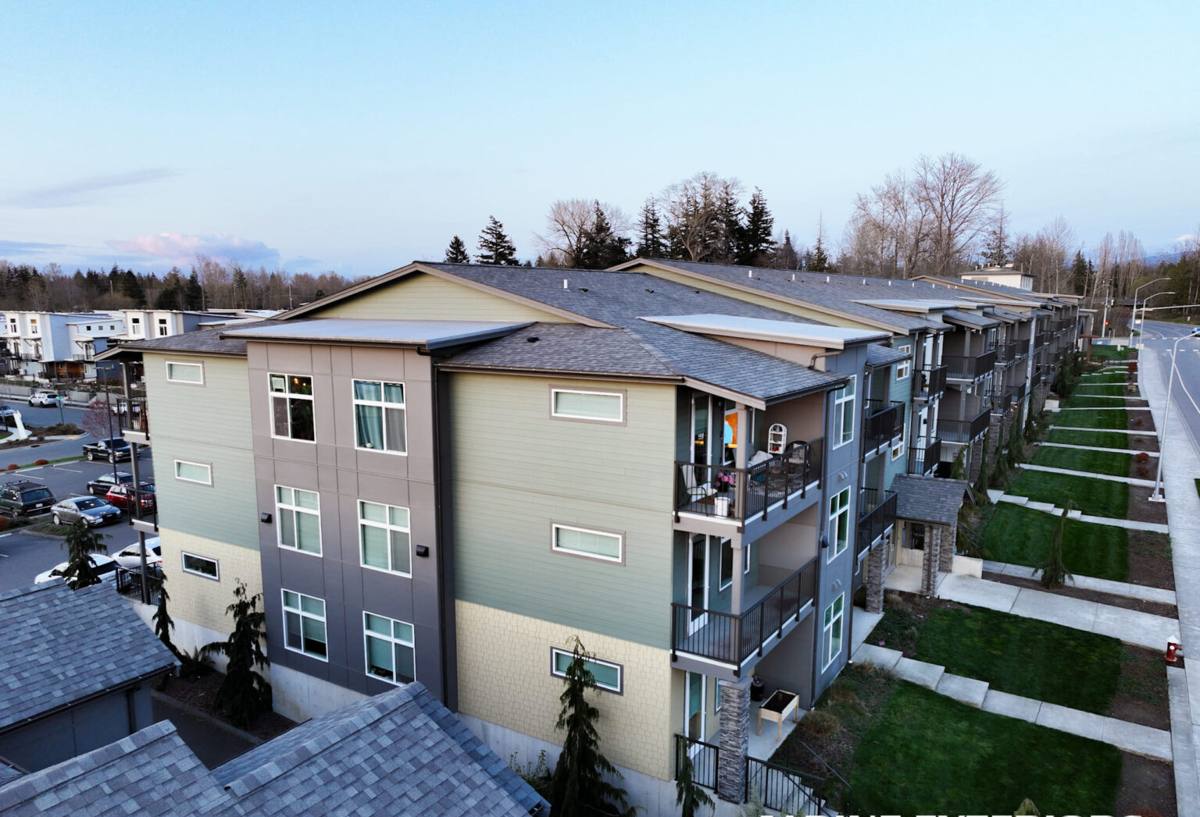
What Salt Air, Rain, and Moss Do to Windows Over Time
Salt Air and Metal Fatigue
Airborne salt is corrosive to metal hardware — hinges, cranks, locks, and especially aluminum components that aren't properly coated or isolated. Over years, homes closer to the water tend to show pitting and corrosion on window hardware well before homes further inland, even when the windows themselves are the same age. This is one reason frame and hardware material choice matters more here than it would in a lot of other parts of the state.
Wind-Driven Rain and Water Intrusion
Rain that falls straight down is easy to shed. Rain that's being pushed sideways by wind off the water is a different problem — it gets pushed up under trim, into gaps around the frame, and behind poorly lapped flashing. Most window leaks we find in this area aren't caused by a bad window unit; they're caused by an installation that didn't account for wind-driven water finding its way in through small gaps that would never be tested by calm weather.
Moss, Algae, and Trapped Moisture
The long damp season here means moss and algae growth on north-facing walls, sills, and anywhere water sits instead of draining. When moss and organic buildup sit against wood trim or an improperly sealed sill, they hold moisture against the material far longer than it would otherwise sit wet, which accelerates rot in wood components and can degrade sealants faster than in a drier climate.
Signs Your Blaine Home's Windows Need Attention
Some warning signs are obvious, but a lot of window problems in this climate start small and stay hidden until they've done real damage to the wall around them. Walk your exterior and check for these:
- Soft, discolored, or bubbling trim or siding directly around a window frame
- Condensation building up between panes on double or triple-glazed units
- Visible gaps, cracked caulk, or daylight showing around the frame
- Windows that are difficult to open, close, or lock — often a sign of a warped or swollen frame
- Moss or dark staining concentrated right at the sill or below the window
- Musty smell or visible mold on interior trim near a window, especially after a storm
- Noticeable draft or temperature difference near the window when it's windy outside
- Peeling interior paint or finish on the window stool or apron
Any one of these on its own might be minor. Several together, especially around the same window, usually means water has already been getting in for a while.
Choosing a Window Frame Material for This Climate
There's no single "best" window material for every home — it depends on your budget, how exposed the wall is to wind and rain, and how much upkeep you want to take on. Here's how the common options actually perform in a salt-air, high-moisture environment like Blaine's:
| Frame Material | Salt Air / Corrosion Resistance | Moisture Behavior | Maintenance Load | Relative Cost |
|---|---|---|---|---|
| Vinyl | Good — won't corrode, though hardware quality still matters | Handles moisture well; no rot risk in the frame itself | Low | Lower |
| Fiberglass | Very good — dimensionally stable, resists salt exposure well | Excellent; very low expansion/contraction with wet-dry cycles | Low | Higher |
| Wood-clad | Depends heavily on cladding integrity and sealant maintenance | Vulnerable if cladding or sealant fails and moisture reaches the wood core | Higher | Higher |
| Aluminum (uncoated or poorly finished) | Poor in direct salt exposure without a quality factory finish | Prone to condensation and thermal transfer | Moderate to high | Varies |
Our general standard for homes with direct wind and salt exposure is vinyl or fiberglass with quality, corrosion-resistant hardware. Wood-clad units can absolutely work here, but they ask more of the homeowner in ongoing sealant inspection and maintenance — that's a real trade-off worth going in with eyes open, not a knock on the product itself.
What a Correct Installation Involves
The window unit itself is only part of the equation. Most of the leaks and premature failures we're called out to repair trace back to installation shortcuts, not a bad window. In this climate, a few details matter more than usual.
Sill Pans and Flashing Sequence
Every opening needs a sloped sill pan to direct any water that does get past the window back outside, and flashing has to be layered correctly — each piece lapping over the one below it, like shingles — so water sheds down and out rather than working its way behind the wall assembly. Skipping or reversing this sequence is one of the most common causes of hidden rot we see.
Sealants and Backer Rod
Caulk alone isn't a water barrier — it's a finish layer over a properly built assembly. Backer rod set at the right depth, paired with a sealant rated for this climate's temperature and moisture swings, gives the joint the flexibility to move without cracking open over the years.
Fasteners and Shims for Wind Exposure
Homes on more exposed lots near the water take more wind load, and a window that isn't shimmed square and fastened per the manufacturer's pattern can rack slightly over time — which is exactly what leads to the hardware and operation problems mentioned earlier.
Interior and Exterior Finish Work
Once the window is set and sealed, trim and finish work need to be closed up properly on both sides so the opening isn't left exposed to weather during a gap between install and finish — not always avoidable on a big job, but it should be minimized and protected.
Our Window Installation Process
On-Site Assessment
We start by looking at the existing openings, checking for any hidden moisture or rot around current windows, and talking through what you actually need — full-frame replacement versus insert replacement, and which openings are taking the worst exposure on your specific lot.
Removal and Opening Prep
Old units come out carefully so we can inspect the framing underneath. This is often the point where hidden water damage from a prior installation shows up — if we find it, we address it before a new window ever goes in, rather than sealing a new window over a problem that will keep growing.
Installation Day
Sill pan, flashing, backer rod, sealant, and fastening all follow a set sequence rather than being left to individual judgment on the day. This consistency is exactly what makes an installation crew reliable — the same details, done the same correct way, on every window in the house.
Final Inspection and Walkthrough
We check operation, look at every joint from both inside and outside, and walk the finished job with you before we consider it done.
What Affects the Cost of a Blaine Window Project
Every home is different, so we won't quote a number without seeing the job, but these are the main factors that move the price up or down:
| Factor | Why It Matters |
|---|---|
| Full-frame vs. insert replacement | Full-frame lets us fully address flashing and any hidden rot; inserts are faster and less invasive but depend on sound existing framing |
| Frame material and glazing package | Vinyl, fiberglass, and wood-clad options carry different material costs and long-term maintenance needs |
| Number and size of openings | Larger units and more openings mean more labor, flashing, and material |
| Wall condition behind the existing window | Hidden water damage found during removal adds repair scope that couldn't be seen beforehand |
| Exposure and access | Upper-story or highly wind-exposed openings can require more time and care to flash and seal correctly |
Why a Crew That Knows Blaine and Birch Bay Matters
A crew that only occasionally works this far north can miss things that are second nature to a crew working Blaine and Birch Bay regularly — how much more attention a west- or water-facing wall needs versus a sheltered one, which sealants actually hold up through a full wet season here rather than just on paper, and how to sequence a job around this area's weather windows so an open wall isn't sitting exposed when a storm rolls in off the water. That local pattern recognition is built from doing the work here, not from a general installation checklist.
If you're seeing any of the warning signs above, or you're just planning ahead for windows that are getting older, we're happy to take a look and give you a straightforward, no-pressure assessment of what your home actually needs. Use the form below to request a free estimate.