 Birch Bay Exterior
 The Lynden Roof Challenge: Rain, Moss, and Marine Air
Roofs in Lynden don't fail because of one bad storm. They fail slowly, from months of steady Whatcom County rain, long stretches of shade and dampness that feed moss, and the marine-influenced air that moves in off Birch Bay and the Sound. A roof here can look fine from the ground and still have a soft deck, a failing flashing seam, or a moss mat holding water against the shingles longer than the manufacturer ever designed for. Repair work in this area isn't about patching a hole and moving on — it's about understanding why that spot failed in the first place and making sure the fix doesn't just move the problem three feet over.
We work roofs across Whatcom County, including Lynden and the Birch Bay coastline, so we see the same failure patterns repeat from one property to the next. That pattern recognition is most of what separates a repair that lasts from one that reopens in two winters.
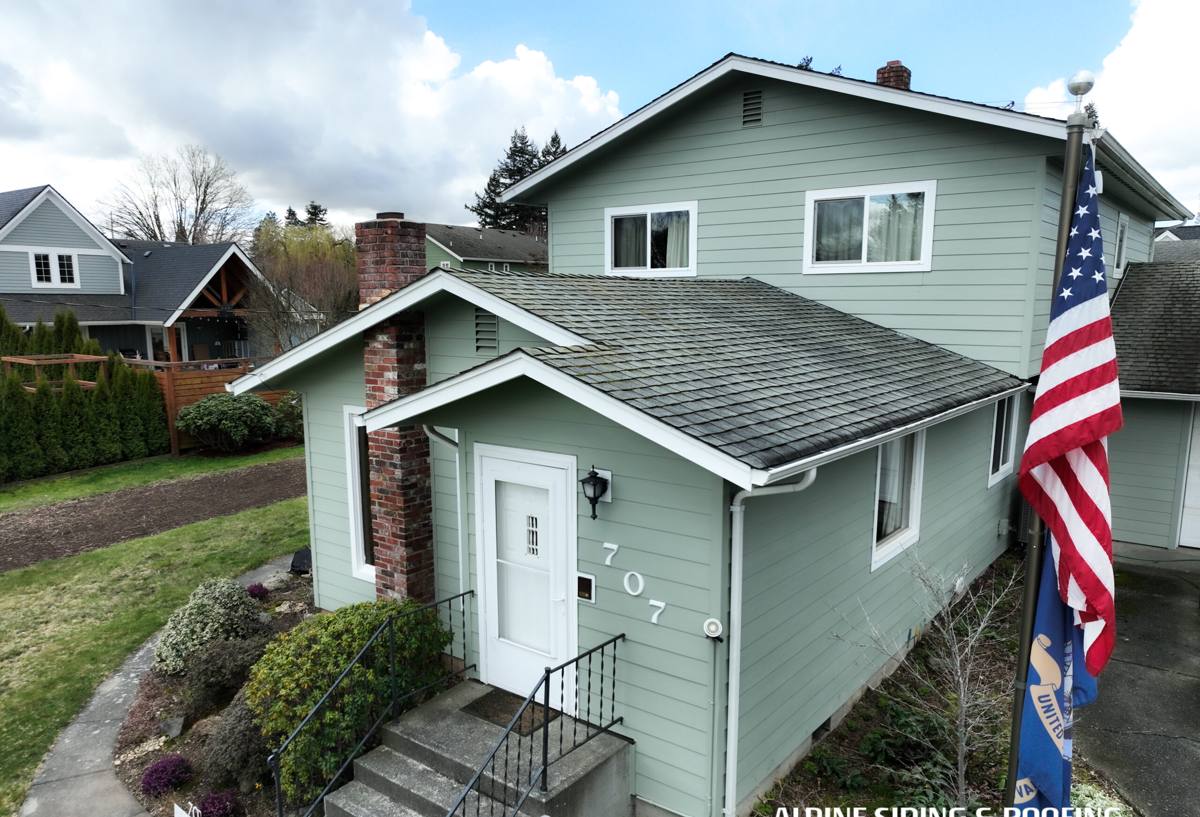
How Moss and Moisture Actually Damage a Roof
The Moss Growth Cycle
Moss doesn't just sit on top of shingles — it roots into the granule surface and holds moisture against the mat long after the rest of the roof has dried out. On north-facing slopes, under conifers, or anywhere shade lingers, that cycle can repeat for most of the year in this climate. Over time it lifts shingle edges, breaks the granule bond that protects the asphalt from UV and weather, and creates channels where wind-driven rain can work its way underneath instead of shedding off.
Trapped Moisture and Deck Rot
The real damage usually isn't visible until the shingles come off. Moisture that gets past a compromised shingle or an old flashing joint travels along the underlayment and finds the nearest fastener, seam, or low point. Given enough time — and Whatcom County gives it plenty of time — that moisture reaches the roof deck itself. A soft or delaminated deck under a small leak is far more common than most homeowners expect, and it's the reason a "quick patch" without an inspection underneath can be a waste of money.
Common Roof Repair Calls We Get in Lynden
Most repair calls in this area fall into a handful of categories. Knowing which one you're dealing with changes both the scope and the cost.
| Symptom | Likely Cause | Typical Fix |
|---|---|---|
| Interior ceiling stain, no visible roof damage | Failed flashing at a penetration or wall intersection | Re-flash the joint, replace saturated underlayment, confirm deck condition |
| Dark streaking or thick moss patches | Prolonged moisture retention on shaded slopes | Careful moss removal, treatment, and inspection for granule loss underneath |
| Granules collecting in gutters | Aging asphalt shingles losing surface protection | Spot-replace worn sections or recommend a replacement timeline |
| Soft spot underfoot near a valley or chimney | Long-term water intrusion into the deck | Cut back to sound decking, sister or replace framing if needed, rebuild the section properly |
| Lifted or cracked shingles after wind | Storm damage or brittle aging shingles | Replace damaged shingles with matched material and re-seal exposed nail heads |
What a Proper Roof Repair Actually Involves
Diagnosis Before Anything Gets Touched
A repair that starts with "seal the leak" instead of "find the leak" usually ends up being redone. We trace water back to its actual entry point, which is often several feet from where the stain shows up inside, and we check the decking underneath before deciding whether this is a shingle-level repair or something that needs framing work.
Matching Materials, Not Just Covering Gaps
New shingles laid next to twenty-year-old ones will never blend perfectly, but there's a right way and a lazy way to do it. We match profile, color family, and exposure as closely as the existing roof allows, and we integrate new courses into the existing pattern instead of overlaying a visibly different patch on top.
Flashing and Underlayment, Not Just Shingles
Most leaks that keep coming back were "fixed" at the shingle level when the actual failure was in the flashing or underlayment beneath it. A repair that only replaces surface shingles without addressing the flashing at a chimney, skylight, or wall intersection is a repair that's likely to fail again in the same spot.
Our Roof Repair Process, Step by Step
- Inspection and diagnosis — We get on the roof (not just a ground-level look) to trace the actual source, not just the visible symptom.
- Written scope and honest estimate — You get a clear explanation of what failed, why, and what it takes to fix it correctly — including if a full section replacement makes more sense than a patch.
- Removing compromised material — Damaged shingles, saturated underlayment, and any soft decking come out until we're back to sound material.
- Rebuilding the layer system — New underlayment, corrected flashing, and matched shingles go back in, following the same water-shedding logic the original roof was designed around.
- Cleanup and final check — Fasteners sealed, debris cleared, and gutters checked so the repair doesn't get undone by a clog on the next heavy rain.
Repair or Replace? How We Help You Decide
Not every roof problem in Lynden needs a full replacement, but not every leak should be treated as a five-minute patch either. We look at the roof as a whole before recommending either path.
| Factor | Points Toward Repair | Points Toward Replacement |
|---|---|---|
| Age of roofing material | Under roughly two-thirds of expected lifespan | Nearing or past expected lifespan for the material |
| Extent of damage | Isolated to one section or penetration | Spread across multiple slopes or recurring in different spots |
| Deck condition | Solid, dry decking found during inspection | Soft, delaminated, or repeatedly wet decking |
| Moss and moisture history | First occurrence, manageable with treatment | Chronic moss return despite treatment and maintenance |
| Overall granule and material condition | Good granule coverage, flexible shingles | Heavy granule loss, brittle or curling shingles roof-wide |
When a roof is on the fence between the two, we'll tell you honestly rather than push whichever job is bigger.
Materials and Workmanship Standards We Hold To
Roof repair only holds up if the materials and technique underneath match the conditions the roof actually faces. In a climate with as much sustained moisture as this one, we're deliberate about a few things:
- Flashing details get sealed and lapped correctly, not just caulked over as a shortcut.
- Fasteners are set to manufacturer spec — overdriven or underdriven nails are a common hidden cause of early leaks.
- Underlayment is chosen and installed for the amount of moisture exposure the slope actually sees, not a one-size-fits-all approach.
- Where moss has been a recurring issue, we'll talk through preventive options rather than just treating the current growth and moving on.
We won't cut corners on a repair to make it cheaper or faster if that shortcut means it's likely to fail again in a season or two — that costs you more in the long run, not less.
A Maintenance Checklist for Lynden Homeowners
Between repairs, a little seasonal attention goes a long way in this climate. Consider this a baseline, not a substitute for a professional inspection if you already suspect a problem:
- Clear gutters and downspouts before the fall rains settle in for good.
- Check shaded, north-facing slopes for moss buildup at least once a year.
- Look inside the attic (not just the ceiling) for staining, especially after a hard windstorm.
- Trim back overhanging branches that keep a section of roof shaded and damp longer than the rest.
- Have flashing around chimneys, skylights, and vents checked every few years, since these are the most common failure points.
- Don't ignore small granule buildup in the gutters — it's often the earliest visible sign of aging shingles.
Why Hiring a Crew That Already Works Lynden Matters
A roof repair company that mostly works dry-climate jobs will approach a Lynden leak differently than one that works Whatcom County and the Birch Bay coastline as a matter of routine. We already know which flashing details tend to fail first in this much sustained moisture, which slopes hold moss longest through a Pacific Northwest winter, and what a "small" leak here can turn into if the deck underneath has been wet for a while. That local pattern recognition means fewer surprises mid-repair and a scope that reflects what your roof actually needs — not a generic checklist.
If you've got a leak, a moss problem, or a roof that's just due for an honest look, we're happy to come out, get on the roof, and give you a straightforward assessment. The estimate is free, there's no pressure attached to it, and you'll walk away knowing exactly what your roof needs and why — you can request one using the form below.