 Birch Bay Exterior
 Why Bellingham Roofs Wear Differently
Bellingham sits close enough to the water that homes take on a different kind of weathering than roofs further inland. Salt-laden air off Bellingham Bay accelerates corrosion on exposed metal — fasteners, flashing, and vents age faster here than the same materials would fifty miles east. Add driving rain that comes in sideways during winter storms, and any weak point in a roof's water-shedding details gets tested constantly, not occasionally. Then there's moss. Whatcom County's damp, mild winters give moss and algae a long growing season, and once it takes hold on a roof it holds moisture against the surface for months at a time. None of this means Bellingham roofs fail faster than they should — it means the ones that fail early usually failed on installation details that don't matter as much in drier climates but matter a great deal here.
Signs Your Bellingham Roof Needs Replacement, Not Another Repair
Every roof eventually crosses a line from "repairable" to "replace it." In this climate, that line often shows up earlier than the shingle manufacturer's rated lifespan would suggest, because moisture exposure and moss are doing extra work in the background. Watch for:
- Granule loss heavy enough that you can see bare, shiny patches on asphalt shingles
- Shingles that are cupping, curling at the edges, or cracking when you look closely
- Moss or algae growth that keeps coming back within a season or two of cleaning
- Soft or spongy spots underfoot in the attic, or daylight visible through the roof deck
- Water stains on interior ceilings, especially near valleys, chimneys, or skylights
- Repeated flashing leaks in the same spot after prior repairs
- A roof approaching or past 20-25 years for asphalt composition in this climate
One or two of these on their own might mean a targeted repair is still the right call. Several together — particularly sheathing softness combined with age — usually means the roof system as a whole is past the point where patching makes financial sense.
What a Correct Roof Replacement Involves
A roof replacement is not just "new shingles on top of what's there." Done properly, it's a full rebuild of the water-shedding system, and in a climate like this one, skipping any of the following steps is where premature failures come from.
Full Tear-Off and Sheathing Inspection
We remove the existing roofing down to the deck rather than layering over it. That's the only way to actually see the plywood or OSB sheathing underneath, which is where hidden moisture damage from years of driving rain and moss-trapped moisture tends to show up. Soft or delaminated sheathing gets replaced before anything new goes down — installing new roofing over compromised decking just hides the problem for a future owner to deal with.
Underlayment and Vulnerable-Area Protection
A synthetic underlayment goes down across the full deck as the roof's secondary water barrier, with self-adhered ice-and-water membrane at eaves, valleys, and other spots where wind-driven rain is most likely to force its way under the shingles. In a coastal-influenced climate, this layer is doing real work most of the year, not just during rare cold snaps.
Flashing at Every Penetration
Chimneys, skylights, sidewalls, and vent pipes are where most roof leaks actually originate — not the open field of shingles. Correct step flashing, counter-flashing, and pipe boots, properly integrated with the underlayment rather than just caulked over, are what keep those transitions dry through repeated storms.
Attic Ventilation
Balanced intake and exhaust ventilation keeps the attic close to outdoor temperature and lets moisture escape instead of condensing against the underside of the deck. Poor ventilation shortens shingle life, contributes to moss growth by keeping the roof surface cooler and damper, and can quietly rot sheathing from below even when the roofing above looks fine.
Choosing a Roofing Material for the Bellingham Climate
There's no single "best" roofing material — the right choice depends on your home's exposure, budget, and how much long-term maintenance you're willing to keep up with. Here's how the common options perform under salt air, driving rain, and heavy moss pressure:
| Material | Moss/Algae Resistance | Coastal Air Durability | Typical Lifespan Here |
|---|---|---|---|
| Standard asphalt composition | Moderate — benefits from regular cleaning | Good with quality fasteners and flashing | 18-25 years |
| Algae-resistant (AR) asphalt shingles | Better — copper/zinc granules slow regrowth | Good | 20-28 years |
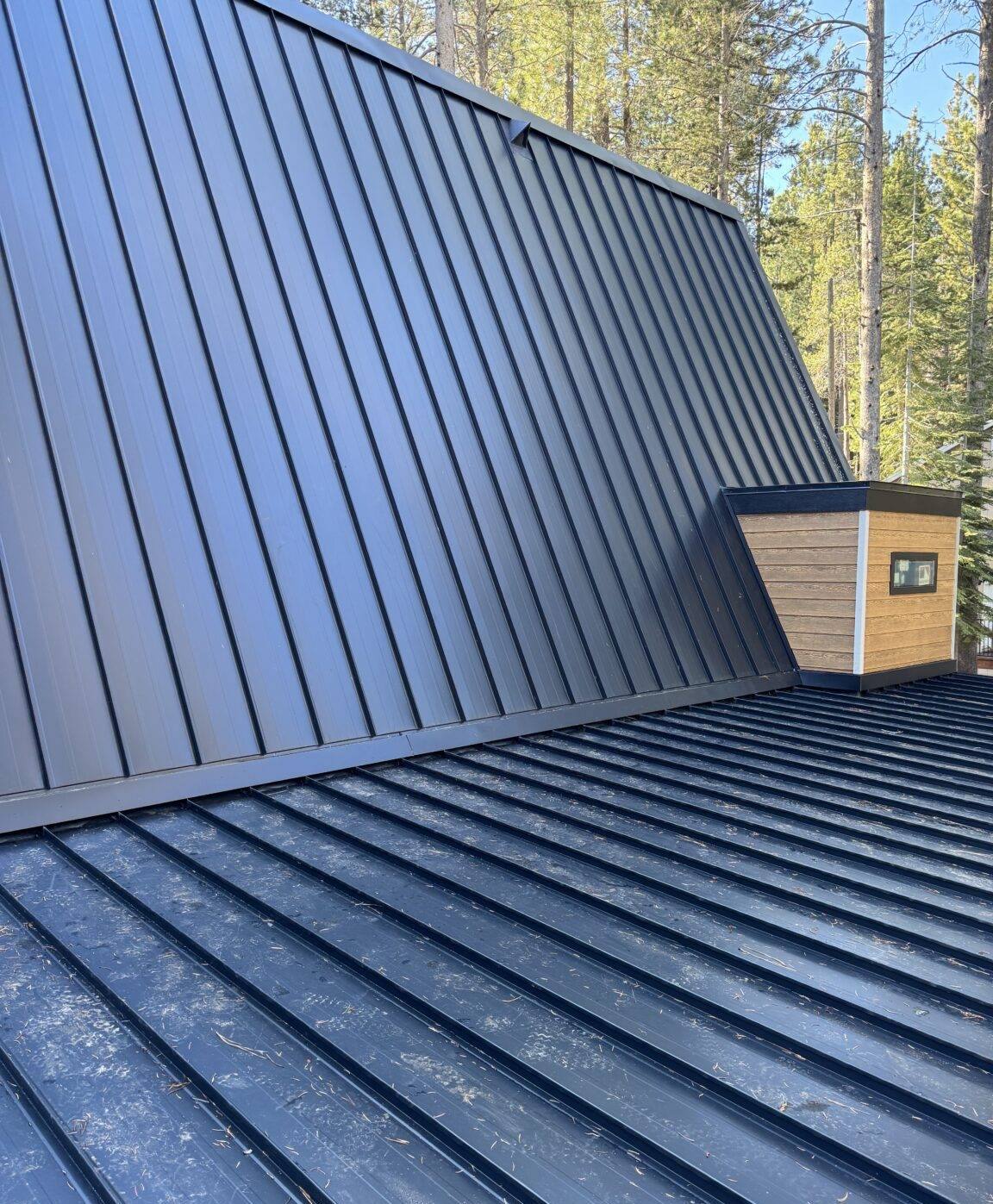
| Standing seam metal | Very good — sheds moisture, little for moss to grip | Requires corrosion-rated fasteners and coatings near the water | 40-plus years |
| Cedar shake | Poor without diligent upkeep — retains moisture | High maintenance burden in this climate | Highly maintenance-dependent |
We generally steer homeowners toward algae-resistant asphalt shingles or metal roofing for this area, not because other materials are inherently bad, but because they demand less ongoing maintenance to perform well against Whatcom County's damp winters and salt-influenced air. Cedar shake can still look excellent here, it just requires an owner who's committed to regular cleaning and treatment — that's a trade-off worth being honest about up front rather than after the fact.
Moss, Algae, and the Bellingham Moss Season
Moss doesn't just sit on top of a roof looking bad — it works its way under shingle edges, lifts them slightly, and holds standing moisture against the roof surface long after a storm has passed. Over a long moss season, that constant dampness accelerates granule loss and, eventually, sheathing rot underneath. Shaded, north-facing roof planes and roofs under overhanging trees see this worst.
A correct roof replacement addresses moss two ways: choosing algae-resistant materials where it makes sense, and making sure the roof's ventilation and drainage are set up so water actually leaves the roof instead of lingering. Zinc or copper strips near the ridge can also help suppress regrowth on a new roof, and we'll talk through whether that's worth adding based on how shaded your particular roof is.
Our Roof Replacement Process
- On-site inspection — we walk the roof and attic, check current material condition, sheathing, ventilation, and flashing details, and take measurements.
- Written estimate — a clear scope covering material choice, tear-off, any sheathing repair allowance, and flashing work, with no vague line items.
- Scheduling around weather — we plan for dry working windows and protect the open roof deck if conditions shift mid-project.
- Tear-off and deck inspection — old roofing comes off, sheathing is inspected and repaired as needed, and debris is hauled off site.
- Underlayment, flashing, and ventilation installed — the parts of the job that determine whether the roof stays dry for the next two decades.
- New roofing installed to manufacturer specification, including nailing patterns rated for wind exposure.
- Final walkthrough — we review the finished roof with you, cover warranty paperwork, and make sure gutters and downspouts are clear and functioning with the new roof edge.
Permits, Codes, and Wind Exposure
Roof replacements in Bellingham and unincorporated Whatcom County typically require a building permit, and inspections confirm that underlayment, flashing, and fastening meet current code. We handle the permitting process as part of the job rather than leaving it to the homeowner. Because this area sees real wind-driven storms off the water, we also pay attention to nailing patterns and fastener schedules rated for the wind exposure your specific site sees — a roof on an open, water-facing lot needs a tighter fastening schedule than one tucked into a sheltered inland yard, even within the same neighborhood.
What Affects the Cost of a Bellingham Roof Replacement
Every roof is priced individually, but the main variables that move the number are consistent. This isn't a quote — it's a guide to what you're actually paying for so a bid makes sense when you see it.
| Factor | Why It Matters |
|---|---|
| Roof size and pitch | More surface area and steeper pitches mean more material and labor time, plus added safety measures on steep sections |
| Material choice | Standard asphalt, algae-resistant asphalt, and metal have different material and labor costs |
| Sheathing condition | Rot or soft decking found during tear-off adds repair scope that can't always be predicted before opening the roof up |
| Number of penetrations | Chimneys, skylights, and multiple roof planes each add flashing labor |
| Layers to remove | Roofs with an existing overlay take longer to tear off than a single layer |
| Access and site conditions | Steep driveways, limited staging area, or difficult roof access affect labor time |
Why a Local Bellingham Crew Matters
A crew that already works this area knows which roof orientations hold moss the longest, which streets catch the worst of the wind off the bay, and what a Whatcom County permit inspector actually wants to see before signing off. That's not something a crew passing through the area for a single job picks up quickly. Local knowledge also means we're still around next year and the year after if you have a warranty question — not just a name on an invoice from a company that worked its way through town once.
Before you hire anyone for a roof replacement in this area, it's worth asking a few direct questions:
- Do you carry current liability insurance and workers' compensation coverage?
- Will you pull the required permit, or is that left to me?
- What's your fastener and flashing schedule for wind exposure at my address?
- Is the workmanship warranty separate from the manufacturer's material warranty, and what does each actually cover?
- Can I see the sheathing before it's covered back up if repairs are needed?
A contractor who answers these plainly, without hedging, is generally one who does this work the right way as a matter of habit rather than an exception.
If your roof is showing its age, growing moss faster than you can keep up with, or you just want an honest read on whether repair or replacement makes more sense, we're happy to take a look. Reach out for a free, no-pressure estimate using the form below.