 Birch Bay Exterior
 Asphalt Shingle Roofing Built for Blaine's Coastline
Blaine sits right where the Strait of Georgia meets Semiahmoo Bay, and that location shapes everything about how a roof ages here. Homes a few blocks from the water take on salt-laden air almost daily, while homes tucked under tree cover a mile inland fight a different battle with shade, moisture, and moss. An asphalt shingle roof that holds up in Blaine has to be built for both conditions at once, not just installed to a generic spec sheet. We work on roofs throughout Whatcom County, and Blaine's mix of coastal exposure and heavy tree canopy is one of the more demanding combinations we see.
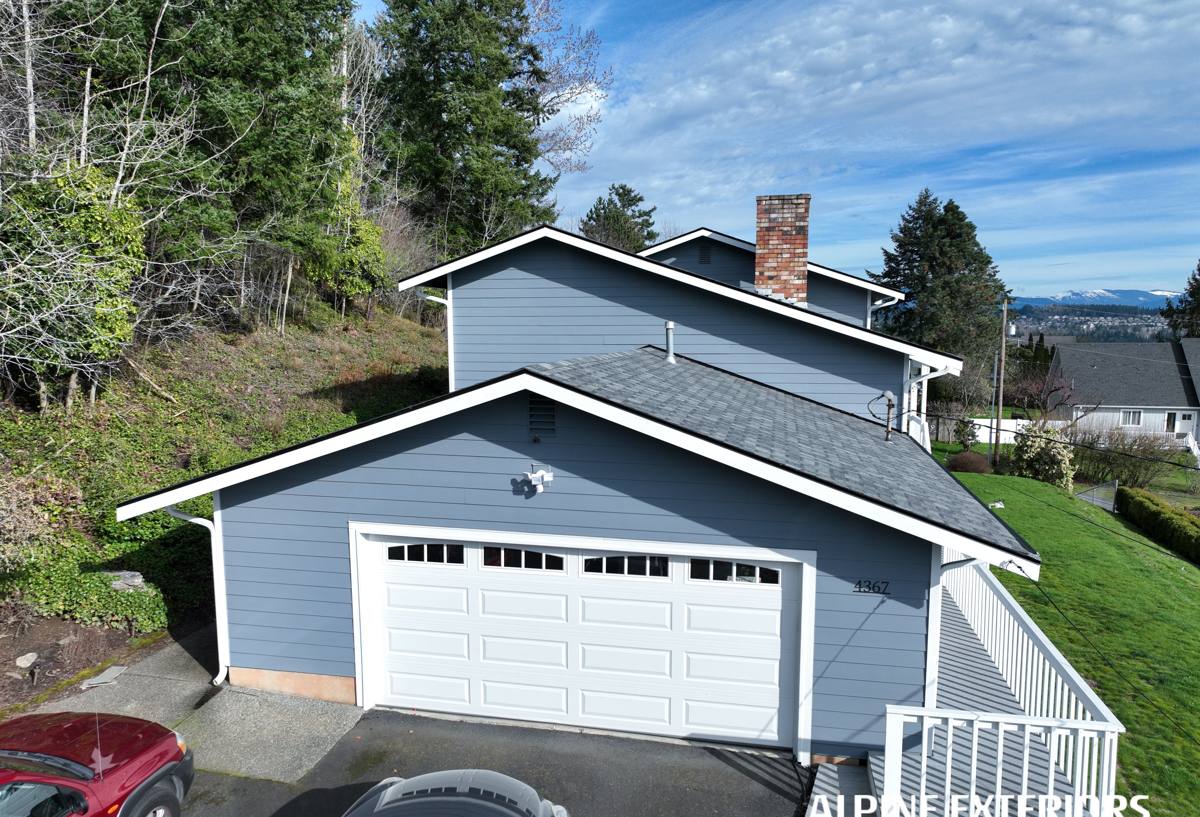
Why Blaine's Climate Is Hard on Shingle Roofs
Three factors do most of the damage to asphalt shingle roofs in this area, and they compound each other over the life of the roof.
Salt Air
Airborne salt from the Strait accelerates corrosion on exposed metal — nail heads, drip edge, flashing, and vent stacks. Once a fastener or flashing seam starts to corrode, water finds a path underneath the shingle field long before the shingles themselves look worn. This is one of the reasons flashing and fastener choices matter more here than in an inland climate.
Driving Rain and Wind
Winter storms coming off the water often bring rain sideways rather than straight down. Wind-driven rain can work its way under shingle tabs, into exposed nail heads, and along poorly sealed valleys and edges — areas that would stay dry in a calmer climate. A roof system built for Blaine needs sealed, wind-rated components, not just a shingle with a good warranty number printed on the wrapper.
A Long Moss Season
Mild, wet winters and shaded lots mean moss and algae have a long growing window here — often close to eight or nine months out of the year on north-facing slopes and shaded roof planes. Moss holds moisture against the shingle surface, lifts tabs as it grows, and shortens the life of even a high-quality shingle if it's left unmanaged.
What a Correctly Installed Roof Needs Here
A shingle roof is a system, not just a layer of shingles. In Blaine's climate, a few components carry more weight than they would elsewhere.
Underlayment and Water Barrier
Synthetic underlayment with a self-adhering water barrier at eaves, valleys, and around penetrations gives the roof a second line of defense if wind-driven rain gets past the shingle surface. This detail matters more on homes with any coastal exposure or low-slope sections where water sits longer before running off.
Flashing and Fasteners
We favor corrosion-resistant flashing and fastener materials on Blaine roofs, especially for homes within a mile or two of the water. Cutting corners on flashing metal is a common way roofs fail early in salt-air environments — the shingles look fine while the metal underneath them is already compromised.
Attic Ventilation
Balanced intake and exhaust ventilation keeps the underside of the roof deck dry and at a consistent temperature. In a climate this damp, poor ventilation traps moisture in the attic, which shows up later as premature shingle aging from underneath, deck rot, or interior moisture problems that have nothing to do with the shingles themselves.
Choosing the Right Shingle for a Blaine Home
Not every asphalt shingle is a good fit for this climate. We steer homeowners toward a few key specs rather than a specific brand name.
- A wind rating suited to open or partially exposed lots, particularly for homes with a water view or minimal windbreak
- Algae-resistant granules (typically copper- or zinc-infused) to slow the growth that drives Blaine's long moss season
- A laminated, multi-layer construction for better mat strength and impact resistance in wind and rain events
- A manufacturer warranty that's backed by proper installation — most warranties are void if underlayment, ventilation, or flashing aren't installed to spec
Asphalt Shingle Options: A Practical Comparison
Homeowners usually choose between three tiers of asphalt shingle. Here's how they generally compare for a Whatcom County coastal home.
| Shingle Type | Typical Lifespan | Wind Resistance | Algae Resistance | Best Fit |
|---|---|---|---|---|
| 3-tab | 15–20 years | Lower wind rating | Limited unless upgraded | Budget-conscious projects, less exposed lots |
| Architectural / laminate | 25–30 years | Higher wind rating, better mat strength | Available with algae-resistant granules | Most Blaine homes, coastal or shaded |
| Premium / designer | 30+ years | Highest available wind rating | Standard on most premium lines | Exposed waterfront lots, longer-term hold |
For most Blaine properties, architectural shingles hit the right balance of durability, moss resistance, and cost. We reserve 3-tab shingles for situations where budget is the deciding factor and the roof has good tree cover or wind protection, and we recommend premium lines for homes with direct water exposure or a long-term ownership plan.
Our Asphalt Shingle Roofing Process
Whether it's a full replacement or a targeted repair, we follow the same disciplined process on every Blaine roof.
- On-site inspection. We check the existing shingle condition, decking, flashing, ventilation, and any moss or moisture damage before quoting anything.
- Tear-off and deck evaluation. Once the old roofing is removed, we inspect the decking for soft spots or rot that wouldn't have been visible from above — common on older Blaine roofs with a history of moss buildup.
- Underlayment and flashing installation. We install synthetic underlayment with self-adhering barriers at vulnerable areas, then set new flashing at valleys, walls, chimneys, and penetrations.
- Shingle installation. Shingles go down to manufacturer spec for nailing pattern, exposure, and sealing — details that directly affect wind and warranty performance.
- Ventilation check. We confirm intake and exhaust ventilation is balanced for the attic size, correcting it if the existing setup is inadequate.
- Cleanup and walkthrough. We clear debris and nails from the property and walk the finished roof with the homeowner before calling the job done.
Moss, Algae, and Salt Air: Keeping a New Roof Healthy
A well-installed roof still needs some ongoing attention in this climate. Moss and algae don't damage a roof overnight, but left unmanaged for a few seasons they lift shingle tabs, trap moisture, and shorten the roof's useful life. We recommend a gentle, low-pressure cleaning approach rather than pressure washing, which strips protective granules and can void shingle warranties outright. Zinc or copper control strips near the ridge are a simple way to slow regrowth on shaded, moss-prone slopes. For salt-air exposure, periodic inspection of flashing, fasteners, and vent boots catches corrosion issues while they're still a small fix rather than a full section replacement.
Signs Your Blaine Roof May Need Attention
Because moss and salt-air damage develop gradually, many homeowners don't notice a problem until it's affecting the interior. Watch for:
- Moss patches, especially on north-facing or shaded roof planes
- Granules collecting in gutters or downspouts
- Curling, cupping, or cracked shingle tabs
- Dark streaking across the roof surface (algae staining)
- Rust staining around vent stacks, flashing, or fasteners
- Missing or lifted shingles after a windstorm
- Daylight visible through the attic decking, or damp attic insulation
- Soft or spongy spots when walking the roof during an inspection
Any one of these on its own isn't necessarily an emergency, but catching them early is almost always cheaper than waiting for interior water damage to show up.
Why Hire a Crew That Already Works in Blaine
A roofing crew that regularly works Whatcom County's coastal communities already knows which details matter here — flashing metal that holds up to salt air, ventilation strategies for a shaded, damp climate, and shingle wind ratings appropriate for an exposed lot near the water. That local familiarity shortens the learning curve on your project and reduces the chance of a callback for a problem that a generic, one-size-fits-all installation would have caused. We're also on hand locally for warranty follow-up, storm damage assessment, or seasonal maintenance questions, rather than being a crew that's hours away when something comes up.
Warranty and Materials
Asphalt shingle roofing typically carries two separate warranties: a manufacturer warranty covering material defects, and a workmanship warranty covering the installation itself. Manufacturer warranties are usually prorated and can be reduced or voided by improper installation — which is exactly why underlayment, flashing, fastening, and ventilation details matter as much as the shingle brand you choose. We're upfront with homeowners about what's covered, what isn't, and what routine maintenance (like moss control) is generally the homeowner's responsibility to keep the warranty intact.
If you're planning a roof replacement or aren't sure whether your current roof needs repair or full replacement, we're happy to take a look and walk you through what we find. Reach out for a free, no-pressure estimate using the form below.