 Birch Bay Exterior
 Siding for Terrell Creek: A Climate That Doesn't Forgive Shortcuts
Terrell Creek sits inland just enough from the open water of Birch Bay to feel a little different from a straight waterfront lot, but the exterior demands on a home here are still shaped by the same Whatcom County weather pattern: salt-tinged marine air drifting in off the bay, long stretches of driving rain through fall and winter, and shaded, tree-lined properties that stay damp longer than open, sun-exposed sites. Homes closer to the creek corridor and its tree cover tend to hold moisture on the north and shaded walls longer after a storm than homes in more open parts of Birch Bay, which makes siding material and installation quality matter even more here, not less.
This page is about one thing specifically: James Hardie fiber cement siding on Terrell Creek homes. Not a general overview of exterior services, and not a sales pitch for siding in general — a straight look at what this climate does to a home's siding, why we install James Hardie exclusively, what a correct installation actually involves, and why hiring a crew that already knows this area changes the outcome.
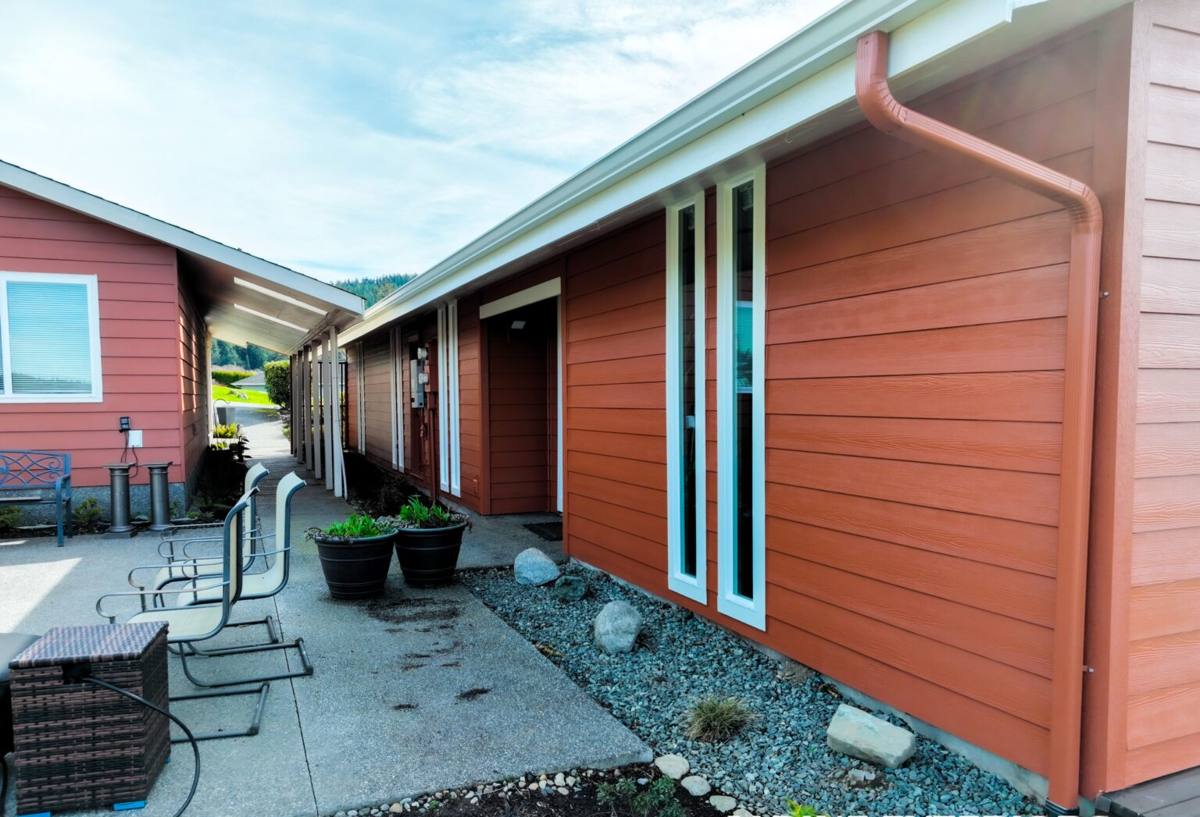
What Terrell Creek's Climate Does to Siding
Salt Air, Even Set Back from the Water
Terrell Creek doesn't sit directly on the shoreline the way some Birch Bay properties do, but it's still close enough to the bay that salt-laden air reaches homes here regularly, especially with onshore wind. Salt accelerates corrosion on fasteners, trim, and lower-grade finishes, and it breaks down paint and coatings faster than a drier, inland climate would. A siding material and finish that isn't built to handle that exposure will show fading, chalking, or fastener corrosion well before a comparable product would in a location further from the water.
Driving Rain and Sideways Water
Whatcom County's fall and winter rain doesn't just fall straight down — wind pushes it sideways into wall assemblies, window and door flashing, and the joints between siding courses. That sideways load is a heavier and more persistent moisture challenge than the region's annual rainfall totals suggest on their own. Siding and flashing details that would be adequate in a calmer, more sheltered climate can fail here specifically because the water is coming in at an angle, not from above.
A Long Moss and Mildew Season Under Tree Cover
Between the creek's tree cover and the county's mild, damp climate, a lot of Terrell Creek properties deal with a moss and mildew season that runs longer than it would on a fully open, sun-exposed lot. Shaded siding walls — typically the north side, or any wall shadowed by mature trees near the creek — stay wet longer after rain and are the first place moss and mildew take hold. Any siding material that's even slightly porous, or that holds moisture against its own substrate, becomes a growth surface over time in exactly this kind of setting.
Why We Only Install James Hardie Siding in Terrell Creek
We install James Hardie fiber cement exclusively. We don't install LP SmartSide, vinyl siding, Cemplank, Allura, primed spruce, or cedar. That's a professional standard, not a supplier relationship, and it comes directly from what this specific combination of salt air, sustained rain, and heavy shade-driven moisture does to siding over years of service calls and tear-offs in this part of Whatcom County.
- Non-combustible fiber cement core: Doesn't feed a fire the way wood-based or wood-composite siding can, which matters for both safety and, in many cases, insurance considerations.
- Factory-applied ColorPlus finish: The color is baked on in a controlled factory process rather than brushed or sprayed on site, so it resists the fading and chalking that salt air and constant damp shade accelerate in field-applied paint.
- HZ5 climate engineering: James Hardie manufactures region-specific product formulations, and homes in our area receive the HZ5 line, engineered for high-moisture, high-humidity climates rather than dry or hot-humid ones.
- Dimensional stability: Fiber cement doesn't swell, cup, or warp the way wood and engineered-wood products can after repeated wetting through a long wet season.
- Strong transferable warranty: Hardie backs its products with one of the more robust warranty structures in the industry, provided the installation follows their published specification.
Each of the products we don't install has a legitimate place in the market, and plenty of homeowners elsewhere are satisfied with them. But for a shaded, moisture-heavy setting like Terrell Creek, we've made the call that we'd rather stand fully behind one system than offer a cheaper option that quietly shifts long-term maintenance risk onto the homeowner.
What a Correct James Hardie Installation Involves
Fiber cement only performs the way it's engineered to when it's installed to James Hardie's published specifications — the material doesn't make up for shortcuts in the installation. On a Terrell Creek home, that means paying particular attention to the details that matter most in a shaded, wet climate:
- Correct fastener type, spacing, and penetration depth per Hardie's fastening schedule
- Proper clearance from grade, roofing, and decking so the bottom edge of the siding isn't sitting in standing water or leaf litter
- A properly lapped weather-resistant barrier behind the panels, with drainage detailing where the wall assembly calls for it
- Correctly lapped and sealed flashing at every window, door, and roof-to-wall transition, oriented to shed wind-driven rain rather than trap it
- Factory-mitered corners or properly caulked joints, using sealants rated for the movement and moisture cycling this climate produces
- Attention to shaded, tree-adjacent walls specifically, since these are the areas most likely to hold moisture and develop moss first
A James Hardie product installed loosely, with rushed flashing or the wrong fastener schedule, will still develop moisture problems in a climate like this. The material is only as good as the crew installing it.
Signs a Terrell Creek Home's Siding Needs Attention
Because of the shade and moisture pattern around the creek, siding problems here tend to show up in fairly predictable places first. Homeowners should watch for:
- Persistent moss or dark mildew staining on north-facing or tree-shaded siding that returns quickly after cleaning
- Visible warping, cupping, or gapping at siding joints, particularly on older wood or engineered-wood siding
- Soft spots or a spongy feel when pressing gently on siding near ground level or below windows
- Peeling, chalking, or fading paint that's noticeably worse on the shaded or wind-exposed side of the house
- Visible corrosion or staining around fasteners and trim, especially on walls that catch onshore wind directly
- Interior water staining near exterior walls, most often showing up after a windy, wet storm
Comparing Siding Materials for a Terrell Creek Home
| Material | Moisture Behavior | Performance Under Shade/Moss Exposure | Typical Longevity Here |
|---|---|---|---|
| James Hardie fiber cement | Dimensionally stable, resists swelling and warping | Non-porous substrate resists moss adhesion; factory finish holds up under shade | 30+ years with correct installation |
| Vinyl siding | Doesn't absorb water, but can warp or distort with temperature swings | Seams and panel edges can trap moisture and debris under tree cover | Variable; shorter in wind-exposed or heavily shaded spots |
| LP SmartSide / engineered wood | Wood-based core is moisture-sensitive at cut edges and joints | Shaded, damp conditions raise the risk of edge swelling without diligent sealing | Depends heavily on installation quality and upkeep |
| Cedar / primed wood | Absorbs and releases moisture readily | Prone to moss growth and rot in shaded, damp conditions without frequent upkeep | Shorter without a consistent refinishing schedule |
Our Process for a Terrell Creek Siding Project
We start every project with an on-site walk of the home, paying specific attention to which walls sit in shade from the creek's tree cover, how the existing siding has handled moisture over time, and where flashing or drainage details may already be falling short. From there we put together a clear, written scope and timeline before any work begins — no vague allowances or open-ended change orders.
During installation, the flashing, fastener, and drainage details that matter most in this climate are handled as standard practice, not as optional upgrades priced separately. On tear-off projects, we also take the opportunity to inspect the sheathing and weather barrier underneath, since that's often where a previous siding failure actually started.
Why a Crew That Already Works Terrell Creek Matters
A contractor who regularly works this part of Birch Bay already knows how shade, salt air, and wind-driven rain interact differently here than they do on a fully open lot or further inland. That familiarity shows up in the details — which walls get extra drainage consideration, how flashing gets lapped at a shaded window, which fastener grade gets specified — and those details are what determine whether a siding job holds up for one wet season or several decades.
A Simple Checklist Before Hiring for Siding Work in Terrell Creek
- Ask what siding material they install and why, and whether they'll put a written warranty behind it
- Confirm current Washington contractor licensing and active liability insurance
- Ask specifically how they handle flashing and drainage on shaded, tree-adjacent walls
- Ask whether they're a certified James Hardie installer and can speak to Hardie's published fastening specifications
- Get a clear, written scope of work, including tear-off and disposal, before signing anything
If you're thinking through a siding project for a Terrell Creek home, we're glad to walk the property with you, look at how the existing siding has held up against the shade and moisture in this part of Birch Bay, and give you an honest read on what it needs. Reach out below for a free, no-pressure estimate.