 Birch Bay Exterior
 Windows Built for Whatcom County Weather, Installed Right
Homes in Sumas deal with the same weather pattern that shapes exterior work across Whatcom County: long stretches of driving rain, damp air that lingers into the afternoon, and a moss season that seems to start earlier every year. Add in the salt-laden air that moves inland off the Sound on windy days, and you have a climate that is genuinely hard on window systems — especially older wood and aluminum-frame windows that were never sealed or flashed correctly to begin with. Window replacement here isn't just a cosmetic upgrade. Done right, it's one of the more effective things a homeowner can do to stop moisture problems before they start.
We work on homes throughout the Birch Bay area and out into communities like Sumas, and the failure patterns we see are consistent: rotted sills, fogged double-pane glass, swollen wood jambs that won't latch anymore, and interior sheetrock damage traced back to a window that was never properly flashed. None of that is unusual for this region. It's just what happens over enough winters without the right materials or installation detail.
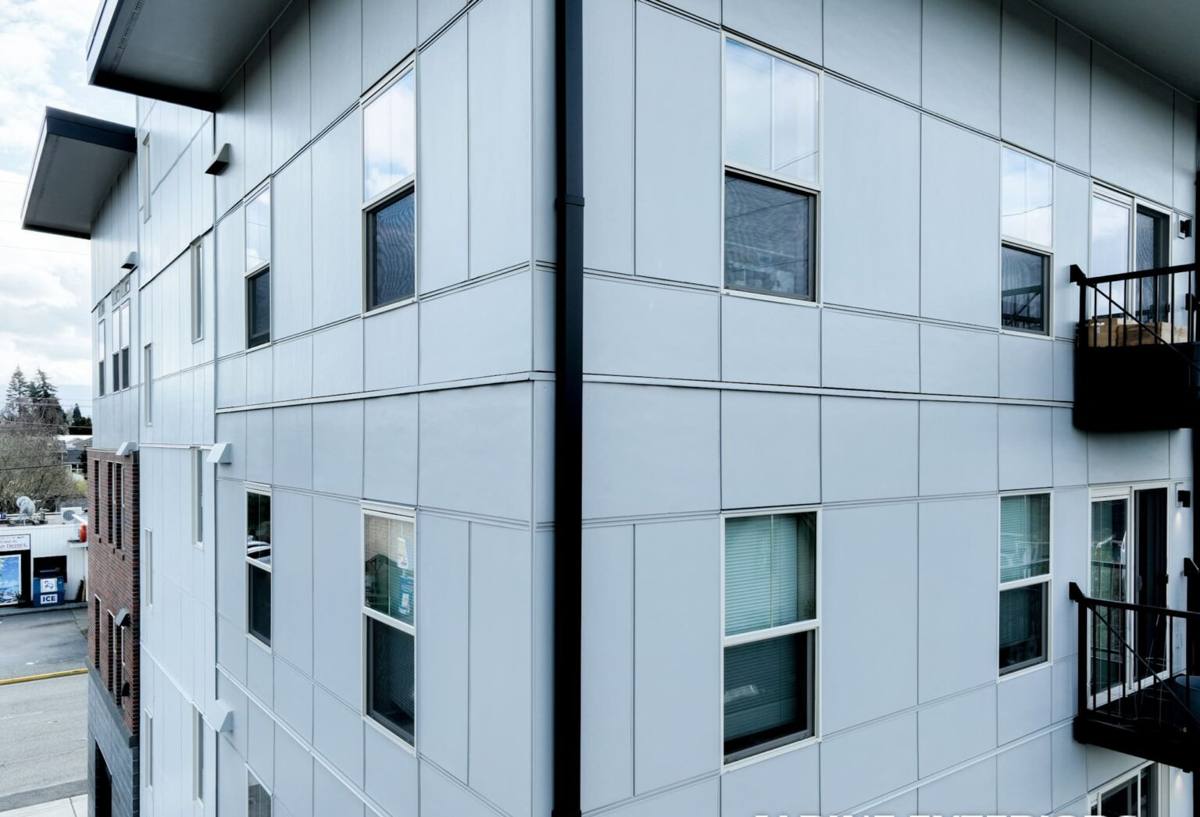
What Sumas Homes Actually Need From a Window Replacement
Not every window on the market is a good fit for this climate, and not every installation method holds up to it either. Three things matter more here than in drier parts of the country:
Moisture Management, Not Just a Watertight Seal
A window that's sealed tight but has nowhere for incidental moisture to go is a slow-motion problem. Wind-driven rain finds its way behind trim and siding eventually — the question is whether the assembly behind the window is built to shed that water back out, or trap it against wood framing. We flash every opening with a drainage plane in mind, not just a bead of caulk around the edges.
Frame Materials That Don't Feed Moss and Mildew
Bare or poorly finished wood frames give moss and mildew something to hold onto, especially on north-facing walls that don't get much sun to dry out. Vinyl and fiberglass frames, or wood-clad units with a durable exterior finish, hold up far better through a Whatcom County moss season than exposed wood.
Hardware That Won't Corrode
Salt-influenced air moving through the Birch Bay corridor accelerates corrosion on cheap window hardware — hinges, cranks, and locks made from lower-grade metals pit and seize faster than they should. We spec corrosion-resistant hardware on replacement units for exactly this reason, even on homes a few miles inland.
Signs a Sumas Home Needs Window Replacement, Not Just Repair
Repair makes sense in plenty of cases — a failed seal, a broken sash cord, a cracked pane. Replacement becomes the smarter move when the problems point to the frame or the installation itself, not just the glass:
- Fogging or moisture between panes that doesn't clear — the seal is gone and the insulated glass unit can't be fixed, only replaced
- Soft, spongy, or visibly rotted wood at the sill or jamb
- Windows that won't stay open, won't latch, or have visibly warped out of square
- Noticeable drafts even with the window fully closed and locked
- Paint or finish that keeps failing on the interior sill no matter how often it's touched up
- Visible daylight or gaps around the frame from outside
- A musty smell near the window that suggests moisture is getting into the wall cavity
If you're only seeing one or two of these on one window, repair may still be worth a look. If it's spread across several windows or paired with any sign of framing damage, replacement is almost always the more cost-effective path once you factor in the labor of repeated repairs.
How We Approach a Window Replacement Job
The install matters at least as much as the product. A premium window installed poorly will leak; a mid-range window installed correctly will outperform it for years. Our process is built around getting the details right in a climate that doesn't forgive shortcuts.
- On-site assessment. We look at each opening individually — not every window on a house is in the same condition, and treating them all identically misses problems.
- Check the framing and sheathing behind the trim. Before a new window goes in, we confirm what's behind it. If there's rot or water damage in the framing, that gets addressed first — installing a new window over a compromised opening just delays the real problem.
- Flash for drainage, not just sealing. We install flashing and a drainage plane detail so any incidental moisture that gets behind the window has somewhere to go, rather than sitting against wood.
- Set the window plumb, level, and properly shimmed. An out-of-square install stresses the frame, causes hardware to bind, and opens gaps over time even if it looks fine on day one.
- Insulate the gap correctly. Over-packing with rigid foam or under-insulating with too little material are both common mistakes that lead to drafts or frame distortion.
- Finish and seal the exterior. Trim, caulk, and exterior finish work are done last, matched to the surrounding siding so the replacement doesn't stand out as an obvious patch job.
- Walk the finished openings with you. We check operation, locking, and seal quality on every window before we consider the job done.
Comparing Frame Materials for This Climate
There's no single "best" window material for every home — it depends on budget, the home's style, and how much upkeep you want to take on. Here's how the common options actually compare for a wet, moss-prone climate like this one:
| Frame Material | Moisture Resistance | Maintenance | Typical Fit |
|---|---|---|---|
| Vinyl | Very good — won't rot, minimal corrosion risk | Low — occasional cleaning | Most homes, best value |
| Fiberglass | Excellent — very stable in wet/dry cycles | Low | Higher-end replacements, larger openings |
| Wood-clad | Good if the cladding and flashing are done correctly | Moderate — clad exterior needs periodic inspection | Homes where interior wood trim is a priority |
| Bare wood | Poor without diligent, ongoing maintenance | High — repainting/sealing on a regular cycle | Historic homes prioritizing original appearance |
| Aluminum | Poor — prone to condensation and thermal transfer | Low, but performance issues persist regardless | Generally not recommended for this climate |
We're upfront that bare wood and standard aluminum frames carry real trade-offs in a climate with this much sustained moisture — not because the materials are inherently bad, but because they demand a level of upkeep or thermal performance that doesn't line up well with what Whatcom County weather asks of a window over 15-20 years.
What Affects the Cost of Window Replacement
Every home is different, but the same handful of factors drive most of the cost variation we see:
| Factor | Why It Matters |
|---|---|
| Number and size of windows | More openings and larger units mean more material and labor |
| Frame material chosen | Vinyl, fiberglass, and wood-clad carry different price points |
| Condition of existing framing | Rot or water damage found during removal adds repair scope |
| Full-frame vs. insert replacement | Full-frame replaces down to the studs; inserts reuse the existing frame and cost less but aren't right for every opening |
| Access and site conditions | Second-story windows, tight access, or extensive trim work add time |
| Trim and siding tie-in | Matching existing exterior finish around new openings takes more labor than a bare install |
We won't quote a number without seeing the actual openings — anyone who does is guessing. A site visit lets us tell you honestly whether insert replacement will work or whether the framing needs a full-frame approach, which changes the price meaningfully.
Why It Matters That We Work in Sumas and Birch Bay Regularly
A crew that mainly works drier inland climates can install a beautiful-looking window that still leaks within a couple of winters, simply because the flashing and drainage details that matter here weren't part of their normal routine. Working consistently in Whatcom County means we're flashing openings for driving rain and salt-influenced air as a matter of habit, not as a special consideration. We know what moss buildup does to a north-facing wall over a few seasons, and we build the installation around that reality rather than a generic checklist.
Local also means accountability. If a seal underperforms or trim shifts after a hard winter, we're not far away and we stand behind our own work.
A Straightforward Process From Estimate to Finished Install
We keep the process simple: a site visit to look at your specific windows and framing, a written estimate that spells out material and labor, a realistic timeline, and a cleanup at the end that leaves your home looking better than when we started — not just functioning better. We're happy to walk through window options at whatever level of detail is useful, whether you already know what you want or you're starting from "these windows are old and I don't know what's wrong with them."
If your Sumas home has windows that are drafty, fogged, hard to operate, or just past their useful life, we'd be glad to take a look. Reach out for a free, no-pressure estimate using the form below.