 Birch Bay Exterior
 Roof Repair Built for Cottonwood Beach Conditions
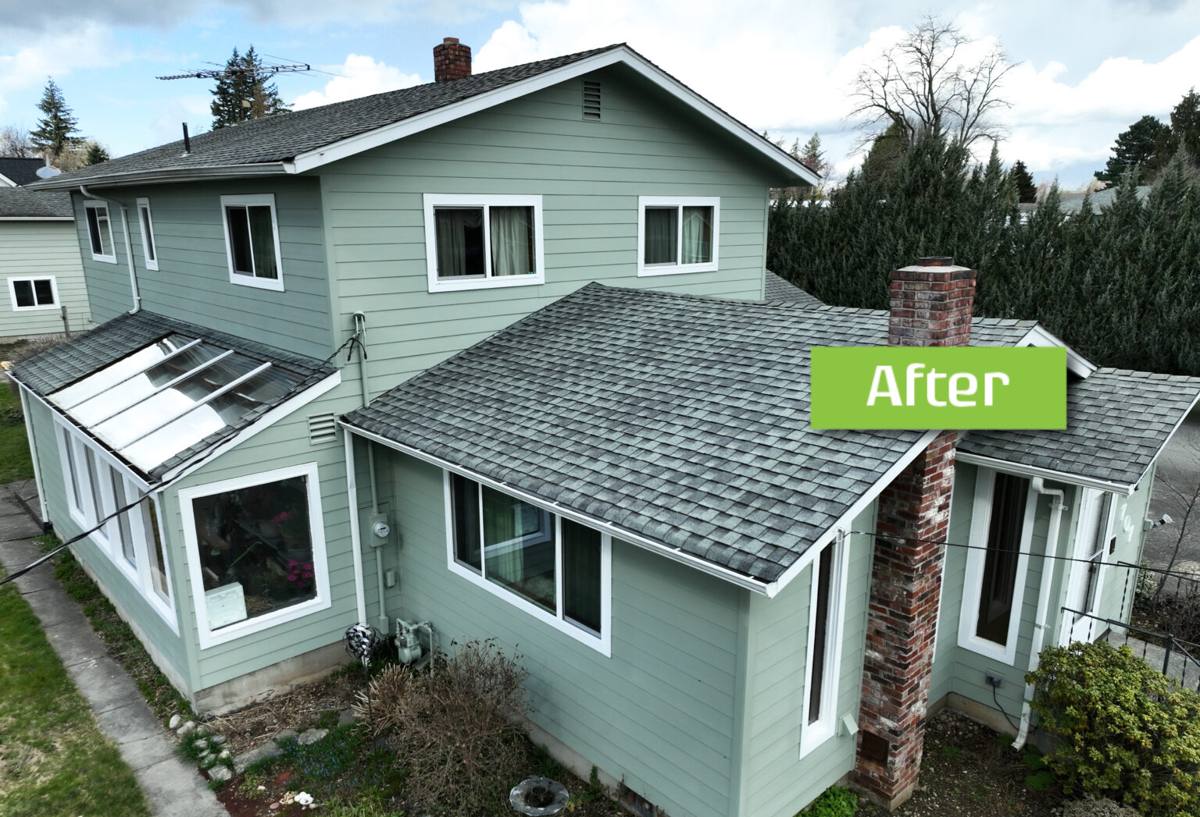
Cottonwood Beach sits close enough to Birch Bay's shoreline that its homes take a different kind of beating than roofs a few miles inland. Salt-laden air rides in off the water and settles on every exposed surface. Wind-driven rain finds its way under flashing that would hold up fine in a drier climate. And the long, damp stretch of fall through spring gives moss and algae months to get a foothold on anything north-facing or shaded by trees. A roof repair here isn't just patching a leak — it's addressing why that leak happened in the first place, with materials and techniques that account for the specific environment this neighborhood sits in.
We work Birch Bay and the surrounding Whatcom County coastline regularly, so we're not guessing at what Cottonwood Beach roofs deal with. We're diagnosing and fixing the same handful of root causes over and over, which is exactly why we can usually tell you what's wrong within the first ten minutes on the roof.
Why Salt Air and Coastal Wind Change the Repair
Salt air doesn't just sit on a roof — it accelerates corrosion on every metal component up there: nails, flashing, vent caps, gutter hardware, and any exposed fasteners. A repair that ignores this and uses standard-grade materials will often fail again within a couple of years, right around the same spot. We use corrosion-resistant fasteners and flashing wherever a repair touches metal, because a roof this close to Birch Bay's water simply eats through lesser hardware faster than an inland roof would.
Wind is the other coastal factor. Storms coming off the water tend to drive rain sideways rather than straight down, which means water can get pushed up and under shingle edges, ridge caps, and flashing laps that would never see moisture in a calmer wind pattern. A repair has to account for that — proper overlap direction, sealed nail penetrations, and flashing that's mechanically fastened and sealed, not just tucked and hoped for.
Common Failure Points We See Near the Water
- Flashing around chimneys and roof-to-wall transitions lifting or corroding at the fastener points
- Ridge cap shingles cracking or losing granules faster than field shingles due to constant wind exposure
- Corroded or loosened gutter and drip edge hardware allowing water to back up under the roof edge
- Nail pops and sealant failure around vent boots and pipe penetrations
- Soft or delaminating roof decking where a slow leak has gone unnoticed for a season or more
The Long Moss Season and What It Actually Does to a Roof
Whatcom County's wet season runs long, and Cottonwood Beach's tree cover and coastal humidity give moss and algae a real head start compared to drier, sunnier parts of the state. Homeowners often think moss is a cosmetic issue — it isn't. Moss holds moisture directly against the shingle surface for weeks at a time, which softens asphalt granule adhesion, lifts shingle edges as it grows, and creates a network of tiny channels that water can travel under. On cedar or wood shake roofs, sustained moisture from moss growth is one of the more common paths to rot in the wood itself.
By the time moss is visible from the ground, it's usually already established in the shaded, north-facing sections and around any area where two roof planes meet and debris collects. A repair that just clears the moss without addressing the underlying moisture retention — clogged valleys, poor drainage, overhanging branches — tends to see the problem return within a season or two.
What a Proper Moss-Related Repair Includes
- Careful removal that doesn't scrape granules off the shingle surface or shock cedar shakes
- Clearing valleys, gutters, and any debris pockets that hold water against the roof
- Inspecting and replacing any shingles or shakes that have already been compromised underneath
- Zinc or copper strip installation at the ridge on request, which discourages regrowth over time
- A honest look at whether trimming back overhanging limbs would meaningfully reduce recurrence
Roof Materials We See Most Often in Cottonwood Beach
Most homes in this part of Birch Bay are roofed in asphalt composition shingle, with a fair number of older cedar shake roofs and a growing number of metal roofs, especially on newer builds or full replacements. Each material fails differently in this climate, and the repair approach has to match.
| Roofing Type | Typical Coastal Issue | Repair Approach |
|---|---|---|
| Asphalt composition shingle | Granule loss from wind/moisture, lifted edges, moss | Spot shingle replacement, resealing laps, moss removal and prevention |
| Cedar shake | Moisture retention, moss-driven rot, splitting | Selective shake replacement, improved airflow, treated fasteners |
| Metal roofing | Fastener corrosion, sealant failure at penetrations | Fastener replacement with coastal-rated hardware, resealing seams and boots |
| Flat or low-slope sections | Ponding water, membrane seam failure | Seam repair or patching, drainage correction |
If a roof is old enough, or damaged enough, that repair would just be delaying the inevitable, we'll say so directly. Our goal on every repair call is to fix what actually needs fixing — not to talk a homeowner into more work than the roof needs, and not to patch something that really needs a fuller conversation about replacement timing.
How We Approach a Repair Call
1. Inspection First, Not Just the Leak Point
We start by getting on the roof, not just looking at the ceiling stain. Water travels before it shows up inside, so the actual entry point is often several feet from where the damage is visible indoors. We check flashing, valleys, vent boots, ridge lines, and decking condition around the affected area, and we'll flag anything else we find — corrosion, moss buildup, early granule loss — even if it's not why you called.
2. A Clear Explanation Before Any Work Starts
We tell you what's actually wrong, why it happened, and what fixing it involves — including if a full section needs replacing rather than a simple patch. No surprise scope changes mid-job.
3. Repair Using Materials Suited to This Coastline
Corrosion-resistant fasteners, properly lapped and sealed flashing, and matched shingle or shake material where possible so the repair blends rather than standing out as an obvious patch.
4. A Walkthrough When It's Done
We show you what was done and what to keep an eye on, especially if moss or drainage issues mean some ongoing maintenance will help the repair last.
Signs a Cottonwood Beach Roof Needs Attention
Some of these are obvious; others get missed for months because they don't show up as an active leak right away.
- Water stains on ceilings or upper walls, even faint or intermittent ones
- Visible moss, algae streaking, or dark patches on north-facing or shaded roof sections
- Granules collecting in gutters or at the base of downspouts
- Curling, cracked, or missing shingles, especially after a windy storm
- Rusty streaking below metal flashing, vents, or fasteners
- Soft spots when walking the attic near the roofline, or visible daylight through the decking
- Gutters overflowing or pulling away from the fascia during heavy rain
Any one of these on its own might not be urgent, but in this climate small issues tend to compound faster than homeowners expect, especially once moss season sets in.
Why It Matters That We Already Work This Neighborhood
A roofing crew unfamiliar with Birch Bay's coastal exposure can still do competent general repair work — but they're often working from inland assumptions about how long materials last, how much wind-driven rain matters, and how aggressive moss growth actually gets here. We've repaired enough roofs along this stretch of Whatcom County to know which failure points show up first in a Cottonwood Beach location versus a roof set back from the water, and we price and schedule accordingly, including realistic expectations around weather windows during the wetter months.
We also know the practical side: permitting expectations in Whatcom County, typical roof ages and materials used by builders in this area over the past few decades, and what a reasonable repair timeline looks like once you factor in the region's rain patterns.
What a Repair Typically Costs
Every roof and every leak is different, so we won't quote a number without seeing it, but repair costs generally scale with three things: how much of the roof is affected, how hard the damaged area is to access, and whether the decking underneath needs replacement in addition to the surface material. Small, localized repairs — a section of flashing, a handful of shingles, a resealed vent boot — are usually the most affordable end of the range. Repairs involving decking replacement or larger sections of moss-damaged shake cost more because of the added labor and material. We'll always give you the actual number for your roof before any work starts, not a rough estimate that changes once we're up there.
If you're seeing signs of a leak, moss buildup, or storm damage on a Cottonwood Beach roof, we're happy to take a look and give you a straightforward, no-pressure estimate. There's no cost to have us come out and tell you honestly what's going on.