 Birch Bay Exterior
 Metal Roofing in the California Creek Area
California Creek sits close enough to the water that homes here deal with a different set of roofing stresses than houses further inland in Whatcom County. Salt-laden air moves in off the Strait and Birch Bay itself, wind-driven rain finds its way under anything that isn't properly detailed, and the shaded, damp stretches of the year give moss and algae months to establish themselves on a roof surface. A roof in this neighborhood earns its keep. Metal roofing, installed correctly for this specific environment, is one of the more reliable ways to stop fighting that combination year after year.
This page is about metal roofing for California Creek specifically — not a general overview of metal roofing everywhere. The fasteners, panel coatings, underlayment choices, and detailing that hold up two miles from saltwater are not the same as what gets specified in a dry inland town, and treating them the same is how roofs end up with premature rust streaking, fastener backout, and moss lodged in every panel seam within a few years.
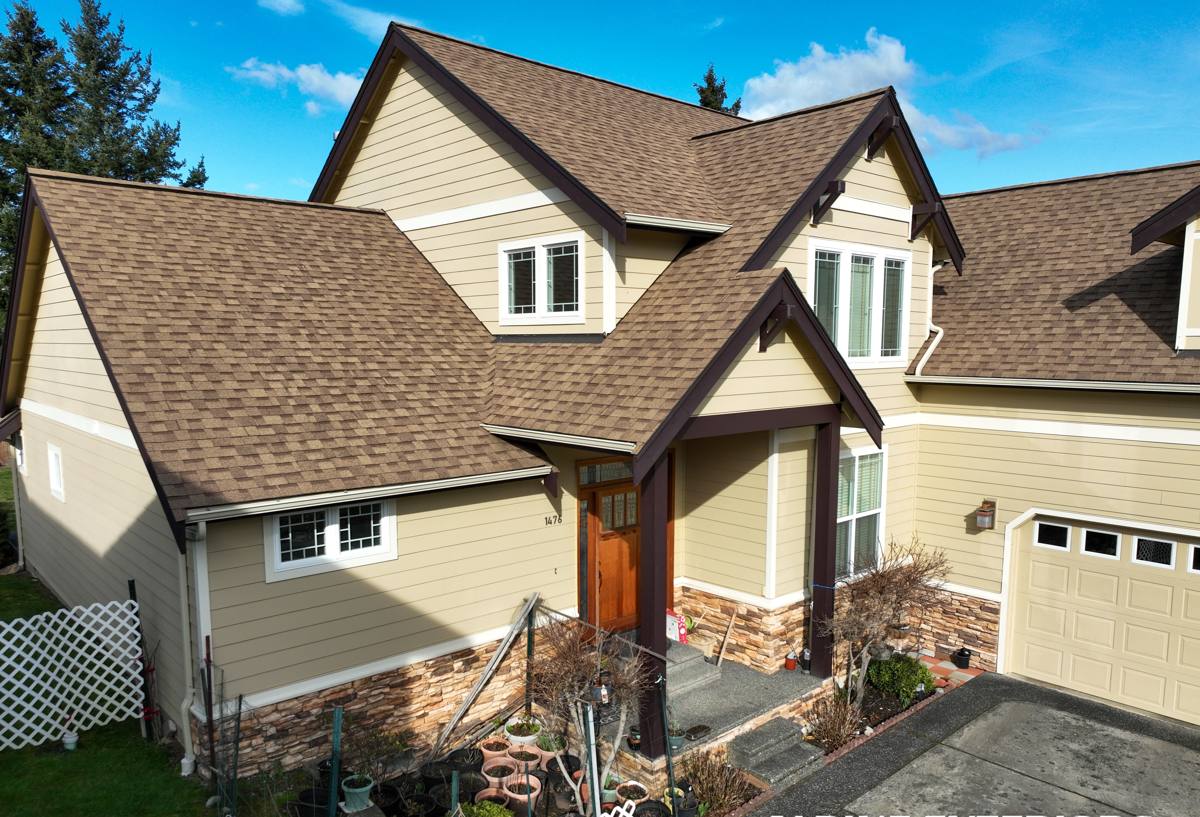
What This Climate Actually Does to a Roof
Salt Air and Corrosion
Airborne salt is the single biggest variable that changes how a metal roof should be specified near Birch Bay and California Creek. Salt accelerates corrosion at cut edges, fastener heads, and anywhere the protective coating is thin or scratched during installation. It doesn't take a direct waterfront lot to be affected — prevailing winds carry salt spray well inland, and it settles on roof surfaces in a fine film that concentrates every time it rains and dries.
Driving Rain
Storms coming off the water in this part of Whatcom County rarely fall straight down. Wind-driven rain gets pushed sideways and upward under eaves, around penetrations, and into any lap or seam that isn't lapped correctly for the prevailing wind direction. A metal roof's water-shedding performance depends almost entirely on details most people never see — underlayment overlap, panel end-lap sealant, and how flashing is integrated at valleys and walls.
Moss and the Long Wet Season
Western Washington's extended damp season, combined with shade from mature trees common in this area, gives moss and algae a long runway to take hold. Moss holds moisture against a roof surface and, on some materials, works into seams and fastener penetrations. Metal roofing doesn't stop moss spores from landing, but a smooth, properly sloped metal surface gives moss far less to grip onto than shingles, and it sheds standing moisture faster once cleared.
Why Metal Roofing Fits This Kind of Site
Metal isn't the right material for every home or every budget, and we'll say so plainly if that's the case on a walkthrough. But for California Creek properties dealing with salt exposure, wind-driven rain, and heavy moss pressure, metal roofing offers a few practical advantages worth weighing:
- A continuous, low-profile surface with far fewer overlapping edges for wind-driven rain to exploit compared to shingles
- Coated steel or aluminum panels resist the kind of granule loss and edge deterioration that saltwater proximity accelerates on asphalt roofing
- Smooth panel surfaces give moss and algae less to anchor into, and standing water clears faster on a properly sloped metal roof
- Long service life when the coating system and fasteners are matched correctly to a coastal environment
- Better wind performance when panels are properly engaged and fastened, relevant given how exposed some California Creek lots are to weather off the water
What a Correct Metal Roof Job Involves Here
Panel and Coating Selection
Not every metal roofing product is built for salt exposure. We steer California Creek homeowners toward coatings and metal types with documented corrosion resistance for coastal environments rather than the lowest-cost option on the shelf. This is a maintenance and longevity call, not a brand preference — a coating that isn't rated for this level of salt exposure will show it first at cut edges and fastener heads, usually well before the rest of the panel shows any wear.
Fasteners
Fastener corrosion is one of the most common failure points on metal roofs near saltwater, and it's also one of the most preventable. Matching fastener material and washer type to the panel material and the coastal environment matters more here than almost anywhere else in the county. Mismatched metals set up galvanic corrosion that can loosen fasteners years before the roof itself is due for attention.
Underlayment and Water Management
Given the driving rain this area sees, we don't treat underlayment as an afterthought. A synthetic or self-adhered underlayment appropriate to the roof pitch and exposure gives the roof a real second line of defense if wind ever pushes water past the panel laps — which, on an exposed lot, it eventually will during the wrong storm.
Flashing and Penetrations
Valleys, chimneys, vent penetrations, and wall intersections are where most roof leaks actually start, metal or otherwise. Flashing gets custom-fit and properly integrated with the panel system and underlayment, not just caulked and hoped for. Sealant is a backup, not the primary water barrier.
Metal Roofing Cost Factors for This Area
| Factor | Why It Matters Near California Creek |
|---|---|
| Coating system | Coastal-rated coatings cost more upfront but resist salt corrosion significantly longer than standard coatings |
| Roof complexity | Valleys, dormers, and multiple roof planes increase flashing work and installation time |
| Fastener type | Corrosion-resistant fasteners matched to the panel metal cost more but prevent early fastener failure |
| Tear-off vs. overlay | Removing an existing roof reveals deck condition and moss-related rot, which affects final pricing |
| Panel profile | Standing seam typically costs more than exposed-fastener panel systems but offers fewer penetration points for wind-driven rain |
We don't publish fixed pricing because every roof's slope, access, complexity, and current condition changes the number, but we'll walk through these factors with you directly and explain what's driving the estimate, not just hand you a total.
Our Process for California Creek Metal Roofing Projects
- On-site assessment. We look at existing roof condition, moss buildup, deck condition where visible, slope, exposure to prevailing wind and salt spray, and any current leak history you can tell us about.
- Material and coating recommendation. Based on the exposure level of your specific lot, we recommend a coating and fastener system suited to it, and explain the trade-offs of each option honestly, including where a lower-cost option would compromise longevity.
- Written estimate. Clear line items so you know what you're paying for and why, with no surprise change orders for scope we could have identified up front.
- Installation. Proper underlayment, correct panel lap direction for prevailing wind, matched fasteners, and custom-fit flashing at every penetration and transition.
- Final walkthrough. We go over the finished roof with you, including basic maintenance expectations for a metal roof in this climate.
Maintenance in a Salt Air, High-Moss Environment
A well-installed metal roof in this area needs less maintenance than shingles, but "less" isn't "none." A few habits go a long way:
- Rinse off accumulated salt film and debris periodically, especially after long dry stretches followed by rain
- Keep gutters and valleys clear of moss and organic debris so water has a clean path off the roof
- Trim back tree limbs that shade sections of roof and feed moss growth
- Have fasteners and flashing points visually checked every few years, particularly on the wind-exposed sides of the home
- Address any coating scratches or dings promptly — an exposed cut edge or scratch is where corrosion starts near saltwater
Why a Crew Already Working This Neighborhood Matters
Metal roofing done wrong on a coastal-exposed home doesn't fail immediately — it fails slowly, usually starting with a corroded fastener or a leak at a poorly flashed valley two or three years in, long after the crew that installed it has moved on. A crew that already works California Creek and the wider Birch Bay area has seen firsthand which details hold up against this specific combination of salt air, wind-driven rain, and moss, and which shortcuts show up first. That's not something you can fully verify from a product spec sheet — it comes from working roofs in this exact environment repeatedly and paying attention to how they age.
We're a Birch Bay-based crew working throughout Whatcom County, and California Creek is part of our regular service area, not a one-off trip. If something on your roof needs a look after the job is done, we're close by, not driving in from out of the region.
Questions Worth Asking Any Metal Roofing Contractor Here
- What coating system are you specifying, and is it rated for coastal salt exposure?
- What fastener type and washer material will be used, and are they matched to the panel metal?
- What underlayment is included, and how is it detailed at valleys and penetrations?
- How will panels be lapped relative to our prevailing wind direction?
- What does your workmanship warranty cover, separate from the manufacturer's material warranty?
If a contractor can't answer these clearly, that's worth noting before you sign anything.
If you're weighing a metal roof for a California Creek home, we're glad to walk the roof with you, explain what we're seeing, and put together a straightforward, no-pressure estimate. There's a form below — reach out and we'll set up a time to take a look.