 Birch Bay Exterior
 Roofing in Birch Bay Village Isn't the Same Job as Roofing Inland
Birch Bay Village sits close enough to the water that the roof over your head deals with a different combination of stress than a house twenty minutes inland in Whatcom County. Salt-laden air moves off the bay and settles on every exposed surface. Wind-driven rain doesn't fall straight down here — it comes in sideways during a fall or winter blow and finds any gap in flashing or underlayment that a calmer climate would never expose. And the tree cover and persistent shade on plenty of Birch Bay Village lots mean roofs stay damp longer than they would in full sun, which is exactly the condition moss needs to take hold. None of this makes asphalt shingle roofing a bad choice for this area — it's still the most practical, cost-effective option for most homes here — but it does mean the shingle, the underlayment, the ventilation, and the workmanship all have to be matched to what this specific stretch of coastline actually does to a roof.
This page is about one job in one neighborhood: asphalt shingle roofing for Birch Bay Village homes. Not a general overview of roofing options, and not a pitch for every product we carry — just what a roof here actually needs, what correct work looks like, and how we handle it.
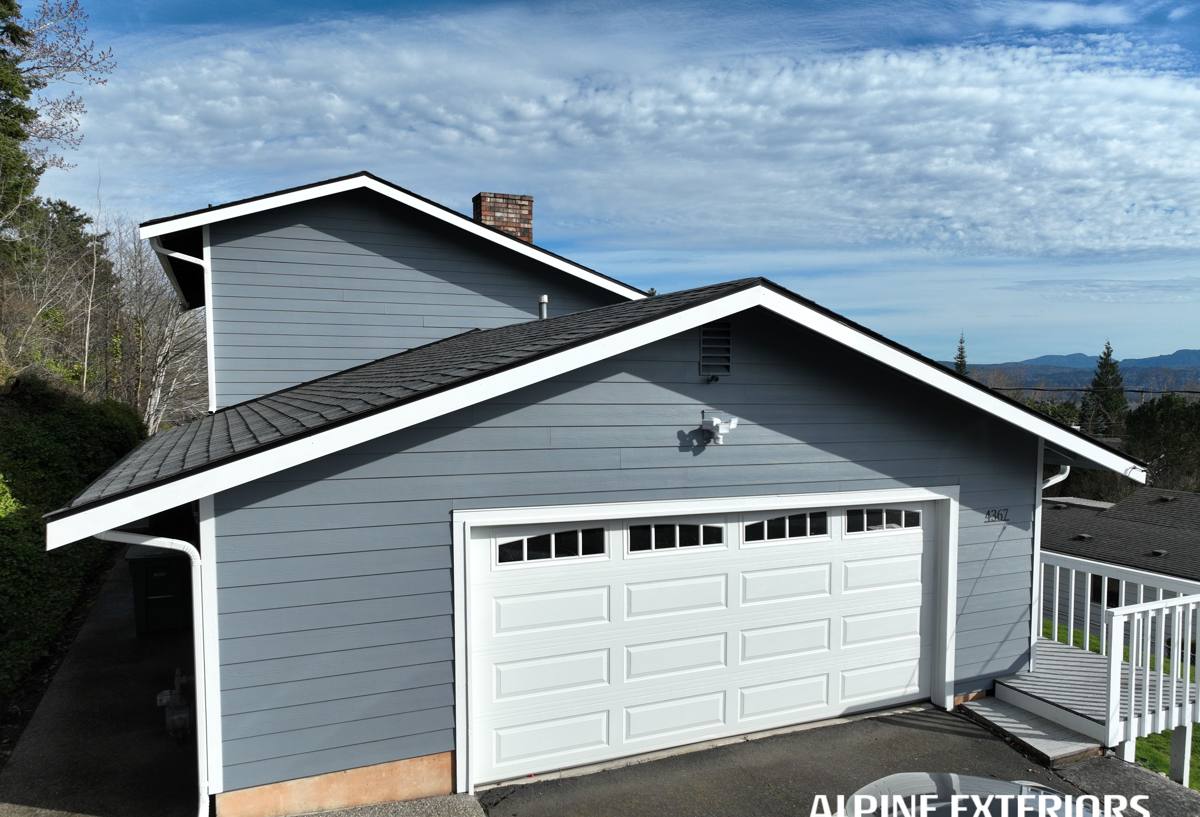
What Salt Air, Driving Rain, and a Long Moss Season Do to a Shingle Roof
Salt Air
Salt exposure doesn't damage asphalt shingles the way it damages bare metal, but it accelerates wear on the metal components every shingle roof depends on — flashing, drip edge, nail heads, vent stacks, and gutter hardware. Once those parts start to corrode or pit, water finds its way underneath the shingle field instead of running off it, and that's when a roof that looks fine from the ground starts leaking from the inside.
Driving Rain
Standard shingle installation assumes rain falls mostly straight down. On exposed Birch Bay Village lots, storms push rain sideways under the shingle tabs, into exposed nail heads, and up against vertical walls, chimneys, and skylights. A roof built to a minimum-code standard can handle normal rainfall and still leak in a wind-driven event, because the margin for error at every penetration and edge is thinner than most homeowners realize.
Moss
Shade, moisture, and mild temperatures are exactly what moss wants, and a lot of Birch Bay Village properties have all three for much of the year. Moss doesn't just look bad — it holds moisture against the shingle surface, lifts shingle edges as it grows, and works its way under tabs and around fasteners. A roof with active moss growth is aging faster than the calendar suggests, even if there's no visible leak yet.
Choosing the Right Shingle for This Coastline
Not every asphalt shingle product is built the same, and for a coastal, moss-prone lot the differences matter more than they would somewhere drier. Here's how the main categories compare for a Birch Bay Village roof:
| Shingle Type | Typical Lifespan Here | Best Fit For | Trade-Off to Know |
|---|---|---|---|
| 3-tab (standard) | Shorter end of the range | Budget-driven re-roofs, rental or secondary structures | Thinner profile means less resistance to wind-driven rain and lifting over time |
| Architectural / dimensional | Longer, more consistent | Most primary homes in this area | Higher upfront cost, but the added thickness and sealant strip hold up better against coastal wind and rain |
| Algae-resistant (AR) shingles | Comparable to standard, but stays cleaner longer | Shaded lots with existing moss or algae history | Copper or zinc granules resist growth but don't make the roof maintenance-free |
| Impact-rated / heavier-weight | Longer, best wind performance | Exposed lots closer to the water | Higher material cost; not always necessary on well-protected lots |
We don't push the most expensive option on every roof — a well-protected, shaded lot doesn't need the same shingle as an exposed one facing open water. Part of an honest estimate is telling you which category actually fits your specific property instead of upselling across the board.
What a Correct Installation Actually Involves
The shingle itself is maybe a third of what determines how a roof performs here. The rest is in the parts most homeowners never see once the job is done.
- Ice and water shield at vulnerable areas — valleys, eaves, and around penetrations get a self-adhering waterproof membrane underneath the shingles, not just felt paper.
- Synthetic underlayment across the field — a second line of defense that outperforms old-style felt against the wind-driven rain this coastline sees.
- Corrosion-resistant flashing and fasteners — salt air will chew through basic galvanized hardware faster than inland homes ever see; we spec metal that's rated to hold up in this environment.
- Proper attic ventilation — a shingle roof without balanced intake and exhaust ventilation traps moisture underneath the deck, which shortens shingle life from below no matter how good the shingle is on top.
- Correct nailing pattern and shingle exposure — rushed or high-nailed installs are one of the most common causes of early shingle failure, and it's invisible until wind gets under a tab.
- Sealed and properly flashed penetrations — every pipe boot, skylight edge, and chimney flashing is a place water can get in if it's not detailed correctly the first time.
A roof that skips any one of these still looks finished on installation day. The difference shows up two, five, or ten years later, usually as a leak that traces back to a shortcut nobody could see from the ground.
Our Process on a Birch Bay Village Roof
Inspection First
We start by getting on the roof, not just looking at it from the driveway. That means checking the deck condition, flashing, ventilation, and the extent of any moss or granule loss, so the estimate reflects the actual condition of your roof instead of a guess.
Tear-Off and Deck Prep
Old material comes off down to the deck so we can check for soft spots, rot, or damage that a re-cover would hide. Any compromised decking gets replaced before anything new goes down — covering a bad deck with new shingles just delays a bigger problem.
Installation
We install underlayment, flashing, and shingles in the sequence and pattern the manufacturer specifies, with the coastal-grade details — ice and water shield, corrosion-resistant fasteners, proper ventilation — built in as standard, not as an upcharge.
Cleanup and Walkthrough
We use magnetic sweeps for stray nails, clear debris, and walk the finished roof with you so you know exactly what was done and what to watch for going forward.
Living With a Shingle Roof in This Climate: Maintenance That Actually Matters
A correctly installed shingle roof still needs periodic attention in a moss-prone, salt-air environment. Most of it is simple and doesn't require a professional every time.
- Have gutters and downspouts cleared at least twice a year — clogged gutters back water up under the shingle edge, especially during heavy fall rain.
- Watch shaded and north-facing slopes for early moss growth and address it before it spreads across the field.
- Avoid pressure washing shingles — it strips granules and shortens shingle life faster than the moss itself.
- After major windstorms, do a visual check (or have one done) for lifted or missing tabs before the next rain event.
- Keep overhanging branches trimmed back — less shade means less moisture retention and slower moss return.
- Have flashing around chimneys, skylights, and vent stacks checked every few years, since that's where most coastal leaks actually start.
Cost Factors for a Birch Bay Village Re-Roof
Every roof is priced on its own specifics, but the main variables that move the number on a Birch Bay Village home are consistent:
| Factor | Why It Matters Here |
|---|---|
| Roof size and pitch | Steeper roofs and larger square footage take more labor and material regardless of shingle grade |
| Deck condition | Rot or soft decking found during tear-off adds repair work most estimates can't fully predict up front |
| Shingle class chosen | Standard 3-tab vs. architectural vs. algae-resistant carries a real material cost difference |
| Number of penetrations | Chimneys, skylights, and multiple vent stacks each add flashing work and labor time |
| Existing moss or moisture damage | Roofs with long-term moss growth sometimes need deck repair, not just a new shingle layer |
| Ventilation upgrades needed | Older homes often need intake or exhaust vents added to meet proper balanced airflow |
We'd rather walk you through these factors on your actual roof than quote a number that doesn't hold up once we're up there. A written estimate should tell you exactly what's driving the cost, not just a bottom-line figure.
Why It Matters That the Crew Already Works Birch Bay Village
A roofing crew that works this stretch of Whatcom County regularly knows which slopes on which lots hold moss longest, which flashing details tend to fail first in wind-driven rain off the bay, and what a salt-air environment does to fasteners and metal over a few seasons. That's not something you can fully get from a general specification sheet — it comes from doing the work here, on roofs with the same exposure yours has. It also means when you call about a problem, you're calling a crew that already understands the site conditions instead of starting from scratch.
If you're planning a re-roof, dealing with moss buildup, or just want an honest read on how much life is left in your current shingle roof, we're happy to take a look. Reach out for a free, no-pressure estimate using the form below — we'll tell you what we actually see up there, not just what sounds good on paper.