 Birch Bay Exterior
 Siding That Actually Holds Up in Sumas
Homes in Sumas deal with a version of the same weather that shapes exterior work across Whatcom County: long stretches of damp, overcast days, driving rain that comes in sideways during winter storms, and moisture-laden marine air that pushes inland off the Salish Sea. Add in the shade from mature trees and the slower-drying conditions that come with a valley setting, and you get a long moss and algae season that stretches well beyond what siding in a drier climate ever has to deal with. Siding here isn't just cosmetic. It's the first line of defense against water intrusion, and it has to keep working through decades of that cycle.
We install siding for homeowners throughout Birch Bay and the surrounding Whatcom County communities, including Sumas, and we've built our entire approach around one material: James Hardie fiber cement. This page walks through what siding installation actually involves when it's done right, why the product matters as much as the labor, and what to expect if you're planning a siding project on a Sumas home.
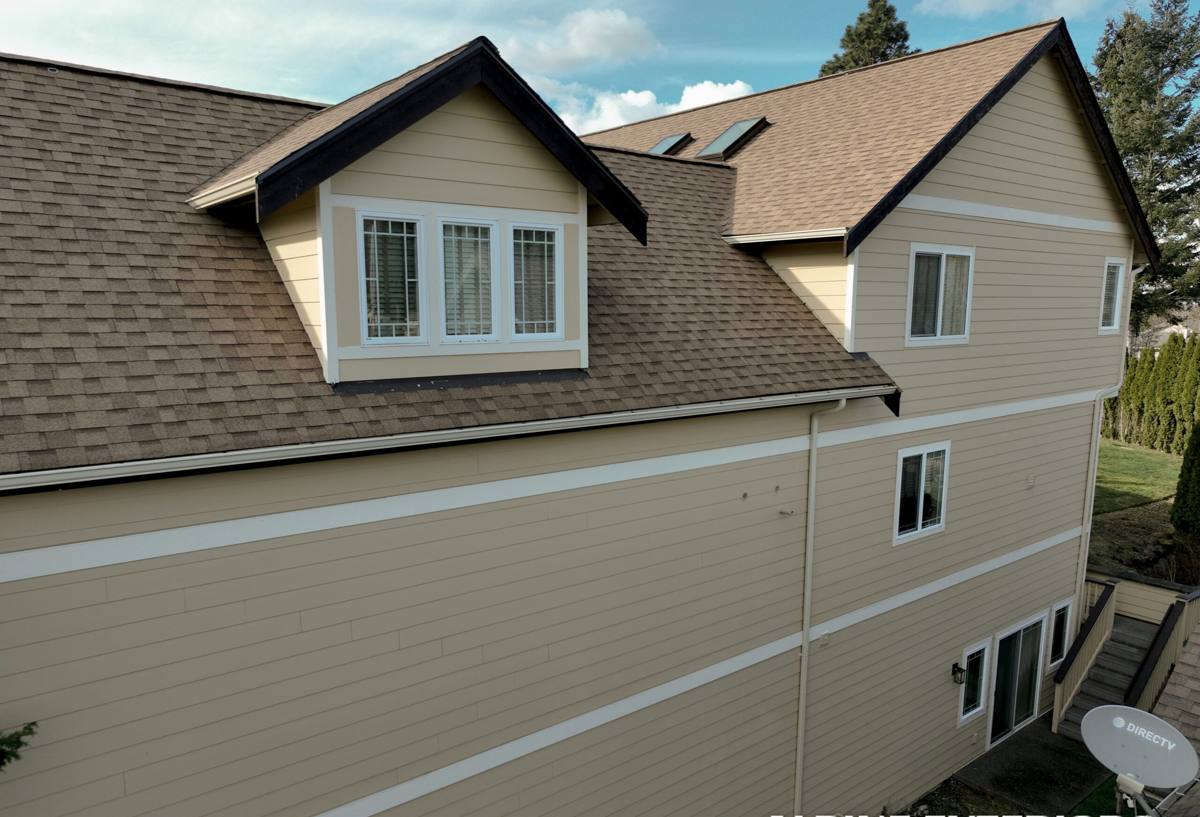
What Sumas Homes Need From Their Siding
Every siding material eventually gets wet. The difference between siding that lasts and siding that fails early comes down to what happens after that moisture hits the wall.
Moisture Resistance That Doesn't Depend on Perfect Maintenance
Wood-based products swell, warp, and can delaminate when they stay damp for extended periods — and in this climate, "extended periods" describes a normal winter. Vinyl doesn't absorb water the same way, but it flexes and gaps with temperature swings, and those gaps become entry points over time. Fiber cement resists moisture absorption at the material level, which matters more here than in a drier region because your siding genuinely doesn't get a long dry season to recover in.
Standing Up to Moss and Algae
Shaded, damp exteriors in this part of Whatcom County grow moss and algae faster than most homeowners expect. That growth holds moisture against the surface and accelerates whatever material is underneath. Siding installed with proper clearance, drainage, and a factory finish that resists staining goes a long way toward keeping that growth from taking hold in the first place.
Handling Wind-Driven Rain
Rain that hits a wall at an angle finds every seam, lap, and fastener hole a crew leaves unsealed or improperly flashed. This is where installation quality matters as much as the product itself — the best siding in the world still fails if the water-resistive barrier, flashing, and lap details underneath it aren't done correctly.
Why We Install Only James Hardie Fiber Cement
We get asked regularly why we don't offer vinyl, LP SmartSide, or other fiber cement brands. The honest answer is that we standardized on one product line because we got tired of watching other materials struggle against this exact climate.
James Hardie fiber cement is non-combustible, dimensionally stable, and engineered specifically for wet marine climates through its HZ5 product line, which is formulated for the Pacific Northwest's moisture and temperature patterns. The ColorPlus factory finish is baked on under controlled conditions, which gives it better fade and moisture resistance than field-applied paint and means touch-ups match instead of requiring a full repaint down the road. Hardie backs the product with a strong transferable warranty, but that warranty is only as good as the installation behind it — which is why we treat installation technique as seriously as the material selection.
We're not going to tell you other products don't have a place. LP SmartSide and vinyl both have legitimate use cases and loyal installers. But we made a professional decision to specialize in one system, install it correctly every time, and stand behind that work — rather than stretching our crews across multiple products and diluting the expertise that makes the difference on a house that has to survive a Whatcom County winter.
What Correct Siding Installation Actually Involves
The material is only half the equation. A Hardie board installed with the wrong fastener pattern, tight butt joints, or no drainage gap will underperform a cheaper product installed correctly. Here's what a proper installation includes on every job:
- Removal of old siding and inspection of the sheathing underneath for existing rot or moisture damage before anything new goes up
- A continuous, correctly lapped weather-resistive barrier behind the siding — this is the actual waterproofing layer, and the siding works with it, not instead of it
- Proper flashing at every window, door, and roofline penetration, since these are the highest-risk points for leaks
- Correct fastener spacing and depth per the manufacturer's specifications — over-driven or under-driven nails are one of the most common causes of premature siding failure
- A minimum 1/8" gap at butt joints and board ends to allow for expansion, caulked or capped per spec rather than jammed tight
- Clearance between the bottom edge of the siding and grade, decks, or roofing to prevent wicking
- ColorPlus touch-up applied to any field-cut edges so the factory finish isn't compromised
Any one of these steps skipped can undercut everything else. This is the part of the job that separates a crew that's installed thousands of feet of Hardie board from one that's treating it like just another siding product.
Our Installation Process, Step by Step
1. On-Site Assessment
We start with a walk-around of the home, checking existing siding condition, trim, window flashing, and any signs of moisture damage that need to be addressed before new siding goes up. This is also when we talk through product line, color, and profile options.
2. Removal and Sheathing Check
Old siding comes off, and we inspect the sheathing underneath. If there's rot or water damage — which shows up more often on older Whatcom County homes than people expect — we address it before closing the wall back up. Covering damaged sheathing with new siding just hides a problem that gets worse.
3. Weather Barrier and Flashing
We install a continuous weather-resistive barrier and flash every penetration — windows, doors, hose bibs, vents — according to manufacturer specs. This layer does the actual work of keeping bulk water out of the wall assembly.
4. Hardie Board Installation
Boards go up with correct fastener spacing, proper gaps, and attention to reveal consistency so the finished wall looks clean from every angle. We work in manageable sections so quality control happens as we go, not just at the end.
5. Trim, Touch-Up, and Final Walkthrough
Trim and accessories get installed, cut edges get ColorPlus touch-up, and we walk the job with you before calling it finished.
Cost Factors for a Sumas Siding Project
Every home is different, and we don't quote prices without seeing the job, but these are the factors that typically move the number:
| Factor | Why It Matters |
|---|---|
| Existing siding removal | Tear-off and disposal add labor time, especially with multiple layers or damaged material underneath |
| Sheathing repair | Rot or water damage found during removal has to be fixed before new siding goes on — this is common on older homes in wet climates |
| Home size and stories | Square footage and access (ladders vs. scaffolding for multi-story walls) directly affect labor hours |
| Trim and accessory complexity | Homes with more windows, dormers, and architectural detail take more time to flash and trim correctly |
| Product line and color | HZ5 boards and ColorPlus finish options vary in cost depending on plank profile and color selection |
We'll walk through each of these during your estimate so you know what's driving the number, not just what the final total is.
Signs a Sumas Home Needs New Siding
Homeowners often wait too long on siding because the damage isn't obvious from the street. Watch for:
- Soft or spongy spots when you press on the siding, especially near the bottom edge or around windows
- Persistent moss or algae staining that comes back quickly after cleaning
- Visible cracking, warping, or separation at seams and corners
- Paint that's peeling or bubbling on the siding itself, which often points to moisture trapped underneath
- Rising energy bills that suggest the wall assembly isn't insulating or sealing the way it should
If you're seeing any of these, it's worth having a crew take a real look rather than waiting for it to get worse — moisture problems behind siding rarely stay small.
Why Hiring a Crew That Already Works in Sumas Matters
Siding installation isn't one-size-fits-all across regions. A crew that mostly works in drier climates may not think twice about details that matter a lot here — drainage gaps, flashing sequencing, or how much clearance to leave near grade in a valley that holds moisture longer than open coastal areas. We work throughout Whatcom County, including Birch Bay and Sumas, and that regional experience shapes how we detail every job, not just the parts a homeowner would notice on a walkthrough.
It also means we're not learning the local building department's expectations on your project. Knowing what inspectors look for locally and building it right the first time avoids delays and rework.
After Installation: Keeping Your Siding Performing
Fiber cement is low-maintenance compared to wood or repainted materials, but "low-maintenance" isn't "no-maintenance," especially with a moss season this long. A few habits go a long way:
- Rinse siding annually with a garden hose to clear pollen, dust, and early moss growth before it takes hold
- Trim back vegetation and tree limbs to improve airflow and sun exposure on shaded walls
- Inspect caulking at trim joints and penetrations every couple of years and re-caulk as needed
- Address any small areas of missing touch-up paint promptly to protect the cut edge underneath
None of this requires a professional visit in most years — it's the kind of upkeep that keeps a correctly installed Hardie exterior looking good for decades rather than one.
If you're considering new siding for a Sumas home, we're happy to take a look and give you a straightforward, no-pressure estimate — including an honest read on your home's current condition and what we'd recommend. Use the form below to get started.