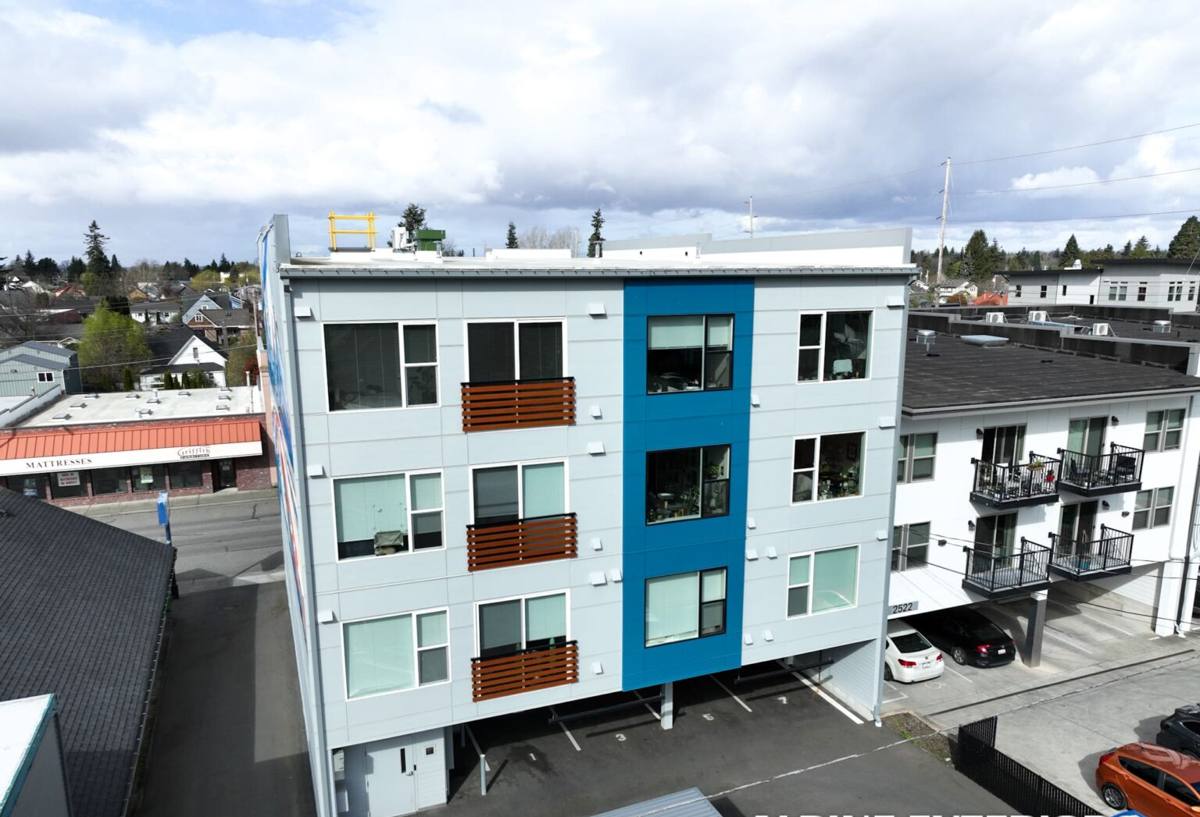
 Birch Bay Exterior
 Windows Built for a Cottonwood Beach Address
Cottonwood Beach sits close enough to the water that its houses live with conditions most inland Whatcom County homes never deal with: salt-laden air, wind-driven rain coming straight off Birch Bay, and long stretches of gray, damp weather that keep wood and vinyl surfaces wet for days at a time. Windows here don't fail the way they do elsewhere. They fail at the seals first, then at the frame corners, then — if nobody catches it — into the wall cavity behind them. A window that's "fine" everywhere else in the county can be a slow leak waiting to happen a few blocks from the water.
We install and replace custom windows for homes in and around Cottonwood Beach as part of our regular Birch Bay-area work, not as a special trip. That matters more than it sounds like it should, because a window job done wrong in a coastal microclimate doesn't show its mistakes for a year or two — by then the flashing has failed quietly and the damage is inside the wall, not on the surface where anyone would notice.
What the Coastal Climate Actually Does to Windows
Salt Air
Airborne salt from Birch Bay settles on every exterior surface, window hardware included. On lower-grade aluminum components and unprotected steel fasteners, that salt accelerates corrosion — hinges stiffen, locks bind, and finishes chalk out years ahead of schedule. It's a slow process, which is exactly why it gets ignored until a window won't latch anymore.
Wind-Driven Rain
Rain that comes in sideways off the water doesn't behave like rain falling straight down. It gets pushed up and under trim, into any gap in the flashing, and against seals that were only ever tested for vertical water. A window installed with standard techniques — techniques that work fine in a sheltered inland yard — can still leak in a Cottonwood Beach exposure because the water pressure and angle are different.
Moss and Sustained Moisture
Whatcom County's moss season runs long, and anything that stays damp for extended periods becomes a host for it — including window sills, exterior trim, and the caulk lines around a frame. Moss holds moisture against the surface it's growing on, which keeps wood trim wet longer and speeds up rot at exactly the joints where a window depends on a tight seal.
Temperature Swings and Condensation
Coastal humidity combined with cooler nights means more condensation on interior glass than homeowners further inland typically see. That's not usually a sign of a bad window, but it does mean glazing and framing choices that manage moisture well are worth prioritizing here more than they might be elsewhere.
What "Correct" Looks Like on This Job
A properly done window replacement in this area isn't just "remove old window, put in new window." The parts that actually determine whether it holds up are mostly invisible once the trim goes back on.
- Flashing sequenced correctly — sill pan, side flashing, and head flashing installed in the right order so water is always directed outward and downward, never trapped behind the frame.
- Sill pan with a sloped, sealed pan — any water that gets past the sash has somewhere to go besides your wall framing.
- Compatible sealants — the wrong caulk or sealant chemistry against certain frame materials can fail early or even damage the frame finish. We match sealant to substrate.
- Fasteners rated for coastal exposure — stainless or coated fasteners instead of standard hardware that corrodes faster near salt air.
- Full perimeter insulation — gaps around the frame packed correctly (not overpacked, which can bow a frame) so there's no thermal bridge or path for moisture-laden air to reach the wall cavity.
- Weep paths kept clear — drainage routes in the frame system left open so any incidental water can exit instead of pooling.
Skip any one of these and the window can still look perfect for a year or two. The problems that show up later — soft trim, stained drywall, a musty smell near the window — usually trace back to one of these steps being rushed or skipped.
Choosing the Right Window for a Cottonwood Beach Home
Frame Material Trade-Offs
| Frame Material | Coastal Performance | Maintenance | Typical Fit |
|---|---|---|---|
| Vinyl | Good — won't rust or rot; UV-stable options hold up well near salt air | Low — occasional cleaning | Most budget-conscious replacements |
| Fiberglass | Very good — dimensionally stable through temperature and moisture swings | Low | Homes wanting durability without high upkeep |
| Aluminum | Fair — needs a marine-grade or coated finish to resist salt corrosion long-term | Moderate — watch hardware and finish over time | Modern designs, larger glass spans |
| Wood / Wood-Clad | Requires the most care in this exposure — clad exteriors help but exposed wood needs vigilant sealing | High — regular inspection and refinishing | Historic or architectural-match projects |
Glazing Considerations
Dual-pane glass is the baseline for this climate; the sustained damp and temperature swings make single-pane a poor fit here regardless of budget. For homes with more direct exposure to wind off the bay, we'll also talk through impact-resistant glass options and reinforced frame packages — not because it's required everywhere in Birch Bay, but because a few properties genuinely take more weather than the rest of the neighborhood and deserve the upgrade conversation.
Our Process, Start to Finish
- On-site assessment. We look at existing window condition, the specific exposure your home has (how directly it faces the water, tree cover, prevailing wind), and any signs of past water intrusion around current frames.
- Measurement and product selection. Custom sizing rather than forcing a stock size into an opening — and a frank conversation about which materials fit your budget and exposure level.
- Removal with a look behind the frame. Old windows come out carefully so we can actually see the condition of the framing and sheathing underneath before anything new goes in. This is where hidden rot or old flashing failures get caught.
- Sill pan and flashing installation. Built to shed water outward at every layer, sequenced so each layer overlaps the one below it correctly.
- Window setting and shimming. Leveled, plumbed, and squared before fastening — a window that's slightly racked stresses its seals from day one.
- Insulation and air sealing. Perimeter gaps filled correctly, not overpacked.
- Exterior trim and sealant. Finished with sealants and fasteners chosen for salt-air exposure.
- Final walkthrough. We check operation, sightlines, and seal integrity with you before calling it done.
Signs Your Current Windows Are Losing the Battle
- Soft or discolored trim or sill wood, especially on the side of the house facing the water
- Persistent fogging or moisture between panes on dual-pane units — a sign the seal has failed
- Drafts you can feel even with the window fully latched
- Difficulty opening, closing, or locking that wasn't there a couple years ago
- Moss or dark staining building up on the sill or lower frame
- A musty smell near the window that comes and goes with wet weather
- Visible daylight or gaps around the frame from outside
Any one of these on its own isn't necessarily an emergency. Two or three together, especially on a wall that takes direct weather, is worth a closer look before the next wet season.
Repair, Replace, or Wait?
Not every window issue means full replacement. A failed seal on an otherwise sound frame can sometimes be addressed with a sash or glass unit replacement. But if the frame itself has taken on water damage, or if the flashing behind it was never installed correctly to begin with, repair just delays the same failure — replacement is the honest answer. Part of our assessment is telling you plainly which category your situation falls into, including when waiting another season is genuinely fine.
Why Local Experience with This Exposure Matters
Whatcom County has a lot of microclimates packed into a small area. A technique that's standard practice for a window installer working mostly inland can be undersized for what a Cottonwood Beach exposure actually delivers in a January storm. Working this specific stretch of coastline regularly means we've seen which details — flashing sequencing, sealant choice, fastener grade — actually matter here versus which ones are just extra cost with no real benefit for this exposure. That's the difference between a window installed to a generic standard and one installed for the address it's actually going into.
We're not asking you to take that on faith. Ask any contractor bidding your window job how they handle sill pan flashing on a coastal wall, what sealant they use against your specific frame material, and what fastener grade they spec for salt exposure. A crew that works this area regularly should have a clear, specific answer — not a shrug.
What a Quote Should Include
| Cost Factor | Why It Moves the Price |
|---|---|
| Number and size of openings | More glass and larger units mean more material and labor |
| Frame material | Vinyl is typically the most affordable; fiberglass and wood-clad cost more upfront |
| Glazing package | Standard dual-pane versus upgraded impact-resistant or higher-performance glass |
| Condition behind the old window | Rot or old water damage discovered during removal adds repair scope |
| Trim and finish work | Matching existing exterior trim profiles or repainting adjacent siding |
| Access and site conditions | Second-story openings or tight site access affect labor time |
A trustworthy quote should walk through each of these line by line, not just hand you a single number. If a bid seems unusually low, it's worth asking specifically whether flashing, sill pans, and coastal-grade fasteners are included — those are the items that get quietly dropped to hit a lower price, and they're exactly the items that determine whether the window survives its first real storm off the bay.
Get a Straight Answer About Your Windows
If you're not sure whether your current windows need attention, or you're planning ahead for a replacement, we're happy to take a look and give you an honest read on where things stand — no pressure, no inflated urgency. Fill out the form below for a free estimate on custom windows for your Cottonwood Beach home.