 Birch Bay Exterior
 Fiber Cement Siding Built for What Ferndale's Climate Actually Does to a Wall
Ferndale sits in the part of Whatcom County where salt-tinged marine air, wind-driven rain, and a moss season that can run most of the year all land on the same wall. None of those stresses is unusual on its own, but the combination is demanding, and it's harder on a home's exterior than most homeowners realize until they're dealing with soft trim, peeling paint, or a wall that's been quietly holding moisture behind the siding for a couple of wet seasons. Fiber cement siding exists specifically because standard wood-based products struggle under that kind of sustained load, and it's why we install it as our standard product on Ferndale homes.
This page isn't a general overview of siding services. It's focused on the material itself: what fiber cement siding actually is, what it needs to do in this specific climate, which James Hardie products we use and why, and what separates a fiber cement job that performs for decades from one that starts showing problems in year six because a detail got skipped.
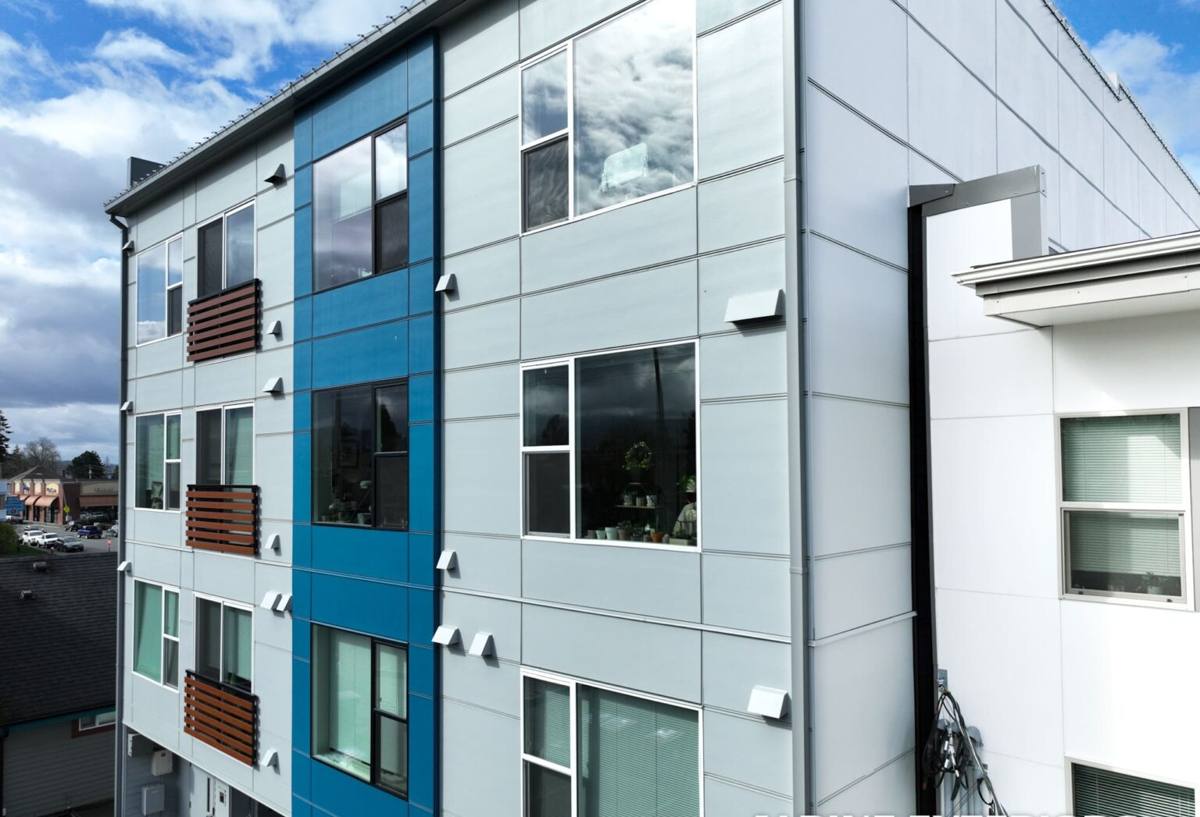
What Fiber Cement Siding Actually Is
Fiber cement is a composite material made from portland cement, sand, and cellulose fiber, formed into planks, panels, or shingle-profile pieces and cured before it ever reaches a jobsite. The core is inorganic, which is the detail that matters most for a climate like Ferndale's. It doesn't have wood fiber that can absorb water and swell, and it doesn't have an organic component for moss, mildew, or insects to take hold in the way they can on cedar or engineered wood products. That doesn't make it maintenance-free, but it does mean the material itself isn't the weak point the way it can be with wood-based siding.
Not All Fiber Cement Products Are Built the Same
Fiber cement is a category, not a single product, and the manufacturers in that category aren't interchangeable. Formulation, curing process, and finish quality vary between brands, and those differences show up over time in how well a board resists moisture at cut edges, how evenly a finish wears, and how well a warranty actually holds up when something goes wrong. We settled on James Hardie specifically, not fiber cement generically, because of how their product performs against this region's weather and how their warranty is structured when installation follows spec.
Why We Install Only James Hardie Fiber Cement in Ferndale
We don't offer a menu of siding brands and let price alone decide. We install James Hardie, full stop, and the reasoning is practical rather than promotional:
- Non-combustible core: The cement-based composite doesn't feed a fire the way wood-based siding can, which matters for household safety and can matter for insurance underwriting.
- Climate-engineered HZ5 formulation: Hardie builds specific product formulations for different climate zones, and HZ5 is engineered for regions with heavy moisture exposure and freeze-thaw cycling, a fit for coastal Whatcom County.
- Factory-applied ColorPlus finish: Color is baked on under controlled factory conditions instead of brushed on in the field, so it resists fading, chipping, and moisture intrusion far longer than site-applied paint.
- Dimensional stability: The inorganic core doesn't swell, cup, or warp the way wood-based siding can after repeated wet-season moisture cycles.
- A warranty that holds up when installation is done right: Hardie's warranty structure is one of the stronger ones in the industry, but it depends on the installer following their specified details, which is as much on us as it is on the product.
We won't install LP SmartSide, vinyl, Cemplank, Allura, primed spruce, or cedar. Each has a legitimate place in the broader siding market, and plenty of homeowners elsewhere are satisfied with them. Our call is narrower than a blanket judgment on those products: in a climate with this much sustained moisture and salt exposure, we'd rather stand fully behind one system than offer a cheaper option that quietly shifts maintenance risk onto the homeowner a few years down the road.
The Hardie Product System We Use on Ferndale Homes
"Fiber cement siding" covers more than one product shape, and picking the right one for a given home is part of doing the job correctly, not just a style preference.
HardiePlank Lap Siding
HardiePlank is the horizontal lap siding most people picture when they think of fiber cement, and it's the most common choice on Ferndale homes. It's available in smooth and cedarmill (wood-grain) textures and a range of plank widths, and it handles wind-driven rain well because the overlapping lap design is a proven water-shedding profile when it's installed with correct exposure and fastening.
HardieShingle Siding
HardieShingle mimics the look of individual wood shingles without the moisture vulnerability of actual cedar shingles. It's a good fit for homes going for a coastal or craftsman look, or for accent areas like gables, and it holds up to this region's moss and mildew pressure far better than real wood shingle siding does over time.
HardiePanel and Trim
HardiePanel is a vertical panel product often used for modern or board-and-batten styling, and it pairs with HardieTrim for window and door surrounds, corners, and fascia. Getting the trim system right matters as much as the field siding, since trim is where a lot of joints, and a lot of potential water entry points, are concentrated.
ColorPlus Finish and Color Selection
Most Hardie products we install come with the factory-applied ColorPlus finish rather than a primed board meant for field painting. Color families range from whites and grays through warmer browns and deeper accent tones, and in a climate that gives field-applied paint a hard time, a factory-cured finish is a meaningful long-term advantage, not just a convenience. We walk homeowners through color and texture choices together, since the same color can read differently in smooth versus cedarmill texture under this region's mostly overcast light.
| Product | Best Fit | Key Consideration for Ferndale |
|---|---|---|
| HardiePlank Lap Siding | Traditional and craftsman-style homes; most common choice | Overlapping profile sheds wind-driven rain well when exposure and fastening are correct |
| HardieShingle Siding | Coastal or craftsman styling, gable accents | Resists moss and mildew far better than real cedar shingle over a long moss season |
| HardiePanel and Trim | Modern or board-and-batten exteriors | Trim detailing at joints is where most water intrusion risk concentrates |
What Correct Fiber Cement Installation Involves in This Climate
Material choice is only half of what determines how siding performs. The installation details matter just as much, and in a climate that's this consistently wet, skipped details tend to surface as real problems faster than they would in a drier region.
Tear-Off and Substrate Inspection
A proper job starts by removing the old siding and actually looking at what's underneath. Sheathing and framing that have been absorbing moisture behind failing siding for years need to be addressed before new siding goes up, not covered over. Skipping this step is one of the more common ways a fiber cement installation looks good on day one and causes problems within a few wet seasons.
Fastening, Clearances, and Flashing
Hardie specifies fastening patterns, minimum clearances from grade, roof lines, and decks, and flashing details at every penetration and transition. Those specs exist because they're what keeps wind-driven rain from finding its way behind the siding. Correct clearance from grade in particular matters here, since standing water and splash-back at the base of a wall is a common source of slow, hidden damage.
Joint and Trim Detailing
Every joint, corner, and trim seam is a potential entry point for water if it isn't lapped, caulked, or flashed correctly. This is where a lot of the actual skill in a fiber cement installation shows up, and it's not something that's visible from the street once the job is finished, which is exactly why it's worth asking a contractor to walk you through how they handle it.
Our Process for a Ferndale Fiber Cement Project
On-Site Evaluation
We start by walking the actual property, not quoting off a phone call or a photo. We look at wall orientation, existing moisture damage, roofline and deck intersections, and anything specific to the lot that affects how the wind and rain hit the house.
Material and Color Selection
We help select the right Hardie product line, texture, and ColorPlus color based on the home's style and the specific exposure of each elevation, since a north-facing wall in shade and a south-facing wall in full sun don't need to be treated identically.
Installation and Final Walkthrough
Installation follows Hardie's specified fastening, clearance, and flashing details throughout, and we walk the finished job with the homeowner before calling it done, so any questions get answered on site rather than after the crew has left.
Cost Factors for Fiber Cement Siding in Ferndale
| Factor | What It Affects | Why It Matters Here |
|---|---|---|
| Home size and wall complexity | Total material and labor | More corners, dormers, and trim mean more joints exposed to wind-driven rain |
| Tear-off vs. new construction | Labor scope and substrate access | Tear-off often reveals hidden moisture damage common under older siding in this climate |
| Substrate condition | Repair costs before new siding goes on | Trapped moisture behind failing siding can rot sheathing and framing over time |
| Product line and texture | Material cost per square | HardieShingle and HardiePanel with trim generally run higher than standard HardiePlank |
| Color and finish | Material cost and finish longevity | ColorPlus factory finishes outlast field-applied paint against salt air and UV exposure |
Exact numbers depend on the home's size, condition, and the products selected, which is why we give real estimates after walking the property rather than quoting off a generic price sheet.
Signs Your Ferndale Home's Siding Needs Attention
- Moss or dark staining that returns quickly after cleaning, especially on shaded or north-facing walls
- Soft or spongy siding, particularly low on the wall or around window and door trim
- Peeling, bubbling, or visibly warped siding boards
- Cracked, chipped, or missing sections after storms or wind events
- Visible gaps at seams, corners, or trim joints where water can track in
- A musty smell near exterior walls or rising energy bills that may point to a wall assembly that's no longer sealing properly
Why a Crew That Already Works Ferndale Matters
A crew that installs fiber cement across Whatcom County day in and day out sees how salt air, wind-driven rain, and moss actually behave on real houses over a full year, not just how a product performs on a spec sheet. That shapes practical decisions on install day: where extra flashing attention pays off, which wall orientations stay wet longest, and which details are worth the extra time so a homeowner isn't dealing with a callback two winters later. Ferndale's mix of coastal exposure and open, low-lying terrain isn't identical to every other town in the county, and a crew with local experience treats it that way instead of applying the same generic approach everywhere.
If your Ferndale home needs new fiber cement siding, repair work, or an honest opinion on what's actually going on behind an aging wall, we're glad to take a look. Reach out using the form below to schedule a free, no-pressure estimate.