 Birch Bay Exterior
 Windows Built for the Nooksack Stretch of Birch Bay
Homes in the Nooksack area near Birch Bay sit close enough to the water that the air itself works against your windows every day. Salt-laden moisture off the Salish Sea settles into frames and hardware, driving rain finds every gap in old caulking, and the long gray stretch of fall through spring keeps moss and mildew active on north-facing walls for months at a time. A window that would hold up fine forty miles inland can start failing here in half the time. Custom window work in this pocket of Whatcom County isn't about upgrading style — it's about matching the product and the installation to conditions that are genuinely harder on building materials than most of the county realizes.
We work this stretch regularly, which means we're not guessing at what fails first. We know which orientations take the worst weather, which older window styles were never built for this exposure, and where sloppy installation work tends to show up five years later as soft framing or fogged glass.
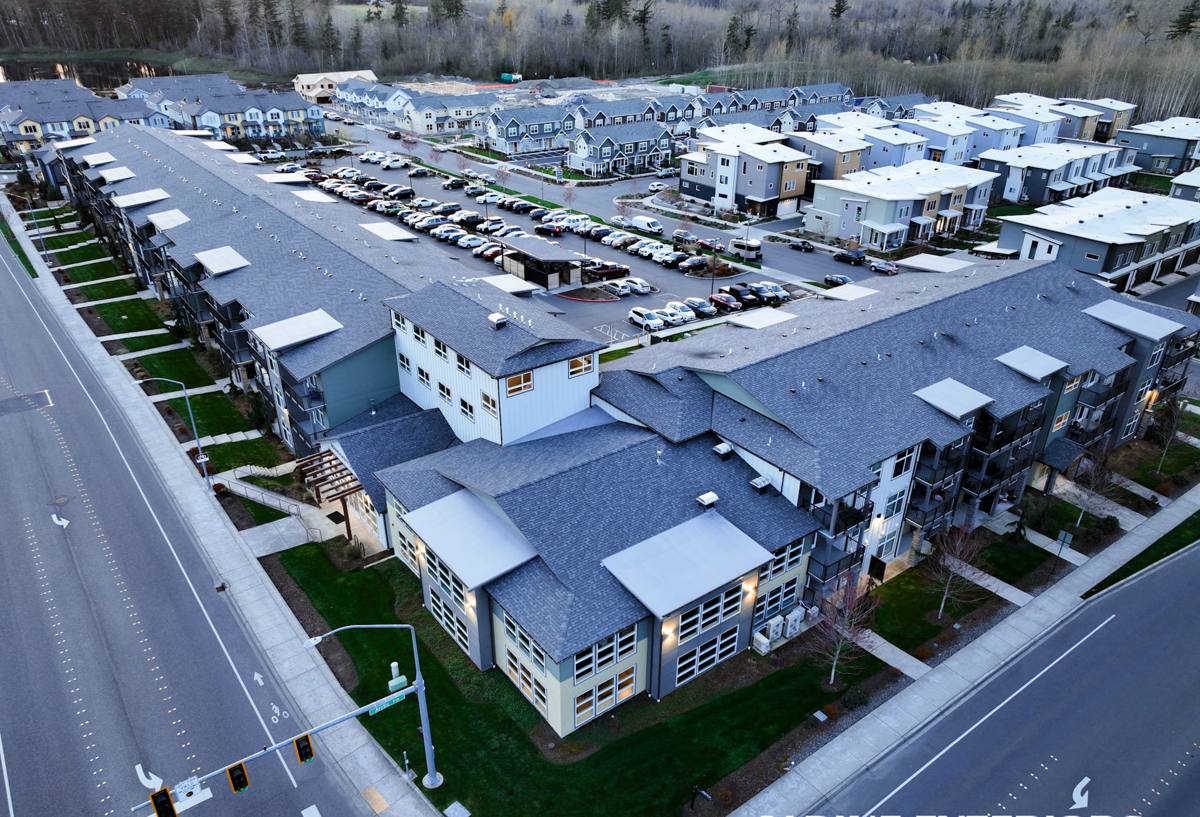
What "Custom" Should Actually Mean Here
"Custom" gets used loosely in this trade. For us it means two specific things: the window is sized and built to fit your actual opening — not a standard size that gets shimmed and gapped to make it work — and the materials and glazing are chosen for your home's exposure, not just picked off a general catalog.
Nonstandard Openings Are the Norm, Not the Exception
A lot of homes in this area were built or added onto in stages, which means openings are rarely perfectly square or a stock size. Forcing a standard window into an irregular opening is one of the most common causes of early water intrusion — the gaps get filled with extra caulk or trim instead of being properly flashed, and that caulk is the first thing salt air and freeze-thaw cycles break down. A true custom order is measured to the actual opening, not to a catalog number.
Exposure-Specific Material Choices
A window on a sheltered south wall and a window facing the prevailing weather off the water are not the same job, even on the same house. We factor in which walls take direct wind-driven rain, which sit in shade long enough to stay damp and grow moss on the sill, and which get the most UV and salt exposure. The frame material, hardware finish, and even the sealant we use can change wall to wall on the same project.
Frame Material Comparison for a Coastal Whatcom County Home
| Material | How it handles salt air & moisture | Maintenance | Where it fits best here |
|---|---|---|---|
| Vinyl | Won't corrode or rot; seams and welds need to be well-made to stay watertight | Low — occasional cleaning | Most homes; good value for full-house replacement |
| Fiberglass | Very stable in wet/dry and hot/cold swings; holds paint and seals well over time | Low to moderate | Exposed walls taking direct wind-driven rain |
| Wood-clad | Attractive interior wood with an exterior shell, but the shell's seams are the weak point in constant damp exposure | Higher — seams and joints need regular inspection | Homes prioritizing interior wood appearance, away from the worst exposure |
| Aluminum | Strong but conducts cold and can pit over years of salt exposure without a quality finish | Moderate | Specific architectural applications, not general use here |
None of these is universally "best" — it depends on which wall of your house we're talking about and what you're trying to solve. We'll walk through the honest trade-offs for your specific openings rather than pushing one material for the whole house by default.
Our Installation Process
The window itself is maybe half the job. The other half is everything around it, and that's where most long-term failures actually start.
- Removal and opening inspection. We check the sheathing, sill, and framing for hidden rot or moisture damage before anything new goes in. This is often where old, undersized flashing gets found.
- Flashing and weather barrier repair. Proper flashing — installed to shed water down and out, not trap it — matters more here than almost anywhere inland. We integrate it with the existing weather-resistive barrier rather than just caulking over gaps.
- Custom-fit window setting. The window goes in level, plumb, and square, shimmed correctly so the frame isn't under stress that will eventually crack seals or bind hardware.
- Sealing and insulation. Gaps get properly insulated and sealed — not overfilled with expanding foam that can bow the frame, and not left thin where wind can find a path through.
- Exterior trim and finish detailing. Trim is sealed and finished to shed water away from the window, since a well-installed window with poor trim detailing can still let moisture in around the edges.
- Final function and weather-seal check. Every window is operated, checked for square, and inspected for a consistent seal before we call the job done.
Signs Your Current Windows Are Already Losing
Salt air and constant moisture don't announce themselves — by the time a window is obviously failing, the frame or sill underneath has often been compromised for a while. Worth checking for:
- Fog or moisture trapped between the panes of a double-pane window (a broken seal)
- Soft, spongy, or discolored wood at the sill or frame
- Visible moss, algae, or dark streaking on the sill or lower frame
- Windows that stick, won't latch fully, or have become hard to open
- A noticeable draft or cold spot near the frame on a windy day
- Paint or finish that's peeling or bubbling specifically around the window, not the wider wall
- Visible daylight or gaps where the frame meets the siding or trim
Any one of these on its own might just mean a repair. Several at once, especially on a wall that takes direct weather, usually means the window and the detailing around it need to be replaced together.
Why Flashing Matters More Here Than It Gets Credit For
Most window failures we see aren't glass failures — they're water management failures. Driving rain off the water doesn't just hit a window straight on; wind pushes it sideways and up under trim and siding edges. If the flashing isn't lapped correctly to shed that water back out, it collects behind the trim and sits against the framing, invisible from outside until rot or interior staining shows up. This is a slower, quieter failure than a cracked pane, and it's also the more expensive one to fix once it's gone on for a few seasons. We treat flashing and sealing as equal in importance to the window unit itself, not an afterthought.
Living With Salt Air and Moss Season
Even a well-installed, well-matched window benefits from a bit of seasonal attention in this environment.
What We Recommend Homeowners Do
- Rinse salt residue off exterior frames and glass a few times a year, especially after storms
- Clear moss and debris from sills and tracks before it holds moisture against the frame
- Check weep holes (the small drainage openings on the exterior frame) stay clear so water can drain out
- Look over exterior caulking annually and have gaps addressed before they widen
- Operate windows a few times through the winter so hardware and seals don't seize up from disuse
None of this is heavy maintenance, but skipping it in this climate shortens a window's working life more than people expect.
Why a Crew That Already Works This Area Is Worth It
A contractor based elsewhere in Whatcom County or coming up from further south may do fine general window work, but they're not necessarily used to detailing for direct salt and wind exposure the way a crew that works the Birch Bay shoreline regularly is. We've seen firsthand which flashing shortcuts fail first in this environment, which sealants hold up and which don't, and which window styles handle wind-driven rain versus which ones struggle. That's not a knock on other contractors — it's just the difference between general experience and site-specific experience, and on a coastal property it shows up in how the job ages, not just how it looks on installation day.
What to Expect From Working With Us
We start with a walkthrough of the specific openings involved, not a generic whole-house quote. You'll get straight answers on which walls need the more weather-resistant material, where a standard-grade window is genuinely fine, and what the flashing and sealing work will involve — before any commitment is made. We don't upsell material upgrades on walls that don't need them, and we don't cut corners on the walls that do.
If your Nooksack-area home has windows that are drafty, fogged, sticking, or just original to a house that's seen a lot of coastal weather, we're glad to take a look. Reach out for a free, no-pressure estimate using the form below — we'll tell you honestly what we find.