 Birch Bay Exterior
 Cherry Point's Climate Is Harder on a Roof Than Most Homeowners Realize
Cherry Point sits right at the edge of the Salish Sea, which means every roof out here deals with a combination of stresses that inland Whatcom County homes simply don't face. Salt-laden air drifts off the water and settles on every exposed surface, including your shingles, flashing, and fasteners. Add in driving rain that comes in sideways during winter storms, and a wet season that can keep roofs shaded and damp for months at a stretch, and you've got a recipe for problems that show up years before they would on a roof in a drier, more sheltered part of the state.
None of this means asphalt shingles are the wrong choice for a Cherry Point home — they're not. It means the installation details that get glossed over on an easier job matter a lot more here. A roof that's installed to a generic standard will often look fine for a year or two, then start showing granule loss, curling edges, or moss colonies well ahead of schedule. A roof installed with this specific coastline in mind holds up the way it's supposed to.
The Three Things Working Against Your Roof
- Salt air: accelerates corrosion on exposed metal fasteners, flashing, and any hardware that isn't rated for coastal exposure.
- Wind-driven rain: pushes water sideways and upward under shingle tabs and around flashing details that would stay dry in a calmer climate.
- Extended moss season: shaded, north-facing, and tree-covered sections of roof stay damp long enough for moss and algae to establish and spread.
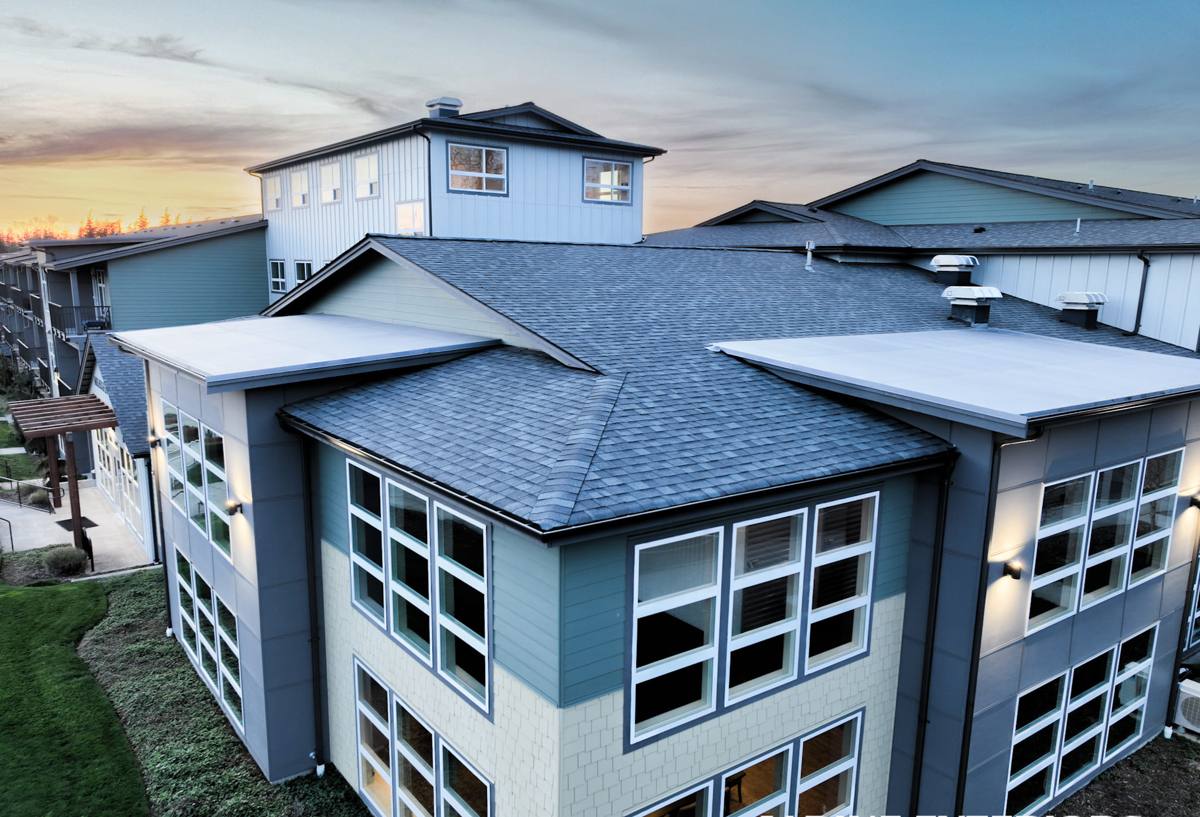
What a Correct Asphalt Shingle Install Looks Like Here
A roofing job that's "up to code" and a roofing job that's actually built for Cherry Point's exposure are two different things. Code is a minimum. For a home this close to the water, we treat several details as non-negotiable rather than optional upgrades.
Underlayment and Water Barrier
Standard felt underlayment is a minimum, not a solution for driving rain. On homes with any real exposure to wind off the water, we favor synthetic underlayment for its tear resistance and consistent water shedding, with self-adhered ice-and-water membrane at the eaves, valleys, and any low-slope transitions where wind-driven rain is most likely to find a way in.
Flashing and Fasteners
This is where salt air does the most damage over time. Uncoated or low-grade metal flashing and fasteners corrode faster here than almost anywhere else in the county. We use corrosion-resistant flashing and fastener materials suited to coastal exposure, with particular attention to step flashing at walls, chimney flashing, and any penetration where a small gap becomes a slow leak.
Fastening Pattern for Wind
Shingles rated for high wind only perform to that rating if they're fastened correctly. We follow the manufacturer's high-wind nailing pattern — typically six nails per shingle rather than four — on homes exposed to open water or unbroken wind runs, which is most of Cherry Point.
Ventilation
A roof deck that can't breathe traps moisture underneath the shingles, which accelerates rot and shortens shingle life from below — invisible until it's a bigger problem. Balanced intake and exhaust ventilation matters everywhere, but in a climate with this much ambient moisture, it's one of the details most likely to get shortchanged by a crew that isn't paying attention.
Choosing the Right Shingle for a Coastal Property
Not every asphalt shingle product is a good match for salt air and sustained damp conditions. The table below reflects how we think through the trade-offs with homeowners in this area.
| Shingle Type | Typical Lifespan | Wind Rating | Coastal Fit |
|---|---|---|---|
| 3-tab (economy) | 15–20 years | Lower | Workable on sheltered, low-exposure sections; not our first choice for open exposure |
| Architectural / laminate | 25–30 years | Higher | Our standard recommendation for most Cherry Point homes |
| Algae-resistant (copper-granule) | 25–30+ years | Higher | Worth the upgrade on shaded, north-facing, or tree-covered roof sections |
| Impact-rated | 30+ years | Highest | Good option where storm debris or falling branches are a recurring concern |
We don't push the most expensive option by default. On a roof with good sun exposure and few overhanging trees, a quality architectural shingle without the algae-resistant upgrade is often money well spent elsewhere. On a shaded lot near the water, that upgrade tends to pay for itself in avoided cleaning and premature staining.
Moss, Algae, and the Long Wet Season
Moss on a roof isn't just cosmetic. It holds moisture against the shingle surface, works its way under tabs as it grows, and can lift shingles enough to let water in during a hard rain. In a region where roofs can stay damp for months, moss and dark algae streaking are two of the most common issues we see on homes that haven't had regular attention.
What Actually Helps
- Keeping tree limbs trimmed back so more of the roof gets sun and airflow
- Zinc or copper strips near the ridge on shaded sections, which reduce moss regrowth over time
- Gentle, low-pressure cleaning rather than pressure washing, which can strip protective granules
- Choosing algae-resistant shingles on sections that stay shaded most of the year
- Clearing gutters and valleys regularly so water isn't sitting against the shingle edge
We're honest with homeowners that no roof in this climate is entirely moss-proof. The goal is managing it so it doesn't get ahead of you, not chasing a moss-free roof that doesn't really exist here.
Our Process for a Cherry Point Re-Roof or Repair
We keep the process straightforward and communicate clearly at each stage, because a roof project is disruptive enough without added uncertainty.
- On-site inspection: we look at the current roof's condition, decking, ventilation, and flashing — not just the shingles — since problems often start underneath what you can see.
- Honest scope and estimate: we tell you what actually needs to happen, including where a repair makes sense versus a full replacement.
- Tear-off and deck check: old material comes off and we inspect the decking for soft spots or rot before anything new goes down.
- Underlayment, flashing, and shingle install: built to the coastal standards described above, not a generic minimum.
- Cleanup and final walkthrough: we clear debris and nails from the property and walk the finished roof with you.
Signs Your Cherry Point Roof May Need Attention
- Granules collecting in gutters or at downspout outlets
- Dark streaking or green-black patches on shaded sections
- Curling, cupping, or lifted shingle edges, especially on wind-exposed slopes
- Rusted or visibly corroded flashing around chimneys, vents, or wall transitions
- Daylight or water stains visible in the attic near the roof edges or valleys
- Shingles that feel soft or spongy underfoot during an inspection
Catching these early is almost always cheaper than waiting. A small flashing repair now is a different job than replacing rotted decking after a slow leak has been running for a season.
Why It Matters That We Already Work This Coastline
A roofing crew that mostly works inland jobs can still do competent work, but they're often applying assumptions that don't hold up out here — standard fastening patterns instead of high-wind patterns, felt underlayment instead of a real water barrier at the eaves, or no real plan for moss on shaded sections. We work this stretch of Whatcom County regularly, so these aren't special-case upgrades we have to think twice about — they're just how we build a roof here.
That familiarity also shows up in smaller ways: knowing which sections of a typical Cherry Point roof tend to hold moisture longest, which flashing details fail first in this exposure, and what a realistic maintenance schedule looks like for a home that sits this close to open water.
What Reasonable Maintenance Looks Like
Asphalt shingle roofs in this climate aren't maintenance-free, but they don't need constant attention either. A simple rhythm covers most of it:
| Task | Frequency | Why It Matters Here |
|---|---|---|
| Gutter and valley clearing | 1–2x per year | Prevents water backing up under shingle edges |
| Visual roof inspection | Annually | Catches flashing corrosion or shingle wear early |
| Moss/algae treatment as needed | Every 1–3 years | Keeps growth from lifting shingles or staining the roof |
| Tree trimming near roofline | As needed | Reduces shade, debris, and abrasion on shingles |
If you're weighing a repair, a full replacement, or just want an honest read on where your roof stands, we're happy to take a look. There's a free, no-pressure estimate form below — no obligation, just a straight answer about what your roof actually needs.