 Birch Bay Exterior
 Why Semiahmoo Decks Wear Differently
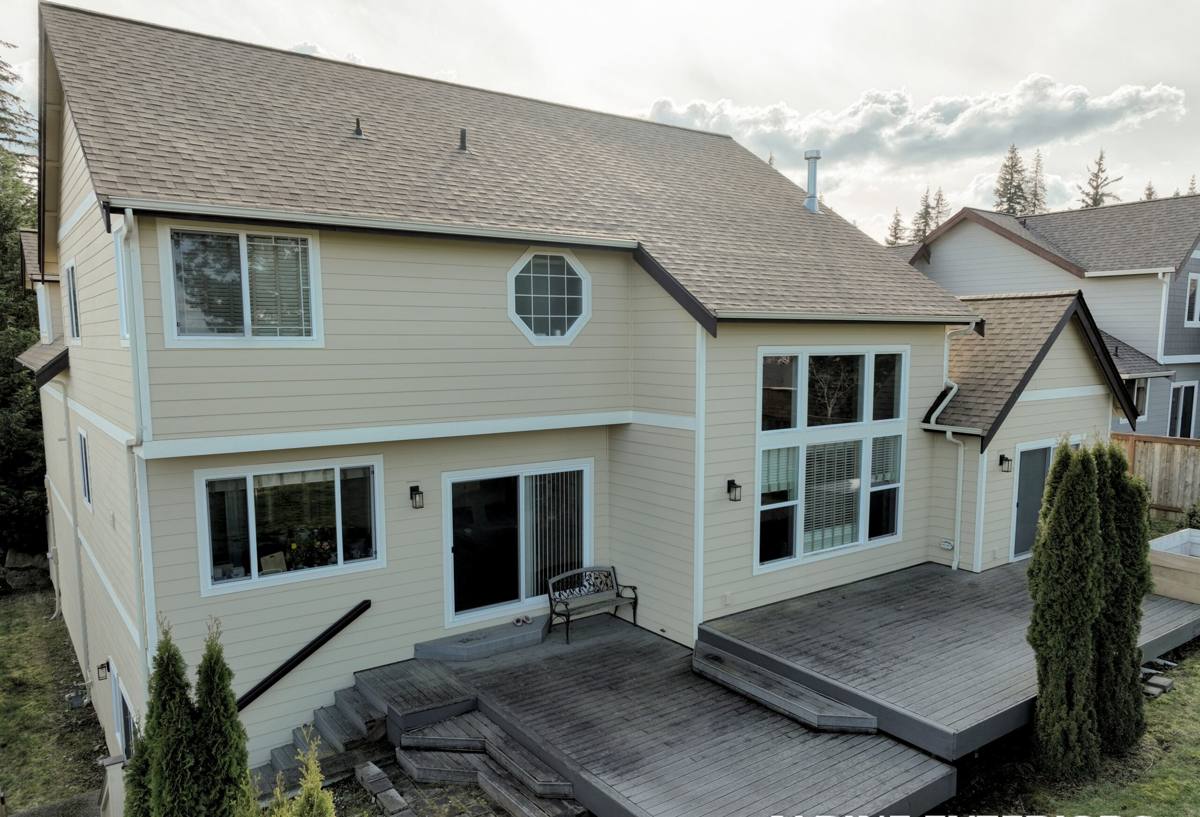
Semiahmoo sits close enough to the water that every deck out here lives with a different set of problems than a deck twenty miles inland. Salt-laden air moves off the water and settles into wood grain, metal fasteners, and any gap in a finish coat. Add Whatcom County's long, wet stretch of fall and winter, and you get a slow, steady cycle of wetting and drying that most decks were never detailed to handle. We've repaired enough decks in this immediate area to know the failure points are rarely random — they show up in the same spots, for the same reasons, over and over.
A deck repair here isn't just "replace the bad board." It's understanding why that board went bad in the first place, and whether the same conditions are quietly working on the boards next to it.
The Climate Factors That Actually Matter
Salt Air and Metal Fatigue
Salt accelerates corrosion on fasteners, brackets, and any exposed hardware. Once a nail head or screw starts to rust, it swells slightly, which widens the hole in the wood around it and lets water in faster. This is one of the most common hidden causes of soft boards and loose railings we find on decks near the water — the wood damage is a symptom, the corroding hardware is the cause.
Driving Rain and Wind-Driven Moisture
Storms off the water don't just fall straight down — wind pushes rain sideways, up under rail caps, behind fascia boards, and into any joint that isn't properly flashed or sealed. Decks built or repaired without that in mind tend to rot from the inside of a joint outward, which means the surface can look fine while the structure underneath is already compromised.
Moss and the Long Wet Season
Whatcom County's moss season runs long, and a deck in partial shade near mature trees or a north-facing wall can stay damp for days after a storm passes. Moss and algae hold moisture against the wood surface, block finish products from doing their job, and make boards slick and dangerous underfoot long before they're structurally bad. Left alone, that constant damp layer speeds up rot underneath it.
What a Real Deck Repair Involves
A correct repair starts below the decking, not at it. We look at ledger board attachment, joist condition, post bases, and the flashing (or lack of it) where the deck meets the house — because in this climate, that ledger connection is one of the highest-consequence failure points on the whole structure. Only after the structure is confirmed sound do we move to surface-level repairs.
- Ledger board and house connection — checked for flashing, water intrusion, and fastener corrosion
- Joists and beams — probed for soft spots, especially where they contact posts or the ledger
- Post bases and footings — checked for rot at ground contact and for standing water around footings
- Decking boards — inspected individually, not just by walking the surface
- Railings and guards — tested for movement, since loose hardware here is often a corrosion symptom
- Fasteners — evaluated for rust staining, which signals hidden moisture even before wood looks damaged
- Stairs and stringers — checked for the same rot and hardware issues, often overlooked
Our Repair Process
Step One: Full Structural Inspection
Before we quote anything, we walk the deck, probe suspect areas with a moisture meter and awl, and get under the deck where possible to look at the framing directly. This is the step that separates an honest repair estimate from a guess.
Step Two: Written Scope, Plain Language
You get a clear breakdown of what's failing, what's causing it, and what fixing it actually requires — not a vague line item. If a repair is cosmetic versus structural, we tell you which is which so you can prioritize spending.
Step Three: Targeted Repair or Rebuild Sections
Most decks don't need full replacement — they need specific sections rebuilt correctly, with attention to the moisture and salt exposure that caused the original failure. Where we do replace boards or framing, we match fastener and hardware choices to the environment, not just to cost.
Step Four: Finish and Protect
Once the structure and surface are sound, we address the finish — sealant, stain, or paint as appropriate — so the repair holds up through the next wet season instead of failing again in a year or two.
Repair vs. Replace: How We Make the Call
| Condition | Usually Repairable | Usually Needs Replacement |
|---|---|---|
| Decking boards | Isolated soft or cupped boards | Widespread soft spots across most boards |
| Joists/framing | Localized rot at one or two joists | Rot at multiple joists or the ledger connection |
| Railings | Loose balusters, surface rust on hardware | Structural post rot, railing pulling away from deck |
| Posts/footings | Surface weathering, minor checking | Rot at ground contact, footing movement |
| Fasteners | Scattered corrosion, easily replaced | Widespread rust staining throughout the structure |
These are general guidelines, not guarantees — every deck is different, which is why the inspection step matters more than any rule of thumb.
Materials That Hold Up Near Salt Air
What we use for a repair depends on what's already there and what the homeowner wants long-term, but a few standards apply across the board in a coastal Whatcom County environment. Fasteners and structural hardware should be rated for coastal or marine-grade exposure, not just standard exterior use — the difference in corrosion resistance is significant over a few winters near the water. Wood species and treatment level matter too; framing lumber should be rated for ground contact where it's near soil or moisture, and any wood-to-concrete contact point is a common spot we look at closely for hidden rot.
We're upfront about trade-offs between materials rather than pushing one option as flawless. Composite decking, for example, resists rot but can trap moisture differently than wood if substructure ventilation isn't right, and it has its own maintenance profile around mold and mildew in a damp climate. Wood decking looks and feels traditional but needs more consistent upkeep — sealing, cleaning, and moss control — to hold up here. Neither is automatically the right answer; the right answer depends on the specific deck, its exposure, and how much upkeep the homeowner wants to commit to.
Signs Your Semiahmoo Deck Needs Attention
- Boards that feel spongy, springy, or noticeably softer underfoot in specific spots
- Rust staining around fastener heads or brackets
- Railings or posts that move when pushed
- Persistent moss or algae buildup that doesn't fully dry between rains
- Gaps opening up where the deck meets the house
- Visible cupping, splitting, or graying that's gone beyond surface weathering
- A musty smell coming from underneath the deck
None of these mean the whole deck is a lost cause — but they're worth a real inspection before winter storms make the underlying problem worse.
Maintenance That Extends the Life of a Repair
A repair done right buys you years, but a little seasonal upkeep buys you more. Clearing moss and debris from between boards before the wet season sets in keeps water from pooling against the wood. Reapplying sealant or finish on the schedule the product calls for — rather than waiting until it visibly fails — keeps moisture out of the grain in the first place. And an annual look at fasteners and hardware, especially anything exposed directly to salt air, catches corrosion while it's still a five-minute fix instead of a rebuild.
Why Local Experience Matters for This Job
A contractor who mostly works inland decks may not think twice about fastener grade, ledger flashing detail, or how close a deck sits to salt spray — because it rarely matters where they usually work. Out here in Birch Bay and along the Semiahmoo area, those details are the difference between a repair that lasts and one you're paying for again in three years. We work in this environment regularly, so we're not guessing at how salt air, driving rain, and moss interact with a deck over time — we've seen the pattern enough times to know what to check first and what corners not to cut.
If you're noticing soft boards, loose railings, or a deck that just doesn't feel as solid as it used to, we're happy to take a look and give you an honest, no-pressure assessment of what it needs. Reach out for a free estimate and we'll walk the deck with you and lay out exactly what we find.