 Birch Bay Exterior
 Metal Roofing in Sumas: A Different Kind of Wet
Sumas sits inland from the coast, on low, flat farmland near the Canadian border — a different setting than the beach communities along Birch Bay and the rest of the Whatcom County coastline, and that changes what a roof deals with over a typical year. The salt air that ages metal fasteners and flashing near the water is less of a factor here. What Sumas roofs contend with instead is long stretches of driving rain, heavy dew and fog off the surrounding farmland, and shade from mature trees that keeps roof surfaces damp for days at a time. That combination is exactly what drives moss growth, slow drainage, and early wear on roofing systems that weren't built with this specific pattern in mind.
Metal roofing handles sustained moisture better than almost any material available to homeowners in this part of Whatcom County — but only when the panel type, underlayment, and flashing are chosen and installed for what this climate actually does, not for a generic install. This page covers what that correct job looks like for a Sumas home specifically.
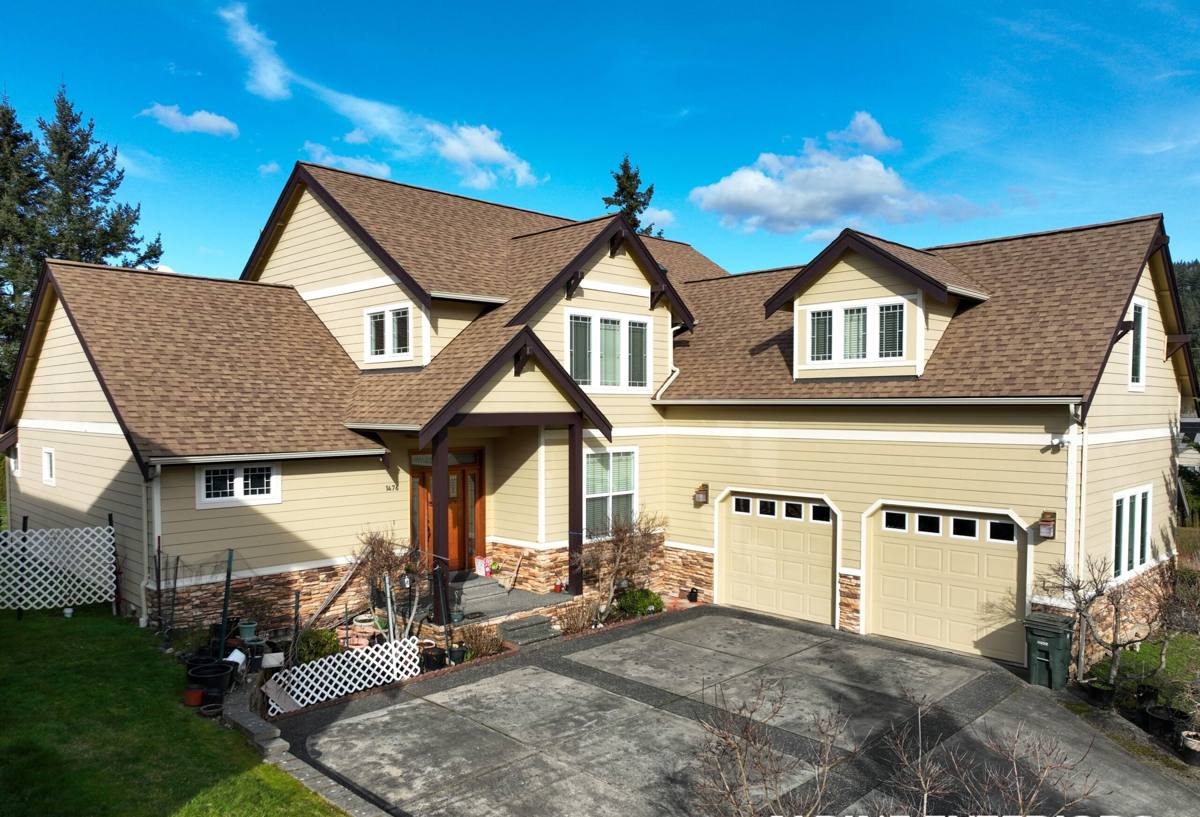
What Sumas' Climate Does to a Roof Over Time
Driving Rain and Slow Drying
Whatcom County gets long stretches of steady, wind-driven rain rather than short heavy downpours, and Sumas' flat, low-lying terrain means water doesn't always move off a property quickly. On a roof, that translates to hours or days of standing moisture at valleys, low-slope sections, and anywhere debris collects. Roofing details that hold up fine in a drier climate — minimal underlayment, exposed fasteners, tight valley flashing — get tested hard here, and any weak point eventually gets found.
A Long Moss Season
Shade, moisture, and mild temperatures are exactly what moss needs, and Sumas has all three for a good part of the year. Moss doesn't just look bad; it holds water against the roof surface and works into seams and fastener penetrations, where it can trap moisture against the underlying material. A roofing system that sheds water fast and gives moss fewer places to grab onto matters more here than it does in drier parts of the state.
Temperature Swings and Metal Movement
Whatcom County doesn't see extreme heat, but metal roofing still expands and contracts with daily and seasonal temperature changes. Panels, fasteners, and flashing all need to be installed with that movement accounted for. Fastened too rigidly, a metal roof will eventually stress at the attachment points or work loose at the seams, especially over the kind of long, damp winters Sumas gets.
What a Correctly Installed Metal Roof Involves
Metal roofing is often sold as a simple, low-maintenance upgrade, and long-term it is — but only if the installation underneath the panels is done right. Most metal roof problems we see on service calls trace back to a handful of details that got rushed or skipped, not to the metal itself.
Underlayment and Moisture Barrier
A synthetic, high-temperature underlayment is standard under metal roofing for good reason: it's the backup layer that protects the roof deck if wind-driven rain ever gets past the panels, which happens more in a climate like this than homeowners expect. In valleys, around penetrations, and at eaves, we use self-adhered ice-and-water membrane for extra protection against the wind-driven rain and slow-draining conditions common around Sumas.
Fastening Method and Panel Type
Exposed-fastener panels cost less up front, but every screw penetration is a potential leak point, and the rubber washers under those fasteners break down over time and eventually need replacing. Standing seam panels use concealed clips that let the metal expand and contract without stressing a fastener, with no exposed penetrations across the field of the roof at all. In a climate with this much sustained moisture, that difference matters more over the life of the roof than it would in a drier region.
Flashing — Where Roofs Actually Fail
Valleys, chimneys, skylights, sidewalls, and roof-to-wall transitions are where the vast majority of roof leaks start, on metal or any other material. Correct flashing means custom-formed metal at every transition, proper overlap and fastening sequence so water always sheds downhill over the next piece, and enough clearance for the metal to move without pulling flashing loose. This is the part of a metal roofing job that separates a crew that works with the material regularly from one that doesn't.
Choosing a Metal Roofing System for a Sumas Home
Not every metal roofing system is built the same way, and the right choice depends on your roof's slope, how much shade and debris it deals with, and your budget. Here's how the two most common options compare in a climate like this one:
| Factor | Standing Seam | Exposed-Fastener (Corrugated/Ribbed) |
|---|---|---|
| Fasteners | Concealed clips, no field penetrations | Screws through the panel face, with washers |
| Expansion handling | Panels float on clips, built for movement | Fixed points; more prone to stress over time |
| Moss and debris resistance | Fewer places for debris to catch | Ribs and fastener rows catch more debris |
| Maintenance | Minimal | Washers typically need replacing over the roof's life |
| Upfront cost | Higher | Lower |
| Best fit | Primary roofs, longer-term ownership | Outbuildings, shops, budget-driven projects |
For a primary residence in a climate that stays wet as long as Sumas does, we generally recommend standing seam. Exposed-fastener panels are a legitimate, lower-cost option for shops, barns, and other secondary structures, where a periodic check of the fastener washers is an acceptable tradeoff.
Maintenance a Sumas Metal Roof Actually Needs
One real advantage of metal roofing is how little maintenance it needs compared to asphalt shingles — but "little" isn't "none," especially with the moss and debris load Sumas properties tend to see. A short annual check catches most problems before they become expensive ones:
- Clear leaves, needles, and debris from valleys and around any roof penetrations before fall rains set in
- Check that gutters and downspouts are flowing freely — a metal roof sheds water fast, and clogged gutters back that water up under the edge
- Look for moss or algae staining, especially on shaded slopes, and remove it before it spreads or holds moisture against seams
- Inspect flashing at chimneys, skylights, and sidewalls for lifted edges or sealant that's cracked or pulled away
- On exposed-fastener roofs, check that screws are snug and washers aren't cracked or compressed flat
- Trim back overhanging branches that keep sections of the roof shaded and slow to dry
Most of this is a once-a-year job, ideally done in early fall before the wet season sets in. We're glad to handle it as part of a service visit if you'd rather not get on the roof yourself.
What Drives the Cost of a Metal Roof in Sumas
Metal roofing costs more upfront than asphalt shingles, and the final number on any given home depends on several factors more than it depends on material price alone:
| Cost Factor | Why It Matters |
|---|---|
| Panel system | Standing seam costs more installed than exposed-fastener panels |
| Roof complexity | Valleys, dormers, and multiple roof planes mean more custom flashing and labor |
| Tear-off vs. overlay | Removing old roofing adds cost but is often the right call over an aging deck |
| Deck condition | Rot or soft sheathing found during tear-off needs repair before panels go on |
| Roof pitch and access | Steeper or harder-to-access roofs take longer and require more safety setup |
| Underlayment specification | Full ice-and-water coverage costs more than minimum underlayment but performs better in this climate |
We give a written, itemized estimate before any work starts, so you know exactly what you're paying for and why — not a single lump number with no breakdown.
Our Process, Start to Finish
- On-site inspection. We look at your existing roof, deck condition, ventilation, and any problem areas before recommending anything.
- Written estimate. A detailed, itemized quote covering materials, tear-off (if needed), flashing work, and timeline.
- Material selection. We walk through panel type, gauge, and finish options based on your roof and budget, not a one-size-fits-all package.
- Tear-off and deck prep. Old roofing comes off, the deck is inspected and repaired as needed, and any rot is addressed before anything new goes down.
- Underlayment and flashing. A full moisture barrier goes down first, with ice-and-water membrane at valleys, eaves, and penetrations.
- Panel installation. Panels and fasteners are installed to manufacturer specification, with attention to expansion clearance and seam alignment.
- Final walkthrough and cleanup. We check every flashing detail, clear the site of debris and fasteners, and go over your roof and its maintenance with you before we leave.
Why a Crew That Already Works Sumas Matters
Metal roofing doesn't forgive shortcuts in a climate like this one. A crew that mostly installs roofs in drier parts of the state may not think twice about skipping ice-and-water membrane in a valley or using a lighter underlayment spec than Sumas' extended wet season calls for — and the roof will look fine for a couple of years before the moisture problems show up. We work throughout Birch Bay and Whatcom County, and we build every metal roof to handle the driving rain, moss, and long damp stretches this area gets, not to a generic regional standard.
That local familiarity also shapes the inspection itself — knowing which roof orientations tend to hold moss, which valley and flashing details fail first on older roofs in this area, and how to sequence a tear-off around Whatcom County's weather rather than a generic schedule. It's the difference between a roof that's technically installed correctly and one that's actually built for where it sits.
If you're weighing metal roofing for a home in Sumas — a full replacement, a re-roof over aging asphalt, or a new build — we're glad to walk the roof with you and put together a straightforward, no-pressure estimate. Fill out the form below and we'll be in touch to schedule a time that works for you.