 Birch Bay Exterior
 Building a Deck That Actually Holds Up in Sumas
Sumas sits inland from the water, but it still gets the same wet, gray stretch of weather that defines this part of Whatcom County — long rainy seasons, heavy dew, and the kind of persistent damp that settles into wood and never quite dries out between storms. Add in the salt-tinged air that drifts in off the Strait and Puget Sound on prevailing winds, and you've got a climate that's genuinely hard on outdoor structures. A deck built with generic, one-size-fits-all methods might look fine for a year or two. Then the fasteners start bleeding rust, the boards cup, and moss creeps into every shaded corner. A deck built for this specific climate looks the same at year ten as it did at year one.
This page is about one thing: custom deck construction for homeowners in Sumas and the surrounding Birch Bay service area, and what it actually takes to get it right here.
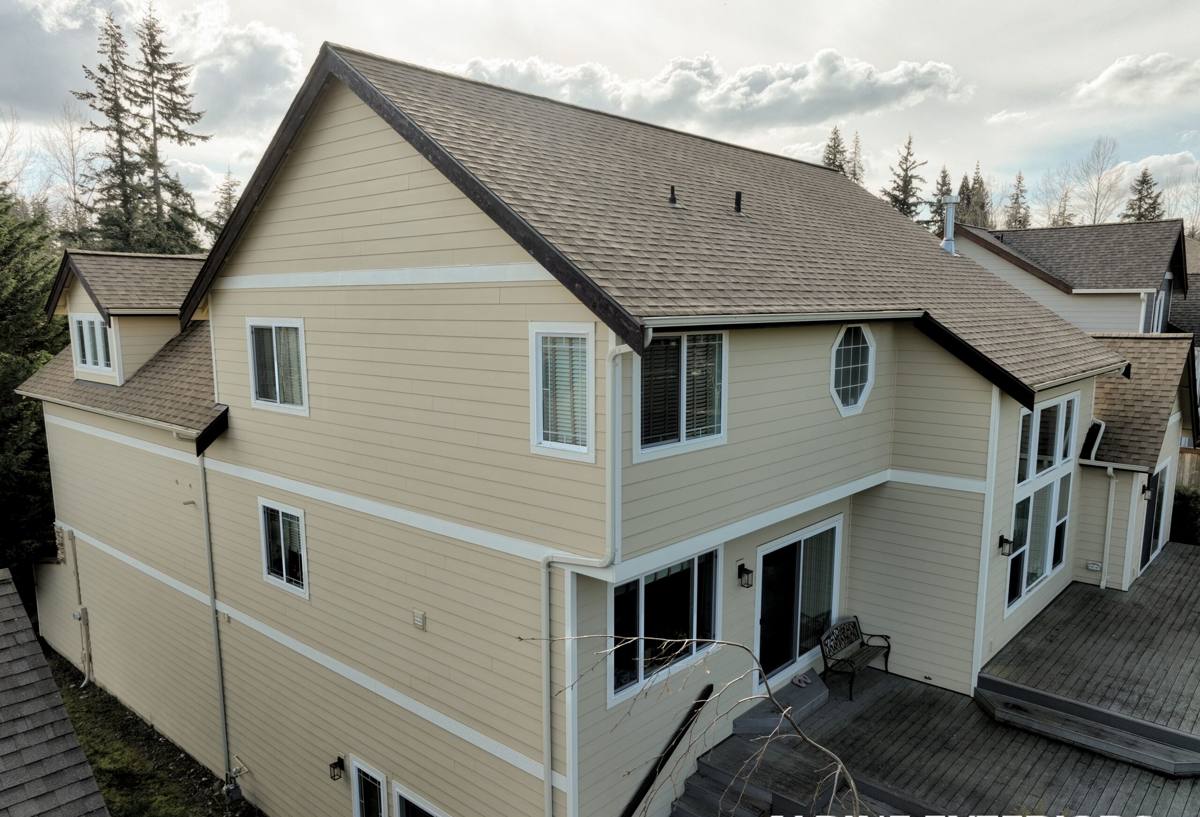
What Whatcom County Weather Does to a Deck
Before talking about materials or process, it helps to understand the specific stresses a deck faces in this region. This isn't generic "weather is tough on wood" advice — these are the failure patterns we see over and over on decks that weren't built with local conditions in mind.
Moisture That Never Fully Leaves
Whatcom County doesn't get the short, hard rain of a summer thunderstorm climate. It gets months of low-intensity, driving rain and mist that seeps into every joint, seam, and end-cut. Decking that isn't properly gapped and ventilated underneath traps that moisture, and trapped moisture is what causes rot, not rain itself. The framing underneath the visible deck surface — joists, beams, and especially the ledger board where the deck attaches to the house — is where hidden moisture damage does the real structural harm.
Salt Air and Metal Fasteners
Proximity to the Strait and the Sound means salt-laden air travels farther inland than most homeowners expect, especially on windy days. Standard hardware corrodes faster here than it would in a dry inland climate. Screws, joist hangers, and structural connectors that aren't rated for coastal exposure will visibly rust within a few seasons, and corroded fasteners are a structural liability long before they're an eyesore.
Moss and Algae Growth
The long moss season in this part of Washington isn't just a roof problem. Shaded, north-facing, or heavily treed deck surfaces stay damp long enough for moss and algae to establish, and once established, they hold moisture against the wood and make the surface slick and slippery underfoot. Deck design — spacing, surface material, and how much shade the structure sits in — has a direct effect on how much moss maintenance a homeowner ends up doing.
What a Correctly Built Deck Involves
A deck is a structural project before it's a cosmetic one. Getting the visible parts right — clean board lines, a good railing, a finish that matches the house — matters, but none of it holds up if the structure underneath is wrong for the site and climate.
Footings and Foundation
Footing depth and design depend on soil conditions and local frost expectations, and this is not an area to guess on. Undersized or improperly poured footings are one of the most common causes of a deck that starts to sag, heave, or pull away from the house within a few years.
Ledger Board Attachment and Flashing
Where the deck ties into the house is the single most failure-prone connection on the entire structure, and it's also the one most often done wrong on lower-quality builds. Proper flashing at this joint keeps water from running behind the siding and into the house's wall framing — a mistake here doesn't just damage the deck, it can lead to hidden rot inside the home itself.
Fastener and Hardware Selection
Given the salt air common to this region, we use structural connectors and fasteners rated for coastal or high-corrosion environments rather than standard interior-grade hardware. It costs more up front and is invisible once the deck is finished, but it's the difference between hardware that lasts the life of the deck and hardware that needs to be replaced piecemeal starting in year three.
Decking Material Choice
There's no single "best" decking material — there's a best material for a given budget, sun exposure, and maintenance appetite. We walk through the real trade-offs with every homeowner rather than pushing one product line.
| Material | Moisture Behavior | Moss/Algae Resistance | Maintenance |
|---|---|---|---|
| Pressure-treated wood | Absorbs and releases moisture; needs proper ventilation underneath | Moderate — bare wood surface can host growth in shade | Periodic cleaning, sealing every few years |
| Cedar | Naturally moisture-resistant but still an organic material | Better than treated pine, still needs attention in deep shade | Regular cleaning and refinishing to hold appearance |
| Composite decking | Doesn't absorb moisture the way wood does | Higher resistance, but surface film can still support algae in wet shade | Occasional washing; no sealing or staining required |
| PVC decking | Fully moisture-resistant board | High resistance | Low; mainly periodic washing |
We don't install every product on that list for every situation. If a homeowner wants real wood, we'll build it to handle this climate properly — correct fastener spacing, ventilation gaps, and a realistic maintenance conversation up front. If low maintenance is the priority, we'll steer toward composite or PVC and explain the up-front cost difference honestly, including where the cheaper composite products on the market tend to fade or show wear faster than mid- and upper-tier lines.
Design Choices That Reduce Long-Term Moss and Moisture Problems
- Board spacing and gapping sized to let water drain and air circulate underneath
- Deck height and joist spacing that allow proper under-deck ventilation, not just code-minimum clearance
- Railing and post placement that doesn't create dead, unventilated corners where debris and moisture collect
- Surface material chosen with actual sun/shade exposure of the site in mind, not just aesthetic preference
- Stair and landing details that shed water away from the house foundation, not toward it
- Fastener and connector hardware rated for coastal-adjacent, high-moisture exposure
Our Process for a Custom Deck Build
Every property in Sumas has its own combination of sun exposure, tree cover, soil, and how the house's existing structure ties in. We don't run a template design and swap the address.
1. On-Site Assessment
We look at the actual site — grade, drainage, shade patterns, and how the house's siding and framing meet the proposed deck location — before recommending a design or material.
2. Design and Material Conversation
We go through the honest trade-offs for the homeowner's specific budget and maintenance preference, including realistic lifespan expectations for each material option in this climate.
3. Permitting
Deck projects in Whatcom County typically require a building permit depending on size, height, and attachment to the structure. We handle this as part of the process rather than leaving it to the homeowner to sort out.
4. Structural Build
Footings, framing, ledger attachment and flashing, and hardware selection all follow the standards above — this is the phase that determines whether the deck lasts.
5. Surface, Railing, and Finish
Decking installation, railing systems, and any staining or sealing (for wood options) happen last, with attention to the drainage and ventilation details established in the design phase.
6. Final Walkthrough
We walk the finished deck with the homeowner, cover basic maintenance expectations for the specific material chosen, and answer questions before calling the job done.
Why It Matters to Hire a Crew That Already Works in This Area
Deck-building knowledge that works in a dry inland climate doesn't automatically transfer here. A crew unfamiliar with Whatcom County's rain patterns, salt air exposure, and moss season can build a structurally sound deck by generic standards that still underperforms locally — rusting hardware early, trapping moisture in the wrong places, or growing moss faster than it should because of a design choice that made sense somewhere else. Working regularly in Sumas and the Birch Bay area means we've already seen which details matter here and which corners can't be cut, and we build every deck accordingly from the start rather than learning through callbacks.
Maintaining Your Deck After It's Built
No deck in this climate is fully maintenance-free, even composite and PVC systems. A little seasonal attention keeps any deck performing the way it should for its full expected lifespan.
- Sweep debris off the surface regularly, especially in fall when leaves and needles accumulate
- Rinse or lightly scrub shaded areas prone to moss before it gets established, rather than after
- Check railing posts and stair connections annually for movement or loosening
- Reseal or re-stain wood decking on the schedule appropriate to the product used
- Keep gutters and downspouts near the deck clear so runoff doesn't drain directly onto or under it
- Have the substructure inspected periodically, since surface wear doesn't always reflect what's happening underneath
If you're planning a new deck or replacing one that hasn't held up to Whatcom County weather, we're happy to take a look and talk through honest options for your property. Reach out for a free, no-pressure estimate using the form below.