 Birch Bay Exterior
 Why Semiahmoo Homes Put Different Demands on Their Windows
Homes along the Semiahmoo side of the Birch Bay area sit closer to open water and wind than most inland Whatcom County properties, and that changes what a window actually has to survive. Salt-laden air corrodes hardware and finishes faster than it would ten or fifteen miles inland. Driving rain off the water tests every seal and flashing detail, not just once, but through months of repeat exposure every winter. And the long moss season here means anything with a horizontal ledge, a shaded north face, or a slow-drying frame track becomes a place for growth to take hold if it isn't detailed correctly. None of this means Semiahmoo homes need exotic products. It means the window has to be sized, sealed, and installed with those specific stresses in mind, not treated like a generic replacement job.
We've done enough work in and around Birch Bay and the broader Whatcom County coastline to know which failure points show up first on waterfront and near-waterfront homes: corroded hardware within a few years, black streaking at the sill, soft trim from water that got behind the cladding instead of running off it. A correctly built and installed custom window job avoids all three, but only if the details are right from the start.
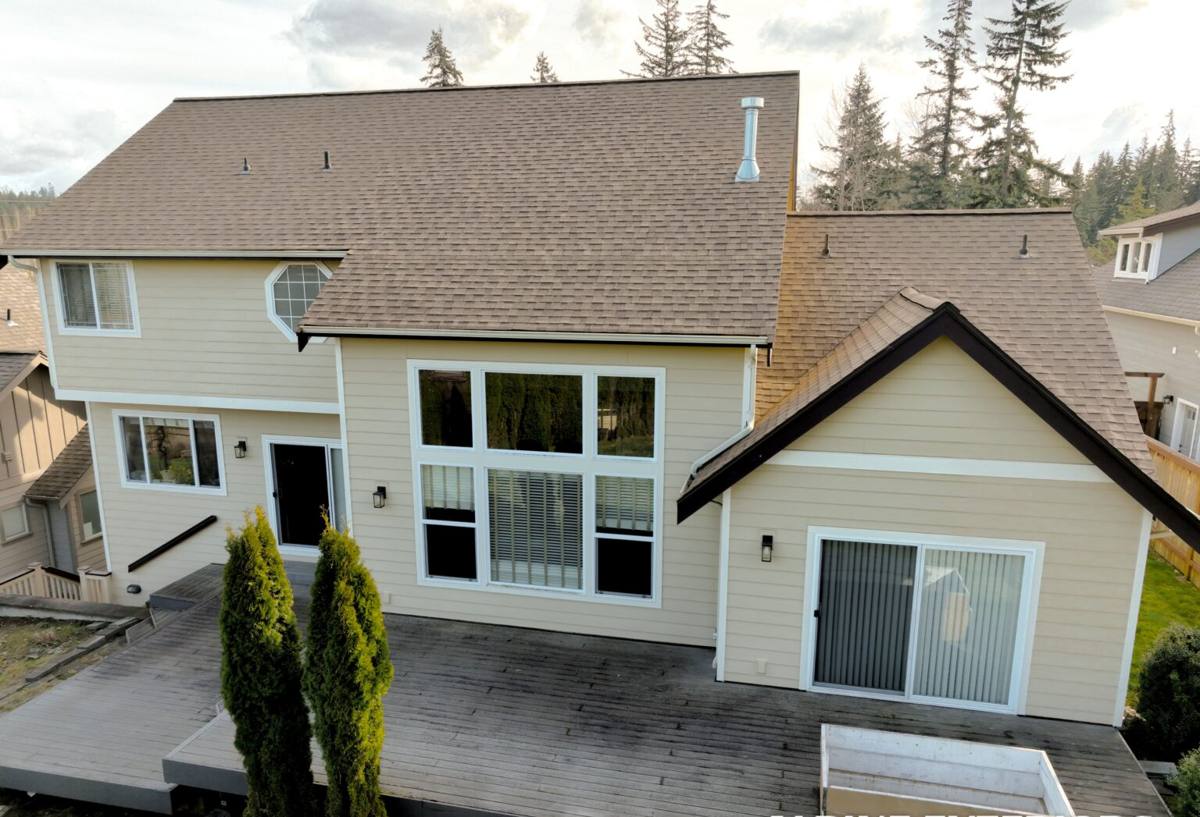
What "Custom" Actually Means on a Job Like This
Custom doesn't just mean a non-standard size, though that's often part of it on older Semiahmoo-area homes with irregular rough openings. It means the window is specified for the actual conditions of that wall: which direction it faces, how exposed it is to wind-driven rain, whether it's near grade or several stories up where wind loads are higher, and what's already happening with moisture in that section of the house.
Orientation and exposure matter more here than inland
A window on a sheltered, tree-covered wall doesn't need the same glazing, weatherstripping, and flashing detail as one facing open water and prevailing wind. We walk the exterior and note exposure wall by wall before we recommend products, rather than quoting the same window package for every opening on the house.
Matching openings to the home's age
Older homes in this area were often built before current moisture-management standards existed. A custom window replacement is a chance to correct decades-old flashing shortcuts, not just swap glass and frame. We treat that as part of the job, not an upsell.
Frame and Glazing Choices That Actually Hold Up Near Salt Water
There's no single "best" window material for every home — the right choice depends on exposure, budget, and how much upkeep the homeowner wants to do. Here's how the common options compare for a Semiahmoo-area install:
| Frame Material | Salt Air Performance | Maintenance | Typical Trade-Off |
|---|---|---|---|
| Vinyl | Good — won't corrode or rust; UV-stable formulas hold color | Low; occasional wash | Fewer custom color/profile options than fiberglass or wood |
| Fiberglass | Very good — dimensionally stable, resists pitting from salt air | Low | Higher upfront cost |
| Aluminum-clad wood | Fair to good if cladding and seams are fully intact | Moderate — any breach in cladding exposes wood to moisture | Best look for some historic or high-end homes, but least forgiving of installation error near water |
| Bare wood | Poor without rigorous, ongoing maintenance | High — repainting/sealing cycle needed | We generally steer waterfront and near-waterfront clients away from this unless it's a restoration priority |
Hardware is just as important as the frame. Standard steel hinges and cranks corrode fast in this air; we spec stainless or coated hardware rated for coastal exposure on every Semiahmoo-area job, even when it costs a bit more up front.
The Installation Details That Separate a Correct Job From a Callback
Most window failures we get called to fix aren't the window itself — they're the installation. This is where a coastal job either holds up for decades or starts leaking within a couple of winters.
- Full perimeter flashing integrated with the home's existing weather-resistive barrier, not just caulk around the trim
- A sloped sill pan so any water that gets past the frame drains out, not down into the wall cavity
- Back-dammed sill details on exposed elevations to stop wind-driven rain from pushing under the frame
- Compatible sealants — mismatched caulk and flashing tape chemistries are a common, avoidable failure point
- Correct shimming and squaring so weatherstripping compresses evenly around the whole sash
- Weep holes and drainage paths left clear, not sealed shut by trim or paint
On a home exposed to driving rain off the water, skipping any one of these is often invisible for a year or two before it shows up as staining, soft trim, or a musty smell in an interior wall.
Our Process, Start to Finish
We keep the process straightforward because homeowners deserve to know what's happening at each stage, especially on a custom job where sizing and product choices take a bit more upfront work.
- On-site walkthrough — we look at every opening being replaced, note exposure and existing moisture conditions, and take accurate measurements rather than relying on old plans.
- Product and detail recommendations — we explain the frame, glazing, and flashing approach for each wall based on exposure, and why, in plain terms.
- Written estimate — clear scope, product specs, and price, with no vague allowances.
- Install — old windows removed, framing checked for hidden damage before the new unit goes in (this is where old water damage sometimes surfaces, and we flag it before closing the wall back up), full flashing and sealant detail per opening.
- Final walkthrough — every window operated, sealed, and inspected with the homeowner before we call the job done.
Cost Factors for a Custom Window Job in This Area
Every job is priced on its own scope, but these are the main variables that move the number up or down for Semiahmoo-area homes specifically:
| Factor | Why It Matters Here |
|---|---|
| Wall exposure | Water-facing walls often need upgraded flashing and back-dam detailing beyond a standard install |
| Existing moisture damage | Older coastal homes sometimes need framing repair before the new window can be set correctly |
| Frame material | Vinyl and fiberglass carry different price points, with fiberglass typically higher |
| Custom sizing | Non-standard rough openings on older homes cost more than stock sizes |
| Hardware upgrades | Coastal-rated hardware costs more than standard but avoids early corrosion and replacement |
| Number of openings | Per-window cost typically drops as the total job size increases |
We'll always give a specific number after seeing the openings in person — broad online estimates don't account for exposure or existing condition, which matter more here than in most areas.
Living With the Windows: Maintenance in a Salt Air, Moss-Prone Climate
A correctly installed window still needs some seasonal attention in this climate. Homeowners who stay on top of a short list avoid most of the problems we get called to fix:
- Rinse frames and hardware periodically to clear salt residue, especially on wind-exposed walls
- Keep weep holes and drainage tracks clear of dirt, pollen, and moss buildup
- Check exterior caulk lines each fall before the wet season sets in, and have any cracking resealed
- Trim back vegetation or moss growth near sills and trim so moisture doesn't sit against the frame
- Operate hardware a few times a season so cranks and locks don't seize from disuse plus salt exposure
- Watch for soft trim, staining, or a musty smell near window openings — early signs of a flashing issue, best addressed before it spreads
Why It Matters to Hire a Crew That Already Works This Area
Window installation isn't uniform across Whatcom County. A crew that mostly works inland, low-exposure jobs can do a technically fine install that still fails within a few years on a Semiahmoo-facing wall, simply because the flashing and sealant details that matter here weren't part of their normal routine. We work Birch Bay and the surrounding coastal communities regularly, so back-dammed sills, coastal-rated hardware, and full perimeter flashing on exposed walls are standard practice for us, not an exception we have to think through on the fly.
That local familiarity also means straight answers about what your specific home needs, instead of a one-size-fits-all package. Some walls on a Semiahmoo-area home genuinely don't need premium coastal detailing; others absolutely do. Knowing which is which comes from doing this work in this exact climate, repeatedly.
If you're weighing a custom window project for a Semiahmoo-area home, we're glad to take a look and give you a straight, no-pressure estimate — just fill out the form below and we'll get in touch.