 Birch Bay Exterior
 Why Sandy Point Siding Wears Differently
Sandy Point sits right on the water in Birch Bay, and that location shapes everything about how siding ages there. Homes on this stretch of Whatcom County shoreline face a combination that inland neighborhoods simply don't deal with: near-constant airborne salt, wind-driven rain that hits walls sideways instead of falling straight down, and a shaded, damp shoulder season that runs long enough to grow a serious moss and algae problem on north- and west-facing walls. None of these factors is dramatic on its own. Together, over years, they're what separates a siding job that looks good for two decades from one that starts failing at year eight.
Salt air is corrosive to exposed metal fasteners and trim, and it also holds moisture against exterior surfaces longer than dry inland air does. Combine that with driving rain that gets pushed under laps and around trim by wind coming off the water, and you get a wall assembly that's under real, sustained pressure. Homes here need a siding system and an installation approach that's built for that pressure, not just a product that looks fine on a sunny day.
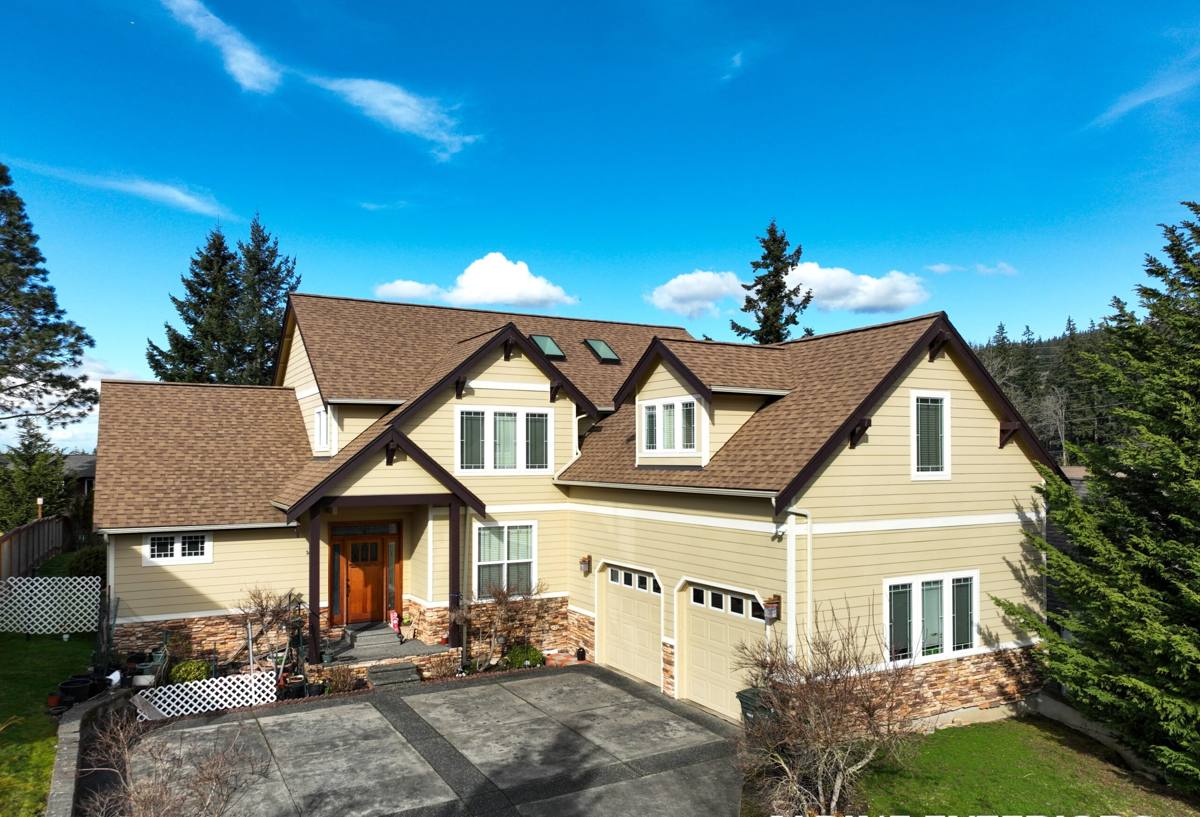
How the Climate Shows Up as Damage
Salt and Wind Exposure
Homes with a direct or partial water view take the brunt of salt-laden wind. Over time this accelerates corrosion on any exposed steel fasteners, degrades caulk and sealants faster than the manufacturer's stated lifespan, and can leave a chalky residue that eats into paint film on lower-grade siding materials.
Driving Rain
Rain that comes in at an angle doesn't behave like rain falling straight down. It gets pushed up under lap joints, around window and door trim, and into any gap where flashing or caulk has failed. On a wall that's correctly built with a drainage plane behind the siding, this water has somewhere to go. On a wall where that layer is missing, thin, or was compromised during installation, the water gets trapped against the sheathing.
Moss and Algae
Birch Bay's wet season is long, and shaded or north-facing walls near mature trees or close neighboring structures stay damp for extended stretches. That's exactly the environment moss and algae need. On some siding materials this is mostly cosmetic. On others, sustained moss growth holds moisture against the surface and accelerates rot underneath.
What "Correct" Siding Replacement Actually Involves
A siding replacement isn't just removing old panels and nailing up new ones. In a marine environment like Sandy Point, the details underneath the visible surface matter as much as the siding itself. A correct job includes:
- Full removal of old siding and inspection of the sheathing underneath for rot, soft spots, or existing water damage
- Repair or replacement of any compromised sheathing before new material goes up — covering over damaged wood just traps the problem
- A continuous, properly lapped weather-resistive barrier (housewrap or building paper) installed shingle-style so water sheds outward, not inward
- Correct flashing at every window, door, and roof-to-wall intersection, since these are the highest-risk points for wind-driven rain intrusion
- Proper fastener selection and placement — corrosion-resistant fasteners driven to the manufacturer's specified depth, not overdriven or underdriven
- Correct clearances at the ground, roofline, and any deck or patio attachment, so siding isn't sitting in standing water or trapped moisture
- Factory-finished siding and trim, rather than field-painted product, wherever possible — factory finishes cure harder and more evenly than a coat applied on site
Skipping any one of these steps doesn't necessarily show up right away. It shows up in year five or year ten, as a soft spot near a window or a section of wall that's holding moisture no one can see from outside.
Why We Install Only James Hardie Fiber Cement
We standardized on James Hardie fiber cement siding for every home we work on, including the ones we replace in Sandy Point and elsewhere around Birch Bay. That's not a marketing preference — it's a decision based on how different siding materials actually hold up in this specific climate.
Vinyl siding is affordable and low-maintenance in a lot of parts of the country, but it isn't rigid, and in sustained wind off the water it can flex, rattle, or pull loose at the fastening points over time. It also softens and can warp under concentrated heat, and its seams and J-channels give wind-driven rain more places to work its way behind the wall. Wood and cedar siding can look excellent, but it requires a real maintenance commitment — refinishing on a schedule, careful caulk upkeep, and vigilance about moss and rot in a climate that gives moss every advantage it needs. Engineered wood products like LP SmartSide perform reasonably well when installation and maintenance are followed to the letter, but any breach in the factory coating exposes wood-based substrate to moisture, and a marine climate doesn't offer much forgiveness for that kind of breach.
James Hardie fiber cement is non-combustible, dimensionally stable in wide temperature and moisture swings, and doesn't rot or support insect damage the way wood-based products can. Its ColorPlus factory finish is baked on under controlled conditions, so it resists fading and chipping better than field-applied paint, and touch-up matching is far more consistent. Hardie also builds specific HZ5 product lines engineered for wetter, harsher climates — which is exactly the profile Birch Bay and Sandy Point fit. Backed by a strong transferable warranty and installed to spec, it's the product we're willing to put our name behind on a shoreline home.
Material Comparison for a Marine Climate
| Material | Salt Air / Moisture Behavior | Moss Resistance | Typical Maintenance |
|---|---|---|---|
| James Hardie Fiber Cement | Non-combustible, dimensionally stable, engineered HZ5 lines for wet climates | Resists moss growth on the material itself; factory finish sheds moisture well | Periodic wash; factory finish reduces repainting need |
| Vinyl | Can flex or loosen at fasteners under sustained wind; seams allow water paths | Moderate; moss can colonize dirt film in shaded areas | Low, but limited repair options if panels crack or fade |
| Cedar / Wood | Absorbs moisture readily; needs intact finish to perform | Low resistance; prone to moss and rot without upkeep | High — refinishing and caulk checks on a set schedule |
| LP SmartSide | Performs well if the factory coating stays intact; vulnerable where breached | Moderate; depends on coating condition | Moderate; coating touch-up needed at cut edges and damage |
Cost Factors in a Sandy Point Siding Replacement
Every home is different, so we won't quote a number without seeing the house, but a few factors consistently drive cost on shoreline replacements in this area:
| Factor | Why It Matters Here |
|---|---|
| Extent of hidden sheathing damage | Wind-driven rain intrusion is more common on exposed walls, and repair scope isn't known until old siding comes off |
| House exposure and elevation | Direct water-facing walls generally need more attention to flashing and drainage detailing than sheltered walls |
| Trim and detail complexity | Homes with more windows, corners, and rooflines have more flashing points to get right |
| Access | Tight lots, decks, or landscaping close to the home can add labor time for staging and material handling |
| Siding profile and color | Lap width, texture, and ColorPlus finish selection affect material cost within the Hardie product line |
Our Process
We walk the exterior with you first, looking specifically at how the home has handled Birch Bay's weather so far — moss patterns, caulk condition, any soft trim, and how the current siding is performing at corners and penetrations. From there we scope the tear-off, sheathing inspection, and repair allowance honestly, before any new material goes up. Installation follows manufacturer specifications for fastening, clearances, and flashing, with particular attention to the water-facing sides of the home. We finish with a walkthrough so you know exactly what was found, what was repaired, and what to expect going forward.
Because we work Sandy Point and the surrounding Birch Bay shoreline regularly, we're not guessing at how this climate treats a wall assembly — we're building to what we've seen hold up and what we've seen fail.
Questions Worth Asking Before You Hire
- Will you inspect and document sheathing condition before installing new siding, not just after?
- What weather-resistive barrier do you install, and how is it lapped at seams and penetrations?
- What fastener type and schedule do you use, and is it corrosion-resistant for a marine environment?
- How do you flash windows, doors, and roof-to-wall intersections specifically?
- Is the siding factory-finished, and what does the manufacturer's warranty actually cover once installed?
- Have you worked on homes in Sandy Point or similar water-exposed sites in Birch Bay before?
Living With Salt Air and Moss Long-Term
Even the right siding system benefits from a little homeowner attention in this climate. Rinsing off salt residue and organic buildup periodically, keeping gutters clear so water isn't sheeting down walls, and trimming back vegetation that keeps a wall shaded and damp all extend the life of the exterior. None of this is heavy maintenance — it's the kind of upkeep that matters more here than it would forty minutes inland, simply because of what Sandy Point's location adds to the equation.
If your siding is showing moss buildup that keeps coming back, caulk that's cracked or pulling away, or soft spots near windows and trim, it's worth having it looked at before those signs turn into structural repair. We're happy to take a look and put together a straightforward, no-pressure estimate for what your home actually needs — just reach out using the form below.