 Birch Bay Exterior
 Point Whitehorn's Coastal Exposure Is Different From Inland Birch Bay
Homes near Point Whitehorn sit close enough to the water that the exterior of a house takes a different kind of beating than a home a few miles inland in Whatcom County. Salt-laden air off the Strait of Georgia settles on every exterior surface, wind-driven rain comes in sideways during winter storms, and the tree cover and shade that keep these lots cool and private also keep siding wet longer after every rain. That combination — salt, moisture, and slow drying — is exactly the kind of environment that separates siding products that hold up for decades from siding products that start showing problems within five to ten years.
We install James Hardie fiber cement siding exclusively, and a project in Point Whitehorn is a good example of why. This page walks through what the local climate actually does to exterior siding, what a correct James Hardie installation looks like out here, and how our process is built around the realities of this specific stretch of coastline.
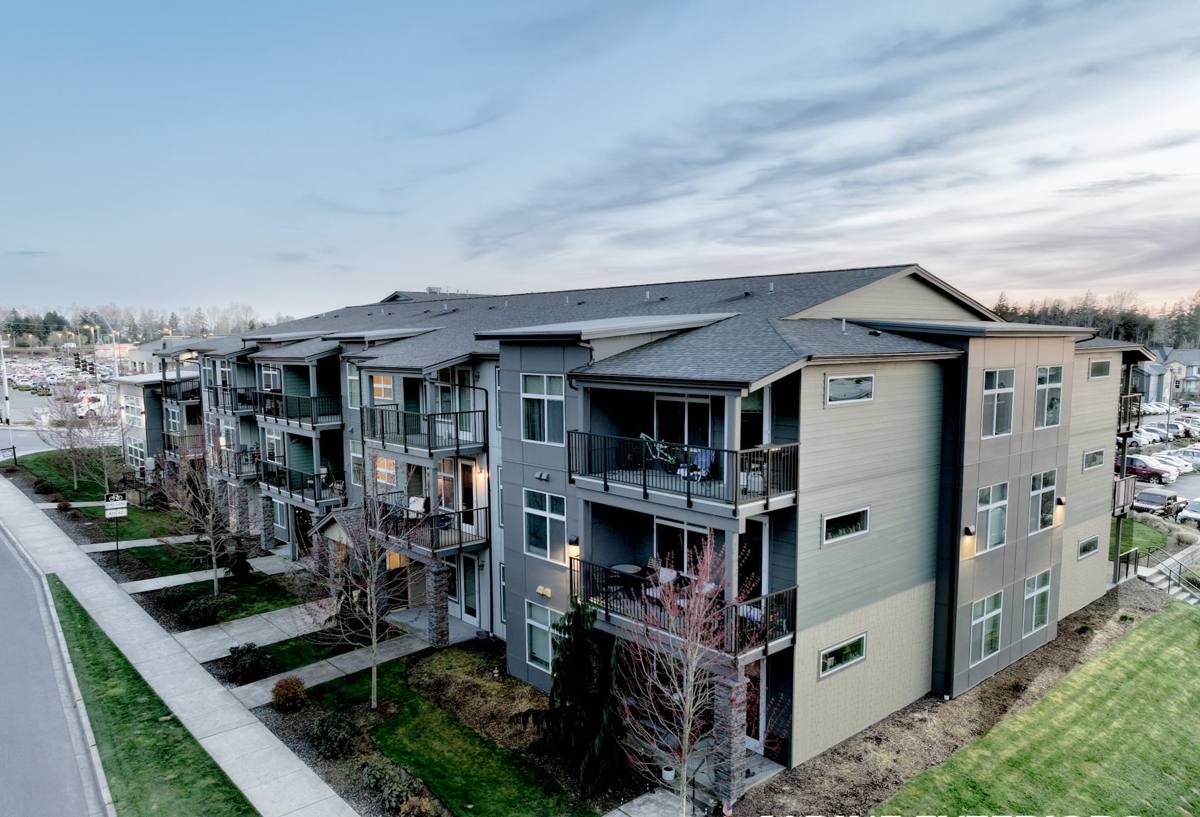
What Salt Air, Driving Rain, and Moss Actually Do to Siding
Salt Air
Airborne salt is corrosive to metal fasteners, flashing, and trim, and it's abrasive to painted and coated surfaces over time. On wood-based products, salt-laden moisture accelerates the breakdown of the surface finish, which is usually the first line of defense against water intrusion. Once that finish starts to fail, the substrate underneath is exposed to exactly the kind of moisture cycling that causes rot.
Driving Rain
Point Whitehorn's exposure to wind off the water means rain doesn't just fall straight down — it gets pushed sideways into wall assemblies, lap joints, trim edges, and anywhere there's a seam. A siding system that isn't detailed correctly at those seams will eventually let water behind the cladding, and once water gets behind siding it can sit against sheathing and framing far longer than anyone can see from the outside.
Moss Season
Shaded lots, high humidity, and a long wet season give moss and algae a real head start in this part of Whatcom County. Moss holds moisture against a surface, and on products that aren't dimensionally stable or that rely on a field-applied finish, that constant dampness shortens the life of the paint or coating and, on wood-based siding, can contribute to soft spots developing behind the growth.
Why We Standardize on James Hardie for a Climate Like This
James Hardie fiber cement is engineered from cement, sand, and cellulose fiber — not wood. That matters here for a few specific reasons:
- It doesn't absorb moisture and swell the way wood-based or wood-adjacent siding does, so it holds its shape and paint line through repeated wet-dry cycles.
- It's non-combustible, which matters anywhere wildfire smoke and ember exposure has become a summer concern in Western Washington.
- Hardie's HZ5 product engineering is built specifically for climates with significant moisture exposure, which describes Point Whitehorn better than it describes most of the country.
- The factory-applied ColorPlus finish is baked on and warranted separately from the substrate, so the finish isn't relying on a contractor's field paint job to hold up against salt air.
We don't install LP SmartSide, vinyl, Cemplank, Allura, primed spruce, or cedar. Each of those has a place in the industry, and none of them is a bad product on its own — but each one asks a homeowner to accept a trade-off (moisture sensitivity, a lower-spec finish, a shorter effective service life in wet climates, or ongoing maintenance) that we don't think makes sense for a house sitting this close to saltwater. James Hardie, installed correctly, is the product we're willing to put our name behind out here.
What a Correct Installation Involves in This Environment
Fiber cement siding is only as good as the installation behind it. In a high-exposure area like Point Whitehorn, a few details matter more than they would on a sheltered inland lot:
Water Management Behind the Siding
Every correct Hardie installation starts with a weather-resistive barrier and a drainage plane behind the siding, not just a flat nailed-on assembly. On a home taking direct wind-driven rain, that drainage gap is what lets any water that does get past the cladding find its way back out instead of sitting against the sheathing.
Flashing and Gaps
Manufacturer-specified gaps at butt joints, window and door trim, and any penetration are non-negotiable — not decorative. Flashing at every horizontal transition (roof lines, deck ledgers, window heads) has to be installed to shed water down and out, not caulked over as a substitute for real flashing.
Fastening
Corrosion-resistant fasteners, set to the manufacturer's specified depth and pattern, matter more in a salt-air environment than almost anywhere else. Over-driven or under-driven nails, or the wrong fastener material, are a common source of early failure on coastal jobs regardless of which siding product is used.
Caulk and Sealant
Caulk is a backup, not a strategy. We use it where the manufacturer specifies it, with the right product for a marine climate, but we don't rely on caulk to compensate for a joint or flashing detail that wasn't built correctly in the first place.
ColorPlus Finish vs. Field-Painted Siding Near the Water
One of the most overlooked decisions on a coastal siding project is the finish itself. James Hardie's ColorPlus technology is a multi-coat, baked-on finish applied at the factory under controlled conditions, with its own warranty coverage against chipping, cracking, and peeling. That's a meaningfully different proposition from a field-applied paint job, which depends on weather conditions on installation day, dry time, and the quality of the specific coating used.
In a spot with a long moss season and persistent airborne salt, a field-applied finish tends to show wear — chalking, fading, early peeling at joints — well before a factory-cured finish does. For homeowners who prefer a custom or specialty color outside the ColorPlus palette, primed Hardie panels are still an option, but we walk through that trade-off honestly before anyone commits to it.
Comparing Siding Options for a Point Whitehorn Property
| Factor | James Hardie Fiber Cement | Vinyl | Wood-Based / LP-Type Panels |
|---|---|---|---|
| Moisture response | Dimensionally stable; HZ5 line engineered for wet climates | Doesn't rot, but can warp or crack under temperature swings and wind loads | Absorbs moisture; prone to swelling and edge softening if the finish fails |
| Salt air durability | Cement substrate is unaffected by salt exposure | Surface can chalk and become brittle after years of UV and salt exposure | Finish breakdown accelerated by salt-laden moisture |
| Fire resistance | Non-combustible | Combustible; can melt or deform near heat sources | Combustible |
| Finish durability | Factory-baked ColorPlus finish, separately warranted | Color runs through the material but can fade unevenly | Relies on field-applied or factory primer coat needing ongoing maintenance |
| Typical maintenance | Periodic washing; repaint only if using primed panels | Low, but limited repair options if damaged | Regular repainting and moisture inspection |
Our Process for Point Whitehorn Homes
Working this stretch of Whatcom County coastline regularly means we already know what to expect before we get to a site walk. Our process for a Point Whitehorn project generally runs:
- Site assessment: We look at wind exposure, existing moisture or moss damage, roofline transitions, and how the home is currently managing water before recommending a scope.
- Product and finish selection: We walk through the relevant James Hardie panel profile and HZ5-engineered options, plus ColorPlus color selection, based on the home's exposure and the owner's preferences.
- Tear-off and inspection: Once old siding comes off, we inspect sheathing and framing for hidden moisture damage before anything new goes on — often the first real look anyone has had at the wall assembly in years.
- Weather-resistive barrier and drainage plane installation: Correctly lapped and sealed before a single piece of siding goes up.
- Hardie installation to manufacturer spec: Proper gaps, flashing, and fastening as detailed above.
- Final inspection and walkthrough: We review the finished work with the homeowner and go over basic care so the siding performs the way it's designed to.
Living With Hardie Siding in a Salt-Air, High-Moss Climate
Correctly installed James Hardie siding is low-maintenance, not no-maintenance. A short, realistic homeowner checklist for a property in this area:
- Rinse siding with a garden hose (not a pressure washer aimed directly at seams) once or twice a year to clear salt residue and organic buildup.
- Keep gutters and downspouts clear so water isn't overflowing directly onto siding runs.
- Trim back vegetation and tree limbs that keep siding shaded and damp longer than the rest of the house.
- Watch for moss or algae buildup at north-facing or shaded wall sections and address it early rather than letting it sit for a full wet season.
- Have caulking and flashing at trim and penetrations checked periodically — these are the components most likely to need attention over time, not the Hardie panels themselves.
Why Hiring a Crew That Already Works Point Whitehorn Matters
Siding installation isn't identical everywhere in Whatcom County. A crew that mostly works drier, more sheltered inland neighborhoods doesn't necessarily plan drainage details for a lot that stays shaded and damp for weeks at a time, or think about wind-driven rain at every joint the way a shoreline job demands. A crew that's worked this specific stretch of coastline knows which wall orientations take the worst weather, where moss tends to establish first, and which flashing details actually hold up here versus which ones look fine on installation day and fail a few years later.
That local pattern recognition doesn't replace following manufacturer specifications — it's what makes sure those specifications get applied in the places that matter most on a given home.
If you're planning a siding project in Point Whitehorn or elsewhere around Birch Bay, we're happy to walk your property, take a look at how your current siding is holding up, and put together a straightforward, no-pressure estimate for a James Hardie installation built for this coastline.