 Birch Bay Exterior
 New Roof Installation Built for Lynden's Weather, Not Just Any Roof
A new roof is one of the few home improvements where "good enough" almost always costs more in the long run than doing it right the first time. That's especially true here in Whatcom County, where homes in Lynden deal with the same marine weather system that soaks Birch Bay and the rest of the county: salt-tinged air rolling in off the water, driving rain that comes in sideways during winter storms, and a moss season that can run eight months or longer under the region's grey, damp skies. A roof system that isn't specifically installed with that weather in mind will show its age faster than it should — through granule loss, soft decking, moss-lifted shingles, and leaks that show up two or three winters in.
This page covers what a correct new roof installation actually looks like for a Lynden home, the decisions that matter most in our climate, and how our process works from first estimate to final walkthrough.
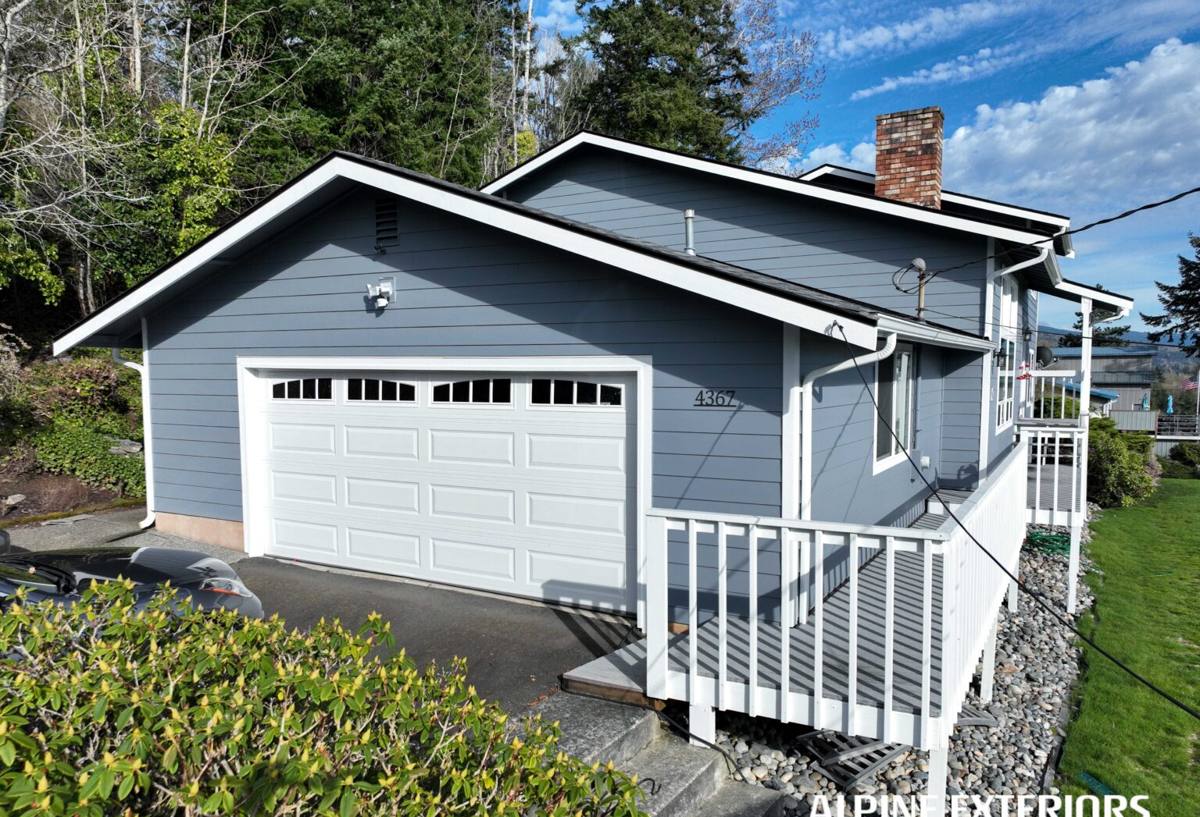
Why Lynden Roofs Take a Different Kind of Beating
Driving Rain and Wind-Driven Moisture
Whatcom County storms rarely drop rain straight down. Wind pushes it sideways and upward under eaves, into valleys, and behind poorly flashed edges. A roof system built for a drier climate — thinner underlayment, minimal flashing, standard nailing — doesn't hold up the same way here. Every seam, penetration, and transition point needs to be treated as a place water will actively try to get behind, not just fall past.
Salt Air and Long-Term Material Wear
Being close to the water means metal components — flashing, fasteners, vents, gutters — face more corrosion pressure over the life of a roof than the same materials would inland in a drier state. That doesn't mean every metal part needs to be exotic and expensive, but it does mean the grade of fastener and flashing matters more here than a supplier catalog might suggest for a "standard" install.
A Moss Season That Doesn't Really End
Shaded roof sections, north-facing slopes, and anywhere debris collects will grow moss for most of the year in this climate. Moss isn't just a cosmetic problem — it holds moisture against the roofing material, lifts shingle edges, and accelerates granule loss. A new roof installation should account for airflow, shading, and drainage from day one, not leave moss control as an afterthought for the homeowner to manage with a hose and a prayer every spring.
Signs a Lynden Home Needs a Full Replacement, Not Another Repair
Not every roof problem calls for a full tear-off. But there's a point where patching becomes throwing money at a system that's already failed underneath. Signs it's time to talk replacement instead of another repair:
- Shingles that are curling, cupping, or losing granules across large sections rather than one isolated spot
- Daylight visible through the roof deck from the attic, or damp insulation after storms
- Soft or spongy spots underfoot when walking the roof, indicating rotten decking
- Moss that regrows within weeks of cleaning, especially on north-facing or shaded slopes
- A roof already at or past 20-25 years old for asphalt shingle systems in this climate
- Multiple past repairs in different locations rather than one contained problem area
- Rising energy bills paired with visible attic ventilation problems
If a roof is showing two or more of these, a straightforward inspection can usually tell you whether replacement is genuinely the better financial call — sometimes it isn't, and we'll say so.
What a Correct New Roof Installation Actually Involves
A new roof is a system, not a single product. Skipping any one layer undermines the rest, no matter how good the shingle or panel on top looks. On every full installation, the components below matter as much as the visible roofing material:
Full Tear-Off and Deck Inspection
We don't install over existing layers. A full tear-off lets us actually see the roof deck, replace any rotten or delaminated sheathing, and confirm the structure underneath is sound before anything new goes on. Roofing over problems just hides them until they're worse and more expensive.
Ice and Water Barrier at Vulnerable Points
Eaves, valleys, and roof-to-wall transitions get a self-adhering waterproof membrane underneath the main roofing material. These are the spots where wind-driven rain and ice damming are most likely to force water backward under the shingles, and they need more protection than a standard felt underlayment alone provides.
Proper Flashing at Every Penetration
Chimneys, skylights, vent pipes, and wall intersections all need correctly formed and sealed flashing — not just caulk. Caulk fails; well-formed metal flashing sheds water for the life of the roof.
Balanced Attic Ventilation
Intake at the eaves and exhaust at the ridge need to work together. Without balanced airflow, moisture builds up in the attic, shortens the roof's life from underneath, and can void material warranties regardless of what's installed on top.
Correct Nailing Pattern and Fastener Grade
Manufacturer nailing specs exist for wind resistance, and shortcuts here are one of the most common causes of premature shingle blow-off in coastal wind events. We use corrosion-resistant fasteners appropriate for this climate rather than the cheapest option that meets a bare minimum spec.
Choosing a Roofing Material for Whatcom County Conditions
There's no single "best" roofing material — the right choice depends on budget, roof pitch, how much shade and moss pressure the property has, and how long you plan to own the home. Here's how the common options compare for a Lynden property:
| Material | Typical Lifespan Here | Moss / Moisture Behavior | Relative Install Cost |
|---|---|---|---|
| Architectural (dimensional) asphalt shingle | 25-30 years | Moderate moss resistance; algae-resistant granules help but shaded slopes still need periodic cleaning | Lowest to mid |
| 3-tab asphalt shingle | 15-20 years | Lower wind and moisture tolerance than architectural shingles; we don't recommend it as our standard for this climate | Lowest |
| Standing seam metal | 40-plus years | Excellent — moss and moisture largely shed rather than sit on the surface | Highest |
| Synthetic/composite shingle | 30-40 years | Good moisture resistance; performance varies more by manufacturer than the other categories | Mid to high |
We install architectural asphalt shingles as our standard recommendation for most Lynden homes because they balance upfront cost, wind rating, and moss resistance better than 3-tab shingles, without the higher price point of metal. That's a professional judgment based on how these materials actually perform in this climate over decades, not a claim that other products are defective — metal and synthetic materials both have a legitimate place depending on the roof and the homeowner's priorities.
Our New Roof Installation Process
- On-site assessment. We inspect the existing roof, attic ventilation, and decking condition, and take real measurements rather than estimating from the ground.
- Written estimate and material selection. You get a clear scope of work and pricing before any commitment, with material options explained in plain terms.
- Scheduling and material delivery. We coordinate delivery and staging to minimize disruption to the property and neighbors.
- Full tear-off. Old roofing is removed down to the deck, with daily cleanup so the property isn't left exposed or littered with debris overnight.
- Deck repair as needed. Any soft or damaged sheathing found during tear-off is replaced before installation continues — flagged and discussed with you first if it goes beyond the original scope.
- Underlayment, ice and water barrier, and flashing installation. Every vulnerable point gets addressed before the finish material goes down.
- Roofing material installation. Installed to manufacturer wind and nailing specifications, not a generalized shortcut pattern.
- Ventilation check and final details. Ridge and intake ventilation, vent boots, and trim are confirmed as a complete system, not isolated parts.
- Site cleanup and final walkthrough. Magnetic sweep for nails, full debris removal, and a walkthrough so you understand what was done and why.
Why a Crew That Already Works in Lynden Makes a Difference
Roofing crews that split time across very different climates tend to install to a generic standard. A crew based in Whatcom County and working Birch Bay, Lynden, and the surrounding area every week makes different calls by default — heavier-duty ice and water barrier placement, corrosion-appropriate fasteners, and ventilation setups sized for a genuinely damp climate rather than a national average. Local permitting familiarity also matters: knowing what the county requires for a re-roof, what inspections to expect, and how to schedule around this region's rain patterns keeps a project on track instead of stalling out mid-tear-off during an unexpected storm.
Questions Worth Asking Before You Commit
A homeowner comparing roofing bids for a Lynden property should expect clear, specific answers — not vague reassurances — on points like:
- Is this a full tear-off, and what happens if the decking underneath needs repair?
- What underlayment and ice and water barrier products are included, and where specifically will they be placed?
- How is attic ventilation being handled, and is it being assessed at all?
- What's the manufacturer's nailing specification, and is it actually followed?
- Is the crew licensed and insured to work in Washington, and can that be verified directly?
- What does the workmanship warranty cover, separate from the manufacturer's material warranty?
If your Lynden home needs a new roof, or you're not sure yet whether repair or replacement makes more sense, we're happy to take a look and give you a straightforward, no-pressure estimate. There's a form below — reach out and we'll get a time on the calendar.