 Birch Bay Exterior
 Whatcom County Weather Doesn't Go Easy on Siding
Homes around Lynden deal with a version of Pacific Northwest weather that's harder on exterior materials than most homeowners realize until they're dealing with a problem. Whatcom County sees long stretches of driving rain, damp marine air drifting in off the water, and a moss season that can run most of the year in shaded, north-facing areas. That combination doesn't just make a house look tired — it actively works on whatever is covering the walls. Wood fibers swell and split. Paint fails early. Caulk joints open up. Moss and algae take hold in seams and behind trim where moisture lingers instead of draining away.
Siding in this climate isn't a cosmetic choice. It's the first line of defense between a wet, salt-tinged air mass and the framing, sheathing, and insulation behind it. Get it wrong — the wrong material, or the right material installed poorly — and the damage happens where you can't see it until a wall starts to feel soft or a bill for hidden rot repair lands on the table.
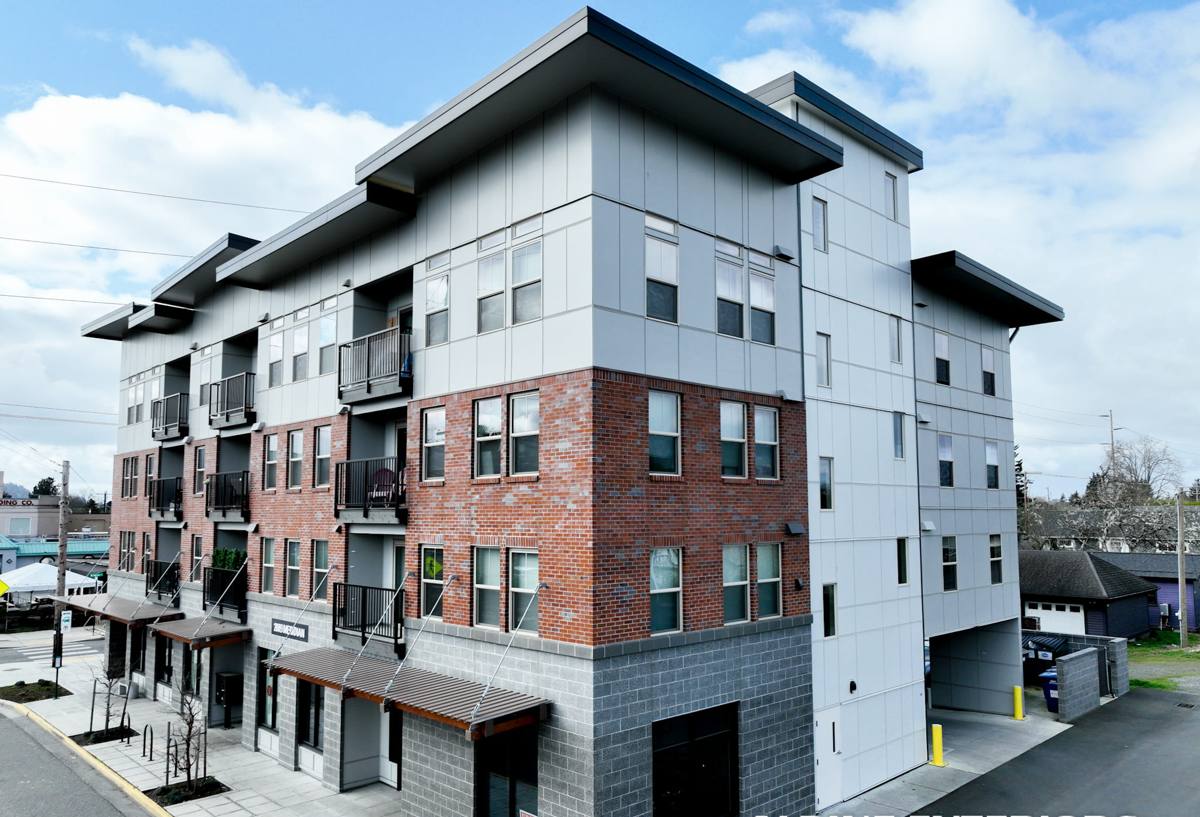
Why We Only Install James Hardie
Birch Bay Exterior Co installs James Hardie fiber cement siding exclusively. We don't install vinyl, LP SmartSide, Cemplank, Allura, primed spruce, or cedar. That's not a marketing line — it's a standard we hold because of what we've seen these products do, and not do, in this exact climate over years of siding work.
Vinyl is affordable and low-maintenance in the sense that it doesn't need paint, but it's a thin plastic product that expands and contracts with temperature swings, can crack in a hard impact, and has seams and J-channels that give wind-driven rain plenty of opportunities to work its way behind the cladding. LP SmartSide and other wood-strand composite products perform reasonably well when detailing is perfect, but they're still engineered wood — meaning any consistent moisture intrusion at a cut edge or fastener hole can lead to swelling and eventual failure, and that risk goes up in a climate that stays wet for months at a stretch. Primed spruce and cedar are beautiful, but they're natural wood: they need real, ongoing maintenance — repainting, re-caulking, checking for rot — to hold up here, and that maintenance schedule is a lot to ask of a busy homeowner in a place where the siding is wet more often than it's dry.
James Hardie fiber cement is cement, sand, and cellulose fiber. It doesn't absorb water the way wood does, it won't warp or swell, it's non-combustible, and it holds paint and factory finish far longer than wood-based products because the substrate itself isn't moving the way wood does with humidity. That's the whole reason we standardized on it: fewer weak points for this specific climate to exploit.
Choosing the Right Hardie Product Line for Lynden Homes
James Hardie makes several siding profiles, and picking the right one is about how the house is built, not just how it should look.
HardiePlank Lap Siding
The most common choice for Lynden-area homes — a traditional horizontal lap look that reads as classic Pacific Northwest siding. It's engineered with a factory-primed or ColorPlus finish and comes in different textures, from smooth to cedar-grain.
HardiePanel Vertical Siding
Used for a board-and-batten look or as an accent on gables and entry features. Works well paired with lap siding to break up larger wall planes.
HardieShingle Siding
For homes that want a shingle-style look — often used as an accent on upper stories or dormers — without the maintenance burden of actual wood shingles.
HZ5 vs HZ10 Engineered Formulations
James Hardie engineers its products by climate zone. Homes in this region typically call for the HZ5 formulation, engineered for areas with freeze-thaw cycles and sustained moisture exposure — a better match for Whatcom County's wet winters than a formulation built for a drier, milder climate. Getting this specification right at the ordering stage matters as much as the installation itself.
ColorPlus Technology: Finish That Doesn't Rely on a Painter
One detail that gets overlooked is where the color comes from. James Hardie's ColorPlus finish is baked onto the board at the factory, in a controlled environment, through multiple coats and curing cycles — not brushed or sprayed on-site after installation. That matters in a climate like this because field-applied paint has to cure properly to bond well, and cool, damp Pacific Northwest weather isn't always cooperative with that timeline.
ColorPlus finishes are backed by their own finish warranty separate from the substrate warranty, come with color-matched caulk and touch-up product, and hold their color and sheen significantly longer than field paint exposed to the same rain and UV cycle. For homeowners who want the look of painted siding without repainting every several years, this is the practical reason we push clients toward ColorPlus over primed board.
What Correct Installation Actually Looks Like
Fiber cement siding is only as good as the installation behind it. Most of the failures we get called out to inspect on other contractors' work trace back to installation shortcuts, not the material itself.
A correct James Hardie install in this climate includes:
- A weather-resistant barrier installed correctly behind the siding, with proper overlaps so water sheds outward, not inward
- Rainscreen or furring strategy where appropriate, so any moisture that does get behind the cladding has somewhere to drain and dry
- Correct starter strip placement so the bottom course sits at the right reveal and pitch
- Fasteners driven to Hardie's specified depth and location — not overdriven, which cracks the board's edge and creates a moisture entry point
- Proper minimum clearances from grade, roof lines, and decks so siding isn't sitting in standing water or splashback
- Correctly sized gaps at butt joints and trim, sealed with the right sealant — not caulked tight, which doesn't allow for the board's minor expansion and contraction
- Flashing at every window, door, and horizontal trim transition, installed in the correct shingle-lap order so water is directed out and down
None of this is exotic. It's James Hardie's own published installation specification. But skipping even one or two of these steps is exactly how a fiber cement job that looks fine on move-out day starts showing problems — swollen edges, staining, moss creeping in at joints — within a few wet seasons.
Hardie vs. the Alternatives, By the Numbers That Matter
| Factor | James Hardie Fiber Cement | Vinyl | LP SmartSide / Wood Composite | Cedar / Primed Spruce |
|---|---|---|---|---|
| Moisture behavior | Doesn't absorb or swell; dimensionally stable when installed correctly | Won't rot, but seams let water travel behind cladding | Wood-based; vulnerable at cut edges and fastener holes | Absorbs moisture readily; needs consistent sealing |
| Fire resistance | Non-combustible | Melts and contributes fuel in a fire | Combustible, engineered wood | Combustible |
| Finish longevity | ColorPlus factory finish, long fade resistance | Color molded in but can chalk and fade | Field or factory paint, needs periodic repainting | Needs repainting/staining every few years |
| Maintenance | Occasional wash and caulk check | Low, but seams and cracks aren't repairable in place | Regular inspection of seams and paint film | Ongoing painting, staining, rot inspection |
| Typical installed cost | Mid-to-upper range | Lowest | Mid range | Mid-to-upper range, plus ongoing upkeep cost |
Installed cost for any siding job depends heavily on the home's size, existing wall condition, trim complexity, and how much prep and repair the sheathing needs underneath — we'd rather walk a specific house before quoting a number than give a figure that doesn't hold up once we see the walls.
Our Process, Start to Finish
- On-site assessment. We walk the exterior, check the existing siding and sheathing condition, look for signs of past moisture intrusion, and take measurements.
- Product and color selection. We help match the right Hardie profile, HZ formulation, and ColorPlus color to the home and its exposure.
- Tear-off and substrate check. Old siding comes off, and we inspect sheathing and framing for hidden rot before anything new goes up — this is the step that gets skipped on rushed jobs.
- Weather barrier and drainage plane. House wrap or building paper goes on correctly lapped, with a drainage strategy suited to the wall assembly.
- Installation to Hardie spec. Fastening, clearances, flashing, and joint sealing follow the manufacturer's written instructions, not shortcuts.
- Final walkthrough. We review the finished job with the homeowner, cover warranty paperwork, and answer questions about care going forward.
Questions Worth Asking Before You Hire a Siding Contractor
- Are they a certified or factory-trained James Hardie installer, or just someone who's ordered the material before?
- Will they specify HZ5 or HZ10 formulation appropriate for this climate zone, or are they guessing?
- Do they check and document sheathing condition before installing over it?
- Do they explain flashing and drainage plane details, or wave the question off as "standard"?
- Is the warranty — both the Hardie product warranty and their own workmanship warranty — in writing?
Why a Crew That Already Works Lynden Homes Matters
Whatcom County's building conditions aren't uniform. Wall assemblies, roof pitches, and exposure to wind-driven rain vary from lot to lot, and a crew that regularly works siding jobs in this region has already seen how local moisture and moss patterns show up on real homes — not just in a training manual. That experience shows up in small decisions: where to add extra flashing attention around a window that's taken on water before, how much rainscreen gap makes sense on a shaded wall, which trim details actually shed water in sustained rain versus which just look good on a sunny installation day.
It also means fewer surprises during the project. A crew that knows this climate isn't discovering, mid-job, that the sheathing needs more attention than expected — they're expecting it, because they've seen it before on other homes in the same weather pattern.
If you're planning a siding replacement or new install in the Lynden area and want it done with James Hardie fiber cement, installed to the manufacturer's actual specification rather than a shortcut version of it, we're happy to walk the property and talk through what your home needs. Reach out for a free, no-pressure estimate using the form below.