 Birch Bay Exterior
 Roof Repair on Lummi Island Isn't the Same Job as On the Mainland
A roof repair estimate written for a mainland Whatcom County subdivision doesn't automatically transfer to a house on Lummi Island. The roofing problems are often the same — a cracked boot, a lifted shingle, a leak tracing back to bad flashing — but the conditions that caused the damage, and the logistics of fixing it, are different. Island homes sit closer to open water, get more direct exposure to wind-driven rain off the Sound, and often have more tree cover and shade than newer mainland developments, which changes how moss and moisture behave on the roof deck.
We treat Lummi Island as its own service area, not an afterthought tacked onto a Birch Bay route. That means we plan the trip, the materials, and the repair scope around what actually works out there — not around what's convenient for us.
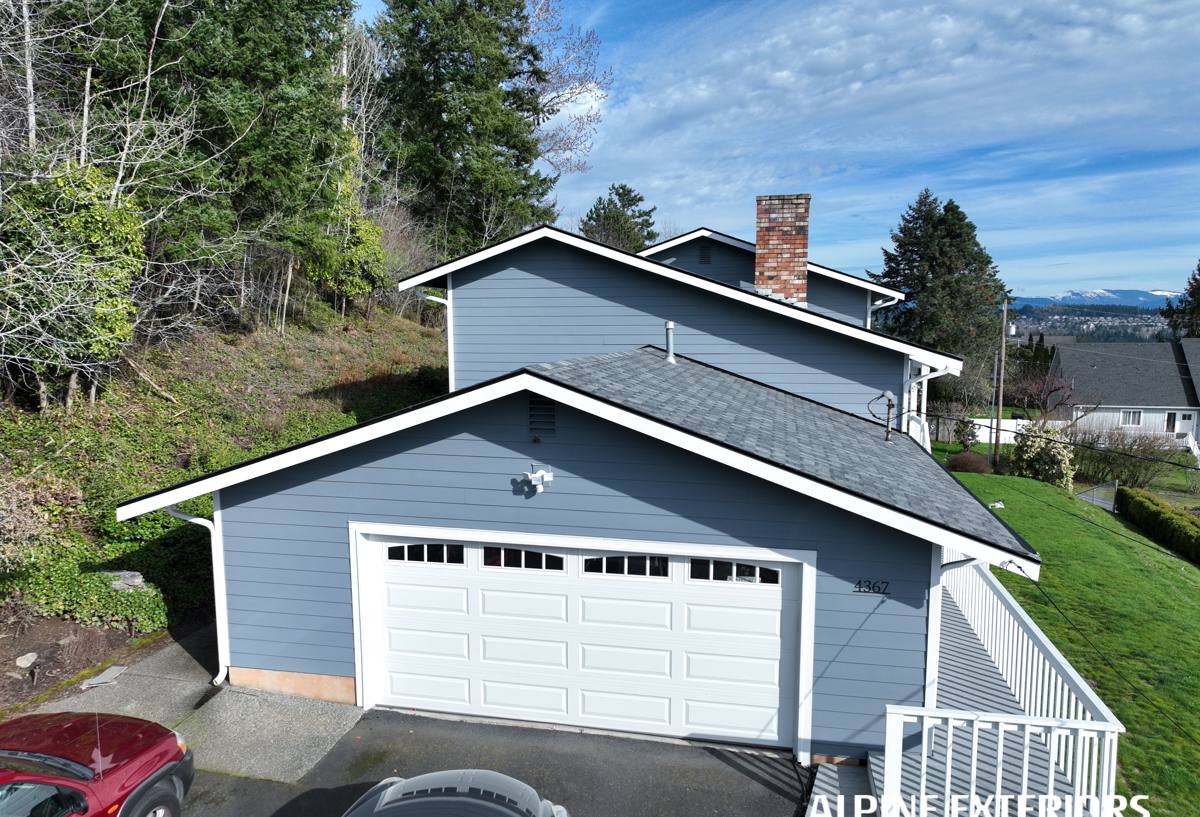
How the Local Climate Wears Down Island Roofs
Whatcom County's marine climate is hard on roofing in general, but a handful of factors hit island homes harder than inland ones.
Salt Air and Metal Components
Homes close to the water deal with salt-laden air that speeds up corrosion on exposed metal — flashing, fasteners, gutter hardware, and vent caps. A fastener or flashing piece that would last two or three decades inland can start showing rust and pitting years sooner in a salt-air environment. When we repair a section of roof near the water, we pay close attention to what metal is being used and how it's protected, because a repair done with the wrong-grade hardware just creates a second problem in a few years.
Driving Rain and Wind-Driven Water
Whatcom County gets a lot of rain, and on the water it often comes in sideways rather than straight down. Driving rain finds gaps that vertical rain never would — under shingle tabs, behind poorly lapped flashing, around chimneys and skylights. A leak that only shows up during a windy winter storm is almost always a driving-rain problem, and it needs a repair approach that accounts for wind direction, not just water running downhill.
A Long Moss Season
Shaded, damp roof sections on this island can stay wet for long stretches of the year, and moss takes hold wherever moisture sits. Moss isn't just cosmetic — it holds water against the roofing material, lifts shingle edges as it grows, and works its way into seams over time. Roofs with heavy tree cover or north-facing slopes tend to need moss-related repair and maintenance more often than roofs that dry out quickly between rains.
Common Roof Repair Issues We See on Lummi Island
- Flashing failure around chimneys, skylights, and roof-to-wall transitions, often worsened by corrosion from salt air
- Shingle or shake damage from wind uplift during storms coming off the water
- Moss-related lifting and granule loss on shaded or north-facing roof sections
- Clogged or damaged gutters contributing to water backing up under roofing material
- Soft or rotted roof decking discovered under a small leak that went unaddressed for a season or more
- Deteriorated pipe boots and vent seals, which are usually the first thing to fail on any roof this age of exposure
What a Correct Repair Actually Involves
Diagnosis Before Any Work Starts
The most common mistake in roof repair isn't bad workmanship — it's fixing the visible symptom without finding the actual entry point. Water travels along roof decking and rafters before it shows up as a stain on a ceiling, so the leak you see indoors is often several feet from where the water is actually getting in. A correct repair starts with tracing the water path on the roof itself, not just patching the spot that looks worst.
Matching Materials and Technique to the Existing Roof
A repair should blend into the surrounding roofing, both in material and in the way it's installed. That means matching shingle type, weight, and color as closely as possible, and following proper lap and fastening patterns rather than just sealing a patch over a gap with roofing cement. Repairs that rely heavily on caulk or sealant instead of proper flashing and shingle technique tend to fail again within a year or two, especially in a wet, windy climate like this one.
Checking What's Underneath
Any time we open up a section of roof for repair, we check the decking underneath before closing it back up. Soft or delaminated decking needs to be replaced as part of the repair, not left in place under new shingles — patching over rotted decking is a short-term fix that guarantees a bigger job later.
Repair vs. Replacement: How We Help You Decide
Not every roof problem on Lummi Island needs a full replacement, and not every leak can be permanently solved with a patch. The honest answer depends on the roof's age, how widespread the damage is, and what condition the decking is in underneath.
| Factor | Favors Repair | Favors Replacement |
|---|---|---|
| Roof age | Under roughly 15 years, or well-maintained | Near or past typical material lifespan |
| Extent of damage | Isolated to one section or component | Multiple areas failing independently |
| Decking condition | Solid, dry decking found on inspection | Widespread soft spots or rot |
| Moss history | Light, manageable moss growth | Heavy, long-term moss damage to shingle mat |
| Budget goal | Extend current roof's useful life | Stop recurring repair costs for good |
We'll give you a straight answer either way. If a repair genuinely solves the problem, we'll tell you that instead of pushing a bigger job, and if the roof is past the point where repair makes financial sense, we'll explain exactly why before you spend money on a patch that won't hold.
How Our Process Works for Island Jobs
Working on Lummi Island means planning differently than a same-day mainland call. Because the island is reached by ferry, we scope the job carefully before we ever load the truck — measuring, identifying materials, and confirming the repair plan up front so we're not making a second trip for a part we should have brought the first time.
- We inspect and diagnose the roof thoroughly before scheduling repair work, so the trip out is productive from the start
- We bring the materials, fasteners, and flashing sized for the job, matched to what's already on your roof
- We work efficiently once on site, respecting that island scheduling isn't as flexible as a mainland callback
- We check decking and surrounding roofing while we're already in the area, so small issues get flagged early instead of turning into a future emergency trip
This is part of why we treat Lummi Island as a standing part of our service area rather than a one-off. A crew that's been out there before knows the ferry timing, knows what materials tend to be needed, and doesn't waste your time or ours relearning the logistics on every job.
Why It Matters to Hire a Crew That Already Works This Island
Roofing companies that rarely come out to Lummi Island tend to either avoid smaller repair jobs out there or price them high enough to cover an unfamiliar, one-off trip. A crew that regularly services the island has already worked out the scheduling, already understands the exposure conditions that are common to island homes, and isn't guessing about how the ferry affects the timeline. That translates into a more accurate quote and a repair that's planned properly the first time, instead of a rushed patch job squeezed in around a return-ferry deadline.
It also matters for follow-up. If a repair needs a warranty check or a small adjustment down the line, it helps to be dealing with a contractor who already knows your roof and has been out to the island before, not one you're contacting for the first time all over again.
Roof Repair Checklist for Lummi Island Homeowners
- Check for granule buildup in gutters and downspouts — a sign of aging or storm-damaged shingles
- Look for moss on shaded slopes, especially north-facing sections and areas under tree cover
- Watch for rust streaks or discoloration around metal flashing and vent caps
- Note any ceiling stains after a windy, wet storm specifically — that points to wind-driven rain intrusion
- Have the roof looked at after any major windstorm, even if nothing looks obviously wrong from the ground
- Don't wait on a small leak — decking damage gets more expensive the longer water sits against it
Get a Straight Answer on Your Roof
If you own a home on Lummi Island and have a roof issue — a known leak, storm damage, moss buildup, or just a roof that's due for a look — we're glad to come take a look and give you an honest assessment. There's no pressure and no obligation to move forward with anything. Use the form below to request a free estimate, and we'll work with you on scheduling that makes sense for island timing.