 Birch Bay Exterior
 Lummi Island Decks Take a Different Kind of Beating
A deck on Lummi Island lives a harder life than one twenty miles inland. It's surrounded by water, which means salt-laden air settling into every joint and fastener, driving rain coming in sideways off the Salish Sea, and long stretches of shade and dampness that let moss and algae take hold on anything that isn't drying out fast enough. None of that is dramatic on its own. It's the slow, steady combination — day after day, season after season — that eventually shows up as soft boards, rust streaks, and a railing that wobbles more than it used to.
We work throughout Whatcom County out of Birch Bay, and Lummi Island is part of our regular service area. That matters more than it sounds like it should, and we'll get into why further down. First, let's talk about what actually goes wrong with decks out here, and what a real repair looks like.
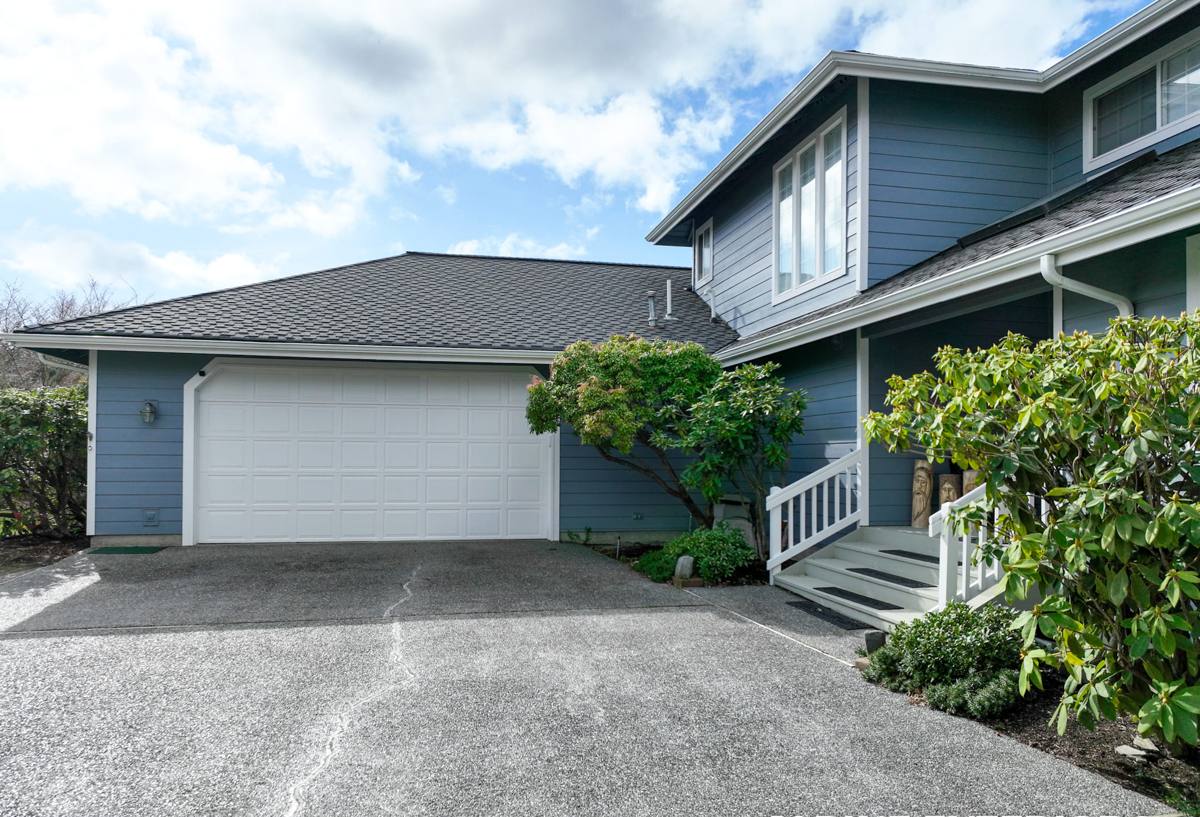
What We Actually Find When We Inspect an Island Deck
Fasteners and Metal Hardware
Salt air is hard on anything metal. Nails, screws, joist hangers, and bolts that aren't rated for coastal exposure start to corrode years before they would somewhere drier. Once a fastener rusts, it loses grip strength — a board that seems solid can be held down by screws that have lost most of their bite. This is one of the most common reasons a deck that "looks fine" turns out to have real problems once we start pulling boards.
Decking Boards
Wood decking cups, splits, and softens where water sits instead of running off. Shaded, north-facing sections and spots under overhangs where moss and debris collect tend to fail first, because they never fully dry between rain events. Composite decking holds up better against rot but isn't immune to problems — boards can still fade, stain, or come loose if the substructure underneath has failed.
Framing, Ledger Boards, and Posts
This is the part that actually matters for safety, and it's the part a lot of surface-level repairs skip. The ledger board (where the deck attaches to the house) and the support posts are the structural backbone. If flashing is missing or was installed wrong, water gets behind the ledger and rots the framing from the inside — you won't see it until the deck starts to feel spongy or pull away from the house. Post bases sitting in standing water or buried in soil rot from the ground up, often invisibly, until they're no longer carrying real load.
Railings and Guardrails
Railings take constant stress from people leaning on them, plus the same moisture and corrosion issues as everything else. A railing that flexes or has any give at the post connections isn't a cosmetic issue — it's a fall hazard, and it's usually one of the cheaper things to fix correctly if it's caught early.
Repair, Re-Deck, or Replace? How We Make That Call
Not every deck problem needs the same level of work. Part of doing this job honestly is telling you which category yours falls into instead of defaulting to the most expensive option. Here's roughly how we think about it:
| Factor | Spot Repair | Full Re-Decking | Full Rebuild |
|---|---|---|---|
| What's typically wrong | A few soft or split boards, loose railing, isolated rust | Decking surface is failing broadly, but framing underneath is still sound | Framing, ledger, or posts show rot or structural compromise |
| What gets replaced | Individual boards, fasteners, or railing sections | All decking boards and railing, framing inspected and reinforced as needed | Decking, framing, ledger connection, posts, footings |
| Rough cost range | Several hundred to low thousands | Several thousand to mid five figures, depending on size | Mid five figures and up, depending on size and access |
| Best when | Deck is under 10-15 years old and the frame tested solid | Frame is solid but decking has reached the end of its life | Deck is older, or inspection turns up rot at structural points |
These are broad starting ranges, not quotes — every deck's size, height, access, and material choice changes the number. The only way to know which category applies is a hands-on inspection, not a guess from the driveway.
What a Correct Repair Job Actually Involves
A repair that's done right isn't just swapping bad boards for new ones. We follow the same sequence on every job:
- Full inspection first. We check the ledger connection and flashing, probe framing and posts for soft spots, test railing connections, and look at drainage under the deck before touching the surface.
- Identify the cause, not just the symptom. A soft board is a symptom. Missing flashing, poor drainage, or undersized fasteners is usually the cause — and if we don't fix the cause, the same failure comes back in a few years.
- Match materials to the exposure. Fasteners and hardware get upgraded to a corrosion-rated spec appropriate for coastal use, not whatever was cheapest to grab.
- Rebuild structure before surface. Any framing, ledger, or post repairs happen before new decking goes down — never cosmetic work over a compromised frame.
- Address drainage and airflow underneath. Standing water and trapped moisture under a low deck are a major reason repairs don't last. We look at grading and ventilation, not just the deck itself.
- Finish and seal appropriately. Wood decking gets a finish suited to the wood and the exposure; composite and railing hardware get checked for manufacturer-required clearances and fastening.
Materials That Actually Hold Up Out Here
There's no single "best" decking material — it depends on how much upkeep you want to do and what you're trying to match. A few honest trade-offs:
- Pressure-treated lumber is affordable and easy to repair in sections, but needs regular re-sealing to resist moss and moisture in a marine climate — skip that maintenance for a few years and it shows.
- Cedar handles moisture naturally better than most softwoods and looks good, but it's a softer wood that dents and wears faster underfoot, and it still needs periodic finish maintenance near salt air.
- Composite decking resists rot and doesn't need sealing, which is a real advantage here — but it's less forgiving of a bad substructure, since it can't be spot-repaired the same way solid wood can, and quality varies a lot between product lines.
We'll walk you through what makes sense for your specific deck rather than pushing one material across the board.
Our Process, Start to Finish
We keep this straightforward because island scheduling already has enough moving parts:
- Free on-site inspection, including probing framing and connections, not just a visual look
- A plain-English explanation of what we found and why it happened
- A written scope broken into what's necessary now versus what can wait
- Materials and fasteners selected for coastal exposure, not generic hardware
- Work scheduled in as few trips as possible, since every crossing takes planning
- A finished deck that's structurally sound, not just freshly surfaced
Signs Your Deck Needs Attention
Most deck failures give warning signs well before anything becomes dangerous. Worth checking for:
- Boards that feel spongy, springy, or noticeably softer than the rest of the deck
- Railings or posts that flex or move when you lean on them
- Rust stains bleeding from screw heads or hardware
- Gaps opening up where the deck meets the house, or a ledger board pulling away
- Persistent moss, algae, or dark staining in shaded or low-airflow sections
- Standing water that doesn't drain within a day of rain
- Stairs that feel less solid than they used to, especially at the stringer connections
Any one of these on its own might be minor. A couple of them together are usually worth a real inspection rather than a wait-and-see approach.
Why It Matters That We Already Work Lummi Island
Lummi Island is reached by a county ferry, not a bridge, and that changes how a repair project should be planned. A crew that doesn't normally work out here has to build ferry schedules, sailing waits, and vehicle space into every single trip — which either inflates the price or leads to rushed, single-visit work that skips real diagnosis. We already build our scheduling around the crossing, order materials ahead of time so we're not making extra trips, and plan the inspection and the repair to happen as efficiently as the ferry schedule allows.
There's also a familiarity factor that's hard to fake. Homes surrounded by water on all sides deal with a more consistent, more concentrated version of the salt-and-moisture exposure that the rest of Whatcom County gets in smaller doses. Knowing that going in changes which fasteners we spec, where we expect rot to start, and what maintenance schedule we recommend afterward.
Permits, Codes, and Doing It Safely
Guardrail height, baluster spacing, and stair rail requirements are governed by building code, and they're not optional even on a repair — if we're replacing a railing, it needs to meet current safety spacing, not just match what was there before. Larger structural work, like reframing or rebuilding a deck attachment to the house, typically requires a permit through Whatcom County. We'll tell you upfront whether your project needs one and handle that conversation as part of the scope, rather than leaving you to figure it out after the fact.
Let's Take a Look
If your deck has a few soft boards, a railing that doesn't feel as solid as it should, or you just haven't had it looked at in a while, we're happy to come take a look. The estimate is free, there's no pressure attached to it, and you'll get a straight answer about what's actually going on — not just a quote for the most expensive option. Fill out the form below and we'll get in touch to schedule a visit.