 Birch Bay Exterior
 Why Decks in Birch Bay Village Take More Punishment
Birch Bay Village sits close enough to the water that salt-laden air is a constant factor, not an occasional one. That air works on fasteners, flashing, and any exposed metal on a deck year-round, and it doesn't take a storm to do it — a steady onshore breeze on an ordinary afternoon is enough. Combine that with Whatcom County's driving winter rain, which tends to come in at an angle rather than straight down, and you get moisture finding its way into joints, ledger connections, and end grain that a drier climate would never expose.
Then there's moss. Western Washington's moss season isn't a few weeks — it's most of the year on a shaded, north-facing, or tree-covered deck. Moss holds moisture against the wood surface long after the rain has stopped, which is exactly the condition that accelerates rot in untreated or poorly finished lumber. A deck built without this combination in mind — salt air, sideways rain, and near-permanent dampness — will show it years before a deck built for the climate does.
Repair, Resurface, or Full Replacement — How to Tell
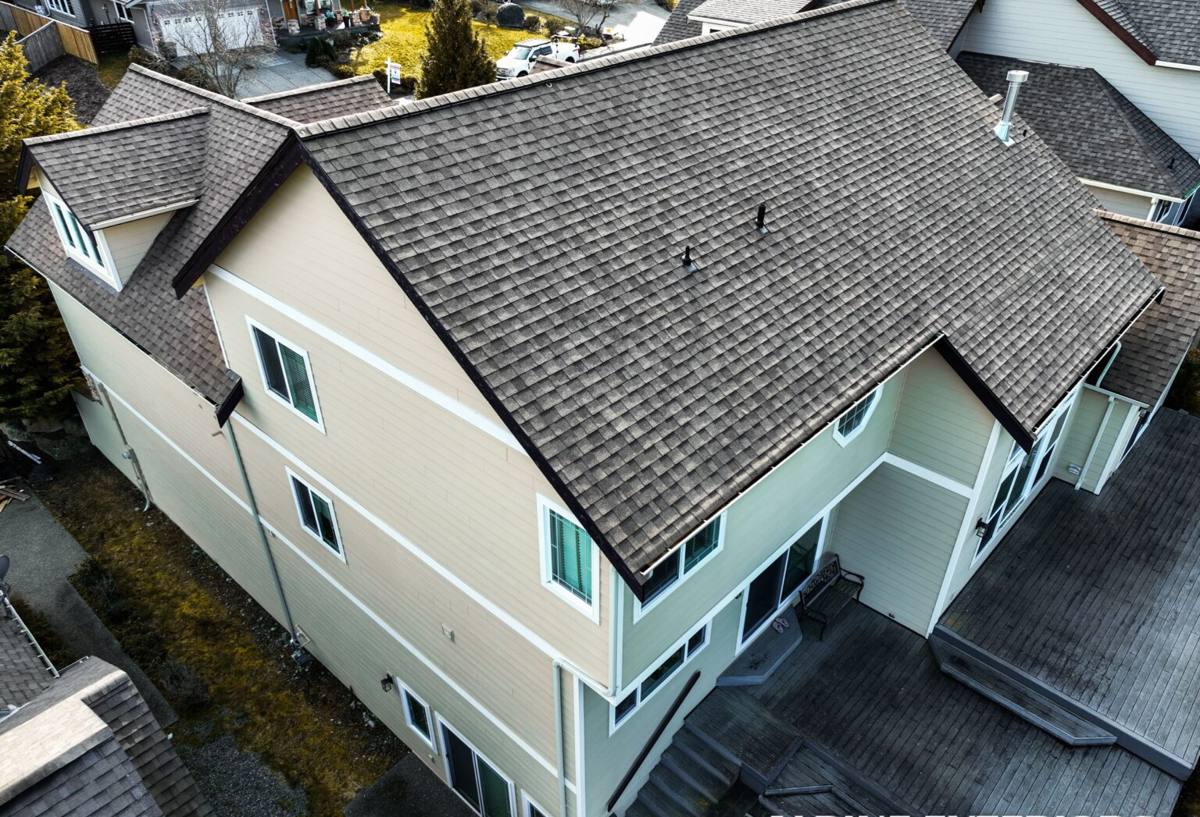
Not every tired-looking deck needs to come out completely. Part of an honest assessment is telling you when a repair or a board-and-rail resurfacing is genuinely enough, and when the structure underneath has reached the point where patching it is just delaying the inevitable — and spending money you won't get credit for later.
Signs that point toward full replacement rather than repair:
- Soft, spongy, or spring-back decking in multiple areas, not just one board
- Rot or soft wood at the ledger board where the deck attaches to the house
- Rusted, popped, or corroded fasteners across the structure, not isolated spots
- Posts or footings that have shifted, settled, or show cracking at grade
- Railings that flex or feel loose under normal pressure — a safety issue, not cosmetic
- A structure that predates current code for footing depth, joist spacing, or guard height
If the problems are limited to surface boards and the framing underneath is sound, we'll say so. We don't sell full replacements to homeowners who only need a repair — but we also won't recommend patching a deck whose framing is already compromised, because that's money spent on a problem that comes back.
Decking Material Options We Recommend for This Climate
Material choice matters more here than in a drier, inland climate, because the deck surface is fighting salt air and standing moisture almost continuously. Here's how the common options compare for a Birch Bay-area application:
| Material | How it handles this climate | Maintenance burden | Typical lifespan |
|---|---|---|---|
| Pressure-treated lumber | Affordable, but end grain and fastener holes need re-sealing regularly to resist moisture and moss staining | High — annual cleaning and periodic re-staining/sealing | 10-20 years with upkeep |
| Cedar | Naturally rot-resistant and handles moisture well, but greys and softens faster in salt air without regular finish upkeep | Moderate to high — finish maintenance every 1-3 years | 15-25 years with upkeep |
| Capped composite | Doesn't absorb moisture the way wood does, resists moss staining better, holds up well to salt exposure | Low — occasional washing | 25-30+ years |
| PVC decking | Fully synthetic, no wood fiber to hold moisture; very strong option for salt-air, high-moisture sites | Low — occasional washing | 30+ years |
We're not going to tell you composite or PVC is the only "right" answer — plenty of homeowners want the look and feel of real wood and are willing to keep up a finish schedule for it. What we will do is walk you through the honest trade-offs — upkeep, moisture behavior, appearance over time — so the choice matches how you actually plan to use and maintain the deck, not just the sticker price on the boards.
A Note on Fasteners and Hardware
Whatever decking material you choose, the hardware holding it together matters just as much in a salt-air environment. Standard galvanized fasteners corrode faster here than inland. We use stainless steel or high-grade coated fasteners and connectors rated for coastal exposure, because replacing decking over corroded framing hardware ten years from now defeats the purpose of a full replacement now.
What's Underneath Matters More Than the Boards on Top
A deck is only as good as what you can't see once it's finished. Most of the failures we get called out to look at started below the surface boards, not on top of them.
Ledger Board and Flashing
The ledger board — where the deck attaches to the house — is the single most common failure point in this climate, because it sits directly against the wall and catches whatever rain the wind drives against the house. Correct flashing detail here, installed so water sheds away from the house rather than behind the ledger, is not optional. This is also where a lot of shortcuts get taken on lower-cost jobs, and it's the detail that causes the most expensive hidden damage later.
Joists and Framing
Joist tape or a comparable moisture barrier on top of the framing keeps standing water from sitting directly against the wood every time it rains — and in Birch Bay Village, it rains a lot of the year. We also make sure joist spacing and beam sizing meet current code, since many older decks in this area were framed to standards that have since been tightened.
Posts and Footings
Footings need to be sized and set to current frost and load requirements, and posts need proper base connectors that keep the post end off standing water rather than sitting in it. This is one of the areas most likely to be undersized on an older deck.
Our Deck Replacement Process
- On-site assessment — we look at the existing structure, ledger connection, framing condition, and grading around the deck before recommending anything.
- Honest scope and estimate — you get a clear breakdown of what's being replaced and why, in plain language, with material options and their trade-offs explained.
- Permitting — we handle the permit application and inspection scheduling with Whatcom County so you don't have to chase paperwork.
- Demolition and disposal — the old deck comes out cleanly, with debris hauled off, not left stacked in the yard.
- Framing and flashing — ledger, joists, beams, posts, and footings are rebuilt or replaced to current code with coastal-grade hardware and proper flashing.
- Decking, railing, and finish — surface material and railings are installed per the plan you approved, with attention to drainage and airflow underneath.
- Final walkthrough — we go over the finished deck with you, including what maintenance (if any) your chosen material needs going forward.
Permits and Code Requirements in Whatcom County
Deck replacement in unincorporated Whatcom County, which includes Birch Bay, generally requires a building permit once you're doing more than a like-for-like surface swap — particularly if framing, footings, or the ledger connection are being replaced. Guard height, stair geometry, and footing depth all have current code minimums that older decks built decades ago often don't meet. We build to pass inspection the first time, and we handle the permit process as part of the job rather than leaving it for you to sort out.
Living With Moss, Mildew, and Salt Air After Your New Deck Is In
A properly built deck in this climate still needs some ongoing attention — the goal of a good build is to make that upkeep manageable, not to eliminate it entirely. A few habits go a long way:
- Sweep leaves and debris off the deck surface regularly, especially in fall — trapped organic material is what feeds moss growth
- Rinse salt residue off the deck surface and railings periodically, particularly after windy weather off the water
- Keep gutters and downspouts near the deck clear so overflow isn't running across or under the decking
- Check the ledger flashing area annually for any signs of staining or moisture
- If you chose wood, keep to a finish/sealing schedule rather than waiting until it visibly needs it
- Trim back vegetation that shades the deck and keeps it damp longer than the surrounding yard
None of this is complicated, but skipping it is how a well-built deck ages faster than it should in a climate like this one.
Why It Matters That We Already Work in Birch Bay Village
A deck replacement here isn't the same job as the same project done twenty miles inland, and a crew that hasn't worked this specific stretch of coastline tends to find that out the expensive way — usually at the ledger flashing or in fastener choice. Working regularly in Birch Bay Village means we already know what the salt air and moisture exposure do to a structure over time, what framing and hardware actually hold up, and how to sequence a project around this area's weather rather than fighting it.
If your property is part of a homeowners' association or has design guidelines around materials, colors, or railing style, we can work within those requirements as part of the planning conversation rather than as an afterthought. Familiarity with the neighborhood also means fewer surprises on scheduling, access, and site logistics — the practical details that keep a project moving instead of stalling out.
Get a Straightforward Estimate
If your deck is showing its age — soft spots, worn boards, a railing that doesn't feel as solid as it used to — it's worth having someone look at it before you decide whether it needs a repair or a full replacement. We'll give you a clear, no-pressure estimate and an honest read on what your deck actually needs, using the form below.