 Birch Bay Exterior
 Roof Replacement Built for Custer's Climate
Custer sits close enough to the Salish Sea that homes here take on a different kind of weathering than roofs just a few miles inland. Salt-laden air off Birch Bay works its way into fasteners, flashing, and roof vents. Driving rain off the water finds every gap in old underlayment. And Whatcom County's long, wet stretch from fall through spring gives moss and moisture months at a time to do damage before a homeowner ever sees a stain on the ceiling. A roof replacement out here isn't just about swapping old shingles for new ones — it's about building a roof system that's matched to this specific exposure.
We've replaced roofs throughout Birch Bay and the surrounding Custer area long enough to know which failure patterns show up locally and which materials and details actually hold up. This page walks through what that looks like in practice.
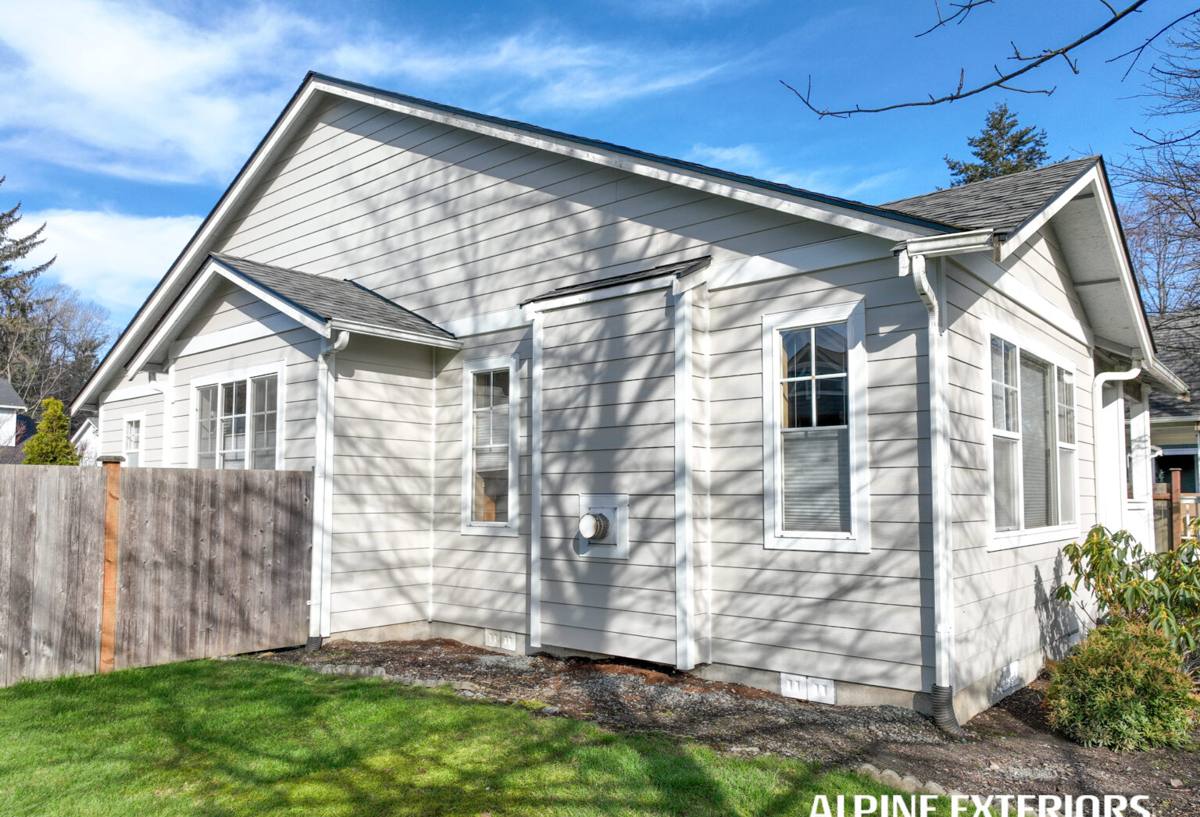
How Custer's Climate Wears Down a Roof
Salt Air and Metal Components
Proximity to Birch Bay means airborne salt settles on roofing metal — flashing, drip edge, vent caps, nail heads — and accelerates corrosion compared to a roof further inland. Cheap or under-coated metal components can start showing rust streaks and pinholing years before they should. This is one of the biggest differences between a roof spec written for a generic Pacific Northwest home and one written for a coastal Whatcom County property.
Driving Rain and Wind-Driven Moisture
Storms coming off the water don't just drop rain straight down — wind pushes it sideways, under shingle tabs and into any flashing detail that isn't sealed correctly. A roof that would perform fine in a calmer inland setting can leak at Custer if the underlayment, flashing laps, and valley details aren't built for wind-driven rain specifically.
Moss, Shade, and a Long Wet Season
Many Custer lots have mature trees and enough shade that roof surfaces stay damp for extended stretches. Combined with our long moss season — realistically much of the year in this part of Washington — that moisture supports moss and algae growth that holds water against the roofing surface, works into seams, and shortens the life of shingles that aren't rated or treated for it.
Signs a Custer Home Needs a Roof Replacement, Not a Repair
- Granule loss heavy enough that you're finding grit in gutters every time it rains
- Moss buildup that comes back within a season or two of cleaning, even after treatment
- Curling, cupping, or cracked shingles across large sections rather than one isolated area
- Rust staining or visible corrosion at flashing, vents, or metal valleys
- Soft spots, sagging, or daylight visible through the roof deck from the attic
- Leaks that show up in more than one location, or that reappear after being patched
- A roof approaching or past the manufacturer's expected service life for this climate
One or two of these on their own might point to a targeted repair. Several at once, especially on a roof that's already 18-20+ years old, usually means repairs are just buying short-term time on a system that's failing as a whole.
What a Correct Roof Replacement Involves Here
Full Tear-Off, Not a Layover
We remove the existing roofing down to the deck rather than layering new shingles over old. That lets us actually inspect the deck for rot or soft spots — common where trapped moisture has been sitting under moss or failed flashing — and replace any damaged sheathing before it's covered up again.
Underlayment Suited to Wind-Driven Rain
Given how much sideways rain a Custer roof can take in a winter storm, underlayment selection and installation matter more here than in a drier climate. We pay particular attention to lap direction, fastening pattern, and coverage at eaves and valleys where wind-driven water concentrates.
Corrosion-Resistant Flashing and Metal
Because of the salt air exposure, we use flashing and metal components rated for coastal conditions rather than the minimum-grade options that are fine further inland. This is a small line-item difference in cost that has an outsized effect on how long the roof's most vulnerable details actually last.
Ventilation That Matches the Roof
Proper intake and exhaust ventilation keeps the underside of the roof deck dry and reduces the moisture buildup that feeds moss and accelerates shingle aging from below. A roof replacement is the right time to correct ventilation that was never sized properly to begin with.
Moss-Resistant Shingle Options
Many shingle lines now come with algae- and moss-resistant granule treatments built in. For a shaded or tree-covered Custer lot, that upgrade is usually worth the modest cost difference given how much moss pressure the roof will face over its life.
Material Options for Custer Homes
| Material | Coastal/Moss Performance | Typical Lifespan | Trade-Offs |
|---|---|---|---|
| Architectural asphalt shingles (algae-resistant) | Good with proper ventilation; resists algae staining better than standard shingles | 25-30 years | Most cost-effective; still needs periodic moss monitoring in heavy shade |
| Standard 3-tab asphalt shingles | More prone to moss and algae staining without treatment | 15-20 years | Lower upfront cost, shorter service life in this climate |
| Metal roofing (coated/coastal-rated) | Sheds moisture quickly, minimal moss buildup; needs coastal-rated coatings to resist salt corrosion | 40-50+ years | Higher upfront cost; installation quality matters even more near salt air |
| Composite/synthetic shakes | Resists moisture absorption better than wood; good moss resistance | 30-50 years | Mid-to-high cost; appearance-driven choice for many homeowners |
We don't push one material as the universal answer. A shaded lot with heavy tree cover, a wide-open roof with full sun exposure, and a home right along the water each call for a different balance of cost, appearance, and maintenance — that's a conversation we have on-site, not a one-size-fits-all recommendation.
Our Roof Replacement Process
- On-site inspection and estimate — We assess the current roof, deck condition, ventilation, and any moss or moisture issues specific to your property, and provide a clear written estimate.
- Material selection — We walk through shingle or metal options suited to your home's sun/shade exposure and your budget, including moss-resistant upgrades where they make sense.
- Scheduling around weather — Given how much rain this region gets, we plan installation windows carefully and protect the home if weather shifts mid-project.
- Full tear-off and deck inspection — Old roofing comes off completely; any damaged decking is identified and replaced before new materials go down.
- Underlayment, flashing, and ventilation installation — Each detail is installed to hold up against wind-driven rain and salt exposure, not just to meet minimum code.
- New roofing installation — Shingles or metal panels are installed per manufacturer specification to keep warranty coverage intact.
- Final walkthrough and cleanup — We review the completed work with you and make sure the property is left clean, including magnetic sweeps for stray fasteners.
Why It Matters That We Already Work in Custer
A roofing crew based somewhere inland or south of here may know roofing in general, but they haven't necessarily dealt with how many Custer roofs age — the flashing that corrodes faster than expected, the north-facing slopes that hold moss year-round, the storm patterns that come straight off Birch Bay. We've built our process around what we actually see on roofs in this specific area, which means fewer surprises during the job and a roof spec that's matched to real conditions instead of a generic checklist.
Being local also means we're accountable after the job is done. If a question comes up during the next big windstorm season, we're not far away and we're not hard to reach.
Cost Factors for a Custer Roof Replacement
- Roof size and pitch — Larger and steeper roofs take more material and labor time.
- Material choice — Standard asphalt, algae-resistant asphalt, metal, and composite options all carry different price points and lifespans.
- Deck condition — Rot or soft sheathing found during tear-off adds material and labor to replace it properly rather than covering it up.
- Ventilation upgrades — Correcting inadequate intake/exhaust ventilation adds some cost but protects the new roof's lifespan.
- Flashing and metal grade — Coastal-rated, corrosion-resistant components cost more than standard-grade but matter more here than inland.
- Number of roof penetrations — Chimneys, skylights, and multiple vents each require their own flashing detail and add labor.
- Access and site conditions — Steep driveways, tree cover, or tight lot access can affect staging and labor time.
We give homeowners a real, itemized estimate rather than a vague ballpark, so you can see exactly what you're paying for and why.
Get a Free Estimate for Your Custer Roof
If your roof is showing moss that won't stay gone, granule loss, curling shingles, or you just know it's getting close to the end of its service life, it's worth having someone look at it before a small problem becomes a deck-level repair. We offer free, no-pressure estimates for homeowners in Custer and throughout the Birch Bay area — use the form below to get started.