 Birch Bay Exterior
 Composite Decking Built for Custer's Climate
Custer sits close enough to the water and open farmland that decks here take a different kind of beating than decks twenty miles inland. Salt-laden air off the Strait works into fasteners and framing connectors year-round, driving rain comes in sideways more often than most homeowners expect, and the long gray stretch from late fall through early spring gives moss and algae months to get established on any surface that stays damp. A deck built without those specifics in mind will look tired well before its time — cupped boards, green film on the shaded side, corroded hardware peeking through at the rail posts.
Composite decking, installed correctly, handles this environment better than wood without the constant upkeep. But "composite" isn't one product with one installation method — it's a category, and the details of board selection, substructure, and fastening matter more here than they would in a drier climate. This page covers what that actually looks like for a Custer property.
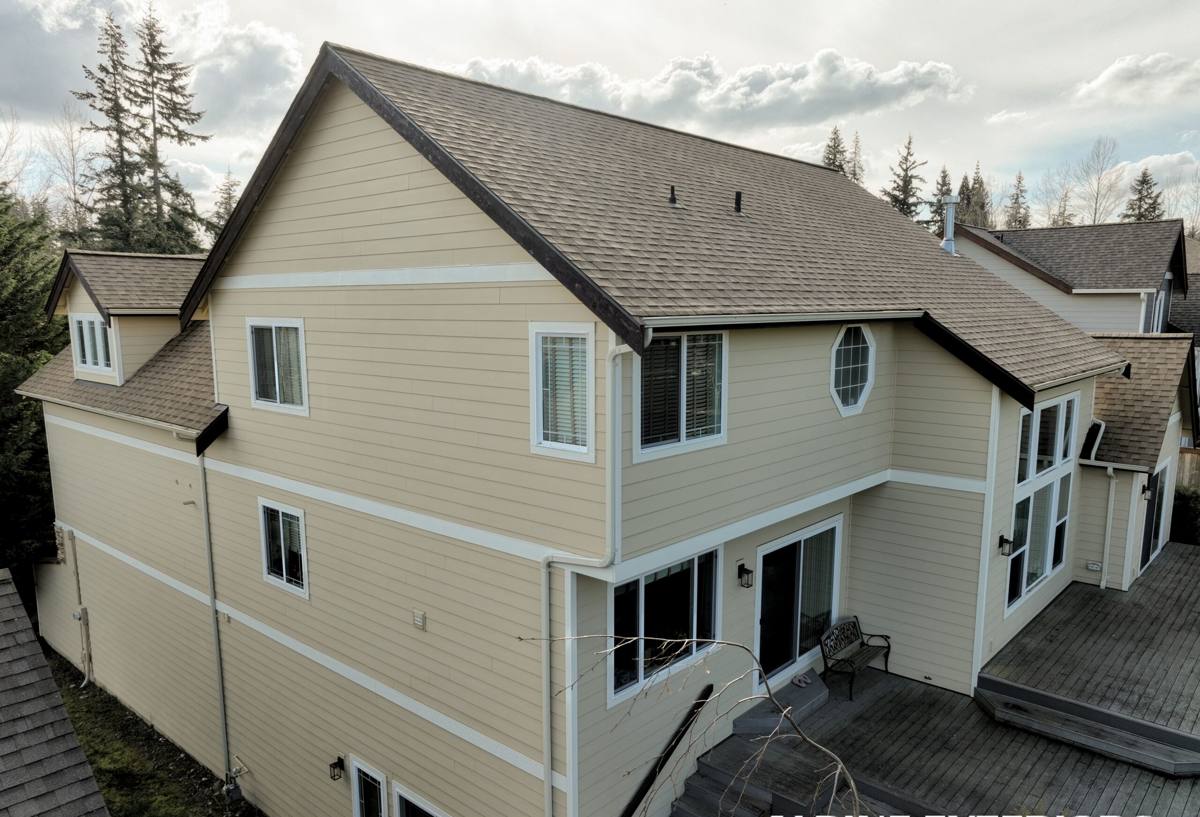
Why Custer's Conditions Change the Job
Salt Air and Metal Hardware
Being near Birch Bay and the broader Whatcom County coastline means airborne salt reaches decks even a fair distance from the water, especially on windward-facing builds. It's not enough to bleach wood the way full ocean spray would, but it's steady, and steady is what corrodes standard fasteners over a few seasons. Any deck we build here uses stainless or coated hardware rated for coastal exposure — not because a code inspector requires it, but because we've seen what happens to mismatched hardware in this air.
Driving Rain and Water Management
Rain that comes in at an angle gets under rail caps, behind fascia boards, and into ledger connections that a straight-down rain would never reach. That means flashing details at the house connection, proper gapping between boards for drainage, and attention to how water sheds off the structure — not just off the decking surface — are not optional extras. They're the difference between a deck that dries out between storms and one that stays damp for days.
Moss Season
Whatcom County's wet season runs long, and any deck surface that holds moisture — especially on the north or shaded side of a house — will grow moss and algae if nothing is done about it. Composite boards vary a lot in how they handle this. Capped boards with a textured, mold-resistant surface shed spores far better than uncapped or lightly capped products, and airflow underneath the deck (proper joist spacing and ventilation at the skirting) matters just as much as the board itself.
What a Correct Composite Deck Build Involves
- A substructure rated for the actual span and load, not just the minimum the board manufacturer allows
- Joist tape or a moisture barrier on top of framing to slow water intrusion into the substructure itself
- Coastal-rated fasteners and hidden fastening systems sized correctly for the board profile
- Proper board gapping calculated for our seasonal humidity swings, not a generic factory spec
- Correctly flashed ledger board where the deck meets the house — this is the single most common failure point we see on older decks
- Ventilation at skirting and low-clearance areas to keep the space under the deck from staying wet
- Rail post connections built to resist wind load and long-term hardware corrosion together
Skip any one of these and the deck will still look fine for a year or two. The problems that show up later — soft spots at the ledger, moss that keeps coming back no matter how often it's cleaned, rail posts that wiggle — usually trace back to one of these steps being shortcut during the build.
Choosing the Right Composite Board for a Custer Home
Not every composite product is a good fit for this climate, and the differences aren't marketing spin — they're real trade-offs in moisture behavior, maintenance, and cost.
| Board Type | Moisture Behavior | Maintenance | Best Fit |
|---|---|---|---|
| Fully capped composite | Cap resists moisture absorption on all sides | Occasional wash-down; best moss resistance | Shaded lots, north-facing decks, waterfront-adjacent properties |
| Partially capped composite | Bottom or edges exposed to moisture uptake | More frequent cleaning, watch cut ends closely | Sunnier, well-drained lots with good airflow |
| Uncapped composite (older-style) | Absorbs moisture, can swell and stain over time | Highest maintenance, shortest realistic lifespan here | We generally don't recommend it for this climate |
| PVC/synthetic decking | No wood fiber content, very low moisture uptake | Low maintenance, higher upfront cost | Homeowners prioritizing lowest long-term upkeep |
We don't push a single brand — different manufacturers make solid capped and PVC products, and the right choice depends on budget, sun exposure, and how the homeowner wants the deck to look. What we do steer people away from is uncapped composite in this specific climate. It's not that the product is defective; it's that the moisture cycle here — wet fall and winter, dry cutting/staining exposure — works against products that weren't built with a full protective cap. That's a maintenance and warranty conversation we'd rather have honestly up front than after the fact.
Cost Factors for a Custer Deck Project
| Factor | Why It Matters Here |
|---|---|
| Board tier (capped vs. PVC) | Capped composite is the mid-range choice; PVC costs more but needs the least attention long-term |
| Substructure condition | Older ledger connections or undersized framing may need rework before new decking goes down |
| Deck height and railing style | Taller decks and view-oriented rail systems add engineering and material cost |
| Site access | Rural Custer lots with limited equipment access can add labor time |
| Fastening system | Hidden fastener systems cost more upfront but reduce visible hardware exposed to salt air |
We're not going to quote a number here that means nothing without seeing the actual site — deck size, framing condition, and board choice swing the total too much for a broad range to be useful. What we can tell you honestly: a properly built composite deck in this climate costs more upfront than a bare-minimum build, and it should. The extra cost is almost entirely in the parts you don't see once it's finished — flashing, fasteners, substructure prep — and those are exactly the parts that determine whether the deck is still solid in fifteen years.
Our Process on a Custer Deck
1. On-Site Assessment
We look at sun exposure, drainage patterns on the lot, existing structure (if this is a replacement), and how the deck connects to the house. This tells us what substructure work is actually needed versus what's cosmetic.
2. Board and Layout Recommendation
Based on the shade pattern and how the homeowner uses the space, we recommend a board tier and layout — including where extra drainage gapping or ventilation will matter most.
3. Substructure and Flashing
This is where most of the long-term durability gets decided. We address the ledger connection, joist condition, and moisture barrier before a single composite board goes down.
4. Decking Installation
Boards go down with the fastening system appropriate to the product, with attention to consistent gapping and clean transitions at stairs, rail posts, and the house line.
5. Final Walkthrough
We walk the finished deck with the homeowner, cover basic care (what little there is with composite), and note anything worth watching in year one.
Composite Deck Maintenance in This Climate
- Rinse or lightly scrub the deck surface a couple times a year, more often on shaded sections prone to moss
- Keep gutters and downspouts near the deck clear so runoff doesn't sheet directly onto boards or framing below
- Check rail post hardware annually for early corrosion, especially on wind-exposed sides
- Trim back vegetation that shades sections of the deck and keeps them damp longer than the rest
- Clear debris from between boards and off the substructure below at least once a season
Composite is genuinely low-maintenance compared to wood, but "low" isn't "none" — a little seasonal attention goes a long way toward keeping moss from getting a foothold and catching hardware issues before they become structural ones.
Why a Crew That Works Custer Regularly Matters
General contractors who don't work this specific stretch of Whatcom County often default to standard fastener specs, standard gapping, and whatever board the supplier has on hand — because in a drier or more sheltered climate, that's usually fine. Here, it isn't. We've built and repaired enough decks around Birch Bay and Custer to know which corners get shortcut most often and which details actually hold up against salt air and a long wet season. That's not a sales pitch — it's the practical reason a deck built for this specific area outlasts one built to a generic spec sheet.
If you're planning a new composite deck or replacing one that's struggled with moss, corrosion, or water damage, we're happy to take a look and give you a straight assessment — no pressure, no upsell. Use the form below to request a free estimate.