 Birch Bay Exterior
 Siding in Cherry Point Has to Work Harder Than Siding Ten Miles Inland
Cherry Point sits right on Whatcom County's shoreline, and that location shapes everything about how siding performs here. Homes get a steady dose of salt-laden air off the water, wind-driven rain that hits walls sideways instead of falling straight down, and a moss season that can stretch across most of the year in our marine climate. None of that is unique to any one house on this stretch of coastline — it's the baseline every exterior surface in the area has to survive, year after year.
Generic siding advice doesn't account for that combination. A product that performs fine in a dry inland climate can fail years early when it's dealing with constant moisture cycling, salt exposure, and shaded, damp conditions that never fully dry out between storms. This page is about what siding installation actually needs to look like for a Cherry Point home, not a general overview of siding in the abstract.
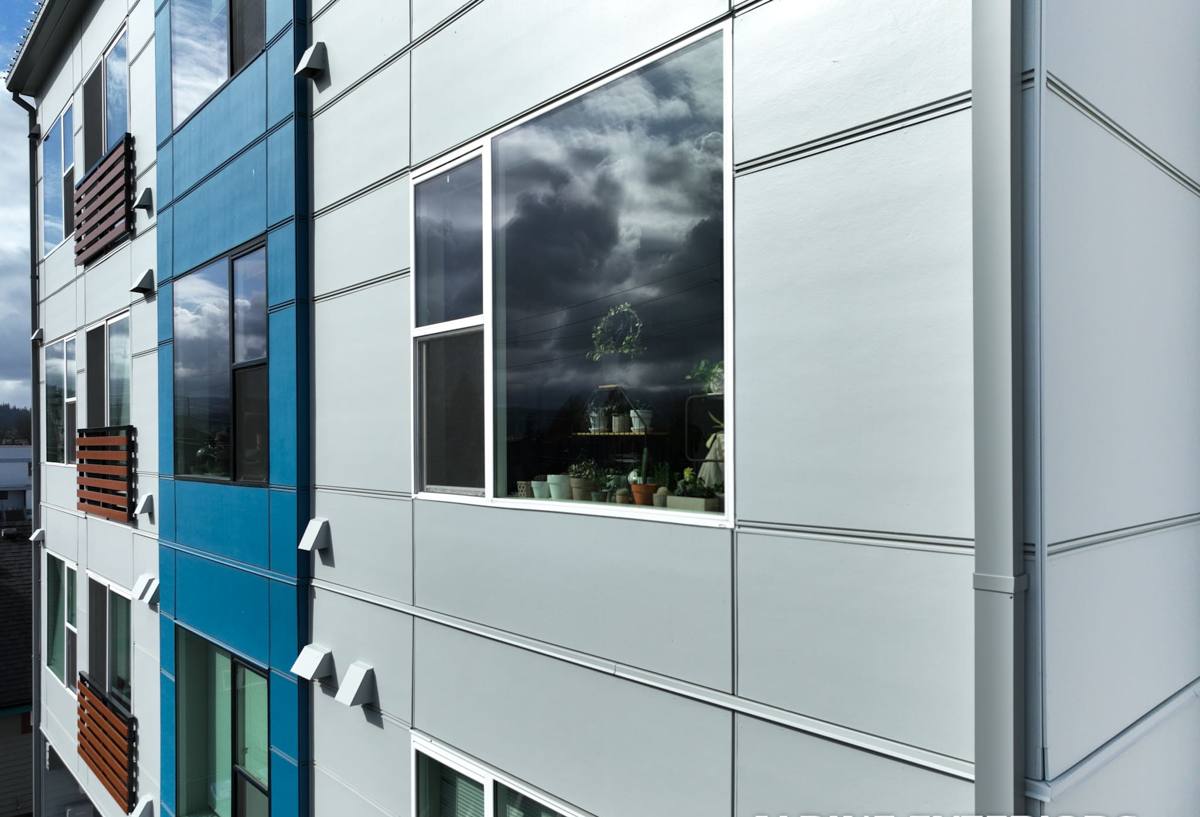
What Salt Air, Driving Rain, and Moss Actually Do to a Wall
Salt Air
Airborne salt accelerates corrosion on fasteners, flashing, and any metal trim that isn't rated for coastal exposure. It also settles into porous siding materials and coatings, which can break down paint film and finishes faster than the same products would wear in a non-coastal setting.
Driving Rain
Wind off the water doesn't just wet the face of a wall — it drives moisture up under laps, into seams, and behind trim if the water-resistive barrier and flashing details aren't built correctly. Most siding failures we see in coastal Whatcom County trace back to water getting behind the cladding, not the cladding itself failing outright.
Moss and Sustained Dampness
Shaded north and west walls, tree cover, and our long wet season mean some siding surfaces rarely get a chance to dry completely. Moss and mildew take hold on surfaces that hold moisture, and over time that constant dampness works into seams, fastener holes, and any spot where the finish has worn thin.
Individually, each of these is manageable. Together, over years, they're exactly the conditions that separate a siding job that lasts two decades from one that starts failing in five or six years.
What a Correct Siding Installation Involves
The siding itself is only part of the system. A correct installation on a coastal Whatcom County home includes several layers working together, and skipping or rushing any one of them is where premature failures start.
- A continuous, properly lapped water-resistive barrier behind the siding, with no gaps at seams or penetrations
- Correct flashing at every window, door, deck ledger, and roof-to-wall transition — the details most likely to leak if done wrong
- Proper fastener selection and placement, driven to manufacturer spec rather than "close enough"
- Correct clearance between the bottom of the siding and grade, decks, patios, and roof lines to keep splash-back and standing water away from the material
- Rain-screen or drainage gap detailing where the wall assembly calls for it, so incidental moisture can drain and the wall can dry
- Caulking and sealant only where the manufacturer specifies it — not as a substitute for correct flashing
Any siding product can be installed poorly, and any siding product can look fine on installation day while hiding problems that surface years later. The workmanship underneath the surface is what determines whether a coastal home actually gets the lifespan the material is rated for.
Why We Install James Hardie Only — Not Vinyl, Not LP SmartSide, Not Cedar
We install James Hardie fiber cement siding exclusively. That's a deliberate standard, not a limitation in what we're capable of installing, and it's worth explaining why — especially for a location like Cherry Point where the climate punishes the wrong material choice.
Vinyl siding is affordable and low-maintenance in mild conditions, but it can become brittle in cold snaps, warp or distort in sustained heat and direct sun exposure, and its seams and J-channels give wind-driven rain more opportunities to work moisture behind the wall. Engineered wood products like LP SmartSide use resin-treated wood strand technology that resists moisture better than raw wood, but they're still an organic, wood-based substrate — any breach in the factory coating or a poorly sealed cut edge gives moisture a path into material that can swell or degrade. Cedar and primed spruce are attractive, traditional materials, but they demand ongoing painting, staining, and caulking to keep water out, and in a climate with our moss season and rainfall, that maintenance burden is constant, not occasional.
James Hardie fiber cement is cement, sand, and cellulose fiber — not wood, and not vinyl. It doesn't rot, it isn't a food source for moss and mildew the way bare wood can be, and it holds paint and factory finish far longer than wood substrates because the material itself doesn't move with moisture the way wood does. It's also non-combustible, which matters increasingly across Washington. Hardie's ColorPlus factory-applied finish is baked on under controlled conditions rather than field-painted, which gives it better adhesion and UV resistance than site-applied paint, and their HZ5 product line is engineered specifically for the kind of wet, moderate Pacific Northwest climate Cherry Point sits in. Combined with a transferable warranty that follows the home rather than the original owner, it's the product we're willing to put our name behind on this coastline.
How Siding Materials Compare for a Coastal Whatcom County Home
| Material | Moisture & Salt Air Resistance | Maintenance Required | Typical Lifespan Here |
|---|---|---|---|
| James Hardie Fiber Cement | Excellent — non-organic substrate, factory finish | Occasional wash; no repainting on the ColorPlus finish cycle | Decades, with warranty backing |
| Vinyl | Fair — seams and channels vulnerable to wind-driven rain | Low, but limited repair options if damaged | Variable; shortened by UV and temperature swings |
| LP SmartSide / Engineered Wood | Good if coating stays intact; vulnerable at cut edges and breaches | Moderate — coating inspection and touch-up over time | Depends heavily on installation and coating maintenance |
| Cedar / Primed Spruce | Poor to fair without diligent upkeep in a wet climate | High — regular painting, staining, caulking | Shortened without consistent maintenance |
This isn't about any one product being "bad" — it's about which material holds up with the least ongoing intervention in a climate that includes salt exposure, driving rain, and extended damp periods. That's the standard we hold every job to.
Our Installation Process for Cherry Point Homes
1. On-Site Assessment
We look at the specific exposure of your home — which walls take the brunt of the weather off the water, where moss and moisture staining already show up, and where the existing siding or trim has failed. That tells us where extra attention to flashing and drainage detailing matters most.
2. Tear-Off and Sheathing Check
Removing the old siding lets us inspect the sheathing and framing underneath for hidden water damage before anything new goes up. Covering over a compromised wall assembly just hides the problem — we address it before installing the new water-resistive barrier.
3. Water-Resistive Barrier and Flashing
This is the layer that does the real work of keeping a coastal home dry. We install it continuous and correctly lapped, with flashing integrated at every window, door, and penetration according to manufacturer sequencing, not shortcuts.
4. Hardie Installation to Spec
Fastener spacing, clearances from grade and roof lines, and joint treatment are all installed to James Hardie's published specifications for our climate zone — the details that protect both the material's performance and its warranty coverage.
5. Final Walkthrough
We review the finished work with you, covering what to expect from the ColorPlus finish over time and what basic upkeep looks like in a Cherry Point setting.
Signs Your Cherry Point Home May Need New Siding
- Moss or dark streaking that keeps returning shortly after cleaning, especially on shaded or west-facing walls
- Soft, spongy spots when you press on siding or trim, particularly near the bottom edge or around windows
- Paint or finish that's peeling, bubbling, or chalking well before you'd expect it to
- Visible gaps, warping, or separation at seams and corners
- Rust staining running down from fasteners or metal trim
- Musty odors or moisture showing up on interior walls near exterior corners
- Rising heating bills that suggest the wall assembly isn't sealing the way it should
Any one of these on its own might be minor. Several together, especially on a home that's been through a few coastal winters without an upgrade, usually means the siding system is past the point where patching makes sense.
Why Local, Coastal-Specific Experience Matters
A crew that mostly works inland, drier parts of Whatcom County can still do competent work, but they aren't necessarily calibrating for salt air corrosion on fasteners, the exact flashing sequencing that matters most under driving rain, or which walls in a shoreline setting like Cherry Point need the most attention to drainage and drying capacity. Those are judgment calls that come from repeatedly seeing how installations here actually hold up over years, not just on installation day.
Working this coastline regularly also means being realistic with homeowners about what's driven by the climate versus what's a product or installation issue — and being straightforward when a repair is genuinely sufficient rather than pushing a full replacement that isn't needed yet.
Caring for James Hardie Siding After Installation
One of the practical advantages of switching to fiber cement in a climate like ours is how little upkeep it demands compared to wood or repeatedly caulked systems. A periodic rinse to keep salt residue and organic buildup from accumulating, a visual check after major storms for any damaged trim or flashing, and prompt attention to anything that looks off are really the extent of it. There's no repainting cycle to plan around and no annual sealing regimen — the ColorPlus finish and the non-organic substrate are doing that work for you.
If your Cherry Point home's siding is showing its age, or you're planning ahead for a replacement, we're happy to walk the exterior with you and give you a straightforward, no-pressure estimate. There's no obligation — just an honest look at what your home actually needs. Fill out the form below to get started.