 Birch Bay Exterior
 Building a Deck That Can Actually Handle California Creek's Weather
California Creek sits close enough to the water that homes here deal with a different mix of weather than you'd find a few miles inland. Salt-laden air off the bay accelerates corrosion on anything metal. Driving rain off the strait pushes moisture sideways into places a standard deck design doesn't account for. And because so many lots here have mature tree cover and shaded north sides, the moss and algae season runs long — often most of the year. A deck built without those three things in mind will look fine for a season or two, then start showing problems: rust streaks around fasteners, soft spots near the house, and a walking surface that turns slick every time the temperature drops.
None of that means a deck in this neighborhood has to be high-maintenance or short-lived. It means the framing, hardware, and material choices need to match the site, not a generic spec sheet. That's the difference between a deck that needs real repair work in eight years and one that's still solid in twenty-five.
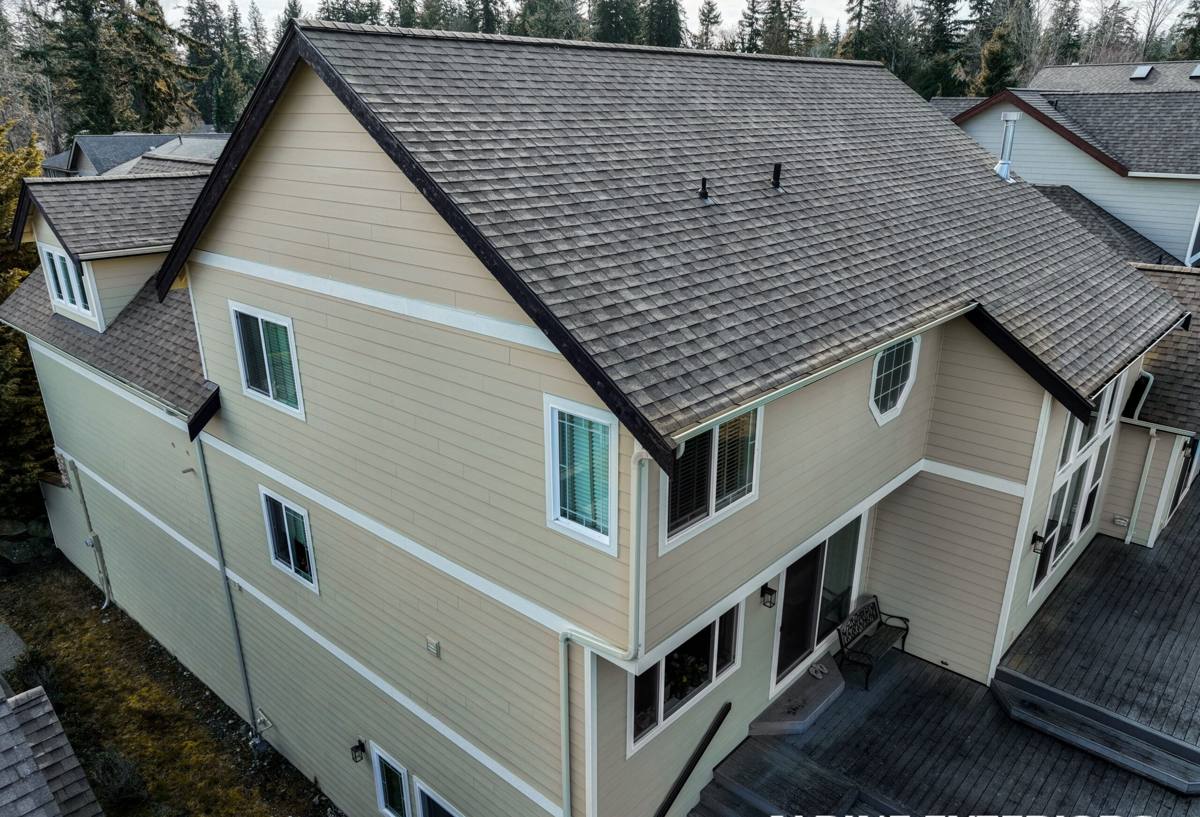
What a Correctly Built Deck Requires Here
Footings and Framing
Whatcom County's soil and drainage vary a lot from lot to lot, and a deck is only as good as what it's sitting on. Footings need to be sized and set to local frost depth and soil-bearing requirements, not eyeballed. On sites with poor drainage or a higher water table — common closer to the creek and shoreline — we adjust footing placement and drainage around the posts so standing water isn't sitting against untreated wood or eroding the base over time. Framing lumber should be rated for ground contact where it's close to grade, and joist spacing should account for the decking material you're planning to use, since composite and PVC boards often have different span requirements than wood.
Ledger Attachment and Flashing
The ledger board — where the deck attaches to the house — is the single most common failure point on decks in wet coastal climates, and it's also the part that's easiest to get wrong because a bad ledger can look fine from the outside for years before it fails. Proper flashing (metal flashing, not just building paper or caulk) has to shed water away from the house band board, with a gap or drip edge that keeps water from wicking back into the wall assembly. In a climate with as much driving rain as Birch Bay gets, we don't cut corners here — it's the detail that prevents rot inside your wall, not just under your deck.
Fasteners and Hardware
Salt air corrodes standard galvanized fasteners faster than most homeowners expect, especially within a mile or two of the water. We use stainless steel or heavy-duty coated fasteners and structural hardware rated for coastal/marine exposure on every deck we build in this area. It costs more up front than standard hardware, but replacing rusted-through joist hangers or bolts on a deck that's only ten years old costs a lot more, and by then you're often tearing into decking to get at them.
Choosing the Right Decking Material for California Creek
There's no single "best" decking material — there's a best material for your budget, your maintenance appetite, and how much shade and moisture your specific lot deals with. Here's how the common options actually perform in this climate.
| Material | Moisture & Rot Resistance | Moss/Algae Resistance | Maintenance | Typical Lifespan |
|---|---|---|---|---|
| Cedar | Good if sealed regularly | Moderate — needs cleaning | Annual cleaning + re-sealing | 15-25 years |
| Pressure-Treated Pine | Good, treated for ground contact | Moderate — needs cleaning | Cleaning + periodic sealing | 15-20 years |
| Composite | Excellent | Good, varies by brand/grain texture | Occasional washing | 25-30+ years |
| PVC/Capped Polymer | Excellent | Very good | Occasional washing | 25-30+ years |
Cedar and pressure-treated wood cost less up front and give a natural look a lot of homeowners want, but they ask for real upkeep in this climate — skip a couple years of sealing and you're playing catch-up on graying, checking, and moss buildup. Composite and PVC cost more initially but hold up with far less attention, which matters if your deck sits in shade for much of the day. We'll walk through the honest trade-offs for your specific site rather than push one product line — the right call depends on how much of the year your deck stays damp and how much maintenance time you actually want to spend on it.
Moss, Algae, and Mildew: Managing the Long Wet Season
Moss doesn't grow on a deck because the wood is bad — it grows because moisture sits somewhere too long. In Birch Bay's climate, that's often a design and airflow problem more than a material problem. A few things make a real difference:
- Board spacing that allows water to drain through rather than pool on the surface
- Adequate ventilation underneath the deck so the underside can dry out between rain events
- Gutters and downspouts routed away from the deck footprint, not draining onto or under it
- Trimming back overhanging branches where practical to cut down on shade and leaf litter that traps moisture
- Choosing a board texture that doesn't hold a film of water on north-facing or heavily shaded decks
Even with good design, a shaded deck in this area will need periodic cleaning — that's just the reality of the local climate, not a sign something was built wrong. The goal of good design is to stretch the time between cleanings and keep moss from getting a foothold in the structure itself, not just the surface.
Railings, Stairs, and Code Requirements
Most decks attached to a house in Whatcom County require a building permit, and inspections check things like footing depth, ledger attachment, and guardrail construction — not just the finished look. General guardrail requirements call for railings at least 36 inches high on most residential decks, with baluster spacing tight enough that a small child can't pass through. Stair stringers need to be sized for the actual rise and run, not a stock cut that doesn't match your site's grade change. Skipping the permit process might save time upfront, but it can create real problems at resale, since an unpermitted deck often has to be corrected or disclosed when the house sells. We handle the permit and inspection process as part of the build so you're not left sorting it out later.
Our Deck Building Process
- On-site evaluation of grade, drainage, shade, and existing structure before any design work
- Material and layout recommendations based on how your specific lot handles moisture and sun
- Permit drawings and submission through Whatcom County
- Footings and framing built to span and load requirements for your chosen decking material
- Ledger flashing and structural connections rated for coastal exposure
- Decking, railing, and stair installation
- Final inspection and a walkthrough covering care and maintenance specific to your materials
Seasonal Maintenance to Protect Your Investment
A deck built right still needs some seasonal attention in this climate. Spring is the time to clear winter debris and check for any moss that took hold over the wet months. Mid-summer, a rinse and inspection catches small issues — a loose baluster, a fastener starting to show rust — before they become bigger repairs. Wood decking generally needs re-sealing every one to three years depending on sun exposure; composite and PVC just need periodic washing to keep pollen and organic buildup from staining the surface. Heading into fall, clearing leaves and needles off the deck surface and out of the gaps between boards goes a long way toward keeping moss from setting in over winter.
Why Hire a Crew That Already Works in California Creek
A deck built to a generic national spec sheet doesn't account for what actually happens on a lot two blocks from saltwater with mature tree cover and a long wet season. We've built and repaired decks throughout Birch Bay and the surrounding Whatcom County area, so we already know which details matter here — coastal-rated hardware, drainage that accounts for local soil, flashing that holds up to driving rain, and material choices that make sense for how much shade and moisture your specific lot deals with. That local knowledge is what keeps a deck performing well past the point a standard build starts needing repairs.
If you're planning a new deck or want an honest look at whether your current one is holding up the way it should, we're happy to come take a look. Use the form below to request a free, no-pressure estimate — we'll walk the site with you and tell you straight what your options are.