 Birch Bay Exterior
 Board & Batten Siding Built for California Creek's Weather
California Creek sits close enough to the water that homes here take a steady beating from salt-laden air, wind-driven rain, and the long gray stretch of moss season that defines a Whatcom County winter. Board and batten siding is one of the most visually striking exterior styles available to homeowners in this part of Birch Bay — clean vertical lines, deep shadow reveals, a look that suits both older farmhouses and newer builds. But that same vertical profile creates more seams, more fastener points, and more opportunities for water to find its way behind the cladding than a standard horizontal lap job. Done wrong, board and batten fails faster here than almost anywhere else in the region. Done right, it's one of the most durable and good-looking siding systems you can put on a house near the water.
This page is specifically about board and batten siding for California Creek properties — what the local climate demands from the material and the installation, how we build the system, and why the crew doing the work matters as much as the product going on the wall.
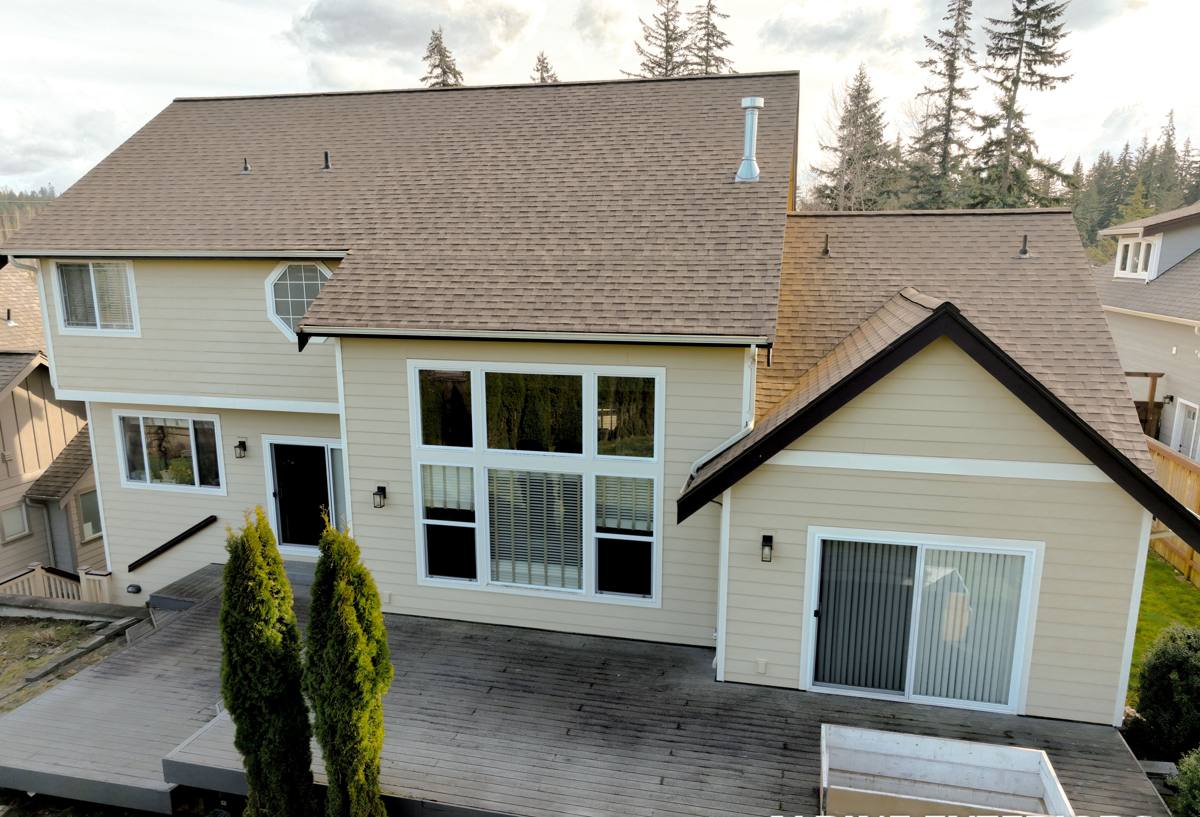
Why This Style Is Popular Near the Water — and Why It's Riskier If Done Wrong
Board and batten works by covering the vertical seams between wide panels with a narrower strip of trim (the "batten"). That detail is what gives the style its rhythm and shadow lines, but it also means every batten is a potential water trap if it isn't fastened, flashed, and spaced correctly. On a home a few blocks from Puget Sound or Semiahmoo Bay, that's not a theoretical concern — it's the difference between siding that looks good for thirty years and siding that's rotting behind the battens in eight.
Salt Air and Fastener Corrosion
Homes near California Creek sit close enough to salt water that airborne salt accelerates corrosion on anything less than a properly rated fastener. Board and batten uses more exposed and semi-exposed fasteners than most siding styles because the battens themselves need to be secured. Standard fasteners can streak, weaken, and eventually fail years before the siding itself would otherwise need replacement.
Driving Rain and Wind-Loaded Seams
Birch Bay gets rain that doesn't just fall straight down — winter storms push it sideways off the water, loading it directly into vertical seams and batten joints. A board and batten system that isn't installed with the right overlap, gap, and drainage plane behind it will let that wind-driven rain track behind the panels, where it can sit against sheathing for weeks at a time.
Moss Season and Shaded Exposures
Whatcom County's long wet season keeps north- and east-facing walls damp for months, especially on lots with mature tree cover, which is common around California Creek. Moss and algae growth on siding isn't just cosmetic — sustained moisture at the surface eventually finds its way into any gap in the caulking or flashing, and vertical batten joints give it more places to start.
Why We Only Install James Hardie for This Style
Board and batten is installed in a few different materials — vinyl, engineered wood (LP SmartSide), cedar, and fiber cement. We install exclusively James Hardie fiber cement, and board and batten is actually one of the clearest cases for why.
What the Alternatives Get Right — and Where They Struggle Near the Water
Vinyl board and batten is inexpensive and low-maintenance, but it's a thin, flexible material that telegraphs waviness on long vertical runs and can crack in cold snaps — and it's not rated to stop wind-driven moisture the way a rigid panel system is. LP SmartSide is a genuine engineered wood product with real strengths in inland, drier climates, but it's wood at its core: if water gets past the factory coating at a cut edge or fastener point — which board and batten creates more of — it can swell and deteriorate faster than fiber cement in a wet coastal environment. Cedar board and batten is a classic, beautiful look, but real wood in a salt-air, high-moisture climate demands a maintenance schedule (staining, sealing, edge treatment) most homeowners underestimate going in, and it's the material most vulnerable to the moss and mildew this area produces.
Why Hardie Holds Up Here
James Hardie fiber cement is non-combustible, doesn't swell or rot when water reaches an edge, and is engineered specifically for climates like this one through its HZ5 product line, which is built for the Pacific Northwest's moisture exposure. The factory-applied ColorPlus finish is baked on before the panel ever reaches the job site, which means the color coat itself resists the fading and moss-friendly surface breakdown that plain-primed products are prone to over time. For a style like board and batten, where the material has to perform at dozens of extra seams and fastener points, that consistency matters more than it does on a plain lap job.
What a Correct Board & Batten Installation Actually Involves
The finished look of board and batten is simple, but a correct installation has several layers most homeowners never see:
- A continuous water-resistive barrier (house wrap) installed and lapped correctly behind the entire wall, not just behind the panels
- Vertical furring or a rainscreen gap in the right applications, so any moisture that does get behind the cladding has somewhere to drain and dry rather than sitting against the sheathing
- Hardie panels fastened per manufacturer spec — correct fastener type, spacing, and embedment, not "close enough"
- Battens installed with a gap (not caulked tight) so the assembly can expand, contract, and drain as designed
- Corrosion-resistant, coastal-rated fasteners throughout, especially at batten strips and trim
- Proper flashing at every window, door, and horizontal trim transition — the single most common failure point we find on redone board and batten jobs
- Factory-cut and factory-sealed panel edges wherever possible, with field-cut edges properly sealed before installation
Skip any one of these steps and the siding may look identical on installation day — the problems that follow don't show up until a wet winter or two has had time to work on it.
Our Process for California Creek Homes
We approach every board and batten project in this area the same disciplined way:
- Walk and assess — we look at your home's specific exposure: which walls face the water and prevailing wind, where tree cover keeps siding damp longest, and what condition the existing wall assembly is in underneath.
- Plan the water management — house wrap, flashing details, and drainage strategy are decided before a single panel goes up, based on your home's exposure, not a generic spec sheet.
- Install to manufacturer spec — Hardie panel and batten installation follows James Hardie's fastening and clearance requirements exactly, including ground clearance and roofline flashing.
- Detail every penetration — windows, doors, hose bibs, vents, and light fixtures get flashed and sealed individually, since these are where wind-driven rain actually gets in.
- Final inspection and walkthrough — we go over the finished job with you, including what maintenance (if any) you'll need to plan for going forward.
Comparing Board & Batten Materials for This Climate
| Material | Moisture Performance Near the Water | Maintenance | Typical Lifespan Here |
|---|---|---|---|
| James Hardie Fiber Cement (HZ5) | Engineered for coastal PNW moisture; won't rot or swell | Low — occasional wash | 30+ years with correct install |
| LP SmartSide | Good in drier climates; more vulnerable at cut edges in wet coastal exposure | Moderate — edge sealing, inspection | Shorter in high-moisture coastal zones |
| Cedar | Attractive but absorbs moisture; prone to moss and mildew without upkeep | High — staining/sealing on a cycle | Highly maintenance-dependent |
| Vinyl | Won't rot, but thin panels can warp, crack in cold, and don't manage wind-driven rain as well | Low | Variable; UV and cold sensitive |
This table reflects general material behavior, not a specific product test — your home's exposure, sun, and shade will always be the biggest variable.
Maintenance Expectations After Installation
One of the practical benefits of Hardie fiber cement board and batten is how little ongoing work it asks for. A yearly rinse to keep salt residue and early moss growth from building up, a periodic look at caulking around trim and penetrations, and prompt attention if a gutter or downspout starts overflowing onto a wall are really the extent of it. Compare that to a wood board and batten system in this climate, where a homeowner is signing up for a recurring stain or seal cycle just to keep the material performing as designed — the maintenance gap is one of the clearest arguments for fiber cement once people actually price it out over a decade or two.
What to Look for When Hiring a Board & Batten Contractor Locally
- Ask specifically how they handle the drainage plane and flashing at batten seams — a vague answer is a red flag on this style
- Confirm what fastener type they use and whether it's rated for coastal/salt-air exposure
- Ask whether they've installed board and batten specifically on homes in Birch Bay or similarly exposed Whatcom County locations, not just inland lap siding
- Get their approach in writing for penetrations — windows, vents, hose bibs — since that's where most failures start
- Ask about manufacturer certification for the fiber cement product being installed, since improper installation can void the warranty
Why a Crew That Already Works in California Creek Matters
Board and batten isn't a forgiving style to get wrong, and every neighborhood in Whatcom County has its own combination of wind exposure, tree cover, and moisture patterns. A crew that already works around Birch Bay and California Creek has seen which walls take the worst of the winter storms coming off the water, which lots hold moss the longest, and which older homes have wall assemblies that need extra attention before new siding goes up. That local pattern recognition doesn't replace following manufacturer spec — it's what tells us where to be more careful than the spec sheet alone would suggest.
If you're considering board and batten siding for a home in California Creek, we're happy to walk your property, look at your specific exposure, and give you a straightforward assessment of what the job actually requires. Reach out for a free, no-pressure estimate using the form below.